
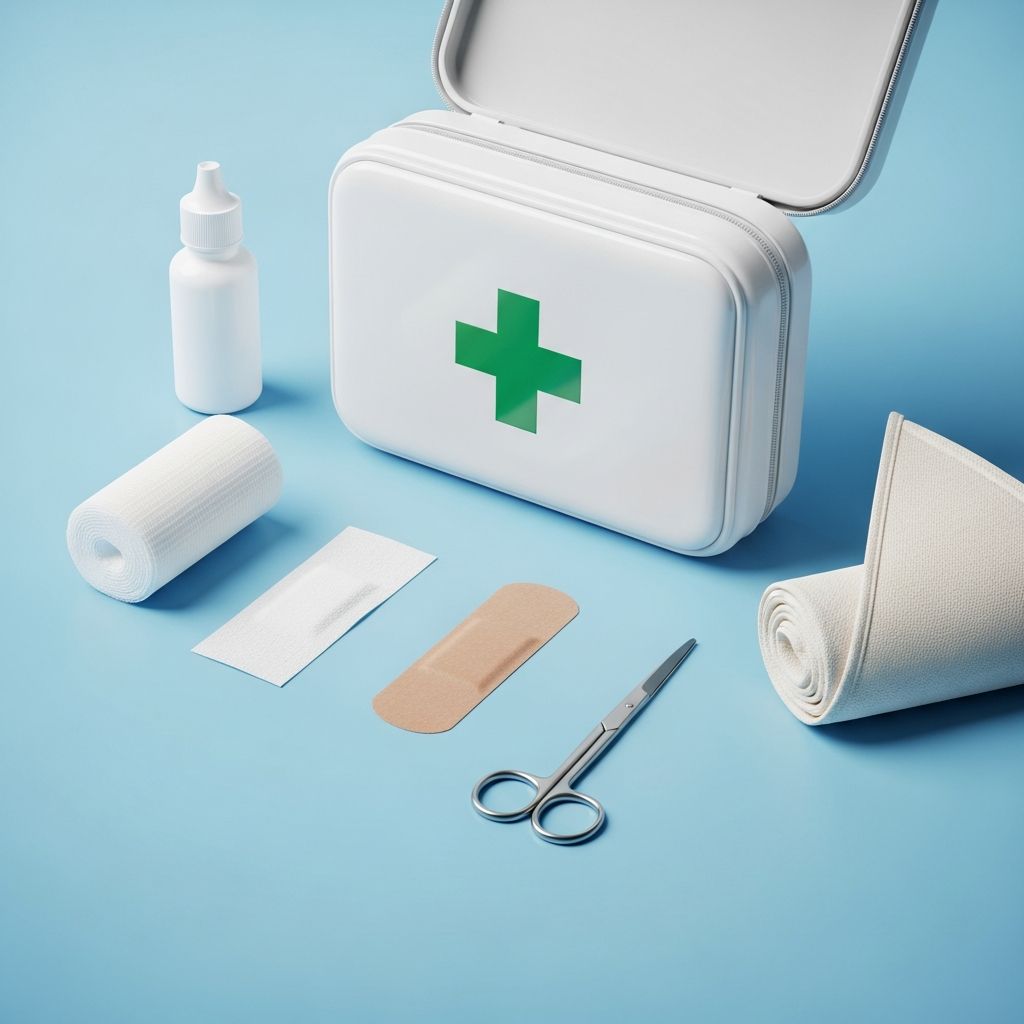
First aid involves immediate actions taken to preserve life, prevent worsening conditions, or promote recovery until medical professionals arrive. Equipping yourself with these skills can make a critical difference in emergencies ranging from minor injuries to life-threatening situations. This guide draws from established protocols to outline practical steps for common scenarios.
Assessing Emergencies Safely
Before intervening, evaluate the scene to protect yourself and others. Check for hazards like traffic, fire, or electrical risks. Ensure the area is safe prior to approaching the injured person.
- Scan surroundings for dangers to you, bystanders, and the victim.
- Avoid rushing in; secure the environment first.
- If safe, proceed to check the person’s responsiveness.
Use the shout-tap-shout method: loudly call out, tap the shoulder, and shout again to gauge response. Limit this check to 10 seconds. Note any medical alerts like bracelets indicating allergies or conditions.
Core Life Support Priorities: The ABC Framework
Traditional first aid emphasizes the ABCs: Airway, Breathing, Circulation. Open the airway by tilting the head back gently and lifting the chin. Check breathing by looking for chest rise, listening for sounds, and feeling for air.
If no breathing, provide rescue breaths: pinch nostrils, seal your mouth over theirs, and deliver two slow breaths. For circulation, if no pulse, seek trained CPR assistance immediately.
| Priority | Action | Key Check |
|---|---|---|
| Airway | Tilt head, lift chin | Clear passage for air |
| Breathing | Observe 5-10 seconds | Chest movement, sounds |
| Circulation | Check pulse | Heart rate present |
Activating Emergency Services
After initial assessment, call emergency numbers like 911 or 999 promptly. Provide clear details: your location, number of victims, their condition, and any hazards. If alone, perform checks and care first, then call.
Delegate tasks if others are present: one calls help, another fetches equipment like an AED if available.
Controlling Severe Bleeding
Bleeding poses immediate risk; act fast to staunch it. Apply firm pressure directly on the wound with a clean cloth or gloved hand. Elevate the limb if possible without causing further injury.
- Wear gloves or use a barrier.
- Press hard for several minutes.
- Add layers if blood soaks through; never remove the initial dressing.
- Bandage securely but not too tight to restrict circulation.
For penetrating objects, do not remove them; stabilize and seek help.
Addressing Choking Incidents
Choking blocks the airway, demanding quick action. For conscious adults, perform abdominal thrusts: stand behind, fist thumb-in above navel, grasp with other hand, and thrust upward sharply.
Deliver up to 5 back blows first: support chest, lean forward, strike between shoulder blades with heel of hand. Alternate sets of 5 back blows and 5 thrusts until object dislodges or victim becomes unresponsive.
For infants under 1 year, use back slaps and chest thrusts instead. If unresponsive, start CPR.
CPR and AED Fundamentals
Cardiopulmonary resuscitation restores blood flow when heart stops. If trained, perform chest compressions at 100-120 per minute, depth of 2-2.4 inches for adults.
- Position hands center-chest, elbows locked.
- Combine with rescue breaths if trained (30:2 ratio).
- Use AED if available: follow voice prompts to analyze rhythm and deliver shock if advised.
Continue until help arrives or victim responds. Certification from organizations like Red Cross ensures proper technique.
Managing Burns Effectively
Cool burns immediately with cool running water for 20-30 minutes to reduce tissue damage. Avoid ice, which worsens injury. Cover loosely with clean dressing; do not pop blisters.
For electrical burns, ensure power off before touching; prioritize airway and CPR. Seek medical evaluation for moderate/severe burns covering large areas.
Recognizing and Treating Shock
Shock impairs organ perfusion; signs include pale skin, rapid pulse, confusion. Lay victim flat, elevate legs 12 inches if no spinal injury, and insulate with blankets.
Monitor breathing; do not give food/drink. Reassure and call for ambulance.
Handling Fractures and Sprains
Immobilize suspected fractures with splints using rigid materials like boards or rolled towels. Support in natural position; apply ice wrapped in cloth for swelling.
For arms, use triangular bandage as sling: form ‘V’ shape, cradle arm, tie at neck. Do not realign bones; splint as found.
Drowning and Near-Drowning Response
Remove from water safely; check breathing. Give 5 rescue breaths if absent, then CPR. Place unconscious but breathing victims in recovery position: side-lying, head tilted back.
Monitor closely; call emergency services immediately.
First Aid for Heart Attack and Stroke
Heart attack symptoms: chest pain, shortness of breath. Help with prescribed nitroglycerin if available; position comfortably, loosen clothing.
Stroke: FAST test (Face drooping, Arm weakness, Speech difficulty, Time to call). Note onset time for treatment window.
Building Your First Aid Kit
A well-stocked kit is essential. Include gloves, bandages, antiseptic wipes, scissors, tweezers, CPR barrier, instant cold packs, and pain relievers.
| Item | Purpose | Quantity |
|---|---|---|
| Adhesive bandages | Minor cuts | 20+ |
| Gauze pads | Bleeding control | 5 packs |
| Triangular bandages | Slings/splints | 2 |
| Gloves | Infection prevention | 4 pairs |
Common First Aid Mistakes to Avoid
- Moving spinal injury victims unnecessarily.
- Giving unconscious people fluids.
- Removing embedded objects.
- Delaying emergency calls.
Training and Certification
Practice through certified courses boosts confidence. Programs cover updates like 2024 guidelines. Regular refreshers ensure current knowledge.
Frequently Asked Questions
What if I’m not certified in CPR?
Focus on calling help and compressions if trained minimally; hands-only CPR is effective.
How long to cool a burn?
At least 20 minutes with cool water.
Can I perform Heimlich on myself?
Yes, use fist against abdomen or chair back.
When to use recovery position?
For unconscious, breathing adults to prevent aspiration.
Is aspirin okay for heart attack?
Chewable aspirin if no allergies and advised by dispatcher.
References
- First Aid Steps | Perform First Aid – Red Cross — American Red Cross. 2024. https://www.redcross.org/take-a-class/first-aid/performing-first-aid/first-aid-steps
- First Aid Guide — Dalton State College. 2024-01. https://www.daltonstate.edu/wp-content/uploads/2024/01/band-aid-guide.pdf
- First aid – NHS — National Health Service. 2024. https://www.nhs.uk/tests-and-treatments/first-aid/
- First aid basics and DRSABCD — Better Health Channel, Victoria Government. 2024. https://www.betterhealth.vic.gov.au/health/conditions-and-treatments/first-aid-basics-and-drsabcd
- Basic First Aid Fact Sheet — Texas Department of Insurance. 2024. https://www.tdi.texas.gov/pubs/videoresource/essifirstaid.pdf

- Integrated M.A. in Applied Linguistics, University of Hyderabad
- 5+ years in editorial, instructional, SEO, and research-based writing
Sneha is a relationships and lifestyle writer with a strong foundation in applied linguistics and certified training in relationship coaching. She brings over five years of writing experience to theskillvault, crafting thoughtful, research-driven content that empowers readers to build healthier relationships, boost emotional well-being, and embrace holistic living. Her writing and insights reflect the belief that beauty, happiness, and wellness…