
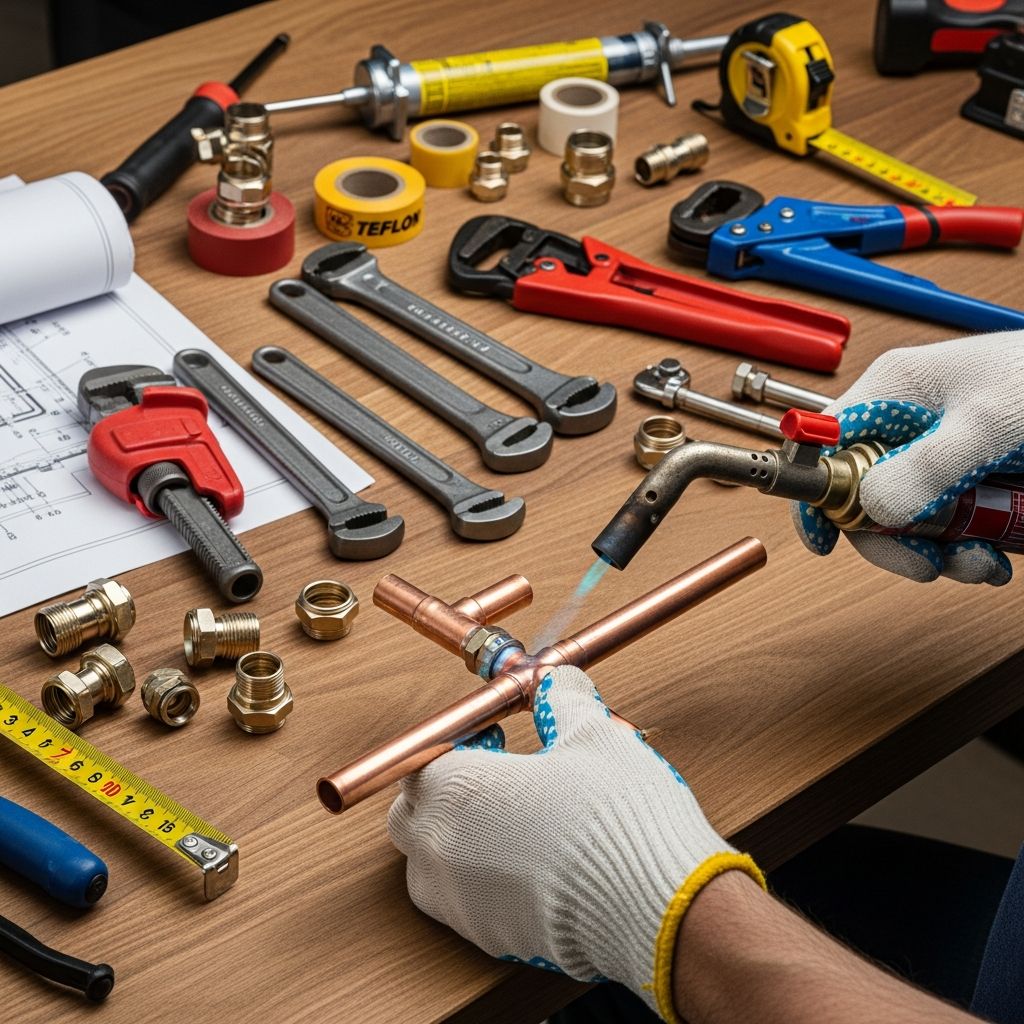
Plumbing stands as a cornerstone of modern infrastructure, demanding a blend of technical precision, physical endurance, and sharp problem-solving. Professionals in this field ensure safe water supply, efficient drainage, and reliable sanitation systems in homes, businesses, and public facilities. Success requires not just manual dexterity but also a deep understanding of evolving codes, materials, and sustainable practices. This guide delves into the foundational and advanced abilities essential for plumbers, outlining pathways to acquire them through education, hands-on experience, and continuous learning.
Core Technical Abilities for Plumbers
At the heart of plumbing expertise lie hands-on technical skills that enable technicians to diagnose, install, and repair systems effectively. These competencies form the bedrock of daily operations, from unclogging drains to designing complex piping networks.
- Pipe Installation and Fabrication: Plumbers must expertly cut, thread, solder, and join pipes using materials like copper, PVC, PEX, and cast iron. Precision here prevents leaks and ensures longevity.
- Fixture and Appliance Integration: Installing sinks, toilets, water heaters, and irrigation systems involves aligning components with structural elements while maintaining proper flow rates and pressure.
- Drainage and Venting Systems: Knowledge of gravity-fed drains, sewer lines, and venting prevents backups and complies with health standards.
Mastery of these skills comes from repetitive practice, where aspiring plumbers learn to select fittings, calculate pipe grades, and test for pressure integrity. For instance, understanding isometric drawings aids in visualizing three-dimensional layouts during retrofits.
Reading Blueprints and Navigating Codes
Plumbers interpret architectural plans and schematics to integrate plumbing within building designs. This ability ensures systems align with electrical, HVAC, and structural components without conflicts.
Key elements include:
- Identifying symbols for pipes, valves, and fixtures on floor plans.
- Calculating pipe runs and elevations for optimal drainage.
- Scaling measurements accurately from drawings.
Equally critical is adherence to plumbing codes, which vary by jurisdiction but emphasize safety, water efficiency, and seismic resilience. Local, state, and national standards—such as those from the International Plumbing Code—dictate minimum pipe sizes, venting distances, and backflow prevention. Non-compliance risks fines, rework, or hazards like contamination. Professionals stay updated via continuing education, as codes evolve with green building mandates.
Diagnostic and Problem-Solving Expertise
Plumbing issues often manifest subtly, requiring systematic troubleshooting. Top plumbers use tools like video cameras, pressure gauges, and smoke testers to pinpoint blockages, leaks, or pressure drops.
A structured approach includes:
| Step | Description | Tools/Techniques |
|---|---|---|
| 1. Assessment | Gather customer history and observe symptoms | Questionnaires, visual inspection |
| 2. Isolation | Test sections to narrow down the fault | Shut-off valves, flow meters |
| 3. Verification | Confirm fix with pressure tests | Manometers, leak detectors |
| 4. Documentation | Record findings for warranties | Digital logs, photos |
This methodical mindset minimizes downtime and builds client trust.
Physical Fitness and Safety Proficiency
The trade’s physical demands—crawling in tight spaces, lifting heavy fixtures, and enduring varied weather—necessitate robust health. Plumbers maintain flexibility through stretching routines and core strengthening.
Safety protocols are non-negotiable:
- Lockout/tagout for electrical hazards near water systems.
- PPE including gloves, goggles, and respirators for chemicals.
- Fall protection on roofs and ladders.
Training emphasizes hazard recognition, such as gas line risks or confined space entry, reducing injury rates significantly.
Customer Interaction and Business Acumen
Beyond technical prowess, plumbers excel through clear communication and reliability. Explaining issues in lay terms, quoting transparently, and delivering on time foster repeat business.
Business skills encompass:
- Estimating material costs and labor hours accurately.
- Managing inventories and scheduling efficiently.
- Leveraging software for invoicing and CRM.
In a service-driven field, empathy and professionalism differentiate masters from novices.
Pathways to Acquire Plumbing Mastery
Building these skills follows a proven progression, blending classroom theory with real-world application.
Foundational Education
A high school diploma or GED provides basics in math, physics, and drafting—crucial for calculations like pipe volume (\(V = \pi r^2 h\)) and blueprint scaling.
Short certificate programs (12-52 weeks) at trade schools introduce tools, materials, and safety, accelerating entry into apprenticeships.
Apprenticeship Programs
The gold standard: 4-5 years combining 2,000 annual on-the-job hours with 144 classroom hours. Apprentices earn while learning under mentors, covering codes, fabrication, and installations. Requirements include aptitude tests, driver’s licenses, and physical capability.
Licensing and Certification
Post-apprenticeship, pass state exams on codes and practices (2-5 years experience needed). Additional certifications in green plumbing or backflow prevention boost employability. Bodies like NCCER offer standardized credentials aligning with DOL standards.
Advanced Specializations and Career Growth
Seasoned plumbers pursue niches like medical gas systems, stormwater management, or smart home integrations. Water conservation training, via groups like GreenPlumbers USA, addresses sustainability.
Career ladders lead to foreman, inspector, or contractor roles, with median wages exceeding $60,000 annually and strong job growth projected.
Frequently Asked Questions (FAQs)
How long does it take to become a licensed plumber?
Typically 4-5 years via apprenticeship, plus exam prep. Some states require 2 years minimum experience.
Do I need a college degree for plumbing?
No, a high school diploma suffices; trade programs and apprenticeships provide the rest.
What math skills are essential?
Algebra, geometry for measurements, and trade math for sizing and pressure calculations.
Is plumbing physically demanding?
Yes, involving lifting, bending, and tool use; fitness and safety training mitigate risks.
Can women succeed in plumbing?
Absolutely; the field welcomes diverse talent with equal opportunities.
Tools of the Trade: A Quick Reference
| Category | Essential Tools | Primary Use |
|---|---|---|
| Hand Tools | Pipe wrench, hacksaw, torch | Cutting, gripping, soldering |
| Power Tools | Pipe threader, reciprocating saw | Threading, demolition |
| Diagnostic | Snake auger, camera scope | Clearing clogs, inspections |
Investing in quality gear enhances efficiency and safety.
Plumbing mastery demands dedication, but yields a stable, impactful career. Start with education, embrace apprenticeships, and commit to lifelong learning for enduring success.
References
- How to Train For A Career As A Plumber — National Technical Institute. 2023. https://www.ntitraining.com/train-for-a-career-as-a-plumber/
- Plumber Training and Certification — Roto-Rooter. 2023. https://www.rotorooter.com/careers/plumber-training/
- Plumbing Apprenticeship — Wisconsin Technical College System. 2025. https://www.wtcsystem.edu/programs/find-your-program/plumbing/
- A Complete Guide to Plumbing Skills — Indeed.com. 2024. https://www.indeed.com/career-advice/resumes-cover-letters/plumbing-skills
- How To Become A Plumber — Explore The Trades. 2024. https://explorethetrades.org/what-we-do/education/plumbing/how-to-become-a-plumber/
- Essential Plumbing Skills: What Every Technician Needs to Know — ServiceTitan. 2024. https://www.servicetitan.com/blog/plumbing-skills
- Plumbing Curriculum — NCCER. 2025. https://www.nccer.org/craft-catalog/plumbing/

- Integrated M.A. in Applied Linguistics, University of Hyderabad
- 5+ years in editorial, instructional, SEO, and research-based writing
Sneha is a relationships and lifestyle writer with a strong foundation in applied linguistics and certified training in relationship coaching. She brings over five years of writing experience to theskillvault, crafting thoughtful, research-driven content that empowers readers to build healthier relationships, boost emotional well-being, and embrace holistic living. Her writing and insights reflect the belief that beauty, happiness, and wellness…