
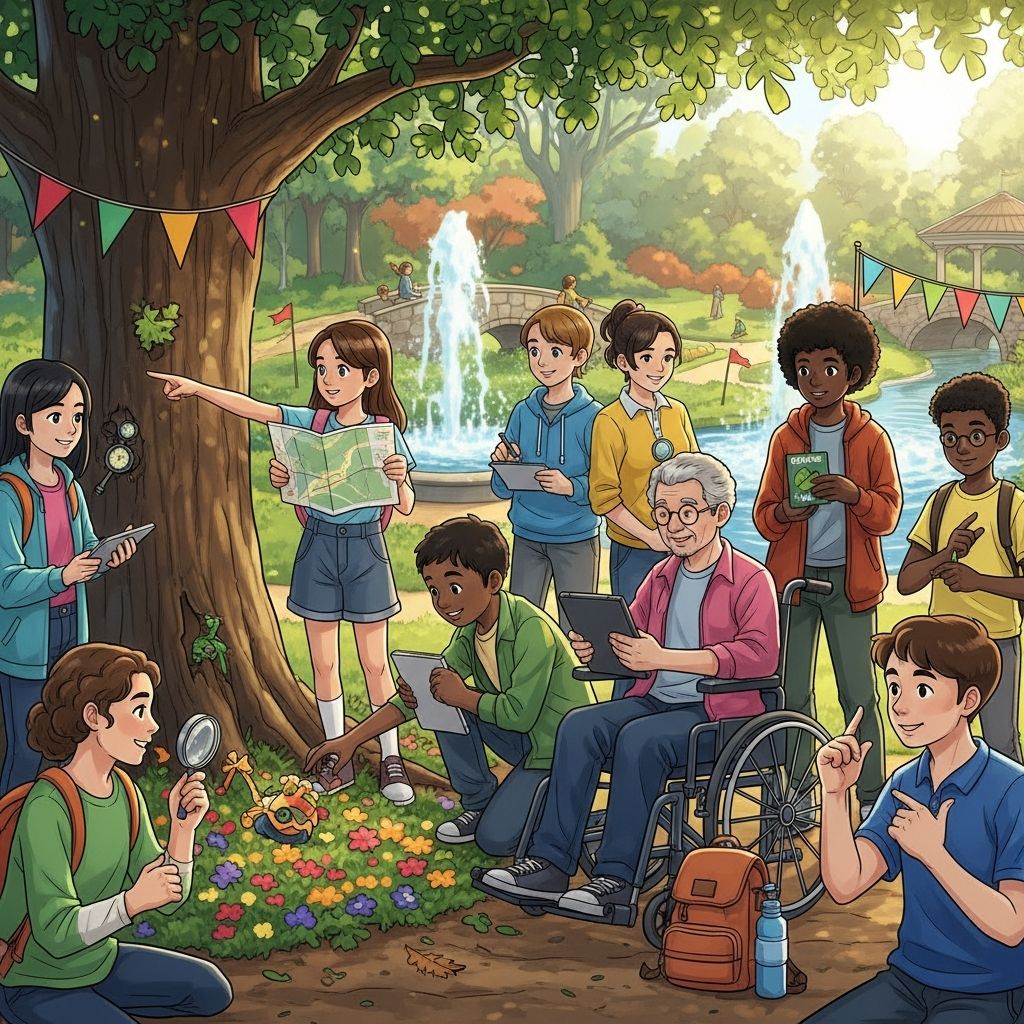
Beyond the Basic Hunt: Reimagining Treasure Searches for Modern Classrooms
Scavenger hunts have long been a staple of educational practice, yet their potential extends far beyond simple item-finding exercises. In contemporary classrooms, where student diversity—including learning differences, language backgrounds, and physical abilities—demands thoughtful instructional design, scavenger hunts can serve as powerful vehicles for engagement, collaboration, and skill development. Rather than viewing them as recreational filler activities, educators increasingly recognize that well-designed hunts can integrate content mastery, critical thinking, and inclusive pedagogy into a single, energizing experience.
The Foundation: Understanding What Makes Hunts Effective
At their core, scavenger hunts work because they combine movement, problem-solving, and discovery—elements that align with contemporary learning theory. When students physically search for information or solutions, they engage multiple sensory pathways and create stronger memory associations than passive consumption alone. The competitive or time-bound element adds motivational energy, while the hunt format itself reduces the perception of difficulty, making challenging material feel more approachable and fun.
The structure of a scavenger hunt typically involves providing students with clues or questions that lead them to answers, objects, or locations. This iterative process—solve, find, move, repeat—maintains cognitive engagement while preventing boredom. However, the magic lies in how educators design and adapt this basic framework to serve their specific instructional goals and their students’ varied needs.
Versatile Hunt Formats for Different Learning Objectives
Not all scavenger hunts serve the same purpose, and having a repertoire of formats allows educators to match the hunt type to their learning goals and student population.
Answer-Matching Expeditions
In this format, each station or card presents a problem or question, and students must locate the corresponding answer elsewhere in the learning space. Once they find the correct answer, it either serves as verification that they can move forward, or the answer itself becomes the next clue. This format excels for content review, skill reinforcement, and quick assessments because students move through problems in rapid succession, and immediate feedback (finding the match or not) is built into the activity.
This approach works particularly well for mathematics, vocabulary building, and factual recall. The spatial component—having to physically locate answers—transforms what might otherwise be a rote worksheet into an active, memorable experience.
Riddle-Based Journeys
Rather than solving a problem to find the next clue, students receive cryptic clues or riddles that require inference, logical reasoning, and reading comprehension to decipher the next location or solution. This format introduces an additional cognitive layer that develops critical thinking and makes the hunt feel more like genuine detective work.
Riddle-based hunts are particularly effective for science units (studying habitats, ecosystems, or natural phenomena), social studies (geography, history, cultural studies), and advanced mathematics. Students must engage both analytical skills and creative interpretation to progress, which deepens their engagement with content.
Visual and Categorical Matching
This format pairs images, photographs, or text passages with categories, labels, or descriptive information that students must match correctly. Rather than solving mathematical or language-based problems, students rely on visual literacy, classification skills, and content knowledge to make accurate connections.
Visual matching hunts excel in science and social studies contexts. For example, students might match ecosystem descriptions to habitat types, or match historical images to time periods and events. For English language learners and students with literacy challenges, this format provides entry points that don’t depend entirely on reading ability.
Peer-Created Challenges
When students design scavenger hunts for their classmates, the activity shifts from consumer to creator, triggering higher-order thinking. Students must determine what information is important, create clear clues, anticipate logical progression, and consider how their peers might approach the hunt. This format works well as an enrichment activity for early finishers, a formative assessment tool, or a culminating project that consolidates learning.
Seated and Station-Based Variants
Mobility-based hunts aren’t always feasible or desirable. Seated hunts, where cards are distributed across desks and students move between them in a controlled manner (sometimes called “scooting”), preserve the kinesthetic and collaborative elements while reducing movement demands. Similarly, station-based hunts—where each station represents a themed space (e.g., “Fractions Station” or “Ecosystem Base”)—combine the hunt format with rotation-based learning, allowing for multi-subject integration or project-based learning approaches.
Accessibility and Inclusion: Designing for Every Learner
A common pitfall in scavenger hunt design is inadvertently excluding students through overly text-dense clues, reading levels that exceed student capability, or physical movement demands that don’t align with all students’ bodies and abilities. Inclusion requires intentional design choices made from the outset.
Multimodal Clue Presentation
Rather than relying solely on written text, effective hunts incorporate multiple modes of information delivery. Offering picture clues, symbols, audio clips, or color-coding systems means that students with varying literacy levels, English language learners, and students with visual processing differences can access clues independently. This approach also reduces anxiety, as students aren’t forced to decode text when they might recognize an image or interpret a symbol.
Collaborative Structure
Pairing or grouping students strategically allows peers to support one another, combining different strengths and compensating for individual challenges. A student who excels at reading can pair with a student who is strong at spatial reasoning or physical tasks. This structure also builds social skills and interdependence rather than placing all cognitive demands on individual shoulders.
Varied Difficulty Levels
Mixing easier and more challenging clues throughout a hunt prevents discouragement and builds momentum. Students who encounter an easier clue early gain confidence, which motivates continued engagement. Strategically placing harder clues after confidence-building moments also ensures that difficulty escalation feels manageable rather than overwhelming.
Movement Accommodation
For students with mobility limitations or sensory sensitivities, bringing clues to them or allowing them to direct a partner ensures full participation. This approach honors their needs while keeping them integral to the activity rather than relegating them to sideline status. The participation structure shifts from independent movement to collaborative direction-giving, which actually enhances their cognitive engagement.
Support Systems
Implementing a “hint board” or support station where students can access additional help—provided they complete a prerequisite task first—allows differentiated support without creating dependency. This gamifies the help-seeking process and maintains engagement while scaffolding learning.
Integrating Technology Thoughtfully
Technology needn’t be elaborate or resource-intensive to enhance scavenger hunts. Strategic digital integration can increase engagement, provide multimedia learning pathways, and reduce preparation time for educators.
Digital Clue Delivery
QR codes linking to short videos, audio files, or digital content create multimedia clues that engage different learning modalities. Rather than reading a text clue, students scan a code and watch a brief video that provides information or poses the next challenge. This approach particularly benefits visual and auditory learners.
Response Documentation
Using digital forms—such as Google Forms—to collect answers streamlines data collection and provides immediate feedback. Students can photograph their findings and submit proof of discovery, creating a digital portfolio of their hunt completion. This also allows for easier differentiation and tracking of individual progress.
Minimal Technology Deployment
Educators don’t need a full class set of devices to leverage technology. Even a single shared device, a few tablets, or coordinated smartphone use can bring digital elements into hunts without requiring significant technological infrastructure.
Designing Hunts for Different Grade Levels and Contexts
While the foundational hunt structure remains consistent, age-appropriate adaptations ensure that complexity and content alignment match student development.
Early Elementary Foundations
Hunts for younger students typically feature simpler clues, shorter distances, and concrete rather than abstract puzzles. Visual and symbolic clues replace dense text. Hunts might focus on classroom orientation, basic vocabulary, or simple problem-solving.
Upper Elementary and Middle Grades
Students at this level can manage more complex riddles, longer sequences, and abstract reasoning. Hunts can integrate subject-specific content—reviewing math concepts, exploring scientific principles, or reinforcing historical facts—with greater sophistication.
High School Adaptation
Secondary scavenger hunts can serve as orientation activities (helping students navigate campus or library resources), as content review tools in advanced courses, or as team-building challenges. Planning exercises—where students map out classroom locations and design logical hunt sequences—also develop spatial reasoning and organizational skills.
Cognitive and Physical Benefits of Hunt-Based Learning
Beyond immediate engagement, scavenger hunts develop capacities that extend far beyond the activity itself. The hunt format promotes observation skills, encouraging students to look carefully and notice details they might otherwise overlook. The process of searching, decoding clues, and locating answers strengthens memory encoding and retrieval. When hunts incorporate movement, they address physical activity needs and provide kinesthetic learning pathways.
Additionally, hunts that involve problem-solving, interpretation, and decision-making build resilience and challenge-handling skills, as students encounter difficulties, seek solutions, and persist toward completion.
Practical Preparation Strategies
Successful hunts require adequate planning. Educators should map classroom or learning space locations, determine the number and sequence of clues, and pilot-test the hunt themselves to identify timing issues, unclear instructions, or logistical problems. Creating printable templates or digital guides streamlines ongoing use and allows quick adaptation for different content or student groups.
Frequently Asked Questions
Q: How long should a typical scavenger hunt last?
A: Duration depends on grade level, hunt complexity, and learning objectives. Early elementary hunts might span 15-20 minutes, while upper elementary and secondary hunts can extend 30-45 minutes. The key is maintaining engagement throughout without creating fatigue or excessive downtime.
Q: Can scavenger hunts work in virtual or hybrid learning environments?
A: Absolutely. Virtual hunts can direct students to find items in their home environment, access digital resources online, or complete tasks within a learning management system. Hybrid approaches might combine classroom-based and at-home components.
Q: How do I manage behavior during hunts?
A: Clear expectations established before beginning—regarding noise levels, movement boundaries, and collaboration norms—set the foundation. Pairing students, using timers, and monitoring progress help maintain focus and appropriate behavior.
Q: What if some students finish significantly earlier than others?
A: Plan extension activities such as creating a follow-up hunt, solving bonus puzzles, or reflecting on their problem-solving process. Alternatively, structure hunts so that students begin at different stations, staggering completion times.
Q: How do I assess learning through a scavenger hunt?
A: Observe problem-solving approaches, review accuracy of answers submitted, and monitor participation. Use the hunt as a formative assessment tool, gathering data about which concepts students understand and which require reteaching.
Q: Can scavenger hunts accommodate students who are absent?
A: Yes. Record video versions of hunts, create at-home versions, or allow students to complete hunts during makeup sessions with peer or teacher support. Digital variants also provide asynchronous completion options.
References
- How to Create a Scavenger Hunt That Excites All Students — TeachHub. 2025-08. https://www.teachhub.com/classroom-activities/2025/08/how-to-create-a-scavenger-hunt-that-excites-all-students/
- 10 Scavenger Hunt Ideas That Actually Teaches Something — The Owl Teacher. https://theowlteacher.com/classroom-scavenger-hunt-ideas-upper-elementary/
- How to Create the Perfect High School Scavenger Hunt — Its Lit Teaching. https://itslitteaching.com/high-school-scavenger-hunt/
- Scavenger Hunt STEM: Hands-On Learning on the Move — Pitsco. https://www.pitsco.com/blogs/news/scavenger-hunts-on-the-move
- Internet Scavenger Hunts — Education World. https://www.educationworld.com/a_lesson/archives/scavenger_hunt.shtml

- Integrated M.A. in Applied Linguistics, University of Hyderabad
- 5+ years in editorial, instructional, SEO, and research-based writing
Sneha is a relationships and lifestyle writer with a strong foundation in applied linguistics and certified training in relationship coaching. She brings over five years of writing experience to theskillvault, crafting thoughtful, research-driven content that empowers readers to build healthier relationships, boost emotional well-being, and embrace holistic living. Her writing and insights reflect the belief that beauty, happiness, and wellness…