
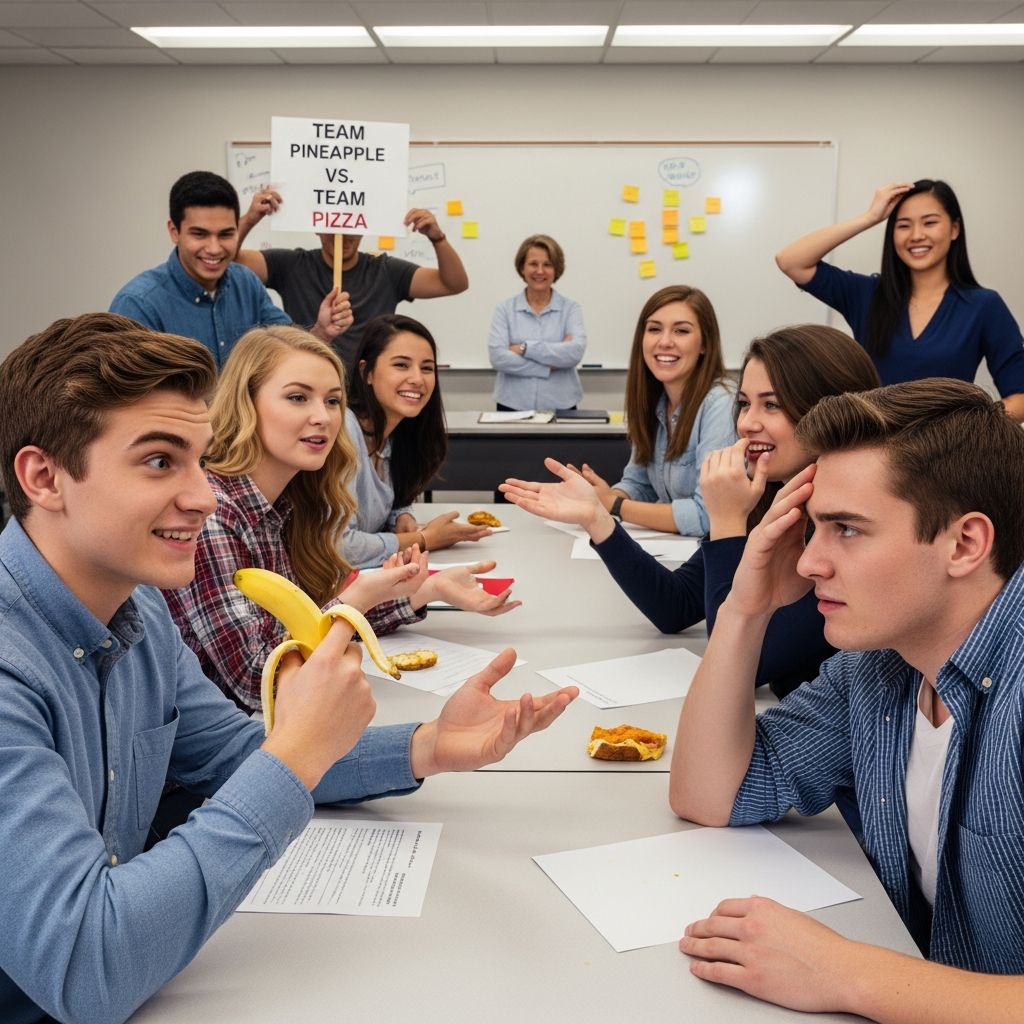
Debates in the classroom don’t have to be serious or stuffy. Introducing humorous questions can transform learning into an entertaining experience, helping students hone essential skills like argumentation, listening, and quick thinking while keeping everyone giggling. These topics are grouped by grade level to match developmental stages, ensuring accessibility and maximum engagement.
Why Funny Debates Work Wonders in Class
Lighthearted debates lower the pressure, encouraging even shy students to participate. They promote creativity, as kids invent wild reasons to defend absurd positions, and teach respect for differing views in a non-confrontational way. Research from educational bodies highlights how such activities enhance rhetorical skills and classroom camaraderie.
- Builds confidence without high stakes.
- Fosters imaginative reasoning.
- Makes abstract concepts relatable through humor.
Elementary School Laugh Riots: Simple and Visual Topics
For younger learners, focus on tangible, everyday scenarios they can picture easily. These prompts spark joy and basic debate practice without overwhelming complexity.
Food Fiascos
- Is a taco basically a sandwich in disguise?
- Pineapple on pizza: genius or culinary crime?
- Chocolate ice cream beats vanilla every time—fight me.
- Should cereal be considered a soup?
- Macaroni and cheese demands a fork, not a spoon.
Animal Antics
- Cats would rule the planet better than dogs.
- Would a pet unicorn outshine a pet dinosaur?
- Penguins make superior mascots over eagles.
- If animals talked, squirrels would be the gossip kings.
Daily Life Debacles
- Making beds daily: total waste or morning win?
- Too hot is preferable to too cold—prove it wrong.
- Summer crushes winter for vacation supremacy.
- Should kids pick their own outfits for school?
- Playgrounds need slides taller than swings.
These topics let elementary students draw from personal experiences, turning debates into storytelling sessions filled with laughter.
Middle School Mayhem: Pop Culture and Everyday Absurdities
Middle schoolers crave relevance, so weave in trends, school gripes, and quirky hypotheticals. This level introduces mild controversy to sharpen persuasive skills.
School Shenanigans
- Homework should vanish on Fridays forever.
- School starts too early—push it back an hour.
- Group projects: teamwork triumph or torture?
- Uniforms optional would skyrocket creativity.
- Nap time belongs in every middle school schedule.
Pop Culture Clashes
- Superhero movies top regular action flicks.
- Video games count as legit sports now.
- Memes are modern art forms.
- Cartoon reboots ruin the originals.
- Influencers deserve real celebrity status?
Silly Social Scenarios
- Socks with sandals: fashion forward or fail?
- Monday merits a national holiday skip.
- Clowns terrify more than they amuse.
- Birthdays off from school—non-negotiable.
- Number 13 brings bad luck, full stop.
Encourage middle schoolers to poll classmates pre-debate for real data, adding an interactive twist.
High School Hilarity: Philosophical Twists and Bold Takes
Teens tackle deeper absurdities, blending logic with laughs. These provoke thoughtful banter on classics and current quirks.
Philosophical Fun
| Topic | Affirmative Angle | Negative Angle |
|---|---|---|
| Water is inherently wet. | It soaks everything it touches. | Wetness is a sensation, not a property. |
| Chicken or egg came first? | Egg laid by proto-bird. | Chicken hatched ready to reproduce. |
| Pluto deserves planet status. | Historical precedence matters. | Dwarf classification fits scientifically. |
| Aliens secretly walk among us. | Math of universe demands it. | No hard evidence yet. |
Lifestyle Lunacy
- Humans eat to live, not live to eat—agree?
- Santa’s elves demand fair wages.
- Social media does more harm than hype.
- Coffee trumps all energy drinks.
- Remote learning beats traditional classrooms.
Future Funnies
- Time travel: past or future first?
- Robots will never replace teachers.
- Electric cars end the gas guzzler era.
- Virtual reality vacations suffice.
High school debates shine with rebuttals; assign prep time for evidence gathering from news or science sites.
Pro Tips for Running Epic Classroom Debates
To maximize fun and learning:
- Set clear rules: Two-minute speeches, no interruptions.
- Team up: Pairs or small groups for support.
- Vote creatively: Loudest cheers or funniest prop wins.
- Rotate roles: Speaker, timekeeper, judge.
- Debrief: What made arguments strongest?
Adapt topics to current events, like debating viral challenges, for timeliness.
Common Pitfalls and How to Dodge Them
Avoid debates fizzling by picking universally divisive topics. Steer clear of sensitive issues; stick to silliness. Time strictly to prevent dominance by talkers.
Frequently Asked Questions
What makes a topic perfect for young debaters?
Opt for visual, personal ones like food preferences or pet rivalries—easy to argue without research.
Can these work for virtual classes?
Absolutely; use breakout rooms for teams and polls for voting to keep energy high online.
How many topics per session?
Two to three per class—enough variety without overload.
Do debates improve grades?
Indirectly yes; they boost communication, cited in educational standards from bodies like the National Council of Teachers of English.
Ideas for non-competitive twists?
Make it a ‘build the silliest case’ challenge with group applause as the score.
These topics have entertained countless classrooms, proving humor unlocks learning potential. Dive in and watch arguments—and laughs—fly.
References
- Standards for the English Language Arts — National Council of Teachers of English / International Reading Association. 1996-01-01. https://ncte.org/standards/
- Debate and Critical Thinking in Education — U.S. Department of Education. 2023-09-15. https://www.ed.gov/
- Public Speaking Curriculum Guidelines — National Speech & Debate Association. 2025-01-10. https://www.speechanddebate.org/education/
- Benefits of Extracurricular Debate — American Educational Research Association. 2024-06-20. https://www.aera.net/
- Classroom Engagement Strategies — Institute of Education Sciences. 2024-03-05. https://ies.ed.gov/

- Integrated M.A. in Applied Linguistics, University of Hyderabad
- 5+ years in editorial, instructional, SEO, and research-based writing
Sneha is a relationships and lifestyle writer with a strong foundation in applied linguistics and certified training in relationship coaching. She brings over five years of writing experience to theskillvault, crafting thoughtful, research-driven content that empowers readers to build healthier relationships, boost emotional well-being, and embrace holistic living. Her writing and insights reflect the belief that beauty, happiness, and wellness…