
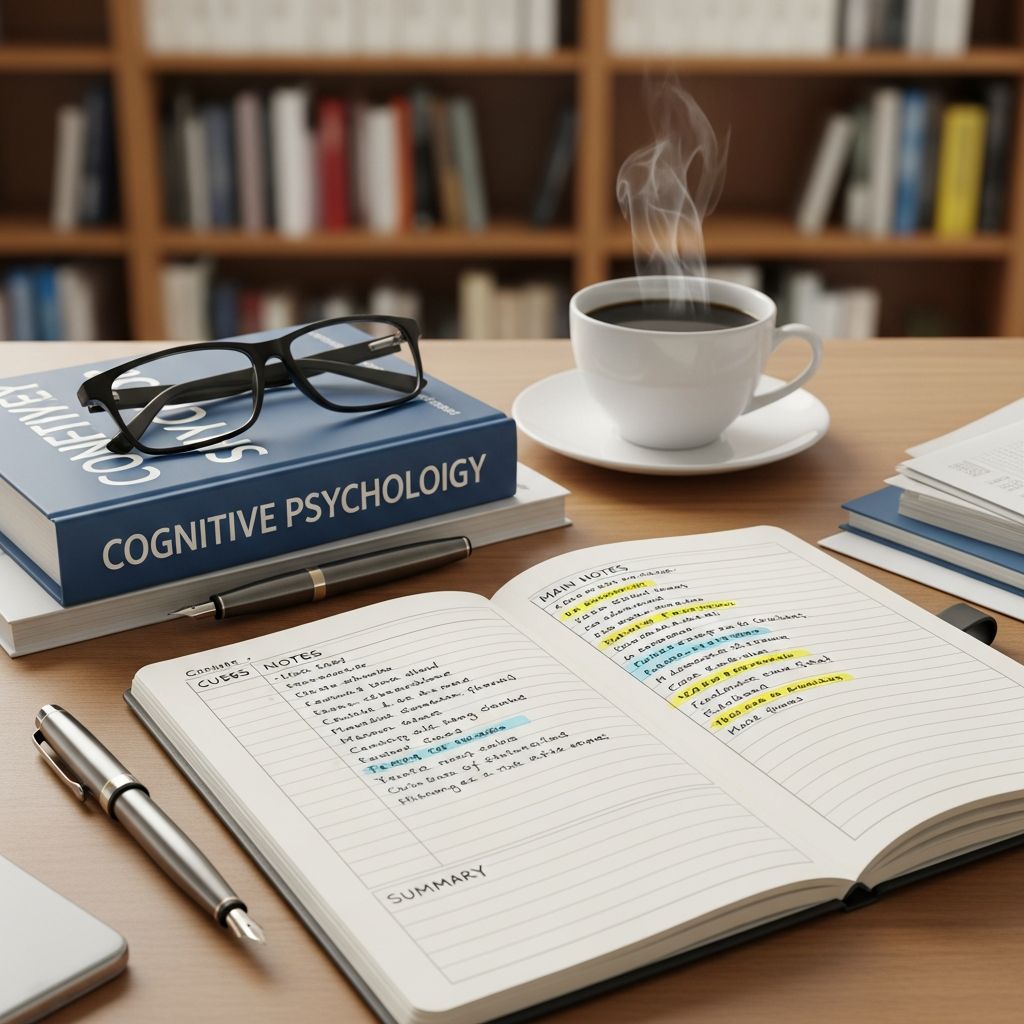
The Cornell Notes system stands as a cornerstone of effective study practices, developed decades ago yet enduring in classrooms and professional settings worldwide. This method transforms chaotic scribbles into organized knowledge repositories, fostering deeper understanding and long-term retention. By dividing notes into distinct zones, it encourages active engagement rather than passive transcription.
Origins and Enduring Relevance of Cornell Notes
Originating in the 1950s at Cornell University, this technique was pioneered by Walter Pauk, a professor who detailed it in his influential book How to Study in College. Pauk recognized that traditional linear note-taking often led to information overload without easy retrieval. His solution: a page layout promoting synthesis and review. Today, despite digital tools, handwritten Cornell Notes remain superior for comprehension, as research underscores the cognitive benefits of pen-to-paper processing.
Its timeless appeal lies in simplicity and adaptability. Students use it for lectures, readings, and meetings; professionals apply it for workshops and brainstorming. A Wichita State University study found users experienced a 17% average grade increase, alongside stronger critical thinking skills.
Setting Up Your Cornell Notes Template
Begin with a standard sheet of paper or digital equivalent. Draw a vertical line 2.5 inches from the left margin, creating a slim cue column (30% of width) and a wider notes section (70%). At the bottom, draw a horizontal line 2 inches from the edge for the summary box.
| Section | Purpose | Width/Placement |
|---|---|---|
| Cue Column | Questions, keywords, prompts | Left, 2-2.5 inches wide |
| Notes Area | Main content, details | Right, remaining space |
| Summary | Key takeaways in 3-5 sentences | Bottom, 2 inches high |
This structure ensures notes are scannable and interactive. For digital use, apps like Notion or GoodNotes replicate it seamlessly.
Step-by-Step Guide: Capturing Information Effectively
The process follows a mnemonic: Record, Reduce, Recite, Reflect, Review—ensuring notes evolve from raw data to mastered knowledge.
1. Record: Capture During Input
In the main notes area, jot key points, facts, and examples using bullet points or phrases. Abbreviate ruthlessly; focus on essence over verbatim quotes. During lectures, prioritize concepts over filler.
- Use hierarchical bullets: main ideas bolded, subpoints indented.
- Incorporate diagrams or shorthand for speed.
- Leave cue column blank initially.
2. Reduce: Craft Cues Post-Session
Within 24 hours, scan notes and generate 4-6 questions or keywords per page in the cue column. These act as memory triggers: “What? Why? How?” Transform statements into interrogatives for active recall.
Example: Notes say “Photosynthesis: light energy to glucose.” Cue: “Key stages of photosynthesis?”
3. Recite: Test Yourself Actively
Cover the notes section, using cues to verbally or mentally recite content. This reinforces neural pathways, outperforming passive re-reading. Repeat until 80% accuracy.
4. Reflect: Synthesize Insights
In the summary, distill the page into 2-4 sentences capturing core themes. Ask: What links exist? How does this fit broader knowledge?
5. Review: Schedule Regular Reinforcement
Weekly, revisit cues for spaced repetition. This combats forgetting curves, embedding info long-term.
Real-World Examples Across Disciplines
History Lecture: Notes detail WWII events; cues ask “Causes of Pearl Harbor?” Summary: “Axis aggression escalated U.S. entry.”
Math Class: Notes outline quadratic formula derivations; cues: “When to use completing square?” Summary links to real-world modeling.
Business Meeting: Notes log decisions; left column flags actions: “Who owns Q3 report?” Summary highlights risks.
These adaptations show versatility, from academia to workplaces.
Key Benefits Backed by Evidence
- Organization: Logical layout aids retrieval, reducing search time.
- Retention Boost: Cues enable self-quizzing; studies confirm superior recall.
- Critical Thinking: Questioning and summarizing build analysis skills.
- Efficiency: Cuts clutter, prevents cramming.
- Stress Reduction: Structured process calms study anxiety.
Peer-reviewed analysis notes organized headings enhance retention over linear methods.
Potential Drawbacks and Smart Solutions
Not flawless: Fast-paced lectures may overwhelm the notes area; rigid structure suits structured content best. Solutions:
- Pre-draw templates for speed.
- Hybridize with mind maps for visual topics.
- Practice to internalize layout.
For digital natives, apps mitigate handwriting limits while preserving benefits.
Advanced Techniques for Power Users
- Color Coding: Highlight cues by theme (e.g., red for definitions).
- Layered Summaries: Multi-page topics get running overviews.
- Integration with Anki: Export cues to flashcards.
- Group Study: Exchange pages for peer quizzing.
Instructors report heightened engagement when assigning Cornell formats.
Frequently Asked Questions (FAQs)
What is the Cornell Notes method best for?
It’s ideal for lectures, textbooks, and meetings where distilling key info matters. Less suited for highly visual or artistic content.
How long to complete a page?
Recording: 45-60 min lecture. Reducing/summarizing: 10-15 min post-session.
Digital vs. Paper?
Paper aids memory via handwriting; digital offers searchability.
Can it raise grades?
Yes—Wichita State study: 17% average increase.
Who invented it?
Walter Pauk at Cornell University in the 1950s.
Implementing Cornell Notes in Your Routine
Start small: One class per week. Track progress via quizzes. Over time, it rewires study habits for efficiency. Combine with Pomodoro for sessions under 25 minutes. Professionals: Use for PDAs or project tracking.
Empirical data affirms: Active methods like this outperform passive ones, aligning with Bloom’s higher-order thinking.
Embrace Cornell Notes to elevate learning from rote to mastery. Its structured genius endures because it mirrors how brains best process information: capture, question, synthesize, test.
References
- The Cornell method – Note-taking: a Practical Guide — University of York. 2023. https://subjectguides.york.ac.uk/note-taking/cornell
- A Simple, Effective Note-Taking Technique — The Cornell Method — California Coast University. 2022-10-15. https://www.calcoast.edu/news/simple-effective-note-taking-technique-the-cornell-method
- An introduction to the Cornell Note system — Sage Journals. 2022-12-01. https://journals.sagepub.com/doi/full/10.1177/01455613221146457
- The Cornell Notes System: Five Words That Lead to Powerful Results — Evernote Blog. 2023. https://evernote.com/blog/cornell-notes-powerful-results
- Why the Cornell Note-Taking Method Still Works — Cultivated Management. 2024-01-20. https://www.cultivatedmanagement.com/the-cornell-note-taking-method/
- Using the Cornell Note Taking Method for Instruction — International Institute for Advanced Studies in Systems Research and Cybernetics. 2024. https://www.iiisci.org/journal/PDV/sci/pdfs/EA227CQ24.pdf
- How Using Cornell Notes Can Increase Grades — EC Tutoring. 2023. https://ectutoring.com/cornell-notes-increase-grades

Medha Deb is an editor with a master's degree in Applied Linguistics from the University of Hyderabad. She believes that her qualification has helped her develop a deep understanding of language and its application in various contexts. Medha specializes in the areas of beauty, health, sports, and wellness and is committed to ensuring that the content on the website is…