
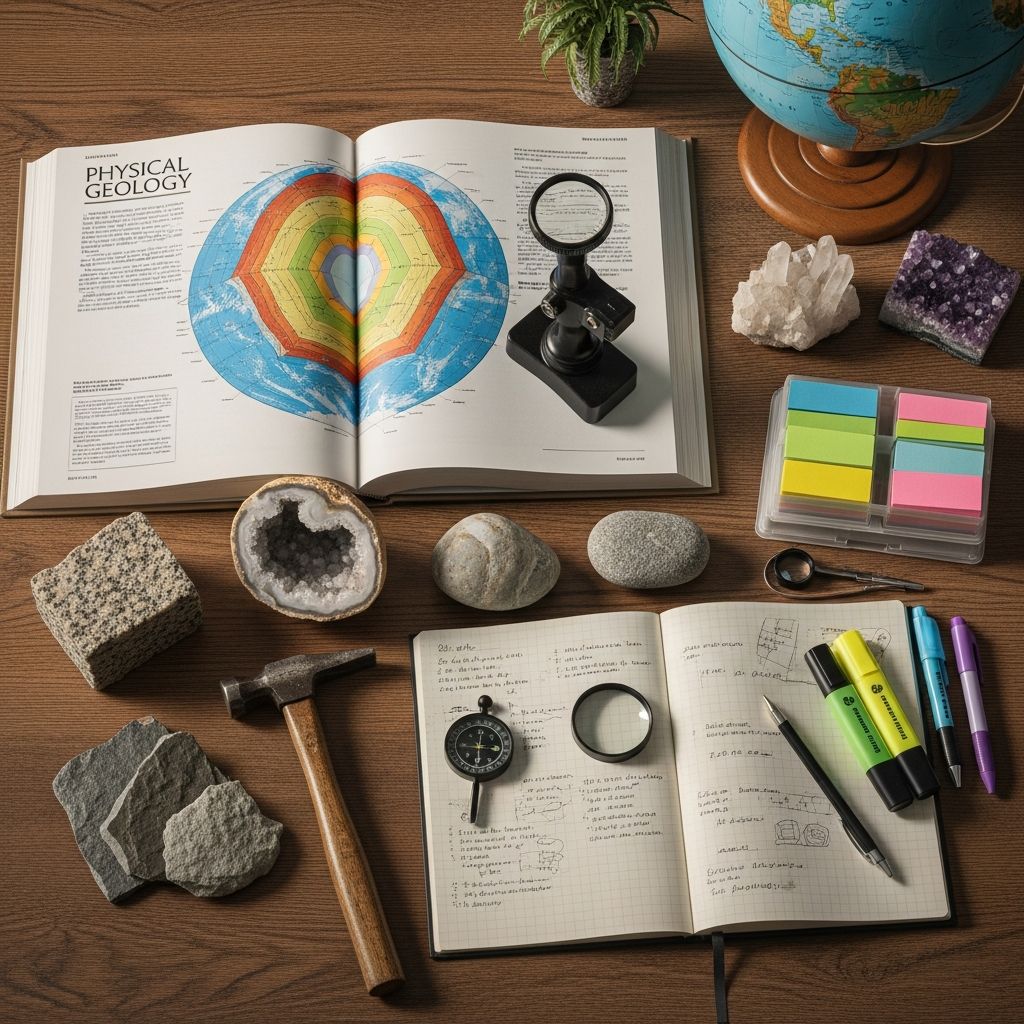
Geology demands a blend of theoretical insight, practical application, and analytical prowess. Success in this field hinges on adopting targeted study methods that bridge classroom learning with real-world exploration. This guide equips students with actionable strategies to navigate coursework, labs, and field experiences effectively.
Building a Strong Foundation in Geological Principles
Geology revolves around understanding Earth’s dynamic systems, from tectonic movements to sedimentary formations. Start by prioritizing core principles over rote memorization. Grasp overarching processes like the rock cycle, plate tectonics, and erosion dynamics before diving into specifics. This top-down method clarifies how facts interconnect, making retention easier.
Begin each study session by outlining major concepts. For instance, map out how igneous rocks form from magma cooling, transitioning to metamorphic under pressure and temperature. Use diagrams to visualize these transformations. Regularly revisit these frameworks to reinforce long-term comprehension.
- Identify key processes: Focus on formation, alteration, and destruction of Earth materials.
- Create visual aids: Sketch cycles and timelines to internalize sequences.
- Link concepts: Relate volcanism to seismic activity for contextual depth.
Optimizing Note-Taking for Geology Lectures and Labs
Effective notes capture the essence of complex lectures without overwhelming detail. Develop a system using abbreviations, symbols, and structured formats. Separate lecture notes from lab records to avoid confusion during review.
Arrive prepared by skimming assigned readings beforehand. During class, jot down unfamiliar terms for post-lecture clarification. Compare notes with peers to fill gaps. Organize by topic, date, and subheadings for quick access. Highlight diagrams and tables, as they often feature in assessments.
| Component | Strategy | Benefit |
|---|---|---|
| Lecture Notes | Use bullet points and mind maps | Quick scanning and connections |
| Lab Notes | Include sketches and measurements | Accurate replication of experiments |
| Review Process | Daily summaries and peer checks | Improved retention and accuracy |
Review notes immediately after class while details remain fresh. This practice transforms passive listening into active learning.
Leveraging Textbooks and Lab Manuals Effectively
Textbooks serve as visual anchors, not just fact repositories. Read chapters before lectures to familiarize yourself with terminology and visuals. You need not master everything initially; exposure primes your mind for deeper discussion.
In labs, treat manuals as guides for exercises. Reference diagrams during hands-on tasks to connect theory with practice. Highlight critical images of minerals, fossils, and maps. Post-lab, annotate margins with observations to personalize content.
- Pre-read strategically: Scan headings, figures, and summaries first.
- Active engagement: Question diagrams and predict outcomes.
- Integration: Cross-reference with lecture points for cohesion.
Hands-On Mastery: Labs, Samples, and Fieldwork
Geology thrives on tactile experience. Labs build proficiency in identifying rocks, minerals, and fossils through tools like hand lenses and microscopes. Practice classifying samples weekly to sharpen observation skills.
Fieldwork translates theory into reality. During trips, map formations, note strata, and collect specimens ethically. Document with photos, sketches, and GPS data. Back in the lab, analyze findings to validate hypotheses.
Develop sketching skills for accurate representations. Use graph paper for cross-sections and topographic profiles. These visuals aid in interpreting landscapes and structures.
Essential Lab and Field Techniques
- Mineral testing: Streak, hardness, luster assessments.
- Rock classification: Texture, composition analysis.
- Fossil preparation: Cleaning and cataloging.
- Mapping: Contour lines and structural features.
Quantitative Tools: Math, Data, and Mapping
Geology integrates math for modeling phenomena like seismic wave propagation and sediment transport. Strengthen algebra, calculus, and statistics for data interpretation. Tools like GIS software visualize spatial data, essential for environmental assessments.
Practice graphing datasets from lab results, such as mineral density variations. Learn topographic map reading to decode elevations and landforms. Google Earth complements this by offering virtual terrain flyovers.
| Skill | Application | Study Tip |
|---|---|---|
| Statistics | Data trends in core samples | Analyze mock datasets weekly |
| GIS | Fault line mapping | Tutorial-based projects |
| Graphing | Age dating curves | Plot and interpret daily |
Time Management and Active Study Routines
Dedicate one hour per lecture hour to focused review, excluding reading. Break tasks into chunks: 25-minute sessions with breaks (Pomodoro technique). Plan weekly goals covering readings, labs, and reviews.
Form study groups for accountability. Quiz each other on processes and identifications. Use flashcards for terms, but prioritize explanations over definitions.
- Daily routine: Review notes, read ahead, practice problems.
- Weekly: Group sessions, sample analysis.
- Monthly: Full concept maps and mock exams.
Harnessing Technology and Resources
Digital tools amplify learning. Apps simulate rock identification; online journals provide case studies. Virtual field trips via platforms like Google Earth explore remote sites. AI tutors identify weak areas through quizzes.
Curate resources: Peer-reviewed journals for current research, textbooks for basics, videos for processes. Attend webinars and workshops for expert insights.
Independent Research and Critical Thinking
Transition to self-directed inquiry by posing questions like ‘How does climate influence sedimentation?’ Design mini-projects: Collect local samples, analyze, and report findings. Present to peers for feedback.
Cultivate skepticism: Evaluate sources for bias and methodology. Synthesize data from multiple studies to form robust conclusions.
Frequently Asked Questions
What is the best way to prepare for geology exams?
Combine process understanding, sample practice, and past papers. Focus on diagrams and maps, reviewing weekly.
How much time should I spend on fieldwork preparation?
Allocate 2-3 hours pre-trip for readings and gear checks, plus post-trip analysis time.
Are study groups effective for geology?
Yes, they enhance discussion of complex visuals and shared sample practice.
How do I improve rock and mineral identification?
Handle specimens daily, use keys, and test properties systematically.
What’s the role of math in geology studies?
It’s crucial for modeling, data analysis, and interpreting geophysical data accurately.
References
- Geologic Skills — Geosciences LibreTexts. 2023-01-15. https://geo.libretexts.org/Bookshelves/Geography_(Physical)/The_Story_of_Earth_-_An_Observational_Guide_(Hauptvogel_and_Sisson)/01:_Labs/1.01:_Geologic_Skills
- Study Tips for Geology 101 — Spokane Falls Community College. 2022-09-01. https://faculty.sfcc.spokane.edu/InetShare/AutoWebs/jenniferb/Study%20Tips%20for%20Geology%20101.pdf
- A Handbook for Geology Students — Appalachian State University. 2024-03-20. https://earth.appstate.edu/sites/earth.appstate.edu/files/handbook.pdf
- Mastering Geology Study Strategies And Tips — Spires Online Tutors. 2025-02-10. https://spires.co/online-geology-tutors/undergraduate/mastering-geology-study-strategies-and-tips
- How to Effectively Study Geology — Education Corner. 2023-11-05. https://www.educationcorner.com/geology-study-skills-guide/

- Integrated M.A. in Applied Linguistics, University of Hyderabad
- 5+ years in editorial, instructional, SEO, and research-based writing
Sneha is a relationships and lifestyle writer with a strong foundation in applied linguistics and certified training in relationship coaching. She brings over five years of writing experience to theskillvault, crafting thoughtful, research-driven content that empowers readers to build healthier relationships, boost emotional well-being, and embrace holistic living. Her writing and insights reflect the belief that beauty, happiness, and wellness…