
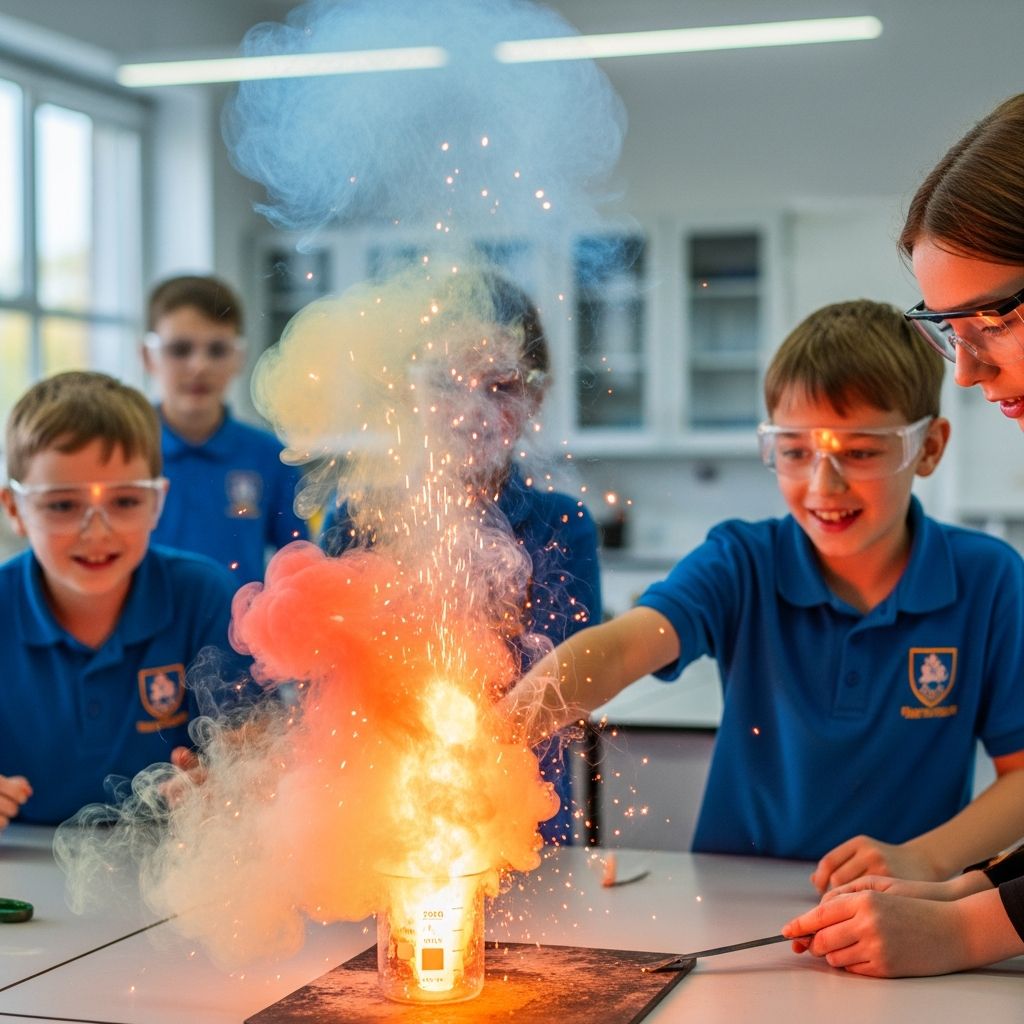
Explosive science experiments captivate children’s imaginations by turning everyday materials into spectacular displays of chemical reactions and physical forces. These activities not only provide entertainment but also teach fundamental principles of science in a memorable way. From towering foam columns to fizzy eruptions, each project demonstrates concepts like gas production, catalysis, and pressure buildup safely at home or in the classroom.
Understanding the Science Behind Explosions
At the heart of these experiments lies the rapid generation of gas, which creates pressure leading to dramatic releases. For instance, reactions producing carbon dioxide or oxygen expand quickly, pushing materials outward in bursts of foam or liquid. Supervised setups ensure safety while allowing kids to observe cause-and-effect in action. Always wear protective eyewear and conduct experiments in open areas to manage any mess.
Classic Mentos and Soda Geyser
One of the most iconic demonstrations involves dropping Mentos candies into a bottle of diet soda, creating a spectacular fountain. The rough surface of Mentos provides nucleation sites for dissolved carbon dioxide to form bubbles rapidly, expelling the soda upward in a geyser reaching several feet.
- Materials: 2-liter bottle of diet cola, roll of Mentos mints, paper tube.
- Steps: Place the bottle on a flat outdoor surface. Load Mentos into a paper tube. Quickly dump them into the soda and step back.
- Science Insight: Surface tension breaks as CO2 escapes, demonstrating supersaturation.
Variations include testing different sodas or candy types to explore which produce the tallest sprays, fostering hypothesis testing skills.
Elephant Toothpaste: A Foamy Spectacle
This experiment produces a massive foam tower resembling toothpaste for an elephant, driven by the decomposition of hydrogen peroxide catalyzed by yeast or potassium iodide. The reaction releases oxygen gas, which mixes with dish soap to form stable foam.
| Ingredient | Amount | Purpose |
|---|---|---|
| 20-volume hydrogen peroxide | 6 oz | Source of oxygen |
| Dry yeast | 1 tbsp in warm water | Catalyst |
| Dish soap | 3 tbsp | Foam stabilizer |
| Food coloring | Few drops | Visual effect |
Pour peroxide into a bottle, add soap and color, then yeast mixture for instant foam eruption. For larger displays, use higher concentrations under adult supervision, noting stronger solutions require caution to avoid burns.
Baking Soda Volcano Eruptions
Build a model volcano from clay or dough around a bottle, then trigger an eruption with baking soda and vinegar. The acid-base reaction produces carbon dioxide gas, simulating lava flow.
- Enhance with layered colors of baking soda for a rainbow effect.
- Try ice versions by freezing baking soda mixtures for slow melts leading to bursts.
This timeless project introduces acids, bases, and indicators, perfect for customizing with natural dyes or scents.
Film Canister Rockets and Pressure Launchers
Using a film canister, combine baking soda and vinegar to build pressure that ejects the lid like a rocket. Experiment with ratios for varying heights.
- Mark a launch zone with chalk.
- Add vinegar to canister, drop in baking soda ball, seal quickly.
- Place lid-down on ground and retreat.
These teach pressure-volume relationships and Newton’s third law through flight observation.
Exploding Watermelon and Fruit Surprises
Insert rock salt and puncturing tools into a watermelon, then seal in a bag for a startling rupture from gas buildup. Emphasize adult handling due to force.
Similar setups with bags of baking soda-vinegar create portable explosions, though success varies by seal quality.
Microwave Marvels: Soap and Marshmallow Eruptions
Microwave a bar of Ivory soap for 90 seconds to puff it into a cloud of foam from water vapor expansion. Likewise, marshmallows expand dramatically before bursting.
- Safety: Use microwave-safe dishes; supervise closely.
- Extension: Compare soap brands or marshmallow types for expansion rates.
These reveal rapid phase changes and gas expansion in confined spaces.
Chain Reaction Popsicle Explosions
Stack popsicle sticks in a precise weave; releasing the end triggers a cascading snap. Patience in building yields a satisfying chain reaction wave.
Ideal for demonstrating energy transfer and mechanical potential energy.
Water Balloon Splatter Science
Drop paint- or water-filled balloons from heights to analyze splatter patterns, linking impact force to spread radius.
- Record heights vs. pattern size for graphs.
- Safe for all ages with supervision.
Safe Chemical Reaction Bombs
Create bath bombs or sponge water bombs for gentler ‘explosions.’ Paint bombs in balloons add artistic flair to reaction studies.
Advanced Variations and Safety Protocols
For older kids, scale up with multi-color elephant toothpaste or Mentos rockets. Always prioritize safety: eye protection, gloves for irritants, outdoor venues, and immediate cleanup. Discuss reactions beforehand—e.g., exothermic processes generating heat.
These experiments align with STEM curricula, promoting inquiry-based learning. Track variables like temperature or concentration for data analysis.
Frequently Asked Questions
Are these experiments safe for young children?
Yes, with adult supervision, protective gear, and following instructions precisely. Start with simpler ones like volcanoes.
What if the reaction doesn’t work?
Check ingredient freshness, measurements, and speed of mixing. Diet soda works best for geysers due to lower viscosity.
Can I do these indoors?
Prefer outdoors for mess control; indoor options like microwave soap suit kitchens with ventilation.
How do they teach science?
They illustrate gas laws, catalysis, and reactions hands-on, encouraging predictions and observations.
What age group are they for?
Ages 5+ with help; 8+ independently for most.
Encouraging Lifelong Scientific Curiosity
These explosive activities transform abstract concepts into tangible wonders, sparking questions and experiments beyond the page. Document results in journals, share videos, or compete for biggest eruptions to deepen engagement. Resources from educational sites emphasize safe, replicable fun aligned with school standards.
References
- Explosive Science Experiments for Kids — Science Sparks. Accessed 2026. https://www.science-sparks.com/explosive-science-experiments-for-kids/
- Safe Explosion for KIDS — TCT Network (YouTube). Accessed 2026. https://www.youtube.com/watch?v=M5W8JfBjsuQ
- 5 Safe Chemical Reaction “Exploding” Activities — The Homeschool Scientist. Accessed 2026. https://thehomeschoolscientist.com/5-safe-chemical-reaction-activities/
- 5 Easy At Home Science Experiments w/ Mark Rober — Mark Rober (YouTube). 2024-11-23. https://www.youtube.com/watch?v=ekUbBot8tDA

Medha Deb is an editor with a master's degree in Applied Linguistics from the University of Hyderabad. She believes that her qualification has helped her develop a deep understanding of language and its application in various contexts. Medha specializes in the areas of beauty, health, sports, and wellness and is committed to ensuring that the content on the website is…