
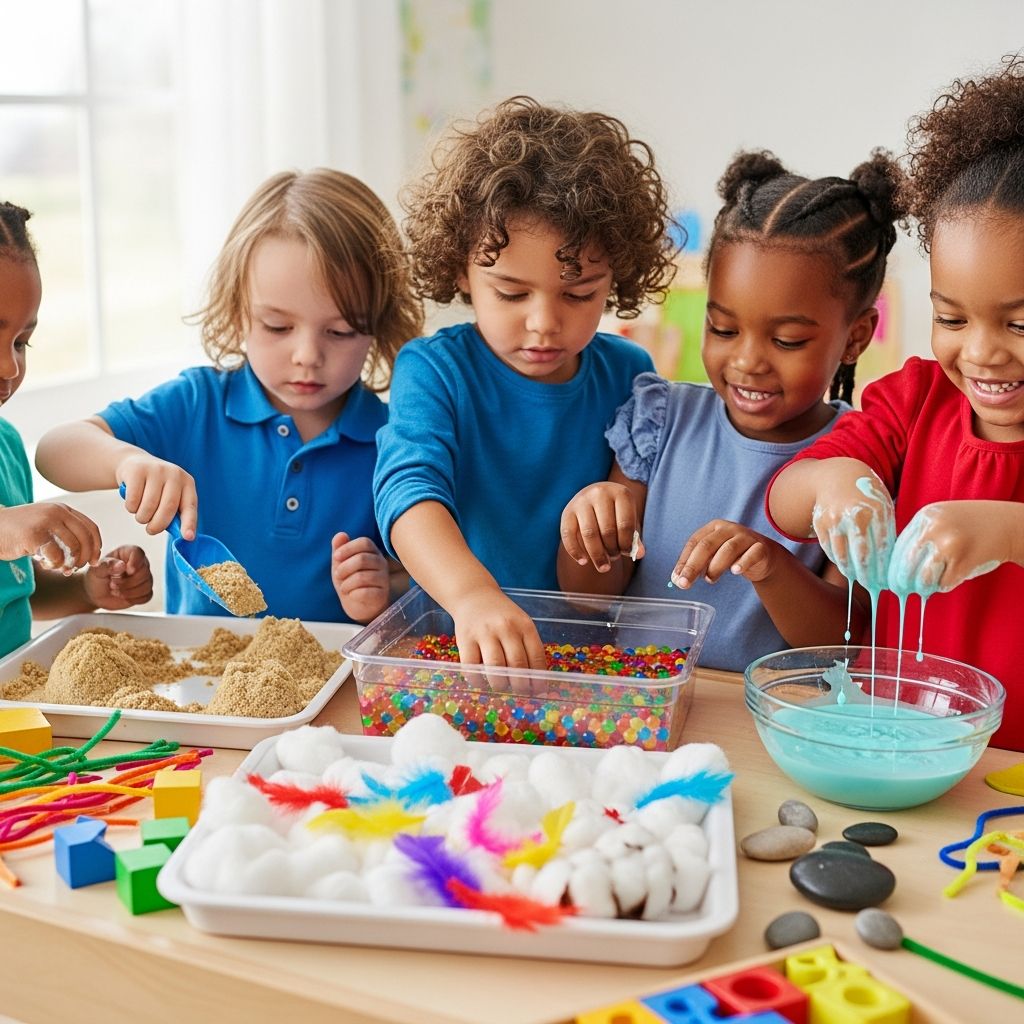
Sensory play involves activities that stimulate one or more of the five senses—sight, sound, touch, taste, and smell—while fostering essential developmental milestones in children. These experiences help build neural connections, improve focus, and encourage problem-solving from infancy through early childhood.
Why Sensory Experiences Matter in Early Years
From birth, children learn primarily through sensory input, which lays the foundation for cognitive, physical, and social growth. Engaging in sensory play enhances brain development by strengthening pathways between sensory neurons and motor responses. Research shows that such activities improve language acquisition, spatial awareness, and emotional regulation.
Parents and caregivers can easily integrate these into daily routines, using household items to create rich learning environments. Benefits extend to children with sensory processing needs, helping them self-regulate and adapt to stimuli.
Touch-Based Explorations: Building Fine Motor Foundations
Tactile activities are cornerstones of sensory play, as touch is the first sense babies develop. Manipulating textures refines hand-eye coordination and dexterity, preparing children for writing and self-care tasks.
- Sensory Bins Galore: Fill shallow containers with rice, oats, or beans. Hide small toys inside for digging and sorting, promoting concentration and bilateral coordination.
- Playdough Creations: Homemade dough scented with herbs offers squishy resistance, strengthening finger muscles while sparking imagination through shaping animals or letters.
- Sand and Water Tables: Layer dry sand with wet for contrasting feels. Add funnels and scoops to experiment with flow and volume.
These setups encourage prolonged engagement, with children naturally practicing pouring and grasping motions that enhance grip strength.
Auditory Adventures: Discovering Sounds and Rhythms
Sound play captivates young ears, aiding auditory discrimination and speech development. Noisy explorations teach cause-and-effect while providing calming or energizing input as needed.
| Activity | Materials Needed | Skills Developed |
|---|---|---|
| DIY Shakers | Plastic bottles, beans, rice | Sound matching, rhythm imitation |
| Household Drums | Pots, spoons, blankets | Volume control, pattern recognition |
| Whisper Tubes | Cardboard tubes, foil | Directional hearing, turn-taking |
Start with soft whispers building to clatters, helping children differentiate pitches and volumes. This is particularly beneficial for language-delayed kids.
Visual and Movement Challenges Indoors and Out
Sight and proprioception (body awareness) combine in dynamic play, supporting balance and spatial skills. Indoor options shine on rainy days, mimicking outdoor freedom.
- Cushion Crash Zones: Stack pillows for jumping and tumbling, delivering deep pressure that soothes overstimulated nerves.
- Blanket Tunnels: Drape sheets over chairs for crawling adventures, enhancing vestibular input through position changes.
- Bubble Chasing: Blow soapy spheres for tracking and popping, refining visual pursuit.
Outdoor variants like leaf piles or puddle splashing extend these, connecting children to nature’s palette.
Gustatory and Olfactory Delights: Safe Edible Fun
Edible sensory play ensures safety for mouthing toddlers, merging taste and smell to expand sensory repertoires without risk.
Taste-Safe Mixtures: Blend yogurt with pureed fruits for finger painting on trays. The cool slipperiness contrasts with chunky add-ins like oats, inviting licking and describing flavors.
- Oatmeal Dough: Mix cooked oats with flour for moldable, chewable sculptures.
- Herbal Sniff Jars: Seal spices in bags for crushing and inhaling.
- Frozen Treats: Juice popsicles provide melting textures and tangy bursts.
These prevent mess-related frustrations while teaching descriptive vocabulary like ‘crunchy’ or ‘zesty’.
Nature-Inspired Sensory Journeys
Outdoor elements introduce authentic textures and scents, grounding children in their environment. Collect natural treasures during walks for home extensions.
- Mud Kitchen: Dig dirt into pots with water for stirring ‘soups,’ building arm strength.
- Stone Sensory Path: Arrange rocks of varying smoothness for barefoot traversal.
- Leaf Rubbings: Crayon over veined surfaces for visual-tactile art.
Such play fosters environmental curiosity and gross motor prowess.
Adapting Activities for Different Ages and Needs
Tailor sensory play to developmental stages: Infants thrive on high-contrast mobiles; toddlers on messy bins; preschoolers on themed challenges.
| Age Group | Focus | Example Activity |
|---|---|---|
| 0-12 Months | Grasping, mouthing | Water beads in basin |
| 1-3 Years | Pouring, stacking | Rice bin treasure hunt |
| 4+ Years | Sorting, inventing | Scented playdough bakery |
For sensory-sensitive children, offer graduated exposure, like observing before participating.
Quick-Setup Ideas for Busy Days
Time-strapped parents appreciate 5-minute wonders using pantry staples.
- Shaving foam on trays with food coloring for cloud mountains.
- Tape lines on floors with cars for textured paths.
- Gelatin wobbles in bowls for poke-and-prod fun.
These sustain attention spans while minimizing cleanup.
Frequently Asked Questions (FAQs)
What age is best for sensory play?
Sensory activities suit all ages, from newborns tracking lights to school-age kids engineering complex bins. Adapt complexity to match abilities.
Are sensory activities messy?
Many are, but use trays, smocks, and edible materials to contain chaos. Mess aids learning!
How often should we do sensory play?
Daily 15-30 minute sessions yield optimal benefits without overwhelming schedules.
Can sensory play help with autism or ADHD?
Yes, it supports regulation and focus, though consult specialists for tailored plans.
What if my child rejects certain textures?
Respect boundaries; introduce gradually with positive associations.
Setting Up Your Sensory Play Space
Dedicate a low, accessible area with washable mats. Rotate themes weekly—ocean, farm, space—to sustain interest. Safety first: Supervise small parts and allergens.
Incorporate reflection: Ask ‘What felt squishy?’ to build language. Track progress in motor gains or extended playtime.
Sensory play transforms ordinary moments into extraordinary growth opportunities, equipping children with skills for lifelong learning.
References
- 8 Sensory Play Ideas and Activities for Kids — Wondirful Play. 2024-12-28. https://www.wondirfulplay.com/blog/8-sensory-play-ideas-and-activities-for-kids
- Sensory Activities for Babies — Learning Babies. N/A. https://www.learningbabies.com/sensory-activities/
- List of Sensory Play Activities & Ideas — Learning 4 Kids. N/A. https://www.learning4kids.net/play-ideas/exploring-activities/list-of-sensory-play-ideas/
- Sensory Play — Action for Healthy Kids (.org, non-profit). N/A. https://www.actionforhealthykids.org/activity/sensory-play/
- Top 5 Easy Indoor Sensory Activities for Kids — YouTube/Harkla. N/A. https://www.youtube.com/watch?v=M0te7yTgp8Y
- Sensory Play Ideas to Support Sensory Processing — The OT Toolbox. N/A. https://www.theottoolbox.com/sensory-play/
- 10 Sensory Play Ideas Set Up in 10 Minutes or Less — Mothercould. N/A. https://www.mothercould.com/posts/10-sensory-play-ideas-set-up-in-10-minutes-or-less

Medha Deb is an editor with a master's degree in Applied Linguistics from the University of Hyderabad. She believes that her qualification has helped her develop a deep understanding of language and its application in various contexts. Medha specializes in the areas of beauty, health, sports, and wellness and is committed to ensuring that the content on the website is…