
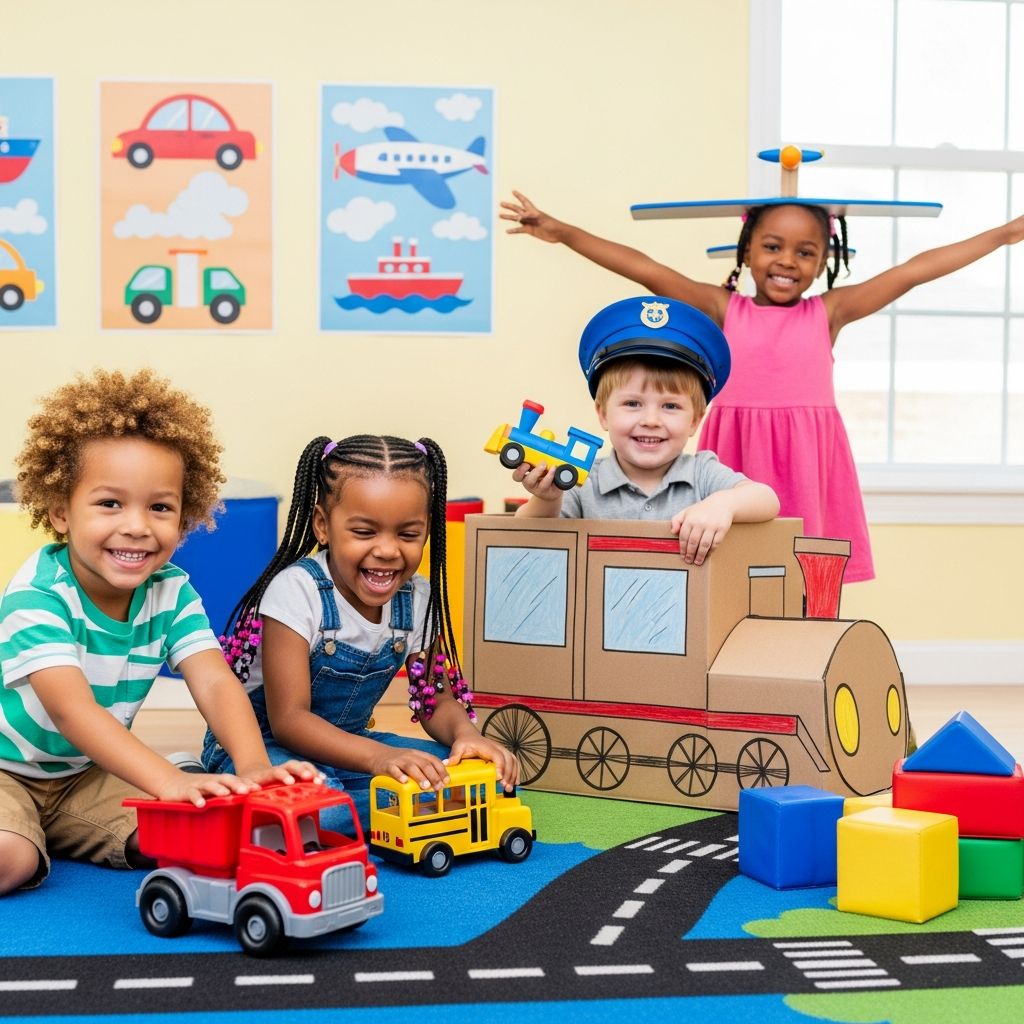
Preschoolers are naturally fascinated by anything that moves—cars zooming by, planes soaring overhead, boats gliding on water, and trains chugging along tracks. This innate curiosity makes transportation an ideal theme for early education, blending excitement with essential skill-building. These activities encourage exploration of land, air, and sea vehicles while developing fine and gross motor skills, vocabulary, counting, patterning, and cooperative play. Designed for children aged 3-5, they require simple household items or affordable supplies, ensuring accessibility for parents, teachers, and caregivers.
Why Transportation Captivates Young Minds
Transportation themes connect directly to children’s daily experiences, like family car rides or airport trips, making learning relatable. According to the U.S. Department of Education’s early learning guidelines, play-based themes like this support cognitive development by helping kids categorize objects (e.g., land vs. air vehicles) and understand functions (e.g., wheels for rolling). They also foster language growth through new terms like ‘propeller’ or ‘rudder’ and promote physical activity via movement games. Socially, group activities teach sharing and teamwork, key for emotional regulation at this age.
Sensory Exploration Stations
Sensory play immerses preschoolers in textures and sensations, enhancing brain connections. Set up stations themed around transportation modes for multi-sensory discovery.
- Land Vehicle Dig: Fill a shallow bin with kinetic sand or rice, burying small toy cars, trucks, and buses. Provide laminated cards with vehicle images for matching. Kids dig, match, and stamp shapes using cookie cutters, strengthening hand muscles and practicing shape recognition.
- Air Adventure Bin: Use blue gel or cloud-like cotton balls in a tray, adding lightweight planes and helicopters. Include scoops for ‘flying’ through the ‘sky,’ promoting imaginative play and color sorting (blue skies, white clouds).
- Water Voyage Tub: In a water-filled basin, float boats and submarines with floating markers for ‘treasure hunts.’ Add droppers for fine motor squirting, teaching sink/float concepts.
These setups rotate daily, extending engagement. Rotate toys to maintain novelty, observing how children narrate their ‘journeys’ to build storytelling skills.
Artistic Vehicle Creations
Art activities channel creativity while refining fine motor control. Use vehicles as tools for unique masterpieces.
- Wheel Painting Tracks: Dip toy car wheels in washable paint and roll across large paper to create road patterns. Experiment with truck treads for varied lines, discussing textures and patterns.
- Recycled Material Builds: Provide cardboard tubes, boxes, and egg cartons for constructing trains or airplanes. Glue on bottle caps for wheels, fostering problem-solving and 3D spatial awareness.
- Spool Engine Art: Paint wooden spools and arrange them into train cars on railroad track paper, adding yarn for smoke trails. This encourages sequencing and color mixing.
Display creations in a ‘Transportation Gallery’ to boost pride and spark peer discussions on designs.
Music and Movement for Active Learning
Songs and games get bodies moving, coordinating rhythm with gross motor skills. Incorporate these daily for high-energy fun.
- Wheels on the Bus Remix: Sing the classic, adding verses for planes (‘The propellers on the plane go round and round’) and trains. Use scarves as wheels for waving motions.
- Human Train Chain: Kids link arms to form a ‘choo-choo,’ chugging forward/backward with whistles. Chant: ‘Chug along the track, toot-toot! Faster now, whoo-whoo!’ Builds listening and body control.
- Red Light, Green Light Drive: Children push toy cars; call ‘green’ to go, ‘red’ to stop. Incorporates safety lessons like looking both ways.
These align with CDC recommendations for 3+ hours daily physical activity in preschoolers, improving focus and health.
Math and Literacy Through Play
Embed core academics seamlessly into transportation fun, targeting counting, letters, and sorting.
Math Builders
| Activity | Skill Focus | Materials |
|---|---|---|
| Vehicle Counting Puzzles | Number sequencing 1-10 | Puzzle pieces with vehicles |
| Pattern Roads | AB patterns (car-truck-car) | Printed vehicle cards |
| Size Sorting Garage | Big/small, long/short | Boxes as garages, toy vehicles |
For patterns, lay out cards like plane-boat-plane, challenging kids to extend the sequence verbally or with toys.
Literacy Drives
- Letter Formation Roads: Draw letters with curved lines as ‘roads’; kids drive cars along paths from 1 to finish, tracing ABCs kinesthetically.
- Vehicle Story Retelling: Read books like Freight Train, then sequence picture cards to retell events, enhancing comprehension.
- Vocabulary Matching: Pair words (wheel, wing) with images during circle time songs.
Fine Motor Skill Sharpeners
Precision tasks prepare hands for writing. Transportation themes make them playful.
- Train Track Scissors: Cut along drawn tracks (straight, wavy) with safety scissors, stopping at ‘stations’ marked by stickers.
- Puzzle Assemblies: Vehicle-shaped puzzles (4-10 pieces) for shape matching and perseverance.
- Bead Stringing Engines: String beads on pipe cleaners to form ‘train cars,’ twisting ends as couplers.
These activities support NAEYC standards for fine motor readiness.
Gross Motor Challenges
Full-body movements mimic real vehicles, burning energy while teaching directionality.
- Plane Flap Relay: Arms as wings, ‘fly’ to cones and back.
- Boat Row Race: Sit and ‘row’ with arms in pairs.
- Truck Haul: Pull weighted wagons in obstacle courses.
Social and Emotional Connections
Group play builds empathy. Assign roles in a ‘city’ setup: drivers share roads, passengers wait turns. Discuss feelings like excitement of travel or frustration in traffic jams.
Frequently Asked Questions (FAQs)
Q: What age group are these activities best for?
A: Ideal for 3-5-year-olds, with adaptations for younger (simpler sorting) or older (added counting).
Q: How can I adapt for small spaces?
A: Use trays for sensory, tape roads on floors for games, and table-top crafts.
Q: What books pair well?
A: The Little Engine That Could, Planes series, Goodnight Goodnight Construction Site.
Q: How long should a unit last?
A: 1-2 weeks, with 4-5 activities daily for balanced exposure.
Q: Are supplies reusable?
A: Yes, most toys and bins serve multiple uses; laminate printables.
Integrate into routines: mornings for songs, afternoons for art. Track progress via photos or journals to share with families, reinforcing home-school ties.
References
- Preschool English Learners Guidelines — U.S. Department of Education. 2019-10-01. https://www2.ed.gov/rschstat/earlylearning/PreschoolEnglishLearnersGuidelines.pdf
- Physical Activity Guidelines for Americans, 2nd edition — Centers for Disease Control and Prevention. 2019-01-15. https://www.cdc.gov/physicalactivity/basics/children/index.htm
- Developmentally Appropriate Practice in Early Childhood Programs — National Association for the Education of Young Children. 2020-04-01. https://www.naeyc.org/resources/position-statements/dap

- Integrated M.A. in Applied Linguistics, University of Hyderabad
- 5+ years in editorial, instructional, SEO, and research-based writing
Sneha is a relationships and lifestyle writer with a strong foundation in applied linguistics and certified training in relationship coaching. She brings over five years of writing experience to theskillvault, crafting thoughtful, research-driven content that empowers readers to build healthier relationships, boost emotional well-being, and embrace holistic living. Her writing and insights reflect the belief that beauty, happiness, and wellness…