
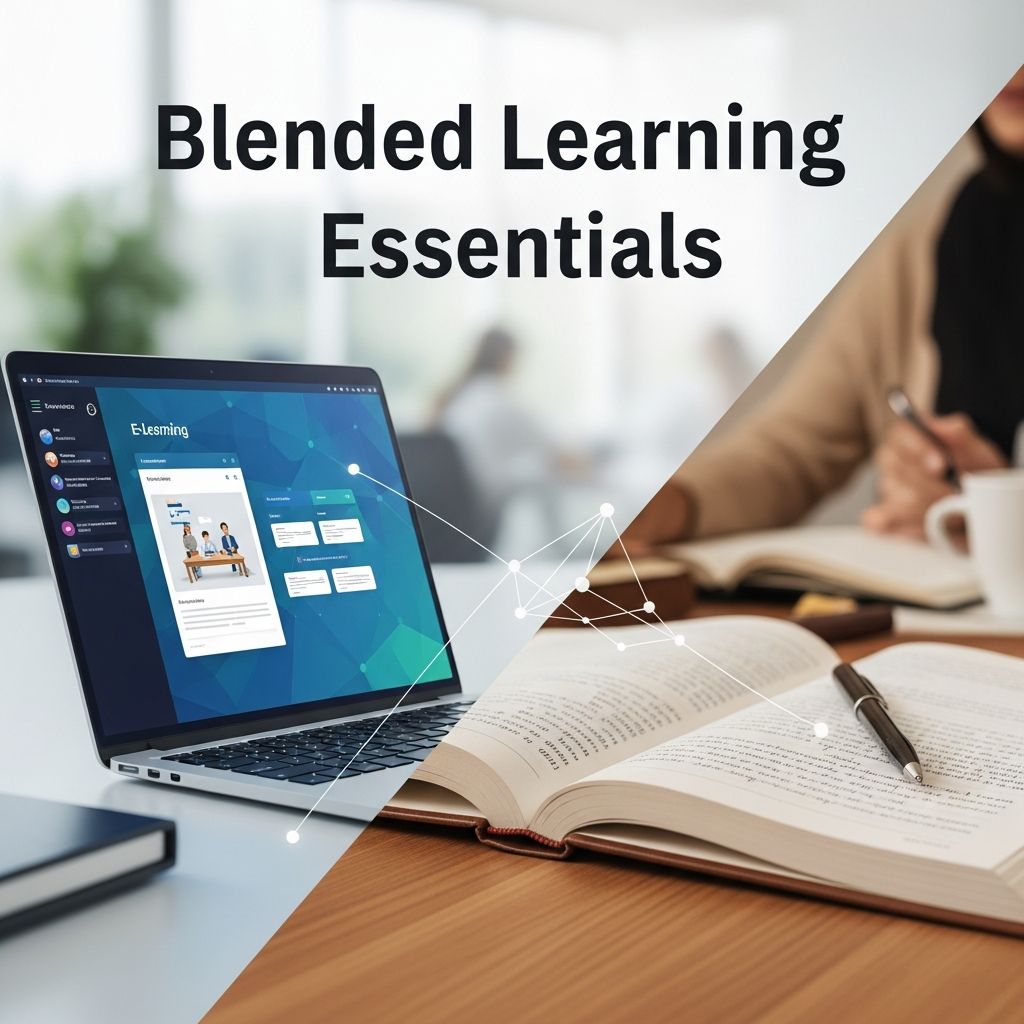
Blended learning represents a dynamic fusion of traditional classroom instruction and digital technologies, creating flexible educational experiences tailored to diverse learner needs. This approach empowers educators to leverage the strengths of both in-person interactions and online resources for deeper engagement and better outcomes.
Defining the Core of Blended Learning
At its heart, blended learning integrates face-to-face teaching with online activities to form a cohesive educational strategy. Unlike purely online or traditional setups, it strategically combines synchronous sessions with asynchronous content delivery, allowing students to progress at their own pace while benefiting from direct instructor guidance. This method has gained traction in K-12, higher education, and professional training due to its adaptability to varying schedules and learning styles.
The concept emphasizes learner-centered design, where technology supports rather than replaces human interaction. For instance, students might review video lectures at home and apply concepts through collaborative in-class projects, fostering active participation and retention.
Key Models Shaping Blended Environments
Blended learning manifests in several models, each suited to specific contexts and goals. Understanding these helps educators select the optimal framework.
- Flex Model: Online instruction drives the core learning, with instructors available for real-time support during limited face-to-face time. Ideal for self-paced learners in virtual academies.
- Flipped Classroom: Learners access instructional content online beforehand, reserving class time for discussions, problem-solving, and hands-on activities to reinforce understanding.
- Rotation Model: Students rotate between modalities—online, group projects, teacher-led sessions, and individual work—within fixed periods, promoting balanced exposure.
- Self-Blend Model: Students supplement standard coursework with online electives, offering customization in traditional settings.
- Enriched Virtual Model: Primarily online with occasional in-person meetings for enrichment or assessments.
| Model | Primary Focus | Best For |
|---|---|---|
| Flex | Online-led with on-site support | Remote or individualized pacing |
| Flipped | Pre-class online prep | Interactive class discussions |
| Rotation | Modalities cycling | Structured classrooms |
| Self-Blend | Online supplements | Customized learning paths |
| Enriched Virtual | Online with periodic meetups | Hybrid remote setups |
Selecting a model requires aligning it with institutional resources, student demographics, and pedagogical objectives.
Compelling Advantages for Learners and Educators
Blended learning delivers multifaceted benefits that enhance educational efficacy. Students gain flexibility to review materials anytime, accommodating diverse paces and reducing scheduling conflicts—particularly valuable for working adults or those in hybrid work environments.
- Personalization: Tailored content meets individual needs, boosting motivation and outcomes.
- Engagement: Interactive tools like quizzes, videos, and forums make learning immersive.
- Accessibility: Digital resources bridge gaps for remote or underserved populations.
- Efficiency: Data analytics track progress, enabling timely interventions.
Educators benefit from freed-up class time for higher-order activities, such as mentoring and collaborative projects, shifting from lecture-heavy to facilitation roles. Research from Columbia University’s Center for Teaching and Learning highlights how intentional tech integration maximizes these gains.
Navigating Common Hurdles in Implementation
Despite its promise, blended learning presents challenges like technology access disparities, digital fatigue, and resistance to change. Uneven internet or device availability can exacerbate inequities, necessitating equity audits beforehand.
Instructor training is crucial; many struggle with tech integration without support. Solutions include phased rollouts, starting with simple tools like discussion forums or video modules to build confidence. Additionally, aligning stakeholder expectations—parents, admins, students—through surveys and seminars fosters buy-in.
Strategic Steps to Launch Blended Learning
Successful rollout demands methodical planning. Begin by clarifying objectives: What skills or knowledge gaps will this address? Conduct needs assessments to gauge student readiness, tech proficiency, and preferences.
- Set Clear Goals: Define measurable outcomes and timelines.
- Assess Infrastructure: Evaluate devices, bandwidth, and LMS compatibility.
- Choose Tools: Opt for user-friendly platforms supporting multimedia and analytics.
- Design Curriculum: Balance online and in-person elements with varied formats—videos, simulations, peer reviews.
- Train Stakeholders: Offer workshops for teachers, tech orientations for students, and portals for parents.
- Pilot and Iterate: Test small-scale, gather feedback, and refine.
Integration of a robust Learning Management System (LMS) streamlines delivery, tracking, and communication.
Leveraging Technology for Maximum Impact
Technology is the backbone of blended success. Essential tools include LMS platforms for content hosting, collaborative apps for real-time interaction, and adaptive software that personalizes paths based on performance data.
- Video platforms for flipped content.
- Interactive quizzes for immediate feedback.
- Gamified apps to sustain motivation.
- Analytics dashboards for progress monitoring.
Diverse formats—microlearning modules, scenario-based exercises, webinars—cater to multiple styles, enhancing retention.
Real-World Success Stories and Insights
Programs worldwide demonstrate blended learning’s efficacy. Adult basic skills initiatives have used it to boost literacy through customized online modules paired with tutor sessions. K-12 districts report higher engagement via rotation models, with students mastering digital literacy alongside core subjects.
In higher ed, flipped models correlate with improved critical thinking scores. Professional development benefits remote workers, blending e-modules with virtual workshops for skill upgrades without disrupting workflows.
Future Directions in Blended Education
Emerging trends like AI-driven personalization and VR simulations promise to elevate blended learning. Adaptive algorithms will further customize experiences, while immersive tech bridges physical distances. Equity-focused policies will address access gaps, ensuring inclusivity.
As education evolves, blended models will dominate, preparing learners for tech-infused futures with essential digital competencies.
Frequently Asked Questions
What distinguishes blended learning from fully online education?
Blended learning requires meaningful in-person components integrated with online elements, unlike fully online which lacks face-to-face interaction.
Is blended learning suitable for young children?
Yes, with age-appropriate tools and supervision; rotation models work well in elementary settings to build foundational skills.
How can schools afford blended learning tech?
Start with free/open-source tools, seek grants, or phase in via pilots to demonstrate ROI through improved outcomes.
What role does teacher training play?
Critical; comprehensive PD ensures confident tech use and pedagogical shifts toward facilitation.
Can blended learning improve student retention?
Absolutely; flexibility and personalization reduce dropout rates, especially for non-traditional students.
References
- The Complete Guide to Blended Learning — D2L. 2023. https://www.d2l.com/blog/blended-learning-guide/
- Blended Learning Journey Guide — Learning A-Z. 2022. https://www.learninga-z.com/user_area/content_media/raw/blended-learning-journey.pdf
- What Is Blended Learning? A Comprehensive Guide — Articulate. 2024. https://www.articulate.com/blog/what-is-blended-learning/
- Blended Learning Guide — ProLiteracy. 2023. https://www.proliteracy.org/resources/blended-learning-guide/
- Blended Learning — Columbia University CTL. 2024. https://ctl.columbia.edu/resources-and-technology/resources/blended-learning/
- What Is Blended Learning? A Guide — Coursera. 2025. https://www.coursera.org/articles/blended-learning

Medha Deb is an editor with a master's degree in Applied Linguistics from the University of Hyderabad. She believes that her qualification has helped her develop a deep understanding of language and its application in various contexts. Medha specializes in the areas of beauty, health, sports, and wellness and is committed to ensuring that the content on the website is…