
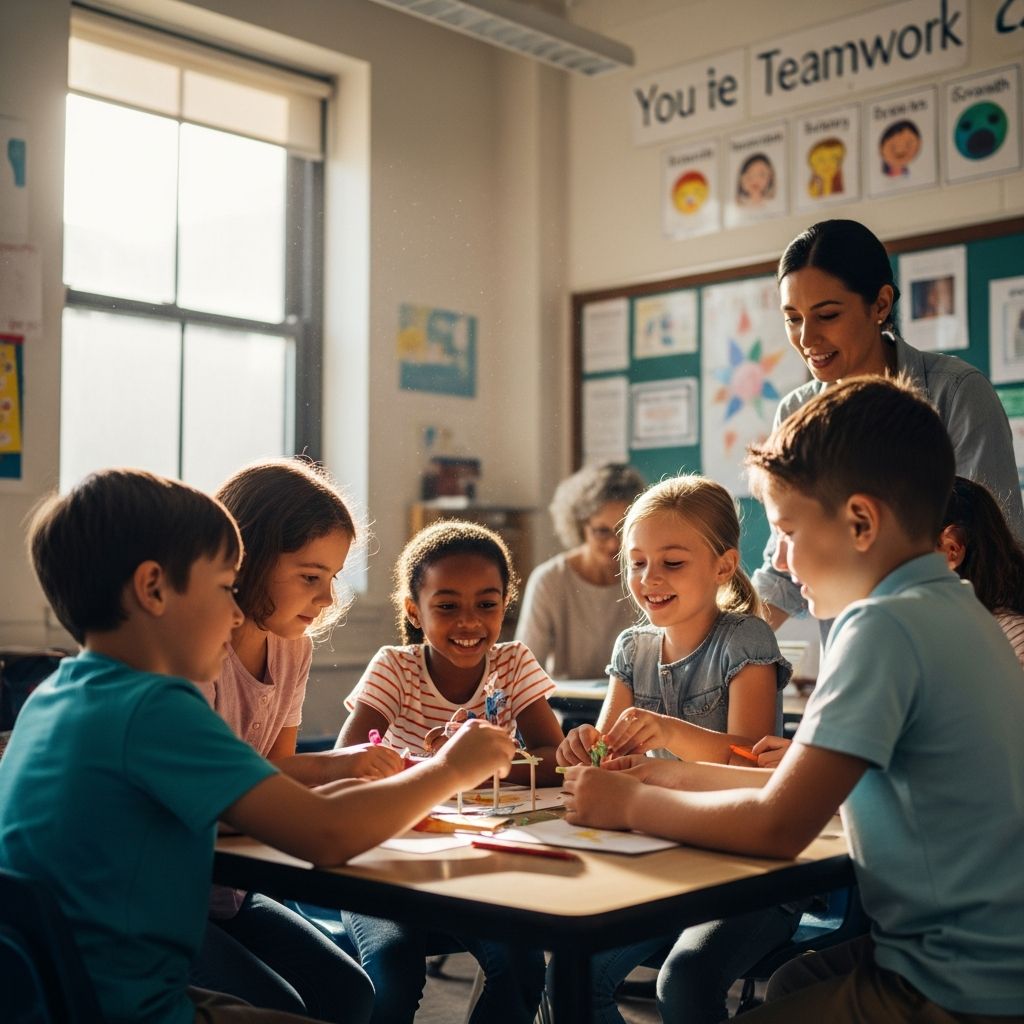
Understanding the Foundation of Emotional Growth in Educational Settings
The modern educational landscape extends far beyond traditional academics. Today’s educators recognize that developing students’ emotional intelligence, self-awareness, and interpersonal capabilities is equally vital as teaching mathematics or literature. This shift reflects a growing body of research demonstrating that students who develop robust emotional and social skills experience improved academic performance, reduced anxiety, and better long-term life outcomes.
Social-emotional learning encompasses five critical competencies: self-awareness (recognizing one’s emotions and strengths), self-management (regulating emotions and behaviors), social awareness (understanding others’ perspectives), relationship skills (building positive connections), and responsible decision-making (making ethical choices). When systematically integrated into classroom environments, these competencies create transformative educational experiences that extend well into adulthood.
Morning Rituals That Set the Emotional Tone
The start of each school day presents a unique opportunity to establish psychological safety and emotional attunement. Morning rituals serve as anchors that help students transition from their home environments into the learning space while signaling that their emotional well-being matters.
Personalized Greeting Exchanges represent one of the most accessible yet powerful morning practices. Rather than generic classroom hellos, students choose their preferred greeting style and engage classmates by name as they arrive. This simple practice acknowledges individual preferences while reinforcing community identity. Greeting variations might include waves, handshakes, high-fives, fist-bumps, or cultural gestures, creating opportunities for students to appreciate diverse communication styles and build inclusive classroom culture.
Structured Check-in Sessions provide designated time for students to articulate their emotional states in supportive environments. These sessions function as emotional barometers, allowing teachers to understand students’ internal landscapes while offering validation and empathetic listening. Check-ins can incorporate show-and-tell activities, preference-based discussions (such as “Would You Rather” scenarios), or brief cognitive breaks following demanding instructional periods. The act of being heard and acknowledged significantly impacts students’ sense of belonging and psychological safety.
Creative Expression as Emotional Processing
Artistic engagement provides nonverbal channels for emotional exploration and processing. Creative activities bypass the constraints of language, allowing students to access and express feelings that might be difficult to articulate verbally.
Visual Arts and Mindful Creation serve dual purposes: stress reduction and emotional reflection. Drawing and painting activities create psychological distance from stressors while facilitating self-exploration. Mindful coloring exercises particularly support individuality and introspective practices, offering repetitive, meditative experiences that calm the nervous system. When combined with intentional reflection prompts, visual creation becomes a powerful tool for emotional awareness.
Collaborative Artistic Projects extend individual creative work into collective experiences. Classroom murals, collaborative displays, and group art installations create natural bonding opportunities while allowing students to contribute to something larger than themselves. These projects simultaneously develop relationship skills, foster shared purpose, and create tangible representations of classroom community values.
Written Reflection and Journaling Practices
Writing serves as a bridge between internal emotional experience and external awareness. Journal writing and reflective writing activities create private spaces for emotional exploration while building metacognitive awareness—the ability to think about one’s own thinking and feeling processes.
Structured journaling prompts guide students toward meaningful reflection without rigid prescriptions. Effective prompts encourage students to explore emotional triggers, identify coping strategies, examine recent challenges, and celebrate accomplishments. Gratitude lists represent a specific journaling variation that shifts attention toward positive aspects of experience, building optimistic thinking patterns and appreciation for existing resources. This practice particularly supports students struggling with anxiety or negative thought spirals by intentionally redirecting cognitive focus.
The confidential nature of journal writing creates psychological safety that group activities cannot replicate. Students often disclose vulnerabilities, challenges, and growth in written formats that they might hesitate to share verbally. Teachers who honor this privacy while offering supportive written responses create powerful mentoring relationships that extend beyond traditional academic instruction.
Mindfulness and Stress Management Techniques
Modern students navigate unprecedented stress levels stemming from academic pressures, social media, family dynamics, and global circumstances. Mindfulness practices equip students with portable, evidence-based stress management tools that build nervous system regulation.
Breathing and Body Awareness Exercises form the foundation of mindfulness instruction. Deep breathing techniques activate the parasympathetic nervous system, counteracting stress responses and promoting physiological calm. Guided practices help students develop awareness of bodily sensations, recognizing where they hold tension and how emotional states manifest physically. When consistently practiced, these techniques become internalized resources students can access during challenging moments without external support.
Emotional Stress Release Activities provide cathartic outlets for accumulated tension. Activities such as writing down worries or insecurities, then physically destroying the written expression through tearing or throwing away the paper, create symbolic closure and emotional release. This three-minute practice acknowledges students’ barriers to learning while validating that emotional experiences precede academic readiness. By honoring this reality, teachers create permission structures that enhance genuine learning capacity.
Building Relational Competence Through Structured Interaction
Social skills develop through guided practice in authentic contexts. Rather than assuming students naturally acquire relationship skills, intentional classroom structures create rehearsal spaces for healthy interaction patterns.
Cooperative Learning Structures embed relationship-building into academic activities. Think-Pair-Share arrangements, group challenges, and collaborative problem-solving create natural contexts for practicing communication, cooperation, and perspective-taking. When teachers explicitly frame these activities as relationship skill development opportunities, students understand the pedagogical intention and engage more consciously. For example, teachers might explain: “We’re organizing into small groups so you can practice your collaboration and active listening skills.”
Conversation Protocols and Discussion Frameworks develop specific communication competencies. Structured protocols ensure equitable participation, honor multiple perspectives, and model respectful disagreement. Prompts such as “What qualities make someone a good team member?” or “How do you handle situations when you disagree with a friend?” create safe spaces for exploring relational challenges. Role-playing scenarios provide practical platforms where students can rehearse difficult conversations and receive supportive feedback before applying skills in real situations.
Perspective-Taking and Empathy Development
Empathy—the ability to understand and share others’ emotional experiences—represents a cornerstone of healthy relationships and ethical decision-making. Deliberate practices strengthen empathetic capacity and reduce harmful social behaviors.
Narrative Exploration and Character Analysis develop perspective-taking through stories. During reading or story time, teachers pause to discuss character emotions: “How do you think the protagonist felt when facing that conflict?” or “What might explain why the character made that choice?”. These questions shift attention from plot summary to internal emotional landscapes, building habits of wondering about others’ interior experiences. This practice simultaneously strengthens reading comprehension while developing empathetic reasoning.
Emotional Mirroring and Expression Recognition builds awareness of emotional communication through play. Mirror activities where partners take turns leading, making different facial expressions while the other mirrors them, create embodied understanding of how emotions appear externally. This simple practice helps students connect physical expressions with underlying emotional states while practicing attentional focus and coordination. Young children particularly benefit from these concrete, playful approaches to emotion education.
Mindset Development and Resilience Building
Students’ beliefs about intelligence, abilities, and challenge fundamentally shape their engagement and persistence. Instructional practices that cultivate growth mindsets—beliefs that abilities develop through effort—build resilience and academic motivation.
Failure Reframing and Growth Conversations normalize challenge as learning pathway rather than evidence of inadequacy. Structured share-outs where students discuss moments when they demonstrated growth mindset (persisting through difficulty, learning from mistakes) alongside fixed mindset moments (giving up, making excuses) create non-judgmental spaces for examining thinking patterns. This metacognitive reflection helps students recognize their agency in choosing perspective and effort level.
Inspirational Messaging and Reflective Dialogue further support mindset development. Introducing relevant quotes—whether addressing current classroom dynamics, broader social issues, or academic challenges—creates springboards for reflection. Students might share one-word responses, pair discussions, or whole-class conversations about whether they agree with quotations and what perspectives peers bring. This practice honors diverse viewpoints while building intellectual humility and openness to other ways of thinking.
Communication Skills and Active Listening Development
Effective communication extends beyond speaking ability to include skilled listening, nonverbal awareness, and emotional attunement. These competencies develop through deliberate practice and feedback.
Active Listening Instruction teaches students to listen with genuine intent to understand rather than to formulate responses. Structured activities emphasizing eye contact, paraphrasing, and open-ended questioning build these often-underdeveloped skills. Group discussions and role-playing scenarios provide safe practice spaces where students can experiment with new communication patterns and receive supportive feedback. Over time, these practices transform from conscious effort to internalized habits.
Verbal and Nonverbal Communication Integration expands communication awareness beyond words. Students learn to attend to tone, body language, facial expressions, and pacing—dimensions that often communicate more powerfully than literal content. Activities exploring contradictions between verbal and nonverbal messages (sarcasm, uncertainty, masking emotions) develop nuanced communication understanding that prepares students for complex real-world interactions.
Emotion Identification and Naming
Many students lack precise emotional vocabulary, limiting their ability to communicate internal states. Deliberate instruction in emotion recognition and naming builds this foundational competency.
Teachers might create classroom activities where students generate emotion lists, developing comprehensive emotional vocabularies beyond basic categories (happy, sad, angry). Reflection prompts asking students to identify recent feelings and their impacts build connections between emotions and consequences. Diverse representation of emotional experiences—not just positive emotions but also frustration, disappointment, jealousy, and confusion—normalizes the full spectrum of human feeling and validates students’ actual experiences rather than expecting artificial cheerfulness.
Structured Implementation Framework
| Competency Area | Implementation Strategies | Ideal Timing |
|---|---|---|
| Self-Awareness | Journaling, emotion identification, reflection prompts | Individual or small group sessions |
| Self-Management | Breathing exercises, stress release activities, mindfulness | Transition times, after challenging tasks |
| Social Awareness | Perspective-taking, character analysis, empathy discussions | During content instruction |
| Relationship Skills | Cooperative learning, conversation protocols, role-play | Integrated throughout academic work |
| Responsible Decision-Making | Growth mindset conversations, value discussions, ethical scenarios | Morning meetings, closing reflections |
Frequently Asked Questions
Q: How much classroom time should social-emotional learning consume?
A: SEL integrates into existing routines rather than requiring substantial separate time. Morning check-ins (5-10 minutes), breathing breaks, and reflective components embedded in content instruction effectively develop emotional competencies without displacing academics. Strategic integration yields greater benefits than isolated SEL classes.
Q: What if some students resist participation in emotional sharing activities?
A: Honor varying comfort levels by offering choice and alternative participation formats. Students might journal privately instead of sharing verbally, draw rather than discuss, or observe initially before participating. Psychological safety develops gradually; forcing participation undermines trust. Consistent, non-judgmental invitations eventually encourage broader participation.
Q: Can SEL activities benefit all grade levels?
A: Yes, though implementation varies developmentally. Elementary students benefit from concrete, playful practices like mirror games and emotion recognition. Middle and high school students engage with more complex reflection, perspective debates, and abstract concept exploration. Activities scale across development while maintaining core competency focus.
Q: How do teachers measure SEL program effectiveness?
A: Observe changes in classroom climate, conflict resolution patterns, student engagement, and academic performance. Collect student feedback about emotional safety and belonging. Research consistently demonstrates that comprehensive SEL integration correlates with improved academic outcomes and reduced anxiety.
Q: What resources support SEL implementation?
A: Evidence-based curricula like Classroom Dinosaur provide structured lessons in friendship skills, emotional language, problem-solving, and anger management. Supplemental resources cover communication, cooperation, emotion regulation, empathy, impulse control, and social initiation. Many free materials exist through educational organizations and teacher-sharing platforms.
References
- 10 Social-Emotional Learning Activities to Engage Students — Explain Everything. 2024. https://explaineverything.com/blog/inspiring-educators/10-social-emotional-learning-activities-to-engage-students/
- Engaging Social Emotional Learning Activities for Any Classroom — Antioch University. 2024. https://commonthread.antioch.edu/engaging-social-emotional-learning-activities-for-any-classroom/
- 5 Social Emotional Learning (SEL) Classroom Management Strategies — The Incredible Years. 2024. https://www.incredibleyears.com/blog/social-emotional-teaching-strategies
- 28 Social-Emotional Learning Activities for the Classroom — Facing History and Ourselves. 2024. https://www.facinghistory.org/ideas-week/28-social-emotional-learning-activities-classroom
- Social Emotional Learning Activities | SEL Skills — Imagine Child. 2025. https://www.imaginechild.com/2025/08/social-emotional-learning-activities/
- 13 Powerful SEL Activities — Edutopia. 2023. https://www.edutopia.org/article/13-powerful-sel-activities-emelina-minero/
- Social Emotional Learning Activities — Centervention. 2024. https://www.centervention.com/social-emotional-learning-activities/

Medha Deb is an editor with a master's degree in Applied Linguistics from the University of Hyderabad. She believes that her qualification has helped her develop a deep understanding of language and its application in various contexts. Medha specializes in the areas of beauty, health, sports, and wellness and is committed to ensuring that the content on the website is…