
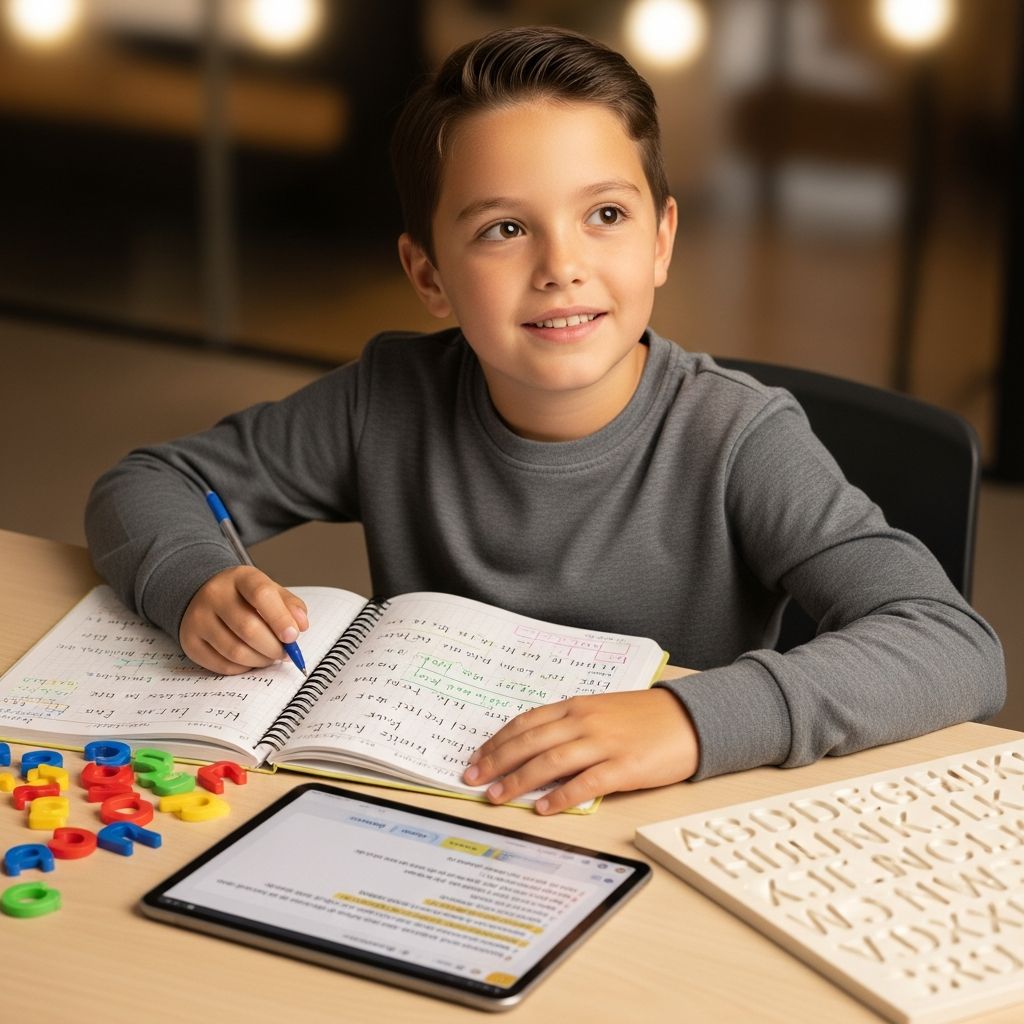
Dyslexic students often face unique hurdles in mastering spelling due to challenges in phonological processing and orthographic mapping. However, structured, multisensory approaches can transform these difficulties into opportunities for success. This guide outlines comprehensive strategies, drawing from evidence-based practices to create engaging lesson plans that build confidence and skill.
Understanding Dyslexia and Spelling Challenges
Dyslexia impacts the brain’s ability to process language sounds and link them to letters, making spelling a persistent struggle even for bright learners. Unlike typical spellers who intuitively grasp phoneme-grapheme correspondences, dyslexic individuals may reverse letters, confuse similar sounds, or forget irregular patterns. Research shows that explicit, systematic instruction addressing these gaps leads to significant improvements.
Key challenges include weak phonological awareness, difficulty segmenting words into sounds, and overreliance on visual memory without phonetic foundations. Effective interventions prioritize building these foundations through repeated, varied exposure.
Building a Strong Foundation: Integrating Reading and Spelling
Spelling instruction for dyslexic learners must align closely with reading lessons. Introduce words for decoding first, then transition to encoding the same patterns. This reinforces orthographic awareness, as students recognize familiar letter-sound links during spelling practice.
Daily reviews using sound-spelling cards help solidify associations. For instance, after teaching the /k/ sound with ‘c’ and ‘k’, have students spell decodable words like ‘cat’ and ‘kit’. Gradually add rules, such as silent ‘e’ or vowel teams, ensuring mastery before progression.
Multisensory Techniques to Engage All Learning Pathways
Multisensory learning activates visual, auditory, kinesthetic, and tactile channels simultaneously, compensating for dyslexia’s processing deficits. These methods make abstract spelling concrete and memorable.
- Air Writing: Students trace letters in the air with finger movements while chanting sounds, enhancing motor memory.
- Sand or Shaving Foam Tracing: Write words in tactile mediums, saying each letter aloud to blend touch with phonics.
- Body Percussion: Clap consonants, snap vowels, or hop syllables to rhythmically segment words.
- Mirror Work: Practice enunciation while watching mouth movements, linking sound production to spelling.
Incorporate movement like ball-tossing while spelling or singing letters to tunes, turning practice into play.
Customizing Word Lists and Practice Intensity
Standard spelling lists overwhelm dyslexic students with too many irregular words. Instead, curate focused lists emphasizing patterns from recent reading lessons, such as all words with ‘ou’ for /ou/ sound.
Modify assignments: Limit to 5-10 pattern-based words weekly, supplemented by high-frequency sight words. Use overlearning—repeated practice beyond initial mastery—to embed spellings in long-term memory.
| Standard List Approach | Dyslexia-Friendly Adaptation |
|---|---|
| 20 mixed words | 8 pattern-focused words |
| Memorization only | Phonics analysis + multisensory |
| Weekly test | Daily dictation + review |
Mastering Irregular Words Through Targeted Drills
Irregular words like ‘said’ defy phonics rules, requiring special strategies. Provide a model word, have students circle deviant parts (e.g., ‘ei’ in ‘said’), then practice:
- Trace the model three times, naming letters aloud.
- Copy with eyes open, then closed, checking against model.
- Write from memory, self-correcting errors.
These simultaneous oral, visual, and written cues build robust recall. Over time, patterns in irregularities emerge, aiding generalization.
Interactive Sorting and Pattern Analysis Activities
Sorting reinforces letter patterns by categorizing words visually and tactilely. Students write words on cards, then sort by sound (e.g., /ch/ as ‘ch’ vs. ‘tch’) or position (initial vs. final blends).
Extend to word matrices or webs: Place base words in centers, add suffixes/prefixes in branches. This teaches morphology—roots, affixes—crucial for advanced spelling.
Example Activity: Blend Sorts
– Initial blends: ‘stop’, ‘clap’
– Final blends: ‘hand’, ‘mist’
Discuss rules, like ‘ng’ at word ends.
Personalized Spelling Notebooks for Ongoing Reference
Encourage students to maintain notebooks divided by sounds, rules, and exceptions. Dedicate pages to each phoneme (e.g., /ee/: ‘ee’, ‘ea’), listing examples and outliers.
Review notebooks weekly, adding discoveries from reading. This active recording promotes ownership and serves as a portable review tool.
Incorporating Technology and Assistive Tools
Digital aids like word prediction software (e.g., Read&Write) and touch-typing programs (e.g., TTRS) support spelling. Touch-typing fosters keyboard visualization, bypassing handwriting struggles.
Apps with dictation drills or gamified lists allow self-paced practice. Pair with voice recorders: Students spell aloud, playback, and self-assess.
Weekly Lesson Plan Template for Consistent Progress
Structure 15-20 minute daily sessions for cumulative gains:
- Warm-Up (3 min): Phonological segmentation (e.g., count phonemes in ‘night’: n-igh-t).
- Review (5 min): Sound cards, notebook check.
- New Pattern (5 min): Introduce, model multisensory spelling.
- Practice (5 min): Sorts, tracing, dictation.
- Wrap-Up (2 min): Notebook entry, quick quiz.
End weeks with cumulative dictation to assess retention.
Engaging Games and Mnemonics for Retention
Games combat fatigue: Spelling bingo, hopscotch letters, or partner relays. Mnemonics like ‘Because’ (Big Elephants Can Always Understand Small Elephants) encode tricky sequences.
Backward spelling tests visual memory: Spell forwards/backwards to confirm orthographic strength.
Monitoring Progress and Adjusting Instruction
Track via error analysis: Note persistent confusions (e.g., ‘b/d’ reversals) and intensify relevant drills. Celebrate small wins to build motivation.
Collaborate with parents: Share home activities like magnetic letters or rainbow writing.
Frequently Asked Questions (FAQs)
How often should spelling practice occur for dyslexic students?
Daily short sessions (10-15 minutes) yield better retention than infrequent long ones, allowing spaced repetition.
Can touch-typing really help with spelling?
Yes, it creates muscle memory and keyboard visualization, transferring to handwriting over time.
What if a student resists multisensory activities?
Start with favorites (e.g., sand trays), gradually introduce others; tie to interests for buy-in.
Are commercial programs necessary?
Not always; core principles work with free adaptations, though structured software accelerates progress.
How do I differentiate for varying skill levels?
Tier lists: Basic patterns for beginners, morphology for advanced; rotate group activities.
References
- 9 Tips on Spelling Instruction for Students with Dyslexia — Brookes Publishing. 2023-05-15. https://blog.brookespublishing.com/9-tips-on-spelling-instruction-for-students-with-dyslexia/
- EAST Guide to Spelling — Addressing Dyslexia Toolkit. 2022-10-01. https://addressingdyslexia.org/wp-content/uploads/2022/10/EAST-Guide-to-Spelling.pdf
- Dyslexia Intervention Lesson Plan Template — Indiana Department of Education. 2016-01-01. https://www.in.gov/doe/files/16-dyslexia-intervention-lesson-plan-template.pdf
- Spelling Tools & Activities — University of Michigan Dyslexia Help. 2024-01-01. https://dyslexiahelp.umich.edu/professionals/dyslexia-and-intervention/spelling/tools-activities/
- Spelling – British Dyslexia Association — British Dyslexia Association. 2023-11-20. https://www.bdadyslexia.org.uk/advice/children/how-can-i-support-my-child/spelling

Medha Deb is an editor with a master's degree in Applied Linguistics from the University of Hyderabad. She believes that her qualification has helped her develop a deep understanding of language and its application in various contexts. Medha specializes in the areas of beauty, health, sports, and wellness and is committed to ensuring that the content on the website is…