
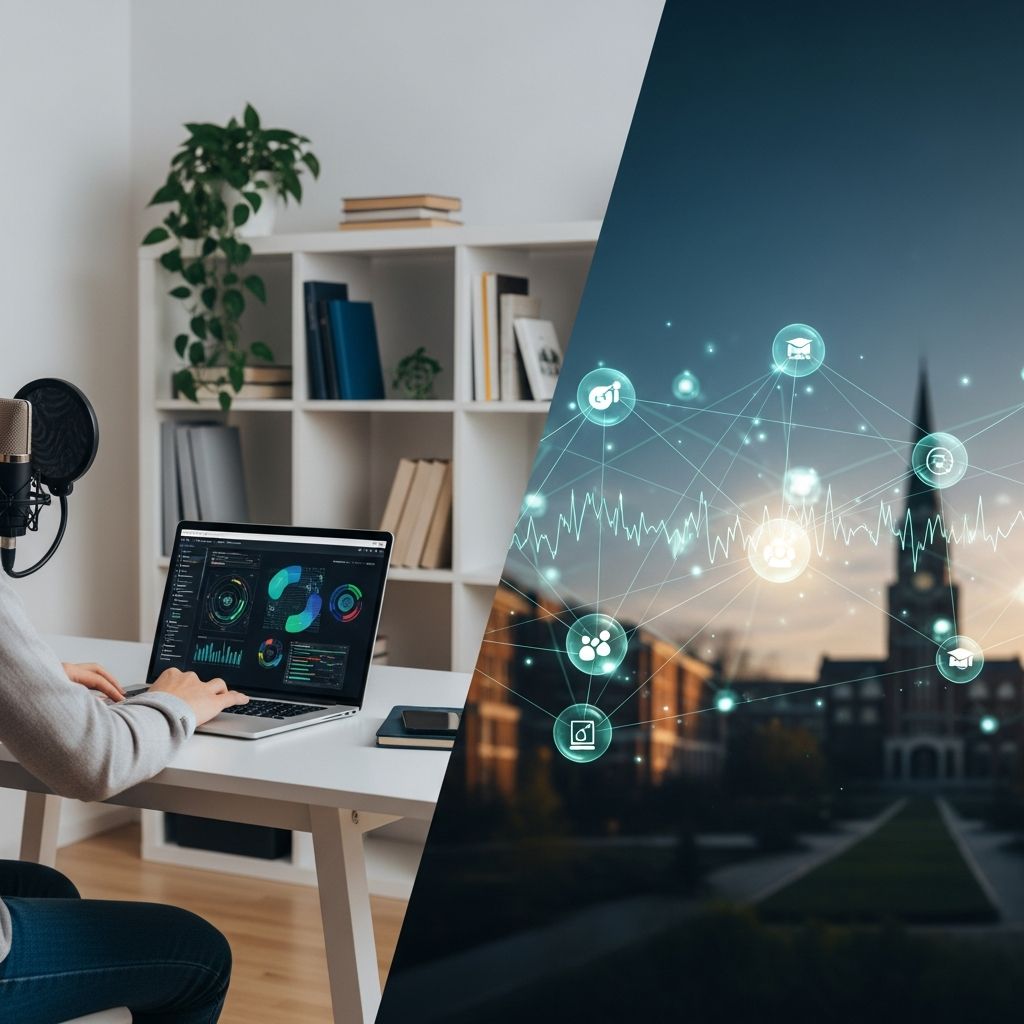
Online doctoral programs have transformed higher education, enabling professionals to earn the highest academic credentials without disrupting their lives. These degrees combine rigorous scholarship with digital accessibility, appealing to those balancing careers and commitments.
Why Pursue a Doctorate in the Digital Age?
Doctoral degrees represent the pinnacle of academic achievement, opening doors to leadership roles, research positions, and specialized expertise. In today’s job market, advanced qualifications are essential for standing out. The Bureau of Labor Statistics projects 13% growth in doctoral-level occupations from 2016 to 2026, outpacing the 7% average for all jobs. Online formats make this attainable for working adults, with over 1,000 accredited programs available across 205 U.S. institutions.
Professionals choose virtual PhDs for practical reasons: no relocation, no rigid schedules, and integration of studies with real-world application. This shift reflects broader trends in distance learning, where 39.8% of graduate students now participate.
Key Advantages of Online Doctoral Studies
Virtual programs excel in delivering value through innovative design. Here’s how they empower learners:
- Schedule Autonomy: Study anytime, anywhere, fitting coursework around full-time work and family. Asynchronous modules allow progress at your pace, reducing burnout.
- Cost and Time Efficiency: Eliminate commuting and housing expenses. Many complete degrees faster than traditional peers due to streamlined structures.
- Tailored Education: Access diverse learning tools—videos, forums, transcripts—suited to individual styles. Faculty mentors, often field experts nationwide, provide personalized guidance.
- Broadened Connections: Interact with peers across regions, fostering a national network rich in perspectives.
These features create a supportive ecosystem. For instance, virtual office hours via video replace campus treks, maximizing productivity. Graduates often report quicker career integration of new knowledge.
Navigating Potential Drawbacks
No educational path is without hurdles. Online doctorates demand self-motivation amid freedoms. Common issues include:
- Self-Discipline Needs: Without classroom structure, procrastination risks rise. Those thriving in guided environments may struggle.
- Digital Interaction Limits: Virtual networking builds diverse ties but lacks in-person rapport for some.
- Tech Dependencies: Connectivity glitches or platform unfamiliarity can disrupt flow.
- Isolation Feelings: Remote study may lead to loneliness without peer camaraderie.
| Challenge | Impact | Mitigation Strategy |
|---|---|---|
| Time Management | Delayed progress | Set weekly goals, use planners |
| Networking | Limited face-to-face bonds | Join virtual meetups, alumni groups |
| Technical Issues | Interrupted sessions | Backup internet, tech support |
| Isolation | Motivation dips | Schedule study buddies, forums |
Research shows graduates overcome these via targeted strategies like routine-building and community engagement. Online formats ultimately suit disciplined learners best.
Popular Disciplines for Virtual Doctorates
Demand spans fields. Business administration tops lists, followed by education, nursing, and technology. Programs emphasize applied research, preparing leaders for industry challenges.
- Education (EdD): Focuses on policy, leadership; ideal for administrators.
- Business (DBA): Targets executives with data-driven decision tools.
- Nursing (DNP): Advances clinical practice for healthcare pros.
- Psychology (PsyD/PhD): Builds therapy and research skills remotely.
These degrees maintain accreditation parity with on-campus counterparts, ensuring employer recognition.
Choosing the Right Online Program
Accreditation is paramount—verify regional bodies like Higher Learning Commission. Evaluate:
- Curriculum relevance to career goals.
- Faculty credentials and support availability.
- Graduation rates and alumni success.
- Dissertation flexibility for working pros.
Reputable platforms offer residencies blending virtual and brief in-person elements, enhancing rigor without full commitment.
Real-World Success Stories
Countless professionals thrive. A mid-career educator earned her EdD online, ascending to superintendent while teaching. An IT manager completed a DBA, landing C-suite roles. These cases highlight accelerated timelines—often 3-4 years versus 5-7 traditional.
Financial Considerations and Aid
Tuition varies: $20,000-$100,000 total. Employer reimbursements, scholarships, and federal loans ease burdens. ROI shines: doctorate holders earn 20-30% more, per BLS data. Calculate personal returns via salary projections.
Overcoming the Toughest Hurdles
The dissertation looms largest—original research demanding persistence. Online programs aid with structured milestones, peer reviews, and advisor check-ins. Other challenges like funding or health issues are met with flexibility and resource access. Strategies include:
- Financial planning early.
- Wellness routines amid studies.
- Relationship nurturing for support.
The Future of Online Doctorates
Technology advances—AI tutoring, VR simulations—promise richer experiences. Enrollment surges as credibility solidifies; myths of ‘easy degrees’ fade against proven outcomes. Expect hybrid models blending best of both worlds.
Frequently Asked Questions
Are online doctorates respected by employers?
Yes, accredited programs hold equal prestige. Employers value skills and outcomes over format.
How long do online PhDs take?
Typically 3-7 years part-time, faster than many traditional paths due to efficiency.
Do they require campus visits?
Some include short residencies; fully online options exist.
What’s the hardest part?
Dissertation and self-motivation; support systems help.
Can anyone enroll?
Requires master’s typically, plus relevant experience.
References
- Pros and Cons of Getting a Doctorate Online — Marymount University. 2024. https://online.marymount.edu/blog/pros-and-cons-getting-doctorate-online
- What’s the Most Difficult Part About Earning a Doctorate? — Walden University. 2024. https://www.waldenu.edu/online-doctoral-programs/resource/what-is-the-most-difficult-part-about-earning-a-doctorate
- Strategies Used to Overcome Challenges and Graduate from Online Doctoral Programs — International Journal of Doctoral Studies. 2022-10-01. http://ijds.org/Volume19/IJDSv19Art017Shur10137.pdf
- Can You Get a Doctorate Online (& Should You)? — Franklin University. 2024. https://www.franklin.edu/blog/can-you-get-your-doctorate-online-and-should-you
- The Rise of Distance Learning and the Online PhD: Is There Cause for Concern? — PUPN Magazine. 2024. https://pupnmag.com/article/the-rise-of-distance-learning-and-the-online-phd-is-there-cause-for-concern/

Medha Deb is an editor with a master's degree in Applied Linguistics from the University of Hyderabad. She believes that her qualification has helped her develop a deep understanding of language and its application in various contexts. Medha specializes in the areas of beauty, health, sports, and wellness and is committed to ensuring that the content on the website is…