
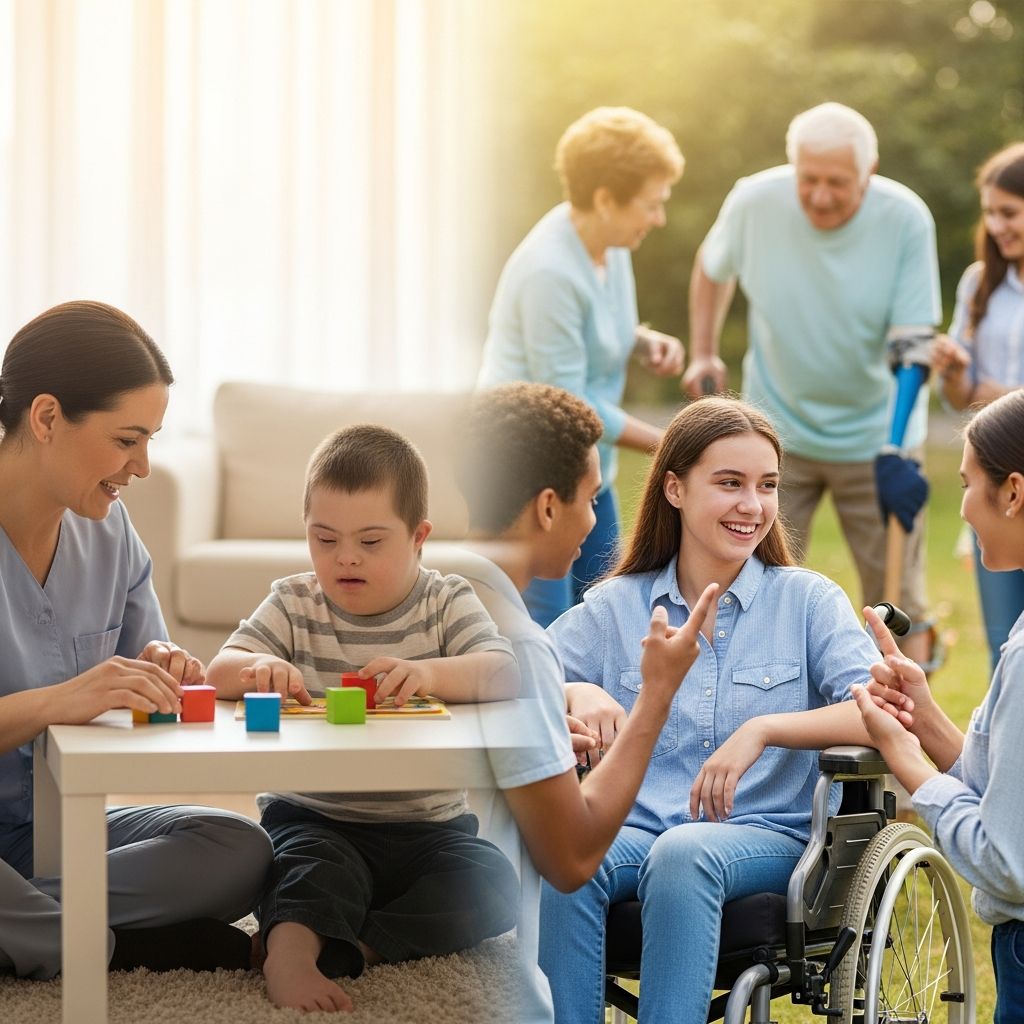
Multiple disabilities represent a complex category in special education where students experience simultaneous impairments that together create profound challenges requiring unique interventions. This guide delves into the legal frameworks, underlying causes, observable characteristics, assessment approaches, and evidence-based strategies to foster meaningful progress for affected individuals.
Legal Foundations and Precise Definitions
The cornerstone of addressing multiple disabilities in the U.S. educational system is the Individuals with Disabilities Education Act (IDEA), which provides a clear delineation. Specifically, IDEA defines multiple disabilities as concomitant impairments—such as intellectual disability paired with blindness or orthopedic impairment—the combination of which generates such severe educational needs that they cannot be met through special education programs designed for just one impairment. Notably, this category excludes deaf-blindness, which holds its own distinct classification under IDEA.
This definition underscores a critical point: it’s not merely the presence of two or more disabilities but their interactive effect that escalates the educational demands to a level demanding integrated, multifaceted support. State variations exist; for instance, Colorado mandates that one impairment must be intellectual disability, alongside another from areas like visual, hearing, orthopedic, speech/language, emotional, autism, traumatic brain injury, or other health impairments. Such specifications ensure that services are calibrated to the unique interplay of conditions.
Diverse Origins and Risk Factors
The etiology of multiple disabilities is often elusive, with many cases lacking a identifiable cause. When origins are known, they span prenatal, perinatal, and postnatal events. Common contributors include chromosomal abnormalities, premature birth, oxygen deprivation during delivery, infections, genetic disorders, brain or spinal cord malformations, and traumatic injuries.
For example, a child might acquire disabilities from birth complications like hypoxia, leading to intertwined cognitive and motor deficits. These factors highlight the importance of early screening and intervention to mitigate cascading effects on development. Understanding potential causes aids families and educators in advocating for comprehensive medical evaluations and tailored preventive measures.
Distinct Profiles and Variability
No two students with multiple disabilities present identically; the term encompasses vast heterogeneity in the number, type, and severity of impairments. One learner might navigate intellectual disability and deafness, while another grapples with cerebral palsy and autism spectrum disorder. This variability demands individualized profiling to capture how each disability influences learning, mobility, communication, and daily functioning.
Key considerations include the specific impairments involved, their intensity (mild, moderate, severe), and their compounded impact. For instance, visual impairment combined with motor challenges might severely limit access to tactile learning materials, necessitating adaptive technologies. Educators must assess the holistic picture: how do these conditions collectively affect sensory processing, cognition, balance, and social engagement?
Prevalent Characteristics Across Cases
Despite diversity, certain traits frequently emerge among students with multiple disabilities. Communication barriers are common, manifesting as limited verbal skills, reliance on assistive devices, or nonverbal cues. Mobility restrictions often necessitate mobility aids, positioning support, or physical therapy.
Daily living skills pose ongoing hurdles, from self-care routines to environmental navigation. Medical comorbidities like seizures or hydrocephalus (excess fluid in the brain) can further complicate management. Cognitively, challenges in attention, memory, and problem-solving predominate, compounded by sensory processing differences.
- Communication deficits: Delayed speech, apraxia, or alternative communication needs.
- Motor impairments: Reduced coordination, spasticity, or ataxia requiring adaptive equipment.
- Cognitive limitations: Varied intellectual functioning impacting academic access.
- Sensory issues: Combined visual/hearing losses altering perception.
- Health concerns: Epilepsy, feeding difficulties, or respiratory vulnerabilities.
Comprehensive Assessment Protocols
Evaluating students with multiple disabilities requires a multidisciplinary team employing specialized tools to gauge functional abilities across domains. Initial screenings identify impairments, followed by in-depth assessments in cognition, adaptive behavior, motor skills, sensory status, and communication.
Standardized instruments must be adapted—nonverbal IQ tests for those with speech issues, functional vision/hearing evaluations, and ecological assessments observing real-world performance. Teams include psychologists, therapists, physicians, and educators to synthesize data into an actionable profile. This informs Individualized Education Programs (IEPs) that address the synergistic needs.
| Assessment Domain | Purpose | Example Tools |
|---|---|---|
| Cognitive | Measure intellectual potential | Leiter International Performance Scale, cognitive adaptive tests |
| Motor/Sensory | Evaluate physical/sensory function | Peabody Developmental Motor Scales, functional vision assessments |
| Communication | Assess expressive/receptive skills | Augmentative communication inventories |
| Adaptive Behavior | Gauge daily living skills | Vineland Adaptive Behavior Scales |
Tailored Educational Approaches
Educational programming for multiple disabilities prioritizes functional, life-skills-focused curricula over traditional academics, given severe needs. Instruction occurs in specialized settings like self-contained classrooms or therapeutic environments, often with a low student-teacher ratio.
Core strategies encompass:
- Universal Design for Learning (UDL): Multiple means of representation, engagement, and expression.
- Assistive Technology: Switches, eye-gaze systems, communication apps.
- Behavioral Supports: Positive interventions for self-regulation.
- Related Services: Therapy integration (OT/PT/speech) into daily routines.
Progress monitoring uses data-driven goals, such as mastering switches for environmental control or basic signs for requests. Collaboration with families ensures consistency across home and school.
Support Services and Interdisciplinary Teams
Holistic support involves occupational, physical, speech-language, and behavioral therapies, alongside nursing for medical oversight. Augmentative and alternative communication (AAC) systems bridge interaction gaps, while adaptive physical education promotes fitness.
Transition planning from early intervention to school-age services, and later to adult life, emphasizes vocational training and community integration. Families access respite care, financial aid, and advocacy training to sustain long-term involvement.
Empowering Families and Caregivers
Parents and guardians are pivotal, yet often overwhelmed. Resources like Parent Training and Information Centers (PTIs) offer guidance on rights, IEP advocacy, and home strategies. Skill-building workshops teach handling equipment, behavior management, and fostering independence.
Emotional support through peer networks combats isolation. Early authorization for services maximizes developmental windows, with emphasis on strengths-based approaches to nurture potential.
Frequently Asked Questions (FAQs)
What distinguishes multiple disabilities from single impairments?
The combination creates severe needs unaddressable by single-disability programs, per IDEA.
Can causes always be pinpointed?
Often unknown, but may include genetic issues, birth complications, or injuries.
What educational settings are typical?
Specialized classrooms with integrated therapies and assistive tech.
How are IEPs developed?
Via multidisciplinary assessments focusing on functional outcomes.
What role does technology play?
Critical for access, communication, and independence.
References
- Understanding “Multiple Disabilities” | A Guide to the IDEA — Special Education Guide. Accessed 2026. https://www.specialeducationguide.com/disability-profiles/multiple-disabilities/
- Multiple Disabilities – Colorado Department of Education — Colorado Department of Education. Accessed 2026. https://ed.cde.state.co.us/cdesped/sd-main/sd-multiple
- Multiple Disabilities – Center for Parent Information and Resources — Center for Parent Information and Resources. Accessed 2026. https://www.parentcenterhub.org/multiple/
- Multiple Disabilities – The Psychology of Developmental Disabilities — Maricopa Open. Accessed 2026. https://open.maricopa.edu/psy243/chapter/multiple-disabilities/
- Multiple Disabilities – Introduction to Special Education Resource — Virginia Pressbooks. Accessed 2026. https://viva.pressbooks.pub/intro2specialed/chapter/multiple-disabilities/
- Multiple Disabilities Best Practices 2022 — Howard County Public Schools. 2022. https://www.hcps.org/webfiles/WebFilesHandler.ashx?id=3423
- MULTIPLE DISABILITIES – Mississippi Department of Education — Mississippi Department of Education. 2022-02-18. https://www.mdek12.org/sites/default/files/Offices/MDE/OAE/OSE/Family%20Guide/mde_vol8_familyspedguide_multiple_disabilities_021822_updated.pdf

- Integrated M.A. in Applied Linguistics, University of Hyderabad
- 5+ years in editorial, instructional, SEO, and research-based writing
Sneha is a relationships and lifestyle writer with a strong foundation in applied linguistics and certified training in relationship coaching. She brings over five years of writing experience to theskillvault, crafting thoughtful, research-driven content that empowers readers to build healthier relationships, boost emotional well-being, and embrace holistic living. Her writing and insights reflect the belief that beauty, happiness, and wellness…