
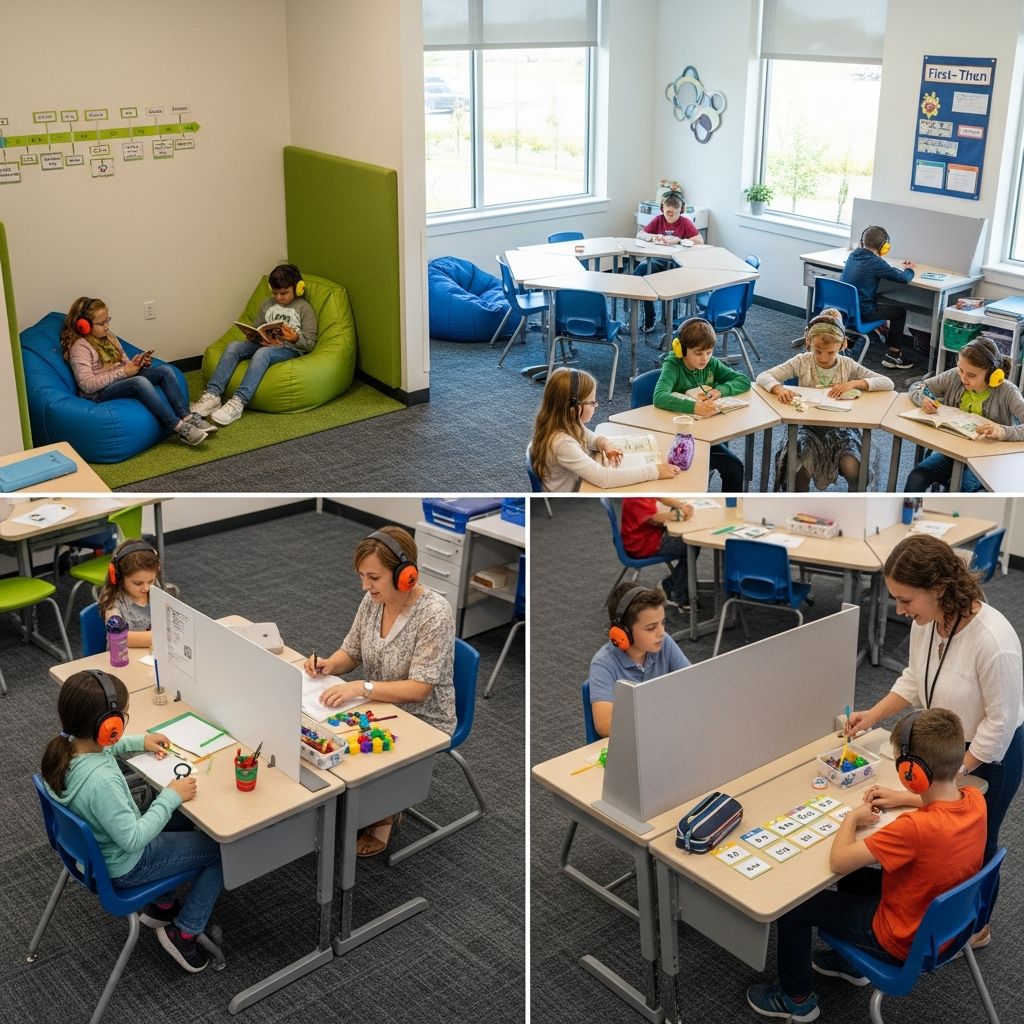
Supporting students with Attention Deficit Hyperactivity Disorder (ADHD) requires tailored approaches that address their unique challenges in focus, impulse control, and organization. These students often thrive when educators implement structured yet flexible methods to maintain engagement and reduce distractions. By drawing on evidence-based practices, teachers can transform the classroom into an environment where ADHD learners not only participate but excel.
Understanding ADHD in Educational Settings
ADHD affects approximately 5-7% of children worldwide, impacting executive functions like planning, attention, and emotional regulation. In classrooms, this manifests as difficulty sustaining attention, hyperactivity, or impulsivity, which can hinder academic progress if unaddressed. Research from the Centers for Disease Control and Prevention emphasizes observing individual triggers and preferences, such as fidget tools or minimized eye contact during instructions, to customize support. Collaborative efforts with parents and multidisciplinary teams further ensure holistic interventions, as outlined in U.S. Department of Education guidelines[10].
Recognizing these traits early allows educators to proactively adapt teaching methods, preventing frustration and promoting positive outcomes for all students.
Building Strong Foundations with Routines and Structure
Consistent routines provide the predictability ADHD students crave, minimizing anxiety during transitions. Start each day with a visual schedule displayed prominently, outlining activities, breaks, and expectations. This visual anchor reduces reliance on working memory, a common challenge for these learners.
Clear rules paired with immediate consequences foster accountability. For instance, a posted code of conduct with simple, positive language like “Listen with respect” helps reinforce boundaries. Studies show such structures improve executive functioning and behavioral control.
- Post daily agendas on the board or via apps for quick reference.
- Use timers for transitions, giving 5-minute warnings to prepare mentally.
- Incorporate predictable breaks to recharge energy levels.
Integrating Movement to Channel Energy
Physical activity is a cornerstone for managing ADHD symptoms, enhancing attention and motor skills. A 2022 study highlighted how exercise boosts cognitive functions, making it essential to weave movement into lessons.
Transform static lectures into dynamic sessions with station rotations, where students cycle through hands-on tasks. This keeps bodies active and minds engaged without derailing the class flow.
| Activity Type | Description | Benefits for ADHD |
|---|---|---|
| Station Rotations | Groups move between math manipulatives, reading nooks, and writing desks every 10 minutes. | Sustains focus through variety and physical shifts. |
| Brain Breaks | Quick stretches, jumping jacks, or yoga poses mid-lesson. | Releases excess energy, improving post-break concentration. |
| Active Learning | Stand-and-deliver discussions or walking while brainstorming. | Combines mobility with content retention. |
Multisensory Approaches for Deeper Engagement
ADHD brains respond best to lessons that stimulate sight, sound, touch, and movement simultaneously. Multisensory techniques improve retention by creating multiple neural pathways for information.
Incorporate tactile tools like sand trays for writing practice or building models in science. Pair these with auditory elements, such as rhythm-based math chants or educational podcasts, to amplify learning. Visual aids like mind maps and color-coded notes further clarify complex ideas.
- Hands-on math: Use blocks or beads for operations.
- Storytelling with props: Act out narratives using costumes.
- Music integration: Teach history timelines via songs.
Flexible Environments to Match Individual Needs
Rigid desks often exacerbate restlessness; flexible seating empowers students to select positions that optimize focus. Options like stability balls, standing desks, or cozy pods accommodate varying energy levels.
This autonomy builds self-regulation skills. Observe what works—some prefer quiet corners, others communal tables—and adjust accordingly, as recommended by CDC resources.
Simplifying Instructions for Clarity and Success
Overwhelming directions lead to shutdowns; chunking tasks into single steps prevents this. Deliver one instruction at a time, confirm comprehension, then proceed.
Visual checklists with checkboxes transform abstract assignments into concrete actions. For example, number steps for a project: 1) Gather materials, 2) Outline ideas, 3) Draft content. Peer tutoring complements this, offering personalized guidance and social reinforcement.
Positive Reinforcement and Timely Feedback
Immediate praise trumps delayed rewards for ADHD students, who thrive on instant affirmation. Use specific feedback like “Great job organizing your desk—that helped you finish quickly!” Token economies, where stickers earn privileges, visualize progress.
Respectful redirection maintains dignity: “Let’s focus here first, then tackle that.” This approach, per Understood.org, reduces defensiveness and encourages persistence.
Gamification and Choice to Spark Motivation
Games tap into ADHD strengths like creativity and quick thinking. A 2020 study confirmed gamification boosts engagement and skill acquisition.
Offer choices: “Practice spelling via flashcards, sentences, or a scavenger hunt?” This ownership increases compliance and output. Digital tools like quiz apps or leaderboards add excitement without chaos.
- Point systems for daily goals, redeemable for fun breaks.
- Team challenges with collaborative scoring.
- Personalized avatars tracking achievements.
Mindfulness and Self-Regulation Tools
Short mindfulness sessions train impulse control and awareness. Guided breathing or body scans, lasting 2-3 minutes, calm racing minds before tasks.
Fidget tools—stress balls, putty—discreetly occupy hyperactive hands, freeing the brain for learning. Teach self-monitoring charts where students rate their focus hourly, promoting metacognition.
Activities Tailored for ADHD Thrival
Targeted games build skills playfully. Color sorting hones categorization; nature hunts sharpen observation.
| Activity | Skills Developed | How to Implement |
|---|---|---|
| Storytime Yoga | Focus, body awareness | Pair poses with narrative elements during reading time. |
| Rhythm Beats | Auditory processing, coordination | Clap patterns to learn multiplication tables. |
| Puzzle Challenges | Problem-solving, patience | Time-bound group puzzles with rewards. |
| Flashcard Races | Quick recall, competition | Relay-style reviews for vocabulary. |
Collaborative and Participatory Learning
Boost involvement with choral responses, thumbs-up voting, or whiteboard shares—quick, whole-class techniques that minimize wait times. Paired work leverages peer support, enhancing understanding through discussion.
Assign skill-matched tasks to build confidence, avoiding overload.
Frequently Asked Questions (FAQs)
What are the most effective daily routines for ADHD classrooms?
Visual schedules, timed transitions, and consistent rules create predictability, reducing anxiety and improving focus.
How can teachers incorporate movement without disrupting lessons?
Use brain breaks, active stations, and flexible seating to channel energy productively.
Why is positive reinforcement key for ADHD students?
Immediate feedback motivates better than future promises, fostering sustained engagement.
Do visual aids really help with instructions?
Yes, checklists and step-by-step visuals offload working memory, aiding task completion.
Can gamification work for all subjects?
Absolutely—adapt points, choices, and competitions to math, reading, or science for broad appeal.
References
- ADHD in the Classroom: Helping Children Succeed in School — Centers for Disease Control and Prevention (CDC). 2023-10-01. https://www.cdc.gov/adhd/treatment/classroom.html
- Teaching Children with Attention Deficit Hyperactivity Disorder: Instructional Strategies and Practices — U.S. Department of Education. 2006-01-01. https://www.ed.gov/media/document/teaching-children-attention-deficit-hyperactivity-disorder-instructional-strategies-and-practices-2006-62756.pdf
- Classroom Interventions for Attention Deficit/Hyperactivity Disorder — William & Mary School of Education. 2020-01-01. https://education.wm.edu/centers/ttac/documents/packets/adhd.pdf
- Universal Design for Learning for Children with ADHD — National Center for Biotechnology Information (PMC). 2023-08-15. https://pmc.ncbi.nlm.nih.gov/articles/PMC10453933/
- 10 Proven Strategies for Teaching Students with ADHD in 2025 — Positive Action. 2024-12-01. https://www.positiveaction.net/blog/teaching-students-with-adhd
- 8 ADHD Teaching Strategies — Understood.org. 2024-01-01. https://www.understood.org/en/articles/adhd-teaching-strategies

- Integrated M.A. in Applied Linguistics, University of Hyderabad
- 5+ years in editorial, instructional, SEO, and research-based writing
Sneha is a relationships and lifestyle writer with a strong foundation in applied linguistics and certified training in relationship coaching. She brings over five years of writing experience to theskillvault, crafting thoughtful, research-driven content that empowers readers to build healthier relationships, boost emotional well-being, and embrace holistic living. Her writing and insights reflect the belief that beauty, happiness, and wellness…