
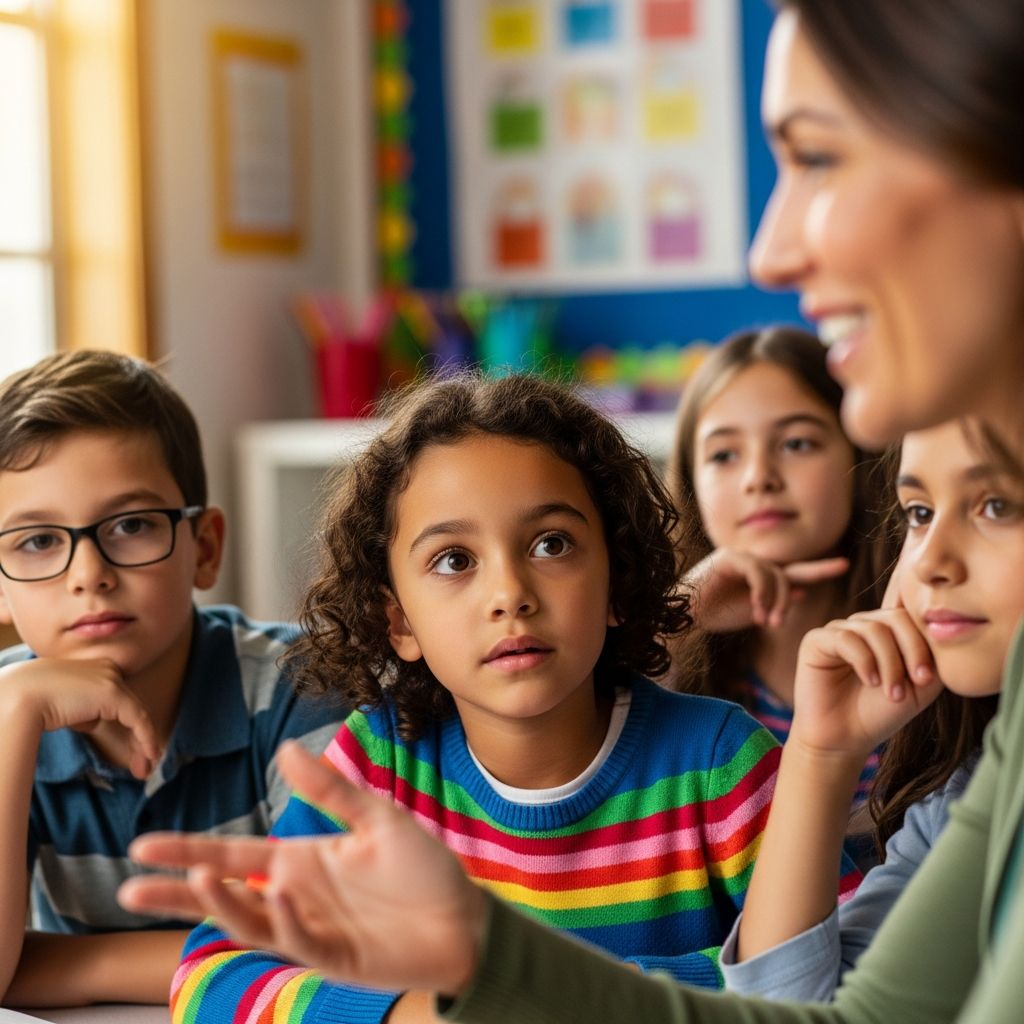
Active listening stands as a cornerstone of effective education, enabling teachers and students to connect deeply with ideas and each other. Unlike passive hearing, it demands full engagement, empathy, and response, leading to richer learning experiences.
Understanding the Essence of Active Listening
Active listening involves concentrating entirely on the speaker to grasp not just words, but underlying emotions and intentions. In educational settings, this skill ensures students process information thoroughly, reducing misunderstandings and enhancing retention.
Educators who practice it model vital communication habits, creating environments where every voice matters. Research highlights that students spend most of their school day listening, making explicit training in this area crucial for academic growth.
Key Benefits for Learners and Educators
Implementing active listening yields measurable gains. Students develop deeper knowledge with fewer comprehension gaps, leading to higher productivity and better task completion. Teachers foster trust and collaboration, essential for dynamic classrooms.
- Improved Comprehension: Engaged listening minimizes errors in understanding complex concepts.
- Enhanced Empathy: Recognizing emotions builds stronger interpersonal relationships.
- Boosted Engagement: Participants feel valued, increasing motivation and participation.
- Better Outcomes: Reduced conflicts and more effective group work.
Studies from educational organizations emphasize how these benefits extend to emotional well-being, with actively listened-to students showing greater confidence.
Core Techniques for Effective Practice
To excel, educators must master specific methods. These build a foundation for reciprocal listening between teachers and students.
| Technique | Description | Classroom Application |
|---|---|---|
| Pay Full Attention | Focus solely on the speaker, using eye contact and open posture. | During discussions, maintain eye contact to signal interest. |
| Withhold Judgment | Avoid interrupting or forming opinions prematurely. | Listen to diverse viewpoints in debates without bias. |
| Reflect and Paraphrase | Restate key points in your own words to confirm understanding. | Ask, “So you’re saying…” after a student’s input. |
| Clarify Doubts | Seek elaboration on unclear parts. | Use follow-up questions like “Can you explain more?” |
| Summarize Key Ideas | Recap main points at discussion’s end. | Close lessons by summarizing group insights. |
| Share Responsively | Respond thoughtfully, linking to prior points. | Build on peers’ ideas in group settings. |
These techniques, when routine, transform interactions into meaningful exchanges.
Practical Strategies for Classroom Implementation
Integrating active listening requires deliberate steps. Start by establishing norms collaboratively with students.
Establishing Classroom Norms
Co-create rules like maintaining eye contact, pausing before responding, and avoiding distractions. This shared ownership promotes accountability.
Demonstrating Through Modeling
Teachers wield immense influence; consistently use students’ words in questions, e.g., “What makes that ‘challenging’ for you?” This reinforces the skill’s value.
- Rephrase student responses to show attentiveness.
- Prompt clarifications during lessons.
- Encourage direct peer responses, like “Respond to Sarah’s view.”
Facilitating Peer-to-Peer Dialogue
Shift focus from teacher-led talks to student interactions. Pose questions requiring agreement or disagreement with peers, tracking full discussions.
Incorporating Reflection Practices
After activities, use reflection sheets: “Did we interrupt less?” Set collective goals based on feedback to sustain improvement.
Engaging Activities to Build Skills
Hands-on exercises make learning fun and memorable. Adapt these for various age groups.
Telephone Game Variation
Whisper a message through a chain; discuss distortions to highlight attention’s role. Debrief: “How did poor listening change the message?”
Pair-Share Echoing
Students share ideas, partners echo back: “I heard you say…” Switch roles to practice reflection.
Empathy Circles
Form circles; one speaks while others listen silently, then paraphrase. Builds non-verbal cues like nodding.
Discussion Trackers
Students note key points from peers, sharing which resonated most. Encourages comprehensive listening.
These activities, done regularly, embed skills naturally.
Overcoming Common Barriers
Challenges like distractions or impatience arise, but solutions exist. Train focus amid noise; teach wait time post-speech.
- Distractions: Designate ‘listening zones’ free of devices.
- Impatience: Use timers for turns.
- Cultural Differences: Discuss varied communication norms respectfully.
Address defensiveness by emphasizing non-judgmental responses.
Long-Term Impact on Learning Environments
Cultivating active listening creates inclusive spaces where ideas flourish. Students gain lifelong skills for collaboration, vital in modern workplaces.
Teachers report stronger relationships and innovative discussions. Over time, it becomes instinctive, elevating overall classroom dynamics.
Frequently Asked Questions
How does active listening differ from passive listening?
Passive listening is hearing without engagement; active involves full focus, reflection, and response to ensure understanding.
Can active listening improve student behavior?
Yes, feeling heard reduces disruptions and builds respect, leading to more cooperative classrooms.
How often should teachers practice these strategies?
Daily integration, starting with 10-minute sessions, yields best results.
What if students resist reflection activities?
Make it game-like and peer-led to increase buy-in.
Is active listening suitable for all grade levels?
Absolutely; simplify for younger students, deepen for older ones.
References
- Four Classroom Strategies to Foster Active Listening — Great Books Foundation. 2023-05-15. https://www.greatbooks.org/four-classroom-strategies-to-foster-active-listening/
- A Guide to Active Listening Skills in Education — Education Corner. 2024-02-10. https://www.educationcorner.com/active-listening-skills-education/
- Show Students How to Listen Actively and Empathetically — Heinemann. 2023-11-20. https://blog.heinemann.com/show-students-how-to-listen-actively-and-empathetically
- Activities to Teach Active Listening — Trevor Muir. 2024-01-05. https://www.trevormuir.com/blog/active-listening
- Lesson: The Power of Active Listening — StoryCorps. 2023-09-12. https://storycorps.org/discover/education/lesson-the-power-of-active-listening/
- The Value of Active Listening — Edutopia. 2024-03-18. https://www.edutopia.org/article/value-active-listening/
- Active Listening Techniques: Best Practices for Leaders — Center for Creative Leadership. 2025-01-22. https://www.ccl.org/articles/leading-effectively-articles/coaching-others-use-active-listening-skills/

Medha Deb is an editor with a master's degree in Applied Linguistics from the University of Hyderabad. She believes that her qualification has helped her develop a deep understanding of language and its application in various contexts. Medha specializes in the areas of beauty, health, sports, and wellness and is committed to ensuring that the content on the website is…