
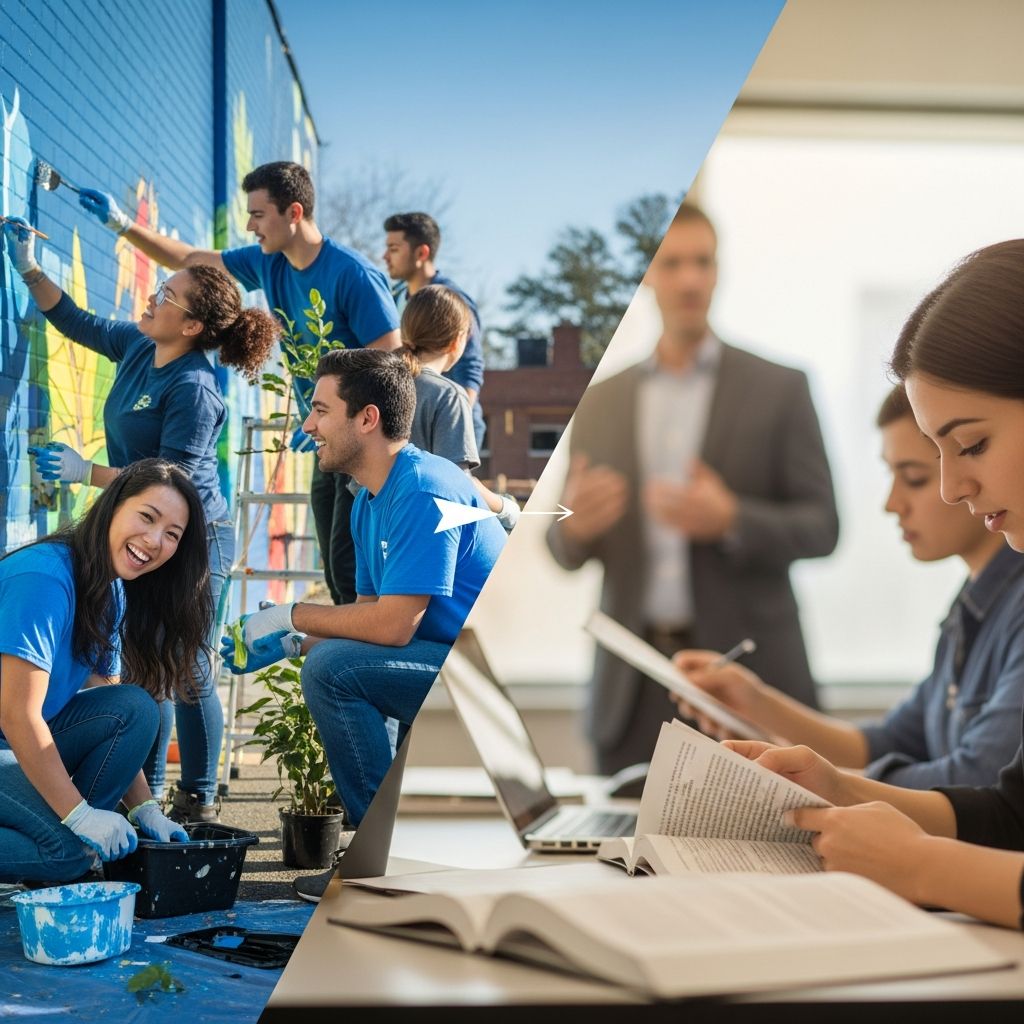
Service learning represents a dynamic educational methodology that merges academic curricula with hands-on community service, promoting profound personal and intellectual growth. By engaging students in addressing authentic community needs while reflecting on their experiences, this approach cultivates lifelong learners equipped with essential skills for a interconnected world.
Defining Service Learning in Contemporary Education
At its core, service learning is an experiential pedagogy where students apply classroom knowledge to real-world projects that benefit local communities. Unlike traditional volunteering, it emphasizes structured reflection, academic integration, and reciprocal partnerships between educational institutions and community organizations. This method encourages students to identify problems, collaborate on solutions, and evaluate outcomes, fostering a deeper understanding of course material alongside civic engagement.
Key characteristics include intentional alignment with learning objectives, meaningful service that meets genuine needs, and continuous reflection through journals, discussions, or presentations. Institutions like Boise State University highlight how it develops leadership, communication, and analytical skills, preparing students for professional success. Research from the National Service-Learning Clearinghouse underscores its role in building self-confidence and predicting long-term civic participation.
Core Principles Guiding Effective Service Learning Programs
Successful service learning adheres to several foundational principles. First, it ensures **mutual benefit**, where communities receive valuable contributions while students gain enriching experiences. Second, it promotes **reflection** as a critical component, helping learners process what they’ve learned and how it relates to broader societal issues.
- Integration with Curriculum: Projects directly tie to academic standards, enhancing subject mastery.
- Student Voice: Learners participate in project design, increasing ownership and motivation.
- Diversity and Equity: Programs accommodate varied backgrounds, promoting inclusivity and cultural competence.
- Sustainability: Initiatives aim for lasting community impact beyond the project duration.
- Assessment: Rigorous evaluation measures both service outcomes and academic growth.
These principles, drawn from frameworks by the Wisconsin Department of Public Instruction, ensure service learning supports all students, aligning with national standards without singling out specific groups.
Academic Advantages: Elevating Learning Outcomes
Service learning significantly enhances academic performance by contextualizing abstract concepts in practical scenarios. Students engaged in these programs demonstrate improved retention, critical thinking, and problem-solving abilities. For instance, applying mathematical models to community budgeting or historical analysis to local preservation efforts deepens comprehension.
| Academic Area | Service Learning Impact | Example Benefit |
|---|---|---|
| Critical Thinking | Analyzing real problems fosters deeper evaluation skills | Students discern fact from fiction in community data |
| Subject Knowledge | Hands-on application strengthens retention | Linking biology to environmental cleanups |
| Writing Skills | Reflection reports improve articulation | Palomar College notes enhanced writing proficiency |
| Interdisciplinary Connections | Encourages cross-subject integration | Solving ill-defined community issues |
Studies confirm that participants connect coursework more effectively, leading to higher engagement and grades. The ACTE reports academic enhancement through linked service activities.
Personal Growth: Building Confident, Empathetic Individuals
Beyond academics, service learning nurtures personal development, boosting self-efficacy, empathy, and resilience. Students often report heightened self-confidence as they witness their contributions’ tangible effects, transforming passive learners into proactive change-makers.
- Increased **self-esteem** from leadership roles in community projects.
- Enhanced **empathy** via interactions with diverse populations.
- Improved **social skills** through teamwork and intergenerational connections.
- Greater **cultural awareness**, fostering appreciation for diversity.
According to PMC research, participants show positive impacts on social skills, pro-social reasoning, and confidence in diverse settings. High school students, in particular, benefit from volunteering-like experiences that promote individual growth, as noted by Edutopia.[10]
Professional Preparation: Skills Employers Value
Service learning equips students with workplace competencies highly sought by employers. The National Association of Colleges and Employers identifies teamwork, communication, problem-solving, and adaptability as top skills— all honed through community projects.
Participants gain resume-building experiences, such as internships or field work, confirming career interests and providing networking opportunities. Monroe Community College emphasizes how it teaches workforce skills and explores career options. Graduates from service learning programs are more likely to secure jobs post-graduation, with institutions reporting higher retention and satisfaction rates.
Benefits for Educators and Educational Institutions
Educators find service learning revitalizes teaching, increasing student engagement and faculty-student rapport. It allows instructors to extend classroom concepts into real-world applications, promoting deeper learning and equity for diverse learners.
- Pedagogical Renewal: Fresh strategies engage students more effectively.
- Institutional Gains: Higher retention, graduation rates, and community relations.
- Equity Promotion: Supports at-risk and special-needs students through practical skill-building.
For preservice teachers, it builds citizenship skills and intercultural understanding, as per ACTE insights.
Community and Societal Impacts: Creating Lasting Change
Communities reap direct benefits from student-led solutions to pressing needs, such as resource expansion and awareness campaigns. Programs foster school-community partnerships, shifting school culture toward collaboration.
- Awareness of local issues and expanded services.
- Increased human resources for problem-solving.
- Positive exposure and educational involvement opportunities.
WCSU notes improved community relations and student hiring likelihood. Overall, service learning strengthens civic fabric by developing responsible citizens committed to ongoing participation.
Practical Strategies for Implementing Service Learning
To launch effective programs, educators should start small, partnering with local nonprofits. Steps include needs assessment, goal-setting, activity planning, execution, reflection, and evaluation.
- Identify Partners: Collaborate with organizations addressing community priorities.
- Align with Curriculum: Ensure projects meet learning objectives.
- Incorporate Reflection: Use journals, group discussions, or portfolios.
- Scale Appropriately: Begin with short-term projects for K-12, expanding in higher ed.
- Train Stakeholders: Orient students, faculty, and partners on expectations.
Challenges like time constraints can be mitigated with administrative support and clear rubrics. Palomar College exemplifies faculty benefits like reinforced standards and community extension.
Real-World Examples Across Educational Levels
In K-12, students might tutor immigrants or restore parks, developing language skills and environmental stewardship. Universities like Elmhurst integrate it to connect classroom theory with community awareness.
High school programs yield engaged citizens, while college initiatives prepare professionals. DPI Wisconsin promotes it for workplace readiness and equity.
Frequently Asked Questions (FAQs)
What distinguishes service learning from volunteering?
Service learning integrates academic goals, structured reflection, and curriculum ties, unlike volunteering’s focus on service alone.
Is service learning suitable for all grade levels?
Yes, it adapts from elementary projects to advanced university research, benefiting diverse learners.
How does it impact student retention and graduation?
Institutions report higher satisfaction, retention, and graduation rates among participants.
Can service learning promote equity?
Absolutely, by grouping diverse students on real problems and motivating at-risk learners.
What role does reflection play?
Reflection solidifies learning, connecting experiences to academics and personal growth.
References
- What are the Benefits of Service-Learning? — National Service-Learning Clearinghouse. Accessed 2026. https://nylc.org/what-are-the-benefits-of-service-learning/
- Benefits of Service-Learning – Boise State University — Boise State University. Accessed 2026. https://www.boisestate.edu/servicelearning/students/benefits-of-sl/
- Benefits of Service Learning – Palomar College — Palomar College. Accessed 2026. https://www.palomar.edu/servicelearning/about-2/
- The Impact of Service Learning — Association for Career and Technical Education (ACTE). 2025-02-10. https://www.acteonline.org/blog/2025/02/10/the-impact-of-service-learning/
- Service-Learning Improves Education — Wisconsin Department of Public Instruction (.gov). Accessed 2026. https://dpi.wi.gov/service-learning/why
- Benefits of Service Learning – Monroe Community College — Monroe Community College. Accessed 2026. https://www.monroecc.edu/depts/servicelearning/benefits-of-service-learning/
- Benefits of Service-Learning – Western Connecticut State University — WCSU. Accessed 2026. https://www.wcsu.edu/community-engagement/benefits/

Medha Deb is an editor with a master's degree in Applied Linguistics from the University of Hyderabad. She believes that her qualification has helped her develop a deep understanding of language and its application in various contexts. Medha specializes in the areas of beauty, health, sports, and wellness and is committed to ensuring that the content on the website is…