
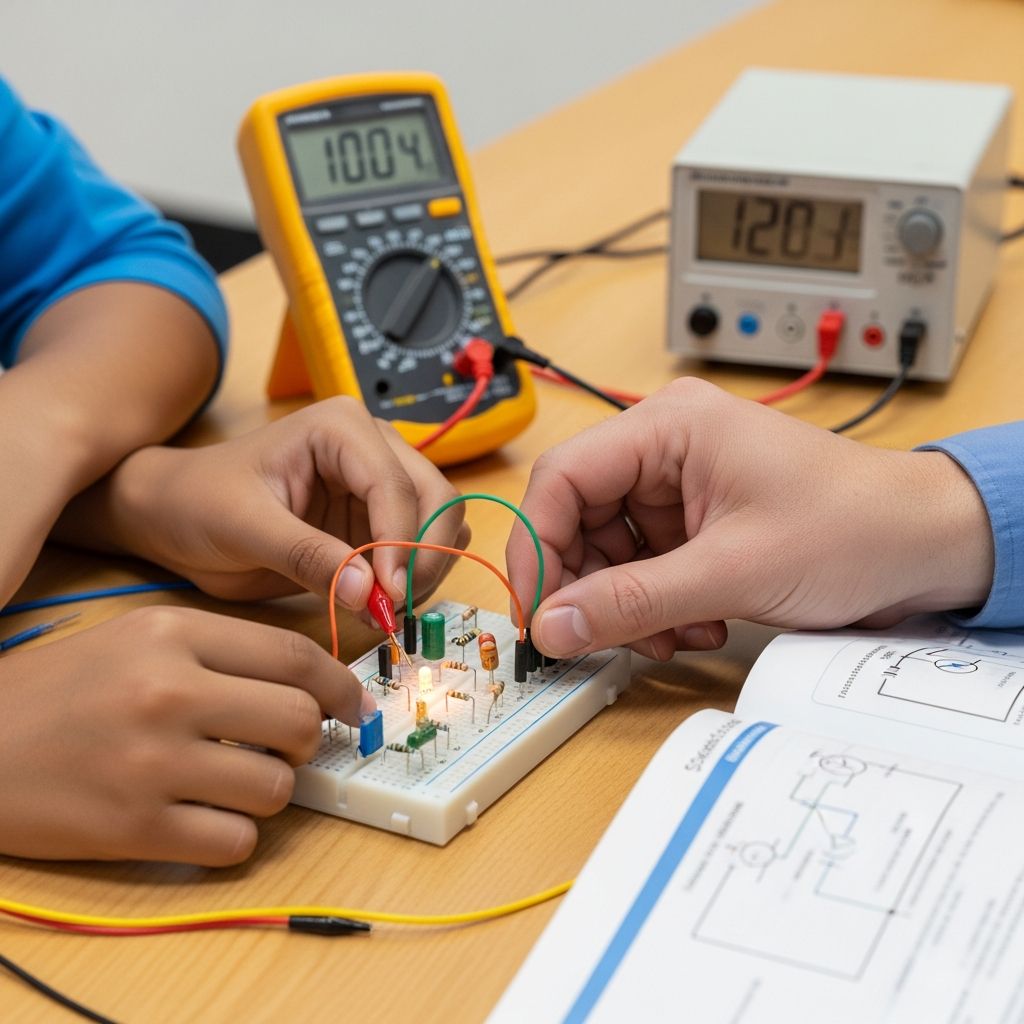
Introduction to Practical Electricity Learning Through Experimentation
Science education becomes most effective when students can directly observe and interact with the concepts they are learning. Electricity, a fundamental force that powers our modern world, can seem abstract to young learners until they witness its effects firsthand. By engaging in hands-on experiments, students develop a deeper understanding of how electrical charges work, how circuits function, and how energy moves through different materials. These practical activities transform classroom instruction from purely theoretical to tangible and memorable, allowing students to build confidence in their scientific reasoning while discovering that complex physical principles can be explained through simple demonstrations using everyday household materials.
Generating Static Charge: The Foundation for Electrical Experiments
Before conducting most electrical demonstrations, students need to understand how to create and observe static electrical charges. Static electricity occurs when electrons accumulate on surfaces, creating an imbalance that produces observable effects. Learning to generate these charges consistently is the first step toward mastering more complex electrical concepts.
Several straightforward techniques allow students to create static charges reliably. The most common method involves using a balloon rubbed vigorously against human hair, which transfers electrons from the hair to the balloon’s surface. This simple friction-based approach works because the balloon material readily accepts electrons, while hair provides adequate friction to create the necessary electron transfer. Alternative methods include running a plastic comb through dry hair multiple times, wrapping wool or silk around a plastic ruler and rubbing it along the ruler’s length, or simply rubbing socks against carpet fibers. Each technique relies on the same fundamental principle: friction between two materials causes electrons to move from one surface to another, creating an electrical charge imbalance.
The effectiveness of these charge-generation methods depends on environmental conditions. Dry air promotes better static electricity development than humid conditions, as moisture in the air can allow charges to dissipate more quickly. Students working in humid climates may need to apply more vigorous rubbing or choose materials that generate stronger charges more readily.
Water Manipulation: Observing Electrical Forces in Action
One of the most visually striking electricity demonstrations involves bending a stream of water using only static charge. This experiment demonstrates that electrical forces work on materials beyond solid objects and provides clear visual evidence of invisible electrical fields at work.
To perform this demonstration, students first charge a balloon or plastic comb using one of the friction methods described above. They then turn on a kitchen faucet to create a thin, steady stream of water approximately the thickness of a pencil. By slowly moving the charged object near the water stream without allowing direct contact, the water visibly bends toward or away from the charged item. The effect becomes more pronounced the closer the charged object approaches the water.
This phenomenon occurs because water molecules, though electrically neutral overall, can be polarized by the strong electrical field generated by the charged balloon. The electrical field causes water molecules to orient themselves with respect to the charge, resulting in a net attractive force that pulls the water stream in the direction of the charged object. This elegant demonstration makes the abstract concept of electrical fields concrete and observable, helping students visualize how invisible forces can produce visible effects.
Separating Mixed Materials: Understanding Selective Attraction
Another foundational experiment that captivates students involves using electrical charge to separate mixed materials based on their mass and electrical properties. The classic version uses salt and pepper, two materials with different weights and electrical characteristics.
Students begin by mixing salt and pepper together in a shallow container, then charging a balloon or plastic spoon by rubbing it on their hair. When the charged object is slowly brought near the salt-and-pepper mixture, the lighter pepper particles jump upward toward the charged surface while heavier salt crystals remain in place. This occurs because pepper particles, being lighter than salt and also more responsive to electrical attraction, overcome gravity more easily and adhere to the charged object.
This experiment introduces students to the concept of selective attraction based on multiple factors: the mass of particles, their electrical responsiveness, and the strength of the electrical field. An alternative version uses a charged spoon held above pepper sprinkled on black paper, making the pepper’s movement even more dramatic and easier to observe. The contrast between black paper and light-colored pepper creates a visually compelling demonstration that helps students remember the principle long after the experiment concludes.
Motion-Based Activities: Making Abstract Concepts Physical
Understanding electrical concepts becomes easier when students can physically embody them. Movement-based activities allow learners to translate abstract electrical principles into actions their bodies can perform, creating kinesthetic learning opportunities that enhance retention and comprehension.
One effective activity involves students representing electrons moving through a wire. Students line up or move along a floor tape that represents a wire conducting current. When an instructor calls out “high resistance,” students move slowly, simulating how electrical resistance impedes electron flow. When the instructor calls out “low resistance,” students move quickly, representing rapid current flow through materials with minimal resistance. By physically experiencing these different states, students develop intuitive understanding of how resistance affects electricity flow.
Another engaging kinesthetic activity transforms electrical concepts into rhythmic patterns. Students represent series circuits by passing a steady rhythm down a line, with each person maintaining the same beat. Parallel circuits involve multiple groups performing different rhythms simultaneously, demonstrating how parallel paths allow multiple routes for electricity to travel. When exploring open circuits, students clap along to music but stop when the music stops, representing how breaking a circuit stops electrical flow just as the interruption stops their clapping. These activities make theoretical circuit concepts tangible and memorable through direct physical participation.
Electromagnetic Principles: Bridging Electricity and Magnetism
Advanced experiments reveal the deep connection between electricity and magnetism, showing how these two forces are intimately related aspects of the same fundamental phenomenon. Creating simple electromagnetic devices allows students to observe this relationship directly.
An electromagnetic train project demonstrates how electrical current flowing through a coil of wire creates a magnetic field capable of propelling objects. This experiment requires careful assembly and close adult supervision due to the strength of neodymium magnets involved. Students stack four strong neodymium magnets on each end of an AAA battery, ensuring the magnetic poles face opposite directions. Copper wire is then coiled into a tunnel shape, with the coil’s diameter just slightly larger than the battery’s diameter. When the magnetized battery assembly is inserted into the wire coil, the interaction between the magnetic field created by current flowing through the wire and the permanent magnets on the battery causes the battery to accelerate through the tunnel. Longer coils allow the battery to travel farther, providing a clear demonstration of how far electromagnetic forces can act.
This advanced project suits older students with sufficient understanding of electrical principles and the maturity to handle powerful magnets safely. The dramatic visual effect of the battery shooting through the coil powerfully illustrates how electricity and magnetism work together to produce motion.
Lightweight Material Testing: Investigating Electrical Responsiveness
Different materials respond differently to electrical charges, making comparative testing valuable for understanding material properties and electrical principles. This structured investigation teaches scientific methodology while revealing why certain materials interact with static electricity more readily than others.
Students working in pairs each receive a charged balloon or comb and a collection of lightweight materials such as tissue paper, feathers, aluminum foil strips, and paper scraps. For each material, students first predict whether the charged object will attract it, then test their prediction by bringing the charged item near the material. Recording results on a worksheet creates a scientific record that allows students to analyze patterns in their findings.
This activity reveals that materials respond to static electricity based on their mass, composition, and how readily they can be polarized by electrical fields. Lightweight materials generally respond more readily than heavy ones, and some materials demonstrate stronger electrical properties than others. By testing multiple materials systematically, students develop evidence-based understanding of which materials work best for creating and observing electrical effects.
Conductive Pathways: Introduction to Simple Circuits
While static electricity experiments explore electrical charge, understanding how electricity flows continuously through conductors requires exploring simple circuits. Using everyday conductive materials, students can create basic circuits that light LEDs or other electrical devices.
Playdough circuits represent one of the most accessible approaches to teaching circuit principles. Students shape conductive playdough into a path and insert an LED bulb, battery, and conducting wires into the dough at appropriate points. When the circuit is complete, the LED illuminates, providing immediate visual feedback that the circuit is functioning. This hands-on approach makes abstract circuit concepts concrete, and students can experiment by breaking the circuit and watching the LED turn off, then reconnecting to see it turn on again.
These simple demonstrations teach fundamental circuit principles including the need for a complete path from the power source through the load and back to the power source, the role of conducting materials in allowing electricity to flow, and how breaking the circuit stops electrical flow completely. The malleable nature of playdough allows students to reconfigure their circuits repeatedly, supporting experimentation and discovery-based learning.
Environmental Awareness: Recognizing Electricity in Daily Life
Beyond laboratory experiments, students benefit from recognizing how electricity integrates into their everyday environment. A scavenger hunt activity raises awareness of electrical systems and devices they encounter routinely but might not consciously notice.
Students work in pairs or small groups searching their classroom or school environment for evidence of electricity within a set time limit. They compile lists including electrical outlets, light switches, wires, batteries in devices, charging ports, and other electrical infrastructure. The team identifying the most items wins the competition, but the real educational value lies in the increased awareness students develop regarding how thoroughly electricity permeates modern environments. This activity contextualizes laboratory experiments within real-world applications, helping students understand why studying electricity matters beyond the classroom.
Comprehensive Activity Comparison
| Activity Type | Primary Concept | Grade Level | Materials Required | Time Needed |
|---|---|---|---|---|
| Water Bending | Electrical Force Fields | K-5 | Balloon, faucet, hair | 5-10 minutes |
| Salt and Pepper Separation | Selective Attraction | K-5 | Balloon, salt, pepper, bowl | 5-10 minutes |
| Material Responsiveness Testing | Electrical Properties of Materials | 3-6 | Charged comb, various materials, worksheet | 15-20 minutes |
| Playdough Circuits | Circuit Completion and Flow | 2-6 | Playdough, battery, LED, wire | 20-30 minutes |
| Kinesthetic Movement Activities | Resistance and Current Flow | 3-8 | Floor space, tape, no additional materials | 10-15 minutes |
| Electromagnetic Train | Electricity-Magnetism Connection | 6-12 | Neodymium magnets, battery, copper wire, dowel | 20-30 minutes |
| Electricity Scavenger Hunt | Real-World Electricity Awareness | 2-8 | None (classroom items) | 15-20 minutes |
Safety Considerations for Electrical Experiments
While the experiments described above use safe materials and low voltages, certain precautions protect students throughout all activities. Experiments involving neodymium magnets require close adult supervision, as these magnets can pinch fingers or cause injury if not handled carefully. Students should understand that these activities use static electricity or simple batteries, which differ fundamentally from household electrical current that poses genuine hazards.
Experiments should never involve wall outlets, household wiring, or commercial electrical sources. All activities should occur in dry conditions, as moisture can create unexpected electrical paths. Teachers should model proper handling of materials and establish clear expectations for student behavior during experiments.
Integration with Curriculum Standards
Electricity experiments align with science standards across grade levels. Elementary standards typically address basic electrical concepts, static electricity, and simple circuits. Middle school standards expand to include circuit analysis, resistance, and the relationship between electricity and magnetism. High school standards expect deeper understanding of electrical theory, mathematical analysis of circuits, and advanced electromagnetic principles.
These hands-on activities support standards-based instruction by providing concrete experiences that ground abstract concepts in observable phenomena. Teachers can scaffold experiments from simple static electricity demonstrations in early grades to complex electromagnetic projects in advanced courses, building student understanding progressively.
Frequently Asked Questions
Q: Why does static electricity work better on dry days than humid days?
A: Moisture in humid air provides a path for electrical charges to dissipate from surfaces. In dry conditions, charges remain concentrated on materials, creating stronger electrical effects and making experiments more successful.
Q: Can these experiments cause electrical shock or injury?
A: No. Static electricity experiments and simple battery circuits used in these activities produce insignificant voltage levels that cannot cause injury. The sensations sometimes felt when touching static-charged objects are completely safe.
Q: What age groups benefit most from electricity experiments?
A: Simple experiments like water bending work for kindergarten through elementary students. Middle school students can handle more complex circuit and electromagnetic projects. The activities scale in complexity to match student developmental levels and prior knowledge.
Q: How can teachers modify experiments for students with different learning styles?
A: Kinesthetic learners benefit from movement-based activities. Visual learners connect best with striking visual effects like water bending. Logical learners appreciate the predictive components where they hypothesize before testing. Offering multiple experiment options allows students to engage through their preferred modalities.
Q: Are these experiments appropriate for home learning?
A: Yes. Most experiments use common household materials and require minimal setup. Parents can guide children through simple static electricity activities or playdough circuits with basic supervision. Advanced projects like electromagnetic trains require more adult involvement but remain manageable in home settings.
References
- Three Fun Static Electricity Experiments to Do at Home — Minnesota Children’s Museum. 2025. https://mcm.org/three-fun-static-electricity-experiments-to-do-at-home/
- 30 Shockingly Fun Electricity Experiments and Activities for Kids — We Are Teachers. 2024. https://www.weareteachers.com/electricity-experiments/
- Static Electricity Experiments — The Wonders of Physics, University of Wisconsin-Madison Department of Physics. 2024. https://wonders.physics.wisc.edu/static-electricity/
- Simple Electric Circuits for Kids – Experiments and STEM Projects — Steam Powered Family. 2025. https://www.steampoweredfamily.com/electric-circuits-for-kids/
- Electricity And Magnetism Science Experiments — Science Fun. 2024. https://www.sciencefun.org/kidszone/experiments/electricity-and-magnetism-science-experiments/

Medha Deb is an editor with a master's degree in Applied Linguistics from the University of Hyderabad. She believes that her qualification has helped her develop a deep understanding of language and its application in various contexts. Medha specializes in the areas of beauty, health, sports, and wellness and is committed to ensuring that the content on the website is…