
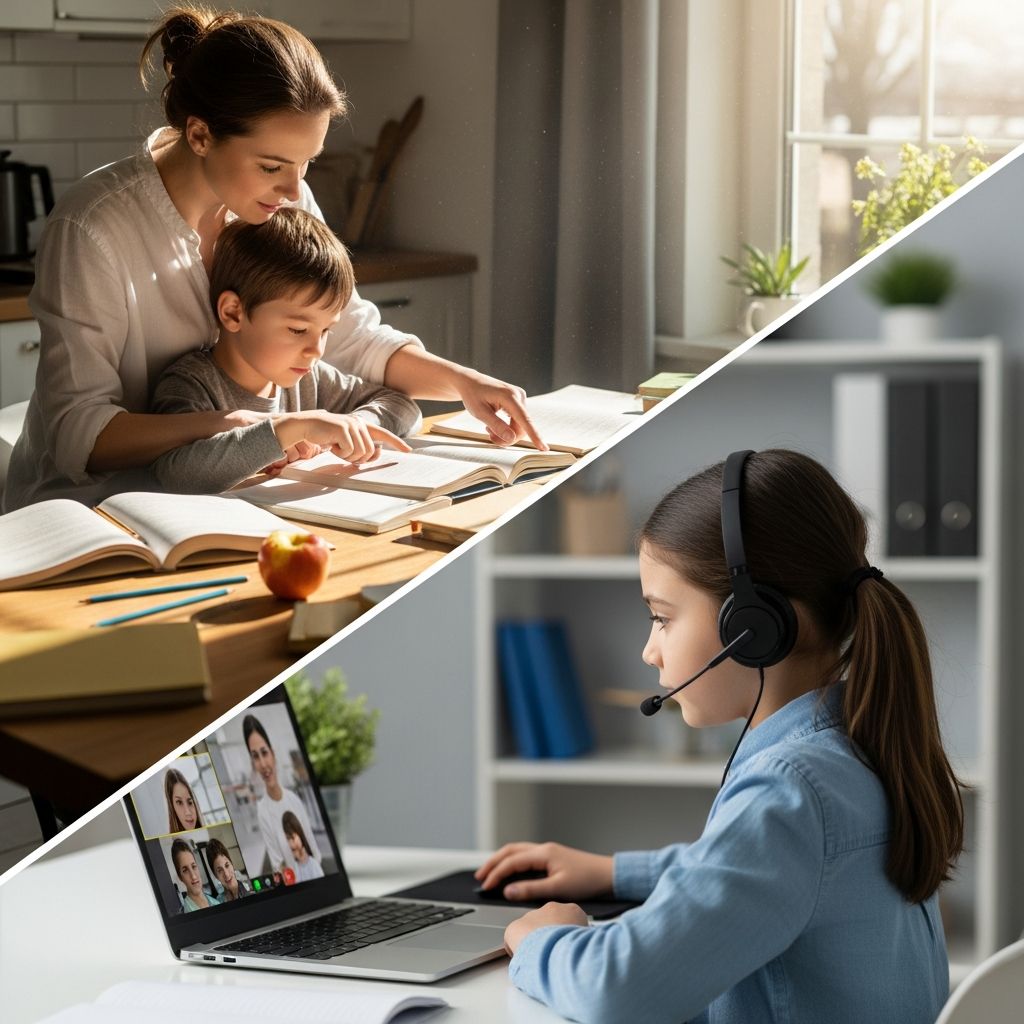
Understanding the Distinction Between Homeschooling and Remote Education
Many families considering educational alternatives often use the terms homeschooling and distance learning interchangeably, assuming they represent the same educational model. However, these two approaches differ significantly in their implementation, management, and outcomes. The fundamental distinction centers on who assumes responsibility for delivering instructional content and making educational decisions. When a parent or guardian directly instructs the child using self-selected materials, that constitutes homeschooling. Conversely, when a student receives instruction from a credentialed educator through online platforms while remaining enrolled in a formal school system, that represents distance learning. Understanding these differences is crucial for families evaluating their educational options.
The Role of Instruction: Who Teaches Your Child
The most critical difference between these two educational models lies in the identity and qualifications of the instructor. In homeschooling environments, parents or guardians serve as the primary educators, responsible for selecting curriculum materials, designing lesson plans, and delivering instruction across all or most subjects. This approach places significant demands on parents’ time and knowledge, requiring them to become experts across multiple disciplines or to invest in supplementary educational resources. Parents maintain complete oversight of their child’s educational journey, from daily instruction through assessment and record-keeping.
Distance learning, by contrast, employs certified teachers who specialize in online instruction. These educators have undergone formal training specific to virtual classroom management and remote pedagogical techniques. They develop the curriculum, establish learning objectives, and deliver instruction through digital platforms. Students interact with these credentialed professionals through video conferences, email communications, and learning management systems. Online educators assess student progress, provide feedback, and maintain official grade records that align with state educational standards. This structured approach reduces parental responsibility for direct instruction, though parental involvement remains important for supporting student success.
Curriculum Control and Educational Decision-Making
Homeschooling grants parents extraordinary autonomy in curriculum selection. Families can choose from traditional textbook-based programs, Charlotte Mason approaches, Montessori methodologies, classical education frameworks, or eclectic combinations tailored to their children’s learning styles and family values. This flexibility enables parents to accelerate advanced learners, provide remedial support where needed, and emphasize subjects aligned with their child’s interests or family educational philosophy. Parents can incorporate religious or cultural perspectives into lessons, integrate travel experiences as learning opportunities, and customize the pace of instruction to match individual development.
Distance learning provides less curriculum flexibility. Online schools typically follow state-mandated educational standards and predetermined curriculum frameworks designed to serve diverse student populations. While some online programs offer course selections and elective options, students generally follow the same core instructional sequence as their peers. Teachers deliver standardized lessons intended to reach all students simultaneously, though they may adjust pacing within established parameters. This standardized approach ensures that content meets official state requirements and maintains educational consistency, but it limits the degree to which instruction can be personalized to individual family values or specific learning preferences.
Scheduling Flexibility and Time Management
Homeschooling offers unparalleled scheduling freedom. Families determine when instruction occurs, whether morning, afternoon, or evening sessions suit their household routine best. Homeschooling families can take vacations during traditional school year periods without requesting approval, celebrate holidays important to their culture or religion regardless of whether they appear on official school calendars, and adjust daily schedules around family needs, appointments, or unexpected circumstances. This flexibility appeals to families with irregular work schedules, those who travel frequently, and those who prefer following seasonal or weather-based rhythms rather than institutional calendars.
Distance learning, while more flexible than traditional brick-and-mortar schools, maintains structured timelines and deadlines. Online schools establish typical academic calendars with beginning and end dates, standardized grading periods, and assignment deadlines. Some online programs include synchronous components such as live lectures or scheduled virtual classroom sessions that students must attend at specific times. While students often can complete asynchronous assignments within established windows, they remain bound by these institutional timelines. This structure provides beneficial organization for families seeking consistency but limits the scheduling autonomy homeschooling provides.
Parental Time Investment and Involvement Levels
The parental time commitment differs substantially between these educational models. Homeschooling demands significant parental involvement. Parents must plan lessons, prepare materials, deliver instruction, monitor student engagement, assess learning, maintain records, and manage administrative requirements such as progress reports or transcript documentation. For families with multiple children spanning different grade levels, this responsibility multiplies considerably. Parents essentially function as full-time educators, often while managing other employment and household responsibilities. This intensive involvement can feel overwhelming, though many homeschooling parents report finding the experience deeply rewarding.
Distance learning significantly reduces direct parental teaching responsibilities. Credentialed teachers handle instructional delivery, assessment, and grade management. Parents transition from instructors to learning coaches or supporters. They monitor their child’s progress through online portals, communicate with teachers about concerns or achievements, provide homework assistance when needed, and ensure their child completes assignments. This reduced instructional burden allows parents to maintain external employment or other responsibilities with fewer conflicts. However, parental involvement remains important for ensuring student engagement, supporting motivation, and facilitating communication with educators.
Cost Considerations and Financial Impact
Financial implications substantially differentiate these educational approaches. Homeschooling involves variable expenses depending on chosen materials and programs. Families might invest in comprehensive curriculum packages, educational software subscriptions, tutoring services for specialized subjects, enrichment activities, field trip expenses, and learning materials. These costs vary widely based on educational philosophy and available resources, ranging from minimal expenses for families using free online resources to thousands of dollars annually for premium curriculum programs. However, families retain control over spending and can adjust expenses based on their budget constraints.
Distance learning through public online schools typically involves no tuition costs, replicating the free education provided by traditional public schools. Some online public school programs provide computer equipment and educational materials, further reducing family expenses. However, certain specialized online programs operate on tuition-based models and cost comparable to private school education. Families considering distance learning should clarify cost structures before enrollment. Generally, public online school represents the most economical option for families seeking structured, accredited education without significant financial investment.
Learning Environment and Experiential Opportunities
Homeschooling enables learning to occur across diverse environments and situations. Students can conduct science experiments in home kitchens, study nature through outdoor exploration, visit museums and historical sites as part of their curriculum, and integrate real-world experiences into academic learning. Families can structure field trips around instructional objectives, incorporate apprenticeships or volunteer work as learning opportunities, and facilitate hands-on projects that develop practical skills. This environmental flexibility often produces deeper understanding through experiential learning, though it requires parental planning and effort to organize such opportunities.
Distance learning primarily occurs through screens and digital platforms, limiting hands-on experiential opportunities. Students engage with content through videos, interactive tutorials, virtual laboratories, and online simulations. While online platforms increasingly incorporate engaging multimedia elements, they cannot fully replicate hands-on laboratory work, physical manipulation of materials, or direct field experience. Some online schools supplement digital learning with occasional in-person enrichment activities or laboratory sessions, but the core instructional model remains stationary and screen-based. Students with learning preferences emphasizing kinesthetic or tactile engagement may find this limitation challenging.
Academic Support and Specialized Services
Distance learning systems typically employ special education professionals trained to support students with learning disabilities, ADHD, or other educational challenges. Online schools maintain specialists on staff including special education teachers, counselors, and learning specialists who work with students requiring additional support. These professionals develop individualized education plans, provide targeted interventions, and monitor progress toward specific learning objectives. Access to trained specialists represents a significant advantage for families with children requiring specialized educational support. This professional expertise often exceeds what individual homeschooling parents can provide, particularly for complex learning differences requiring specialized intervention strategies.
Homeschooling families rely on parental knowledge, outside tutoring, or specialized curriculum materials to address learning differences. While many homeschooling parents become highly knowledgeable about their child’s specific needs, they may lack professional training in special education methodology or experience with diverse learning disabilities. Families with children requiring significant intervention often supplement homeschooling with professional tutoring services, adding to their financial and logistical burden. This distinction makes distance learning particularly valuable for families with children requiring specialized academic support.
Student Focus and Attention Management
Maintaining student focus represents different challenges in each educational model. Homeschooling allows parents to employ varied instructional strategies to sustain attention, including transitioning between subjects, incorporating breaks, adjusting activity types, or moving to different physical locations. Parents can recognize individual attention patterns and structure instruction accordingly, providing stimulation when attention wanes. This flexibility benefits younger students with developing attention spans or learners who struggle with sustained focus in standardized classroom settings.
Distance learning presents greater focus challenges, particularly for younger students. Online instruction often requires students to maintain attention on screens for extended periods, engage with standardized pacing set for entire class groups, and complete assignments within established timeframes regardless of individual attention patterns. Teachers cannot easily vary instructional delivery to match individual attention needs when teaching entire classes through virtual platforms. Students with attention-related challenges or those requiring frequent activity transitions may find extended distance learning sessions difficult. Families recognizing attention difficulties in their children should consider whether distance learning’s structural demands align with their child’s needs.
Comparison of Key Features
| Feature | Homeschooling | Distance Learning |
|---|---|---|
| Primary Instructor | Parent or Guardian | Certified Teacher |
| Curriculum Control | Complete Parental Choice | School-Determined Standards |
| Schedule Flexibility | Maximum Flexibility | Structured Timelines |
| Parental Time Commitment | Intensive (20-40+ hours/week) | Moderate (5-15 hours/week) |
| Typical Cost | Variable ($500-$5000+/year) | Public Schools (Free) |
| Learning Environment | Multiple Locations, Hands-On | Screen-Based, Virtual |
| Special Education Support | Parental Responsibility | Professional Staff Available |
| State Standards Compliance | Varies by State/Program | Meets State Standards |
Making Your Decision: Key Considerations
Selecting between homeschooling and distance learning requires honest assessment of your family’s circumstances, values, and resources. Consider your available time and willingness to serve as primary educator. Evaluate your child’s learning style, attention patterns, and any specialized educational needs. Reflect on your family’s flexibility needs regarding schedules and curriculum emphasis. Assess your financial situation and comfort with educational expenses. Examine your child’s social and extracurricular needs and how each model addresses them. Many families discover that hybrid approaches—combining distance learning for certain subjects with homeschooling in others—offer optimal balance.
Frequently Asked Questions
Q: Is homeschooling cheaper than distance learning?
A: Homeschooling costs vary widely depending on curriculum choices, ranging from minimal to several thousand dollars annually. Public online schools are typically free, making them more economical than most homeschooling programs, though specialized online schools may charge tuition comparable to private institutions.
Q: Can homeschoolers transition to traditional school later?
A: Yes, homeschoolers can transition to traditional schools, though the process requires ensuring proper record-keeping, transcript documentation, and alignment with school placement requirements. Most schools accommodate transfers with appropriate documentation of completed coursework.
Q: Do colleges accept homeschooled students?
A: Yes, colleges accept homeschooled students. Most require standardized test scores, transcripts, course descriptions, and sometimes portfolios demonstrating academic rigor. Homeschooled students often perform well in college, particularly when parents maintained detailed educational records.
Q: Is distance learning appropriate for younger students?
A: Distance learning can work for younger students with strong parental support and involvement. However, younger learners often benefit from homeschooling’s flexibility in attention management and activity variation, making it potentially better suited to elementary-aged children’s developmental needs.
Q: Can I combine homeschooling and distance learning?
A: Many families successfully combine both approaches, enrolling in distance learning for specific subjects while homeschooling others. This hybrid model allows families to leverage advantages of each approach while mitigating limitations, though it requires careful coordination and planning.
Q: Do online schools provide extracurricular activities?
A: Many online schools offer virtual clubs, activities, and occasional in-person events. However, availability and variety typically differ from traditional schools. Homeschooling families often supplement through community centers, sports leagues, or homeschool co-ops for extracurricular engagement.
References
- Homeschool vs. Distance Learning — Education Corner. 2024. https://www.educationcorner.com/homeschool-vs-distance-learning/
- The Difference Between Homeschooling and Distance Education — Euka Education. 2024. https://euka.edu.au/all-episodes/the-difference-between-homeschooling-and-distance-education/
- Online School vs. Homeschooling: What’s the Difference? — Summit Learning Charter. 2024. https://summitlearningcharter.org/resources/blog/online-school-vs-homeschooling/
- Homeschool vs. Online School: Key Differences and How to Choose — K12. 2024. https://www.k12.com/how-online-learning-works/homeschool-vs-online-school/
- What Are The Benefits Of Online School vs. Homeschooling? — ASU Prep Digital. 2024. https://www.asuprepdigital.org/blog/online-schooling-vs-homeschooling/
- Online School vs. Homeschooling – Connections Academy — Connections Academy. 2024. https://www.connectionsacademy.com/support/resources/article/5-differences-between-homeschool-and-online-school/

- Integrated M.A. in Applied Linguistics, University of Hyderabad
- 5+ years in editorial, instructional, SEO, and research-based writing
Sneha is a relationships and lifestyle writer with a strong foundation in applied linguistics and certified training in relationship coaching. She brings over five years of writing experience to theskillvault, crafting thoughtful, research-driven content that empowers readers to build healthier relationships, boost emotional well-being, and embrace holistic living. Her writing and insights reflect the belief that beauty, happiness, and wellness…