
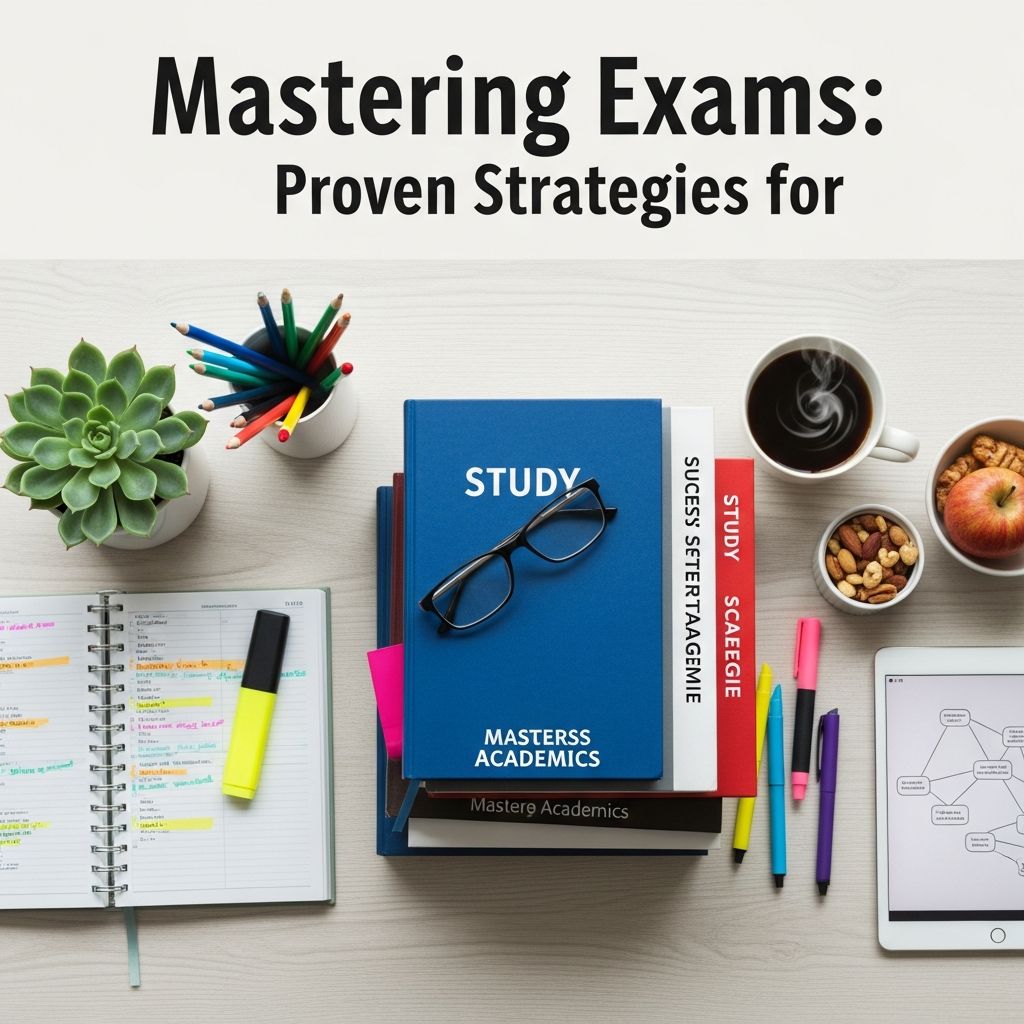
Excelling in exams requires more than just memorizing facts; it demands smart preparation, tactical execution during the test, and effective recovery afterward. This guide draws from university resources and educational research to equip you with actionable techniques that enhance performance across various test formats. Whether facing multiple-choice quizzes, essays, or comprehensive finals, these methods help students manage time, reduce stress, and demonstrate true knowledge.
Building a Strong Foundation Before the Exam
Success begins long before test day. Establishing solid study habits ensures deep understanding rather than superficial cramming, which often leads to forgetting under pressure. Start by reviewing course syllabi early to map out exam dates and question types, allowing for targeted preparation.
Active engagement with material is key. Instead of passive reading, quiz yourself on notes and readings without peeking at answers. Write definitions and explanations in your own words, then create flashcards for quick drills. This reinforces retention and identifies weak spots early.
- Attend office hours to clarify confusing topics with instructors.
- Form study groups to quiz each other and discuss concepts.
- Practice with sample questions provided by professors or self-created ones, timing yourself to mimic exam conditions.
Avoid last-minute cramming; spaced repetition over days or weeks builds long-term memory. Gather all materials the night before—pens, ID, calculator if allowed—to eliminate morning chaos. Physical preparation matters too: aim for 7-9 hours of sleep and light exercise to sharpen focus.
Optimal Preparation in the Days Leading Up
As the exam nears, refine your approach. Create mind maps linking key concepts visually, or condense notes into a ‘cheat sheet’ exercise—even if not permitted, this forces prioritization of essentials.
Develop mnemonics for lists or sequences, but pair them with deeper strategies like explaining ideas aloud or relating them to real-life examples. For instance, connect historical events to current news for better recall. Simulate the testing environment with full practice runs, scoring yourself to analyze errors—did you misread, miscalculate, or lack knowledge?.
| Study Phase | Key Actions | Benefits |
|---|---|---|
| Weekly Review | Daily note summaries, self-quizzing | Prevents overload, builds retention |
| Final 48 Hours | Practice tests, light review | Boosts confidence, simulates pressure |
| Night Before | Materials check, relaxation | Reduces anxiety, ensures readiness |
Set specific, achievable goals like ‘Master 80% of multiple-choice concepts’ to maintain motivation without overwhelm.
Arriving Ready: Pre-Test Rituals
The hour before sets the tone. Eat a balanced meal with protein and complex carbs for sustained energy. Arrive early to settle in, avoiding rushed entry. Bring stress-relief tools like a fidget item if permitted.
Mentally rehearse: Visualize success, review goals, and breathe deeply (4-7-8 technique: inhale 4 seconds, hold 7, exhale 8). This activates calm focus, countering adrenaline spikes.
Navigating the Test: General Tactics
Upon receiving the exam, pause. Preview all sections to gauge length and allocate time—e.g., 1 minute per multiple-choice question. Read instructions meticulously; missing details like ‘choose two’ can cost points.
Start with easiest questions to build momentum and confidence. Mark and skip stumpers, returning later with fresh eyes. Jot a quick ‘memory dump’ of formulas or lists on scrap paper immediately. If stuck, rephrase the question in your words or visualize your study space for cues.
Monitor time: Budget more for high-value sections like essays. Double-check answer placements on bubble sheets to avoid misalignment.
Conquering Multiple-Choice Questions
Multiple-choice tests reward elimination and prediction. Read the stem first, formulate your answer mentally, then scan options—covering choices initially prevents distraction.
- Eliminate obvious wrongs; qualifiers like ‘always’ or ‘never’ often signal falsehoods.
- Watch for ‘except’ or ‘best’—they flip logic.
- If tied between two, pick the most comprehensive or specific.
Avoid changing answers unless certain; first instincts are often right. For math, work backwards from choices if direct solving fails.
Excelling in Matching and True/False
For matching, scan both columns fully before pairing. Start with sure matches to narrow options, reading descriptions first if longer.
True/false demands caution: Extremes (all/none) are usually false. Base decisions on course content, not hunches.
Tackling Short Answer and Fill-in-the-Blank
Partial knowledge earns points—write what you know, even approximately (e.g., ‘early 1900s’ for 1904). Match grammar and space length as clues. Generalize if specifics escape: list causes if exact names don’t.
Mastering Essay and Long-Form Responses
Essays test organization. Read prompts fully, noting directive verbs: ‘analyze’ means break down, ‘compare’ highlights similarities/differences.
Outline first: intro thesis, body points with evidence, conclusion summary. Allocate time proportionally to points. Follow outline rigidly, then proofread for clarity and errors. Memory dump aids here—list ideas upfront.
Managing Test Anxiety Effectively
Anxiety impairs recall; counter it proactively. Practice under timed conditions to desensitize. Positive self-talk (‘I prepared well’) reframes nerves as excitement.
During: Pause for deep breaths if racing thoughts hit. Focus on one question at a time. Post-test, debrief without obsessing—note what worked for future.
Post-Test Analysis for Continuous Improvement
Review promptly: What tripped you? Adjust strategies accordingly. Celebrate efforts to reinforce habits.
Frequently Asked Questions (FAQs)
What if I blank out during the test?
Taking deep breaths and moving to easier questions rebuilds momentum. Return after; pressure often eases.
Should I guess on multiple-choice?
Yes, if no penalty—eliminate options first to raise odds from 25% to 50%.
How much sleep before an exam?
Aim for 7-9 hours; sleep consolidates memory better than all-nighters.
Is cramming ever useful?
For minor details, sparingly—but prioritize understanding for long-term success.
What if time runs out?
Prioritize high-point items; quick guesses beat blanks.
References
- Test taking strategies – College Tips | UW-La Crosse — University of Wisconsin-La Crosse. Accessed 2026. https://www.uwlax.edu/college-tips/test-taking-strategies/
- Test-Taking Strategies: Academic Support and Learning Advancement — Northwestern University. Accessed 2026. https://www.northwestern.edu/academic-support-learning/academic-resources/find-strategies-for-success/test-taking-strategies/
- TEST TAKING STRATEGIES — California State University, Fullerton. Accessed 2026. https://www.fullerton.edu/aas/_resources/pdfs/Test%20Taking%20Strategies.pdf
- 14 Tips for Test Taking Success — Harvard Summer School. 2023-06-12. https://summer.harvard.edu/blog/14-tips-for-test-taking-success/
- 4 Test-Taking Strategies That Help Students Show What They Know — Edutopia. Accessed 2026. https://www.edutopia.org/article/4-test-taking-strategies-that-help-students-show-what-they-know/
- Test Taking Strategies and Test Anxiety — College of the Ozarks. Accessed 2026. https://www.cofo.edu/Academics/Resources/Student-Support-and-Success/Test-Taking-Strategies-and-Test-Anxiety

- Integrated M.A. in Applied Linguistics, University of Hyderabad
- 5+ years in editorial, instructional, SEO, and research-based writing
Sneha is a relationships and lifestyle writer with a strong foundation in applied linguistics and certified training in relationship coaching. She brings over five years of writing experience to theskillvault, crafting thoughtful, research-driven content that empowers readers to build healthier relationships, boost emotional well-being, and embrace holistic living. Her writing and insights reflect the belief that beauty, happiness, and wellness…