
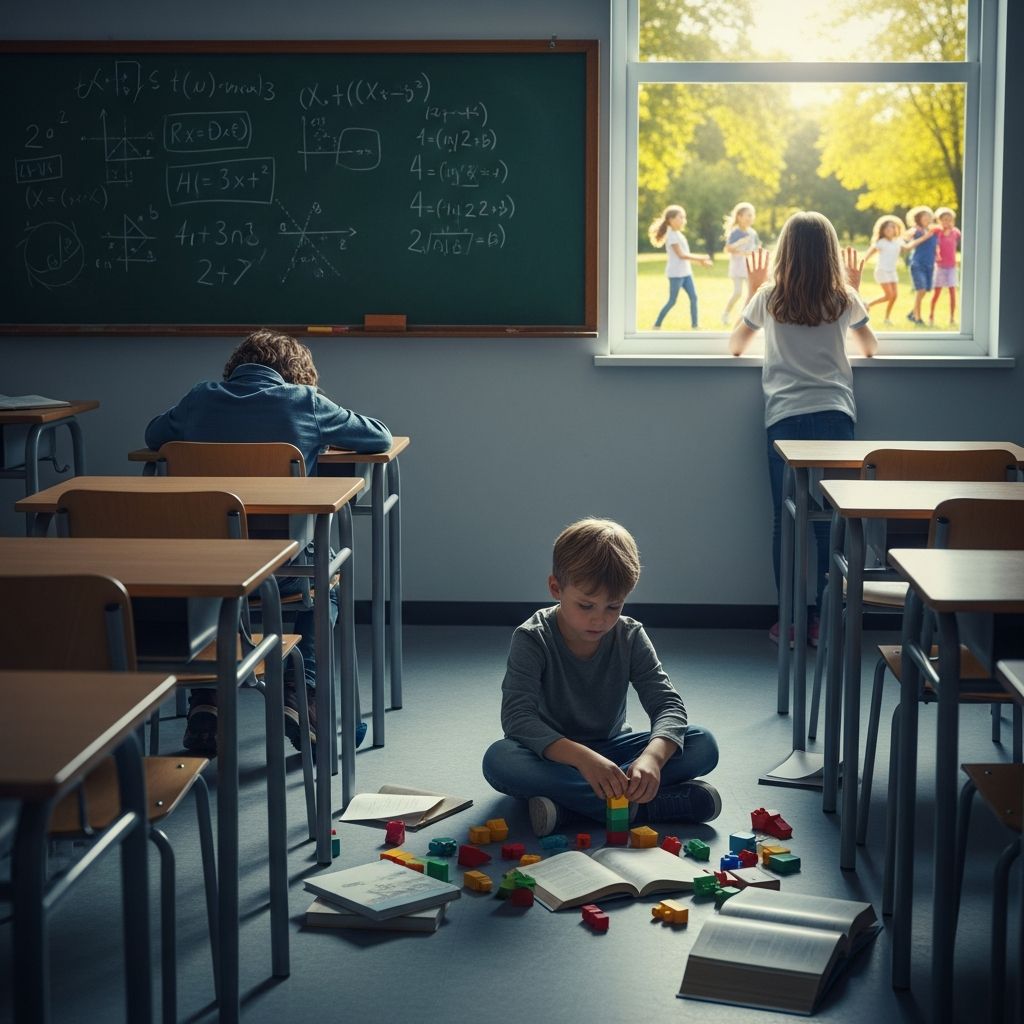
Conventional education systems, built on uniformity and mass instruction, do not meet the needs of every student. Many children experience frustration, disengagement, and stalled growth in these environments, prompting parents to seek more adaptive approaches.
The Hidden Flaws in Conventional Learning Environments
Standard classrooms prioritize group pacing and standardized assessments over individual potential. This approach, rooted in industrial-era models, treats students as uniform units rather than unique learners with varying paces, interests, and styles.
Large class sizes—often exceeding 25 students—limit teacher interaction to mere minutes per child daily. Curricula enforce a fixed sequence, ignoring innate differences in cognitive development. Research from the OECD highlights how such rigidity contributes to widespread underachievement, with over 30% of students in developed nations reporting low engagement in traditional settings.
Moreover, emphasis on rote memorization overshadows essential 21st-century competencies like critical analysis and collaboration. A Nature Human Behaviour study revealed that adaptive, tech-assisted methods outperform conventional ones by 40% in learning speed and 25% in test scores. These gaps leave many graduates unprepared for dynamic careers demanding innovation and resilience.
Spotting the Red Flags: Is School Draining Your Child?
Parents must vigilantly observe behavioral and academic shifts to intervene early. Persistent reluctance to attend school signals deeper mismatches.
- Chronic Avoidance: Repeated pleas to stay home or feigned illnesses indicate anxiety or overwhelm from rigid structures.
- Emotional Volatility: Sudden mood swings, irritability, or withdrawal reflect unaddressed stress from unmet needs.
- Declining Performance: Falling grades despite effort, or boredom in high-achievers, show curricula misaligning with abilities.
- Social Withdrawal: Isolation or conflicts arise when environments stifle natural social dynamics.
- Physical Symptoms: Headaches, stomach issues, or sleep disturbances often stem from school-related pressure.
These indicators, noted across multiple studies, underscore systemic failures rather than personal deficits. Early recognition empowers families to pivot toward supportive frameworks.
Why One-Size-Fits-All Teaching Suppresses Potential
Neurodiversity challenges the uniformity of traditional models. Children with ADHD, dyslexia, or gifted traits thrive under customized strategies, yet standard classrooms enforce sedentary, lecture-based formats ill-suited to kinesthetic or visual learners.
Multi-sensory techniques—integrating movement, visuals, and tech—yield superior retention. For instance, audiobooks and interactive apps benefit dyslexic students by bypassing textual barriers. Without such adaptations, capable kids disengage, fostering cycles of low self-esteem and learned helplessness.
Global data from the World Bank reveals that personalized interventions boost outcomes by up to 50% for diverse learners, affirming the need for flexibility over conformity.
Modern Workforce Demands: Bridging the Preparation Gap
Tomorrow’s jobs prioritize adaptability, emotional acuity, and interdisciplinary thinking—skills sidelined in exam-focused systems. Employers value problem-solvers over memorizers, yet traditional paths cultivate compliance.
| Traditional Focus | Future-Ready Skills | Impact of Mismatch |
|---|---|---|
| Memorization & Tests | Critical Thinking | Graduates struggle with real-world ambiguity |
| Individual Competition | Team Collaboration | Poor workplace integration |
| Rigid Schedules | Self-Directed Learning | Low adaptability to change |
This table illustrates core discrepancies, supported by IMF reports on skill shortages in evolving economies. Shifting paradigms ensures children lead rather than follow.
Empowering Alternatives: Tailored Paths to Success
Beyond conventions lie vibrant options honoring individuality. Homeschooling allows parent-led customization, aligning lessons with passions and strengths. Data from the U.S. Department of Education shows homeschooled students outperforming peers by 15-30% on standardized measures.
Online academies offer flexibility, blending self-paced modules with live support. Hybrid models merge in-person socialization with virtual depth, ideal for transient families or those needing medical accommodations.
Specialized institutions cater to neurodivergence via therapy-integrated programs, while micro-schools emphasize project-based inquiry. Each pathway fosters autonomy, with communities providing peer networks absent in isolation.
Implementing Change: A Parent’s Action Roadmap
Transitioning requires strategy. Begin with assessments from educational psychologists to pinpoint needs. Research local regulations—many regions support flexible enrollments.
- Evaluate Fit: Track a week’s routines to quantify mismatches.
- Explore Options: Visit alternatives, join forums for insights.
- Pilot Programs: Trial short-term enrollments or tutoring.
- Build Support: Network with like-minded families; leverage co-ops.
- Monitor Progress: Use portfolios over grades for holistic tracking.
Parental resolve transforms challenges into triumphs, as evidenced by rising alternative enrollment rates.
Frequently Asked Questions
What if my child seems fine but underperforms?
Subtle disengagement can mask deeper issues; observe enthusiasm levels and consider diagnostic evaluations for hidden learning differences.
Is homeschooling viable long-term?
Yes, with structured curricula and socialization via groups, it yields strong results; resources abound from official departments.
How do I convince skeptical relatives?
Share outcome data from credible studies and personal milestones to demonstrate efficacy.
Are alternatives costlier?
Many public options exist; private ones invest in futures via superior engagement and skills.
What about college readiness?
Alternatives produce self-starters who excel in applications emphasizing portfolios and independence.
Final Thoughts on Educational Liberation
Discarding outdated molds unlocks children’s innate brilliance. By prioritizing fit over tradition, families cultivate resilient, joyful learners poised for fulfillment. The journey demands courage but rewards exponentially.
References
- Education at a Glance 2023 — OECD. 2023-11-29. https://www.oecd.org/education/education-at-a-glance/
- Skills for a Resilient Recovery — World Bank. 2022-06-01. https://www.worldbank.org/en/publication/skills-for-resilient-recovery
- AI Tutors Boost Learning Efficiency — Nature Human Behaviour. 2023-05-15. https://www.nature.com/articles/s41562-023-01612-3
- World Economic Outlook: Skill Gaps — IMF. 2024-04-16. https://www.imf.org/en/Publications/WEO
- Homeschooling in the United States: Results — U.S. Department of Education, NCES. 2023-09-12. https://nces.ed.gov/pubs2023/2023001.pdf
- Parenting Mistake: Traditional Schools — ILIM School. 2024-02-20. https://www.ilimschool.com/post/parenting-mistake-the-real-reason-traditional-schools-don-t-work

- Integrated M.A. in Applied Linguistics, University of Hyderabad
- 5+ years in editorial, instructional, SEO, and research-based writing
Sneha is a relationships and lifestyle writer with a strong foundation in applied linguistics and certified training in relationship coaching. She brings over five years of writing experience to theskillvault, crafting thoughtful, research-driven content that empowers readers to build healthier relationships, boost emotional well-being, and embrace holistic living. Her writing and insights reflect the belief that beauty, happiness, and wellness…