
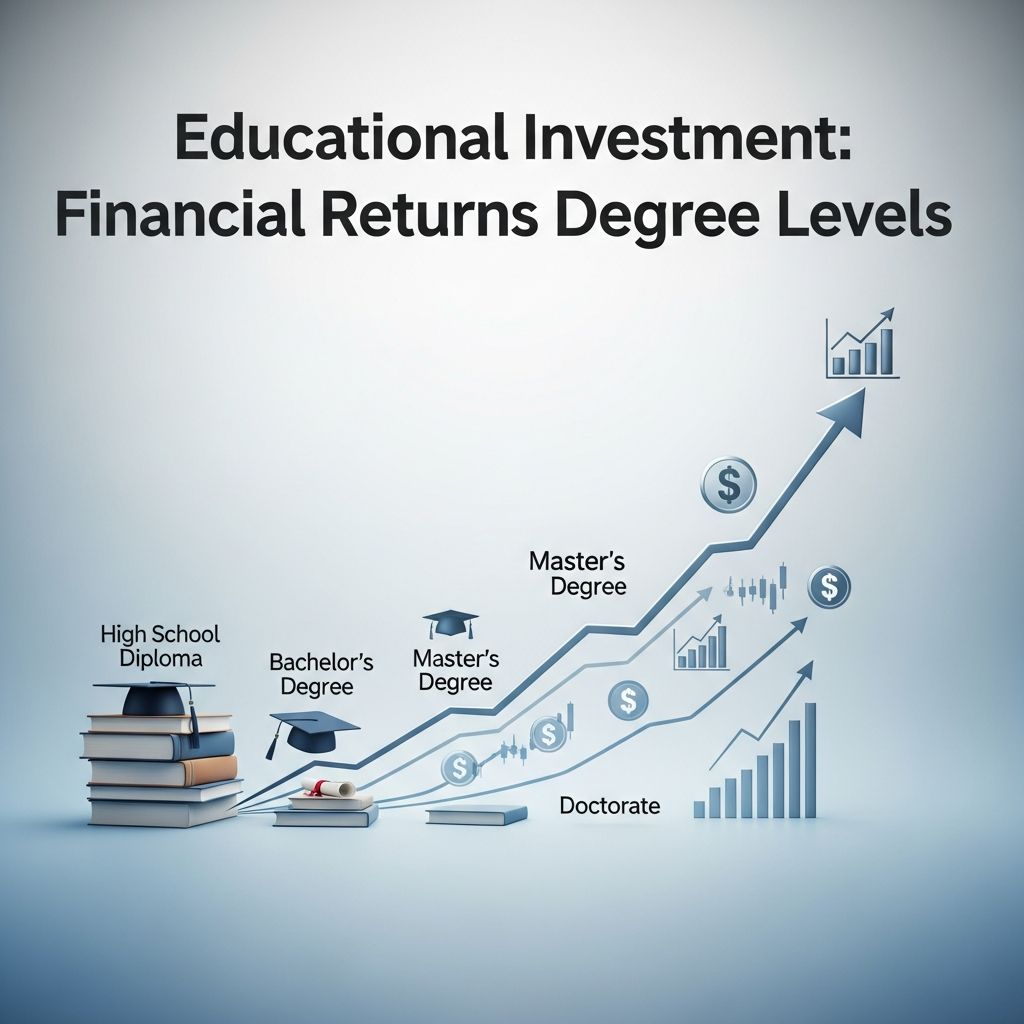
Understanding Educational Value Through Financial Metrics
When evaluating whether to pursue higher education, prospective students increasingly view their academic choices through a financial lens. The concept of measuring educational outcomes in terms of monetary returns has become integral to decision-making for millions of learners worldwide. This approach treats educational credentials similarly to financial investments, where the initial capital expenditure—tuition, fees, and opportunity costs—must be weighed against future income benefits. The calculation extends beyond simple salary comparisons to encompass lifetime earnings trajectories, career advancement opportunities, and the broader economic implications of credential attainment.
Educational institutions and workforce economists have developed sophisticated models to quantify these relationships, revealing that the financial benefits of higher education vary dramatically depending on program selection, institution type, and field of study. Understanding these variations empowers students to make informed decisions aligned with both their aspirations and financial realities.
The Mechanics of Calculating Educational Returns
Calculating the financial return from educational investment involves comparing the total cost of degree completion against the incremental earnings gained throughout a career. The total investment encompasses multiple components: direct tuition and mandatory fees, indirect costs such as housing and meals, foregone income during study years, and accumulated interest on student loans. These figures represent the baseline against which future earnings premiums are measured.
The methodology considers the earnings differential between degree holders and those with lower educational attainment across their entire working lives. By establishing a clear relationship between educational investment and lifetime income streams, stakeholders can evaluate whether specific degree programs justify their financial requirements. This framework acknowledges that educational benefits extend beyond initial salary offers to encompass career longevity, advancement opportunities, and earning potential in later career stages.
Bachelor’s Degree Programs: Varying Financial Outcomes
Bachelor’s degrees represent the most commonly pursued tertiary qualification, yet their financial returns demonstrate remarkable heterogeneity across disciplines. An average bachelor’s degree generates a lifetime return on investment of approximately 682%. However, this aggregate figure masks significant variation: the median lifetime return reaches 1,042%, indicating that half of degree recipients experience substantially higher returns than average.
For students completing their degree within four to six years, the median net return on investment approximates $306,000 in today’s dollars. This substantial figure reflects the cumulative earnings advantage gained throughout a career. Entry-level salaries for bachelor’s degree holders average around $64,433, providing an initial financial foundation that typically grows over time as workers advance into supervisory and specialized roles.
High-Return Bachelor’s Programs
Certain bachelor’s degree fields consistently demonstrate exceptional financial returns. These programs align educational content with labor market demands, enabling graduates to command premium salaries relative to their educational investment.
- Finance and Business Finance: Bachelor’s degrees in finance yield lifetime returns exceeding 1,842%, making this field among the most financially rewarding. These graduates benefit from direct entry into high-compensation financial services careers.
- Computer Science and Information Technology: Computer and information sciences majors achieve lifetime returns around 1,753%, reflecting the sustained demand for technological expertise across all economic sectors.
- Engineering Disciplines: Engineering bachelor’s degrees, including computer engineering, generate returns exceeding 1,700%. Engineering graduates command median annual returns of approximately 13% on their educational investment.
- Economics and Mathematics: Economics degrees produce lifetime returns near 1,708%, while mathematics and science fields yield annual returns of 10-13%.
- Healthcare and Nursing: Nursing and healthcare-related degrees provide consistent returns of $500,000 or more over a career lifetime.
Challenging Financial Landscapes for Certain Majors
Not all bachelor’s degrees generate positive financial returns. Education degrees illustrate this challenge most acutely, with an average lifetime ROI of negative 54.67%, representing losses exceeding $149,000 in degree-related earnings compared to high school graduates. This paradox reflects the reality that educator compensation often fails to match the costs of obtaining teaching credentials.
Similarly problematic are liberal arts and humanities degrees, which generate negative returns of approximately 42.78%, and family and consumer science degrees at negative 38.95%. These fields exemplify situations where degree costs exceed the earnings premiums students can realistically achieve. Fine arts programs also typically yield lower returns, with annual earnings advantages below 8%.
Advanced Degrees: Master’s, Doctoral, and Professional Credentials
Beyond bachelor’s degrees, advanced credentials present different financial propositions. These programs require additional time and financial investment but may provide access to specialized career pathways with elevated compensation structures.
Master’s Degree Economics
Master’s degrees demonstrate a 20-year return on investment of approximately 84.78%, with 40-year returns reaching 472%. While these percentages appear modest compared to bachelor’s degrees, they reflect the shorter remaining career span following completion and the higher absolute investment required for graduate-level study. For students strategically pursuing master’s degrees in fields with demonstrated employer demand, the financial benefits can be substantial and career-transformative.
Doctoral Degrees and Beyond
Doctoral degrees show 20-year returns of 82.2% and 40-year returns of 623.5%. These credentials require significant time and financial commitment, typically resulting in delayed workforce entry and extended periods of reduced income. However, they unlock career pathways in research, academia, and specialized professional roles that may not be accessible to holders of lower credentials.
Professional degrees—including medicine, law, and dentistry—represent the highest-return educational investments, with lifetime returns reaching 2,249%. These credentials command exceptional earning premiums that eventually overcome substantial tuition costs, often exceeding $250,000. However, professional degrees typically assume prerequisite bachelor’s degree completion and represent career investments extending across a decade or more of combined education and training.
Temporal Dynamics of Educational Returns
The timing of returns significantly influences how educational investments are evaluated. Research indicates that for students at approximately 55% of four-year institutions, degree costs are recouped within five years of graduation. This relatively swift payback period reflects the immediate earnings premiums most bachelor’s degree holders achieve compared to high school graduates.
However, return achievement timelines vary substantially by program. Approximately 41% of bachelor’s degree programs generate positive returns within five years, while 10% of programs fail to generate any positive ROI over entire career spans. Understanding these timelines helps prospective students distinguish between short-term sacrifices that yield medium-term financial benefits and investments that may never produce positive returns.
Institutional and Sector Variations
The sector classification of the institution—public, private, or for-profit—significantly influences educational ROI. Public four-year institutions generate positive returns for 97.6% of their degree programs, while private institutions similarly demonstrate positive outcomes in 99.4% of programs. In stark contrast, for-profit institutions produce positive returns in substantially smaller shares of their offerings.
This disparity reflects differences in program costs, instructional quality, employer recognition, and graduate employment outcomes. Students evaluating institutions should consider sector classification as one indicator of financial return likelihood, while recognizing that institution-specific factors—such as specialized program reputation and regional labor market conditions—also significantly influence individual outcomes.
Field-Specific Return Patterns and Career Considerations
Annual return rates provide another dimension for evaluating educational investment attractiveness. Engineering and computer science majors achieve median annual returns exceeding 13%, placing them among the most financially efficient educational investments. Business, health, mathematics, and science majors follow with annual returns between 10-13%. Biology, agriculture, and social science majors generate 8-9% annual returns, while education, humanities, and arts majors typically produce annual returns below 8%.
These differential annual returns reflect both salary premiums and job market stability. Disciplines aligned with technology sector growth and professional specialization demonstrate superior financial returns, while fields with abundant labor supply relative to demand show constrained earnings growth.
Comprehensive Investment Analysis
| Education Level | 20-Year ROI | 40-Year ROI | Key Characteristics |
|---|---|---|---|
| Associate Degree | 80.88% | 545% | Targeted credentials; streamlined costs |
| Bachelor’s Degree | 142.4% | 841.7% | Variable returns; field-dependent outcomes |
| Master’s Degree | 84.78% | 472% | Specialized career access; substantial investment |
| Doctoral Degree | 82.2% | 623.5% | Research pathways; extended study period |
| Professional Degree | 554.5% | 2,248.6% | Highest returns; substantial prerequisites and costs |
Critical Considerations for Prospective Students
While financial returns provide valuable decision-making frameworks, several important caveats warrant consideration. Educational value extends beyond monetary calculations to encompass personal development, civic knowledge, and social connections. Furthermore, individual circumstances—including family financial resources, geographic location, and personal circumstances—influence how standardized return calculations apply to specific students.
The current landscape reveals that approximately 69% of evaluated degree programs generate positive lifetime ROI, while 31% do not. This distribution suggests that educational credentials remain financially beneficial for most students, but careful program selection becomes essential. Students pursuing fields with demonstrated negative or minimal returns should clearly understand their financial implications and possess compelling non-financial motivations for their educational choices.
Additionally, initial investment figures continue expanding due to rising tuition costs that have outpaced inflation for decades. A typical bachelor’s degree now requires total investments exceeding $255,000, including tuition, fees, living expenses, and loan interest. This escalating baseline investment makes field selection increasingly consequential, as the cost foundation against which returns are measured has substantially increased.
The Broader Educational Landscape
Research from the Federal Reserve and other economic institutions confirms that college education continues generating significant returns. In 2020, estimated annual returns on educational investment ranged from 13.5% to 35.9% across demographic groups, substantially exceeding typical investment returns available through alternative financial vehicles. This persisting advantage explains why college enrollment remains elevated despite rising costs—prospective students and families recognize that financial payoffs justify educational investments.
However, this positive aggregate picture masks troubling exceptions and emerging challenges. The student debt crisis reflects situations where educational investment—particularly in fields with limited earning premiums—leaves graduates financially burdened rather than enriched. Addressing this challenge requires transparency regarding program-specific returns and realistic career outcomes, enabling students to make fully informed decisions.
Frequently Asked Questions
Q: Which bachelor’s degree field offers the highest financial return?
A: Finance and business finance degrees provide the highest lifetime returns, exceeding 1,842%, followed closely by computer science and computer engineering programs at approximately 1,750%.
Q: Why do education degrees generate negative returns?
A: Education degree returns are negative primarily because educator compensation fails to match degree completion costs. Teaching salaries typically provide limited earnings premiums relative to high school graduate earnings, while degree costs continue rising.
Q: How long does it typically take to recoup educational investment?
A: For students at approximately 55% of four-year institutions, degree costs are recouped within five years of graduation. However, this timeline varies significantly by field—high-return fields recover costs faster than low-return disciplines.
Q: Do professional degrees like medicine generate better returns than bachelor’s degrees?
A: Yes, professional degrees generate substantially higher lifetime returns—approximately 2,249% compared to 682% for average bachelor’s degrees. However, professional degrees require prerequisite bachelor’s degrees and extensive additional education.
Q: What percentage of degree programs fail to generate positive ROI?
A: Approximately 31% of evaluated degree programs do not generate positive lifetime ROI. Additionally, 10% of bachelor’s programs never produce positive returns throughout entire career spans.
References
- Return on Education for Bachelor’s Degrees — SoFi Learn. 2024. https://www.sofi.com/learn/content/roi-by-bachelor-degree/
- The Return on Investment in Education — Summit Educational Group. 2024. https://www.mytutor.com/blog/the-return-on-investment-in-education
- College Degree Return on Investment — Education Data Initiative. 2024. https://educationdata.org/college-degree-roi
- The Return on Investing in a College Education — Federal Reserve Bank of St. Louis, Regional Economist. March 2023. https://www.stlouisfed.org/publications/regional-economist/2023/mar/return-investing-college-education
- Does College Pay Off? A Comprehensive Return On Investment Analysis — Foundation for Research on Equal Opportunity (FREOPP). 2024. https://freopp.org/whitepapers/does-college-pay-off-a-comprehensive-return-on-investment-analysis/
- Higher Education Return on Investment for Students, Families and Society — Southern Regional Education Board (SREB). 2022. https://www.sreb.org/sites/main/files/file-attachments/2022_roi_brief.pdf
- Measuring the Return on Investment of Higher Education: Breaking Down the Complexity — Bipartisan Policy Center. 2024. https://bipartisanpolicy.org/explainer/measuring-the-return-on-investment-of-higher-education-breaking-down-the-complexity/

Medha Deb is an editor with a master's degree in Applied Linguistics from the University of Hyderabad. She believes that her qualification has helped her develop a deep understanding of language and its application in various contexts. Medha specializes in the areas of beauty, health, sports, and wellness and is committed to ensuring that the content on the website is…