
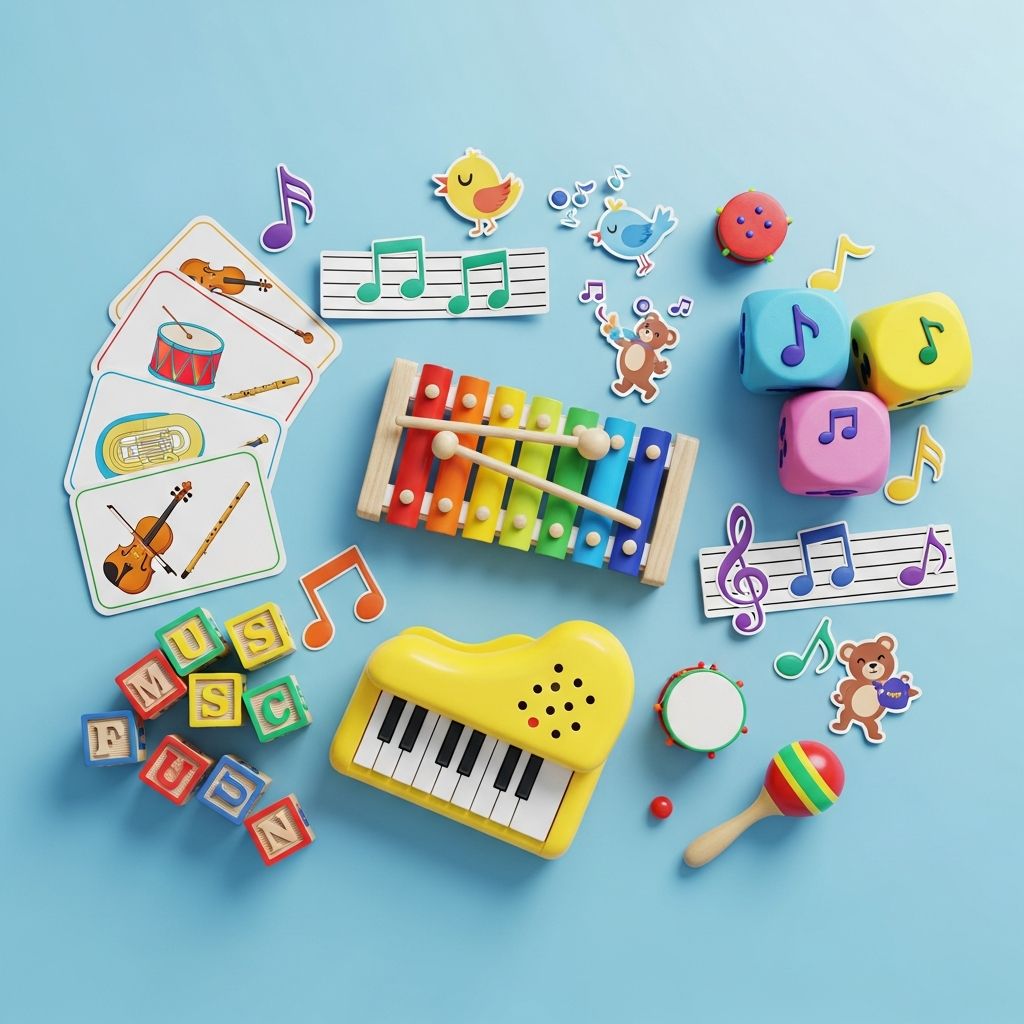
Music serves as a powerful tool in early childhood education, helping children develop essential skills like coordination, language, and emotional expression. These activities transform simple tunes into dynamic experiences that captivate young minds and bodies.
Why Music Matters in Early Development
Engaging preschoolers in musical play supports multiple areas of growth. Research from the American Academy of Pediatrics highlights how music exposure enhances brain development, particularly in areas related to language and spatial reasoning. Activities involving rhythm and movement improve gross motor skills, while singing boosts vocabulary and phonetic awareness.
Parents and educators can easily integrate these games into daily routines, requiring minimal materials like household items or free online tunes. The key is repetition and enthusiasm, allowing children to build confidence through familiar patterns.
Getting Started with Basic Rhythm Explorations
Begin with foundational games that introduce beat and tempo without overwhelming young participants. These low-prep options build a strong base for more complex play.
- Beat Matching Claps: Gather children in a circle and clap along to a steady beat from a simple drum app or hand percussion. Gradually speed up or slow down to teach tempo variations.
- Body Percussion Basics: Use hands, feet, and knees to create rhythms. Start with patting thighs for bass sounds and snapping fingers for highs, mimicking drum kits.
- Echo Games: Leader claps a short pattern; children echo it back. This sharpens listening skills and memory.
These exercises, done for 5-10 minutes daily, foster focus and group synchronization, as noted in studies from the National Association for Music Education.
Prop-Based Movement Adventures
Incorporate everyday props to add visual and tactile excitement, turning abstract sounds into tangible fun.
Scarf Twirling Sessions
Hand out lightweight scarves in vibrant colors. Play upbeat tracks and encourage swirling, tossing, and waving. When music pauses, children freeze in creative poses. This game refines fine motor control and spatial awareness.
- Materials: Scarves or fabric scraps, playlist of lively children’s songs.
- Tips: Vary music tempo to match scarf movements—fast spins for quick beats, slow floats for gentle melodies.
Ribbon Wand Wonders
Attach ribbons to sticks for DIY wands. Children wave them to follow musical dynamics: high notes prompt upward arcs, low ones downward swoops. Introduces concepts like pitch in a playful way.
Extend by forming shapes in the air, promoting teamwork as groups create patterns together.
Freeze and Go Games for Energy Release
High-energy games channel preschooler enthusiasm while teaching impulse control.
Signal Dance Challenges
Similar to traffic lights, call out “Go” for dancing and “Freeze” for statues. Use songs with clear starts and stops. Add themes like animal marches to spark imagination.
| Command | Movement Idea | Skill Built |
|---|---|---|
| Go | Jump like frogs | Gross motor |
| Freeze | Pose as trees | Balance |
| Slow | Sway like leaves | Control |
Musical Statues Extravaganza
Dance freely until music halts; hold poses. Award points for silliest or most elegant freezes, encouraging creativity without competition.
Instrument-Making and Exploration
Craft sessions combine art with sound, deepening sensory engagement.
- Shaker Bottles: Fill plastic bottles with rice or beans, seal securely. Shake to rhythms, experimenting with volumes for soft/loud dynamics.
- Drum Circles: Use upside-down buckets or pots. Lead group beats, rotating leaders to build confidence.
- Glow Stick Percussion: In dim light, tape glow sticks to hands for visual drumming on surfaces, ideal for evening play.
These crafts, inspired by educational resources, reinforce cause-effect learning as children discover how materials alter sounds.
Singing Circles and Story Songs
Group singing strengthens social bonds and literacy.
Welcome and Goodbye Tunes
Create personalized songs naming each child, sung with ukulele or claps. Builds community and eases transitions.
Action-Packed Narratives
Songs with gestures, like row-row-row-your-boat in rounds, teach harmony basics. Puppets enhance storytelling, drawing shy participants in.
Incorporate dynamics: whisper verses, shout choruses, mimicking emotions.
Themed Music Parties
Tie activities to seasons or holidays for relevance.
Winter Wonderland Spins
Pretend snowflake dances with gentle music, freezing mid-twirl. Progress to parachute waves with soft balls inside.
Summer Bubble Beats
Blow bubbles to a bubbly tune; pop them rhythmically. Combines visual delight with motor precision.
Advanced Group Challenges
For progressing groups, introduce coordination tasks.
- Song Dice Rolls: Cubes with song snippets and actions; roll to combine randomly for surprises.
- Parachute Symphony: Lift and shake to music swells, lifting toys in the center for team lifts.
- Scale Climbs: Use xylophones for up/down melodies, children mimicking with voices or jumps.
Benefits Backed by Research
Consistent music play yields measurable gains. A study from the Johns Hopkins University Peabody Institute shows improved executive function in musically active toddlers. Coordination enhances via cross-lateral movements, per CDC guidelines on physical activity.
Tips for Seamless Integration
- Repeat favorites to build mastery.
- Adapt for inclusivity: seated options for all.
- Observe engagement; extend popular games.
- Record sessions for parent sharing.
Frequently Asked Questions
What age group benefits most from these activities?
Ages 3-5 thrive, as they balance attention with physical capability for full participation.
Do I need musical training?
No—enthusiasm trumps expertise. Free online resources provide simple melodies.
How often should we do music time?
15-20 minutes daily maximizes retention without fatigue.
What if a child is shy?
Start with echoes or props; pair with buddies for comfort.
Can these work at home?
Absolutely—use phone speakers and household items for family bonding.
References
- Music and the Developing Brain — American Academy of Pediatrics. 2023-01-15. https://publications.aap.org/pediatrics/article/151/1/e2022057753/188013/Music-and-the-Developing-Brain
- Opportunities for Policy and Practice — National Association for Music Education. 2024-06-10. https://nafme.org/early-childhood-music-education/
- Effects of Music Instruction on Executive Function — Johns Hopkins University Peabody Institute. 2022-09-20. https://peabody.jhu.edu/news/peabody-study-shows-music-education-benefits-executive-function-in-children/
- Physical Activity Guidelines for Americans — Centers for Disease Control and Prevention. 2025-02-01. https://www.cdc.gov/physicalactivity/basics/children/index.htm
- Early Childhood Music Development — U.S. Department of Education. 2024-11-12. https://www2.ed.gov/rschstat/research/pubs/arts-integration/arts-integration.pdf

Medha Deb is an editor with a master's degree in Applied Linguistics from the University of Hyderabad. She believes that her qualification has helped her develop a deep understanding of language and its application in various contexts. Medha specializes in the areas of beauty, health, sports, and wellness and is committed to ensuring that the content on the website is…