
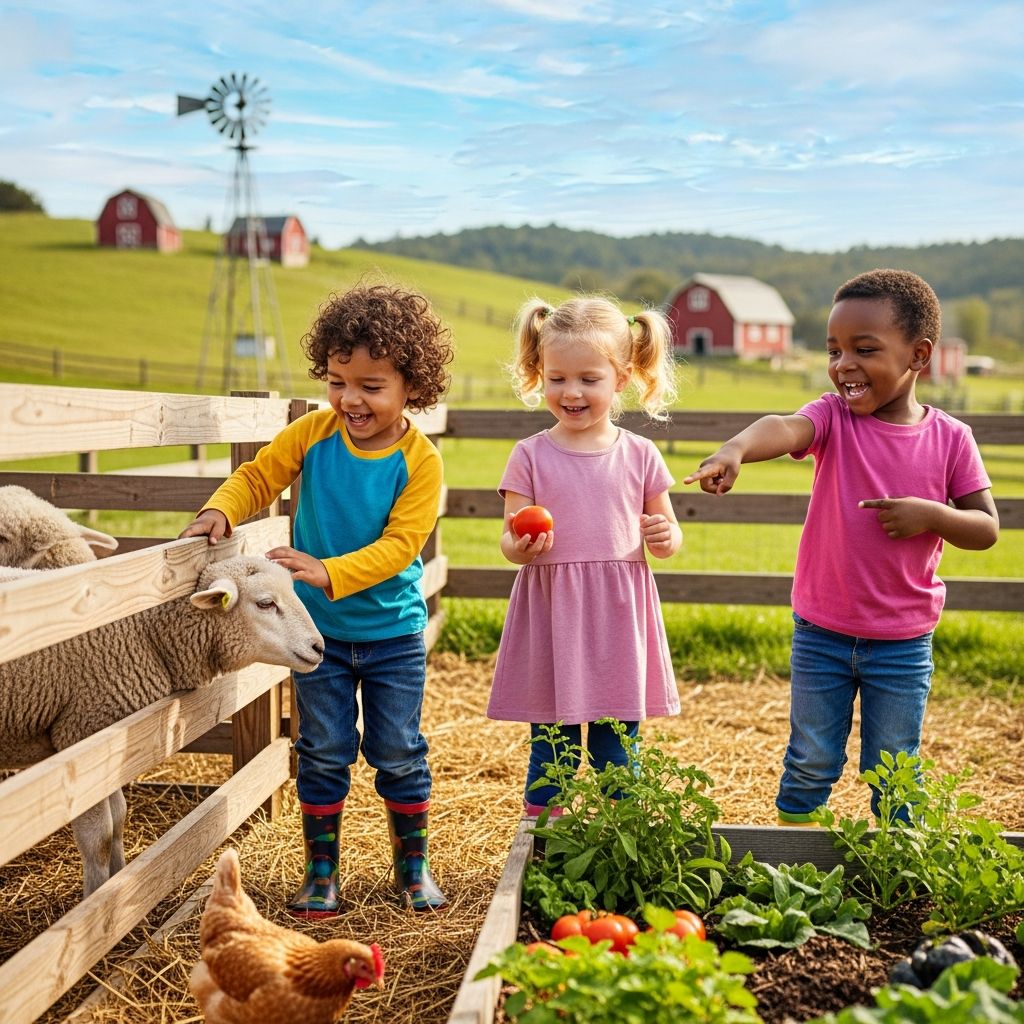
Bringing Agricultural Experiences Into the Preschool Classroom
Farm-themed learning provides an exceptional avenue for young learners to explore the natural world while developing critical developmental skills. Preschoolers are naturally curious about where food originates and how animals live, making agricultural concepts ideal for classroom integration. Through carefully designed activities centered on farm life, educators can create meaningful learning experiences that address multiple developmental domains simultaneously.
The farm environment offers rich opportunities for hands-on exploration that engages children’s senses and imagination. When preschoolers encounter farm-related materials and scenarios, they develop cognitive connections between classroom learning and real-world applications. This authentic learning approach helps children understand their community and the processes that sustain daily life.
Building Sensory Foundations Through Tactile Exploration
Sensory play forms the cornerstone of effective preschool learning experiences. Farm-themed sensory activities allow children to explore different textures and materials while developing fine motor control and spatial awareness. Creating a dedicated sensory station with farm elements provides children with extended time to investigate and discover independently.
A corn kernel sensory bin offers exceptional developmental value. Fill a shallow container with dried corn kernels and introduce small farm animal figurines, miniature tractors, and fencing pieces. Children can engage in multiple play sequences: filling containers, sorting animals by color or species, creating pretend harvest scenarios, and burying objects for discovery. This simple setup promotes hand strength, pincer grasp development, and problem-solving skills.
Alternative sensory materials expand learning possibilities. Oats provide a softer texture for younger or more sensitive learners, while larger seeds accommodate different comfort levels. Incorporating vegetable figures that children can dig from the kernels adds narrative elements to sensory exploration, transforming tactile play into imaginative storytelling.
Dramatic Play Spaces That Encourage Role-Taking and Social Development
Creating an immersive farm dramatic play area transforms classroom corners into opportunities for social-emotional learning and vocabulary development. Children naturally gravitate toward role-playing scenarios that reflect their world, and farm settings provide numerous character possibilities and interaction patterns.
Establish your farm dramatic play environment by gathering essential props:
- Vintage flannel shirts and denim overalls for farmer costumes
- Work boots and rubber boots for outdoor farm activities
- Plastic tools including rakes, shovels, and pitchforks
- Buckets and watering containers in various sizes
- Pretend vegetables and fruits for harvesting play
- Plastic animal figures representing common farm creatures
Use large cardboard boxes to construct barn structures, creating vertical interest and defined spaces. Plastic storage bins transformed into watering troughs or animal pens extend the dramatic play possibilities. Allow children to suggest additions to the environment and involve them in creating backdrop elements—sponge-painting clouds on blue paper for sky sections encourages artistic participation while personalizing the space.
A farm stand component within the dramatic play area introduces mathematical thinking through pretend commerce. Children practice counting, exchange transactions, and customer service interactions as they “sell” harvested items to classmates. This seemingly simple addition develops numeracy skills, communication abilities, and collaborative play patterns.
Pattern Recognition and Fine Motor Development Through Construction Activities
Pattern work serves dual purposes in preschool settings: building mathematical thinking while strengthening hand muscles and dexterity. Farm-themed pattern activities maintain engagement through thematic relevance while developing essential pre-academic skills.
A farm fence pattern activity leverages inexpensive craft materials with substantial educational value. Paint wooden popsicle sticks in multiple colors—red, white, blue, green, and yellow. Create printed templates showing various repeating patterns: alternating color sequences, grouped color combinations, or more complex multi-element patterns. Children recreate patterns by arranging their sticks to match templates without gluing pieces together, allowing activities to be reused multiple times and patterns to be changed regularly.
This flexible approach accommodates diverse learner needs. Younger or emerging learners might work with two-color alternating patterns, while more advanced children tackle three- or four-element patterns. The non-permanent nature of the activity reduces performance pressure, encouraging experimentation and risk-taking in mathematical thinking.
Muddy Creations: Art That Connects to Farm Realities
Messy art activities hold particular appeal for preschoolers while providing authentic connections to farm life. Mud-based painting projects incorporate color mixing, cause-and-effect learning, and gross motor engagement.
Prepare muddy paint by combining soil, water, and a small amount of dish soap to achieve the proper consistency. Set toy tractors and plastic farm animals into shallow paint trays. Children roll tractors through the paint and across large paper to create track impressions, or press animal figures to leave footprints. This process develops understanding of how farm vehicles and animals create visible marks on farmland while exploring color, texture, and artistic expression.
Children can mix colors to create custom brown shades, experimenting with proportions and observing how water content affects paint consistency. These scientific observations emerge naturally through play rather than formal instruction, supporting inquiry-based learning approaches.
Exploring Food Origins Through Hands-On Preparation Activities
Connecting agricultural production to food preparation creates meaningful learning experiences that extend beyond classroom activities. Simple food preparation projects demystify farming processes while developing life skills and scientific understanding.
Butter-making represents an ideal farm-to-table activity for preschoolers. Provide heavy cream in clear jars with secure lids and allow children to shake containers until cream separates into butter and buttermilk. This straightforward process demonstrates physical transformation and provides sensory engagement. Children observe texture changes, experience cause-and-effect relationships, and produce an edible result that reinforces learning.
Vegetable washing activities introduce farm-to-table concepts through practical participation. Set up a washing station with plastic vegetables (or safe, pesticide-free produce) and soapy water. Children scrub vegetables with soft brushes, discussing how farmers clean crops after harvest. This sensory-rich activity teaches responsibility, introduces agricultural practices, and provides fine motor practice through scrubbing motions.
Letter Sounds and Phonemic Awareness Through Farm Vocabulary
Farm themes naturally incorporate rich vocabulary relevant to phonemic awareness instruction. Animals, tools, and farm locations provide authentic contexts for letter sound work rather than abstract letter identification exercises.
Create a farm animal beginning sounds game by gathering picture cards or small figurines representing animals with diverse initial sounds: cow, sheep, pig, horse, goat, donkey, and chicken. Call out letters and have children move to locate animals matching those sounds. This active, playful approach embeds phonological awareness practice within engaging farm-themed movement.
Extend learning by discussing animal sounds, helping children recognize both the animals’ vocalizations and the language sounds they’re learning. This multisensory approach strengthens neural connections and maintains engagement through varied modalities.
Building Gross Motor Competence Through Farm-Inspired Movement
Physical development remains central to early childhood education, and farm themes provide natural contexts for gross motor activity. Movement games incorporating farm elements build strength, coordination, and body awareness while maintaining engagement through thematic coherence.
Develop a farm chore game where children move to different stations representing various farm responsibilities. At one station, children practice carrying with a bucket relay, building upper body strength and coordination. Another station involves bending and reaching to “plant” items, developing flexibility. A third station includes balancing activities while walking along a “fence line” marked on the floor. Children move through stations performing authentic farm movements in playful contexts.
Animal movement games translate naturally into gross motor practice. Children gallop like horses, waddle like ducks, hop like rabbits, and lumber like cows. These movements develop coordination, rhythm, and bilateral coordination while maintaining high engagement through imaginative play elements.
Small-World Play: Creating Miniature Farm Ecosystems
Small-world play—creating miniature landscapes and environments—supports cognitive development, creativity, and sustained attention. Farm environments translate exceptionally well into small-world formats, providing children with manageable scenes they can control and manipulate.
Establish small-world farms using shallow containers as bases. Incorporate plastic animals, miniature fencing, barn structures, and natural elements like straw or hay. Children can arrange environments according to their understanding of farm organization, creating barns for specific animals or organizing pastoral scenes. This constructive play develops spatial reasoning, animal classification thinking, and sustained imaginative narrative.
Introduce loose parts—popsicle sticks, fabric scraps, paper, and other recyclables—allowing children to extend their farms according to individual ideas. This open-ended approach fosters creativity and problem-solving as children determine how materials might represent farm elements.
Sensory Harvesting: Engaging Multiple Learning Modalities
Harvest-themed sensory activities celebrate agricultural production cycles while providing rich multisensory experiences. These activities can be adapted to accommodate different sensory preferences and developmental levels.
Create a carrot patch by embedding plastic carrots in playdough or kinetic sand within a shallow container. Children pull carrots from their “planted” locations, practicing hand strength and cause-and-effect understanding. Introduce farm animal figurines and tools, allowing children to construct narratives around harvest activities.
For a more structured mathematical component, assign quantities to different harvest items. Children might “pick” specific numbers of carrots, beans, or cornstalks, practicing counting and quantity concepts through purposeful action rather than rote recitation.
Comparing Farm-Based Learning Approaches
| Activity Type | Primary Skills Developed | Materials Required | Setup Time |
|---|---|---|---|
| Sensory Bins | Fine motor, sensory awareness, sorting | Container, sensory material, figurines | 10-15 minutes |
| Dramatic Play Area | Social skills, vocabulary, imaginative thinking | Costumes, props, structures, materials | 30-45 minutes |
| Pattern Activities | Mathematical thinking, fine motor control | Popsicle sticks, paint, templates | 20 minutes |
| Movement Games | Gross motor skills, body awareness, coordination | Open space, optional props | 5 minutes |
| Food Preparation | Life skills, scientific understanding, tasting | Food items, utensils, containers | 15-25 minutes |
Integrating Assessment Into Farm Activities
Thoughtful observation during farm-themed activities provides valuable developmental information without formal testing. As children engage in sensory play, educators can note hand strength development, bilateral coordination, and attention span. Dramatic play observations reveal social interaction patterns, vocabulary usage, and emotional regulation.
Document children’s emerging concepts about farm life through anecdotal notes and photographs. These observations inform instructional adjustments and provide meaningful information for family communication about learning progress.
Frequently Asked Questions
Q: How can I adapt farm activities for children with sensory sensitivities?
A: Provide alternative sensory materials such as larger seeds instead of kernels, foam tools instead of plastic implements, and alternative dramatic play costumes using softer fabrics. Offer sensory activities in quieter settings and allow children to participate at their comfort level without pressure to use all materials.
Q: What safety considerations apply to farm-themed activities?
A: Use only food-safe sensory materials or plastic alternatives, ensure small items are appropriately sized to prevent choking hazards, supervise water activities closely, and verify that any real produce has been thoroughly washed and is age-appropriate for consumption.
Q: How can I extend farm learning beyond classroom activities?
A: Share activity ideas with families for home extension, invite families to describe their own gardening or agricultural experiences, arrange virtual farm tours through online resources, and create take-home books featuring children’s farm artwork and learning.
Q: Can farm activities accommodate different developmental levels?
A: Yes, most farm activities offer natural differentiation. Sensory bins appeal to various developmental stages, pattern activities range from simple two-color sequences to complex patterns, and dramatic play roles can be adjusted based on children’s participation preferences and abilities.
Q: How long should individual farm activities last in preschool?
A: Most sensory and fine motor activities work well for 10-20 minutes, while dramatic play areas benefit from extended open-ended time of 20-30 minutes or longer. Observe children’s engagement levels and allow activities to continue as long as genuine learning and enjoyment persist.
References
- 12 Farm-Related Activities for Preschoolers — Highlights Early Learning. 2024. https://earlylearning.highlights.com/blogs/the-confident-classroom/12-farm-related-activities-for-preschoolers
- 35+ Farm Activities for Preschoolers — Pre-K Pages. 2024. https://www.pre-kpages.com/farm-activities-for-preschoolers/
- Preschool Farm Lesson Planning Ideas — Pre-K Printable Fun. 2024. https://www.prekprintablefun.com/farm-lesson-planning-page.html
- 45 Preschool Farm Theme Activities — How Wee Learn. 2024. https://www.howweelearn.com/45-preschool-farm-theme-activities/

Medha Deb is an editor with a master's degree in Applied Linguistics from the University of Hyderabad. She believes that her qualification has helped her develop a deep understanding of language and its application in various contexts. Medha specializes in the areas of beauty, health, sports, and wellness and is committed to ensuring that the content on the website is…