
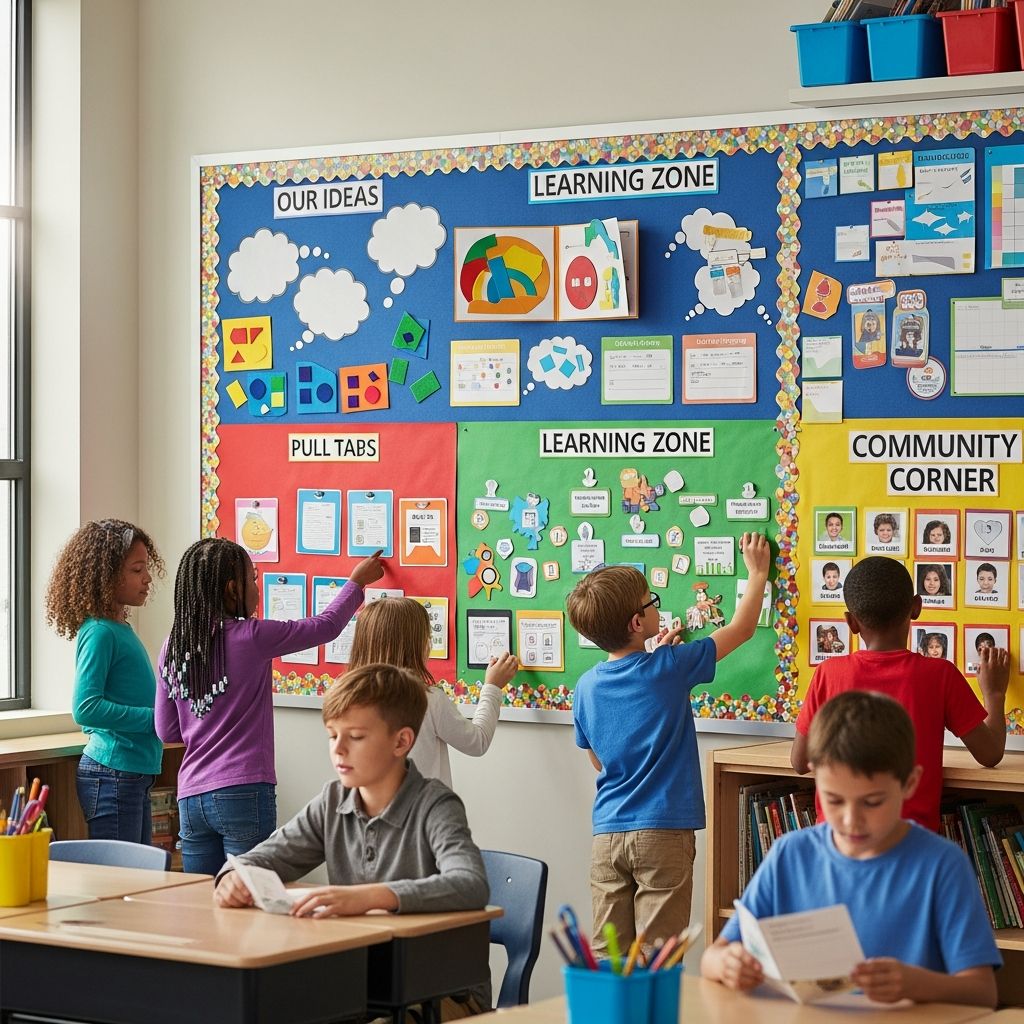
Interactive bulletin boards turn passive wall space into active learning zones that captivate students and reinforce key concepts daily. These displays invite hands-on participation, promote collaboration, and provide flexible activities for diverse learning needs, making them essential tools for modern educators.
Why Interactive Displays Transform Learning Environments
Traditional bulletin boards often serve as static announcements or decorations, but interactive versions actively involve students in their education. They boost engagement by allowing physical interaction, such as moving pieces or adding responses, which helps information stick through kinesthetic learning. Research from educational psychology highlights how such tactile experiences enhance retention and motivation, particularly during short transitions or free moments.
These boards also cultivate classroom community by encouraging shared contributions, like group questions or collective tracking. They adapt to any subject—math, science, literacy, or social-emotional learning—while accommodating different grade levels. Simple to set up with basic supplies like pins, Velcro, or magnets, they offer low-cost ways to fill wall space productively.
Math-Focused Interactive Boards for Skill Building
Mathematics benefits greatly from visual, manipulative displays that make abstract concepts concrete. Create a life-size hundreds chart where students cover numbers with sticky notes, challenging peers to identify missing ones. Extend this to multiplication grids, where kids add products using removable cards, practicing facts interactively.
- Giant Graphing Stations: Draw a grid and categorize laminated student photos by preferences, like favorite fruits or travel methods. Pose daily questions such as “Which color is most popular?” to spark data analysis discussions.
- Operations Challenge Walls: Pin equation cards with movable answer tiles. Students solve and swap tiles, self-checking with color-coded matches for addition, subtraction, or fractions.
- Geometry Puzzles: Attach shapes that students assemble into larger figures, labeling properties like angles or symmetry as they build.
These setups rotate weekly, aligning with curriculum units and providing endless review opportunities without extra prep time.
Science Exploration Through Hands-On Boards
Bring scientific inquiry to the walls with boards that simulate experiments or ecosystems. For biology, set up a food web where students connect organism cards with yarn to show predator-prey relationships in habitats like oceans or forests.
| Board Type | Key Activity | Learning Outcome |
|---|---|---|
| Solar System Scanner | QR codes link to planet facts; students pin orbits | Astronomy basics and research skills |
| Ecosystem Builder | String connections between species cards | Energy flow and interdependence |
| Famous Inventors Timeline | Sticky notes with researched facts | History of science and biographies |
Incorporate diverse scientists by assigning monthly research tasks—students add notes to posters, fostering representation and curiosity. QR codes extend learning: scanning reveals videos or quizzes on topics like chemical reactions, perfect for quick rotations during lessons.
Language Arts and Literacy Engagement Zones
Literacy boards sharpen reading, writing, and vocabulary through playful challenges. Design a word wall where students match synonyms or sort by parts of speech using magnetic strips. For phonics, create mitten pairs labeled with letters and blends for matching games.
- Story Starter Prompts: Pin illustrated scenes; students add speech bubbles or continuations with notecards.
- Poetry Puzzle Walls: Scramble lines of famous poems—reassemble and recite as a class reward.
- Book Recommendation Chain: Link reviews with paper chains, growing the display as reading logs fill.
“Would You Rather” boards spark discussions: Post dilemmas like “Fly or be invisible?” with voting pins, building persuasive writing around results. These encourage reluctant readers to contribute thoughts publicly.
Social-Emotional Learning and Community Builders
Emotional intelligence thrives on boards promoting kindness, mindfulness, and goal-setting. A “Kindness Chain” lets students write daily acts and link them, visually tracking class positivity.
Stress-relief zones feature punchable goal cups: Tissue-covered prizes reveal upon achievement, motivating persistence. Mindfulness walls collect calming strategies—deep breaths, stretches—voted on by students for personalized calm corners.
- I Wonder Inquiry Board: Students post questions about lessons; class votes and researches top ones.
- Gratitude Station: Daily notes of thanks, read aloud weekly to build empathy.
- Take What You Need: Pins with affirmations for tough days, plus space for peer additions.
Technology-Integrated Interactive Displays
Blend digital tools for hybrid engagement. QR mystery boards deliver clues for history figures or math riddles—scan to unlock. Coding challenges pin algorithm steps; students sequence via app-linked scans.
Braille touch boards teach tactile reading: Feel letters, flip for practice. These low-tech/high-impact hybrids ensure inclusivity across devices.
Game-Based Boards for Fun Skill Reinforcement
Turn walls into playgrounds with oversized games. Sudoku giants let one move per free minute; track class progress. Bingo grids list tasks like “Read 20 minutes”—first blackout wins stickers.
- Sorting Olympics: Categorize by habitat, emotion, or equation type competitively.
- Code Breaker Walls: Cipher challenges with decoding pins.
- Trivia Towers: Stack correct answers to build class structures.
Seasonal and Themed Adaptations
Refresh boards quarterly: Holiday sorting by traditions, weather graphing, or seasonal science like plant growth trackers. Welcome displays with kindness pledges set positive tones.
Practical Tips for Setup and Maintenance
Use Velcro for reusability, laminate for durability. Involve students in creation to boost ownership. Rotate content biweekly to sustain interest, aligning with standards for targeted practice.
Frequently Asked Questions
What supplies do I need for interactive bulletin boards?
Basic items include poster board, pins, Velcro, markers, laminator, and optional QR generators or magnets for versatility across activities.
Are these suitable for all grade levels?
Yes—scale complexity: Colors for preschool, equations for middle school, research QR for high school.
How often should I change the board?
Weekly or biweekly to match units, preventing staleness while reusing elements.
Can they help with classroom management?
Absolutely—fill transition times, reward early finishers, and promote positive behaviors through interactive rewards.
What if I lack wall space?
Mount on doors, use rolling whiteboards, or create portable trifolds for flexible positioning.
References
- 5 Interactive Bulletin Boards — Remedia Publications. 2023-05-15. https://www.rempub.com/blog/5-interactive-bulletin-boards/
- Interactive Bulletin Boards — Science Lessons That Rock. 2024-02-10. https://sciencelessonsthatrock.com/interactive-bulletin-boards-html/
- 42 Awesome Interactive Bulletin Board Ideas for Your Classroom — Bored Teachers. 2023-11-20. https://www.boredteachers.com/post/interactive-bulletin-boards
- 40 Unique Interactive Bulletin Boards to Engage Your Students — We Are Teachers. 2024-08-05. https://www.weareteachers.com/interactive-bulletin-boards/
- Interactive Bulletin Boards — Teachers Pay Teachers. 2025-01-12. https://www.teacherspayteachers.com/browse?search=interactive+bulletin+boards
- 15 Inspiring Teacher Bulletin Board Ideas — Mrs Learning Bee. 2024-09-18. https://mrslearningbee.com/learn/blog/5-free-classroom-welcome-displays

Medha Deb is an editor with a master's degree in Applied Linguistics from the University of Hyderabad. She believes that her qualification has helped her develop a deep understanding of language and its application in various contexts. Medha specializes in the areas of beauty, health, sports, and wellness and is committed to ensuring that the content on the website is…