
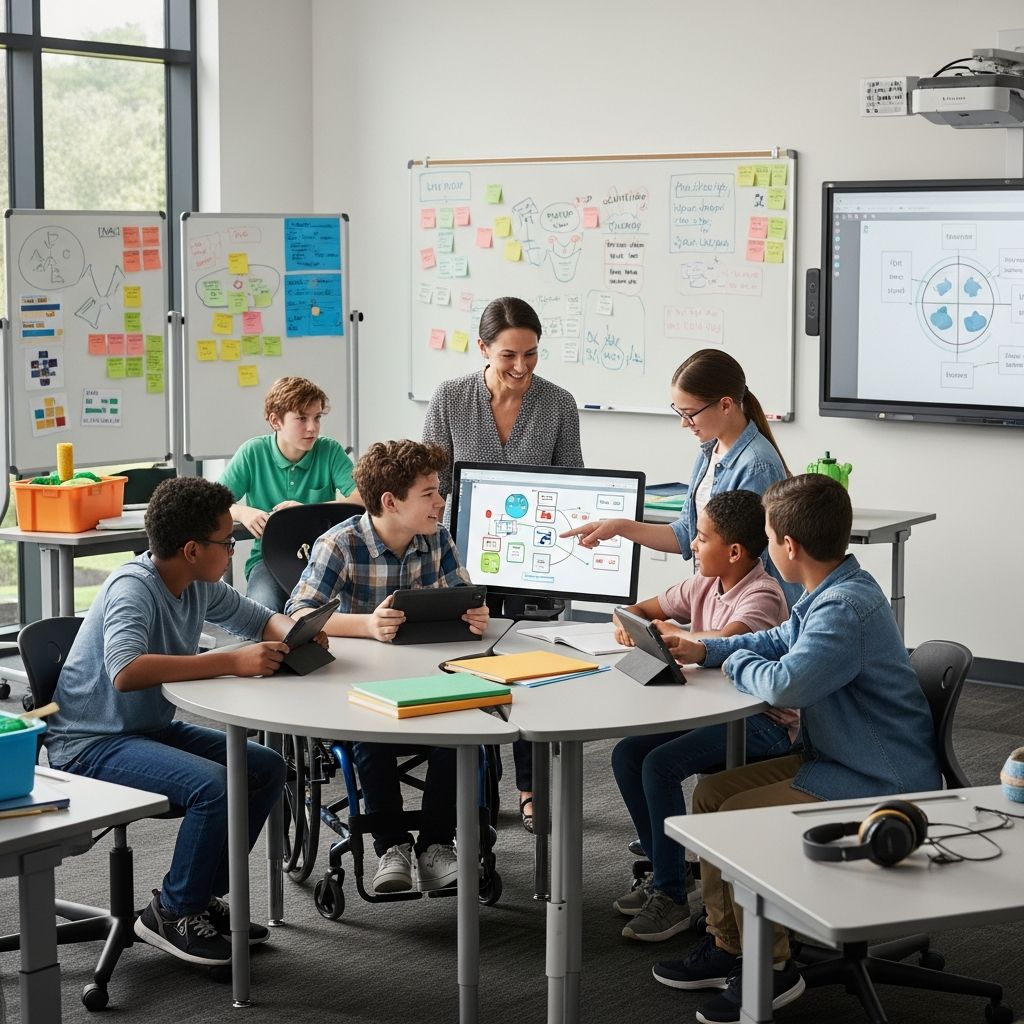
Building an Adaptive Classroom Without Overwhelming Yourself
One of the most persistent challenges in modern education is the belief that effective differentiation requires teachers to create multiple lesson versions, develop extensive supplementary materials, and invest countless hours in preparation. This misconception has discouraged many educators from implementing differentiated instruction, despite its proven benefits for student achievement. The reality is fundamentally different: thoughtful differentiation emerges from strategic adjustments and intelligent systems rather than excessive preparation.
Meeting diverse learner needs is not only possible but can be accomplished through deliberate choices that enhance instruction without multiplying your workload. By understanding which differentiation techniques deliver maximum impact with minimal effort, teachers can create inclusive learning environments where all students thrive.
Rethinking Differentiation Through Strategic Questioning
One of the most powerful yet underutilized differentiation tools is adaptive questioning. Rather than asking identical questions to all students, tailoring your questions to individual learners personalizes their experience while requiring minimal advance preparation. This technique leverages what you already do in the classroom—asking questions—and makes it responsive to student needs.
Effective questioning operates at multiple levels. When a student struggles with a task, posing simpler, more concrete questions builds their confidence and helps them engage with the material. Simultaneously, advanced learners benefit from increasingly specific and abstract questions that push their thinking deeper. This real-time adjustment costs you nothing in terms of resources but yields significant differentiation.
Questioning frameworks provide structure for this approach. Using established taxonomies as a foundation, you can smoothly adjust the cognitive demand of your questions based on student responses. If a learner finds an initial question challenging, you might reformulate it using more concrete language or break it into smaller components. For high-performing students, you can quickly escalate to synthesis-level thinking and complex problem-solving.
The beauty of this method lies in its immediacy. You respond to what you observe in real time, making micro-adjustments that respond precisely to each student’s current understanding.
Leveraging Existing Resources Through Flexible Grouping
Permanent ability grouping reinforces labels and limits opportunities for growth. Instead, flexible grouping allows you to organize students based on immediate skill needs, learning preferences, or collaborative potential. This approach requires no additional materials—you’re simply reorganizing existing students and content.
Effective flexible grouping operates on several principles. First, decisions about group composition should be fluid and responsive to assessment data. Exit tickets, quick observation notes, or brief skill checks reveal which students need focused practice on specific concepts. Second, rotation prevents stagnation; students move between groups regularly rather than being locked into fixed positions. Third, grouping criteria can vary—sometimes by skill level, sometimes by learning style, sometimes by interest or project role.
When you implement flexible grouping, you create natural opportunities for differentiated instruction without designing separate lessons. A single activity, taught to different groups with adjusted support levels and pacing, meets varied needs simultaneously. This is fundamentally more efficient than creating multiple versions of the same lesson.
Scaffolding as a Time-Efficient Support Structure
Scaffolding—providing temporary support that gradually removes as competence grows—is an essential differentiation strategy that requires thoughtful design but not excessive creation of new materials. Well-designed scaffolds help struggling learners access grade-level content while promoting independence.
One practical scaffold involves sentence starters or writing frames. Rather than creating entirely different assignments, you provide structured beginnings that guide students’ thinking and expression. A student who struggles with written expression might use: “I think this is important because…” or “The evidence shows that…” These simple structures unlock written expression without requiring a completely different task.
Another scaffold involves breaking complex tasks into smaller, manageable segments. Instead of asking all students to complete an entire project in one sitting, you chunk the work into discrete steps with checkpoints. Advanced learners might move through these steps independently, while others receive guided practice at each stage. The same project becomes appropriately challenging at multiple levels.
Visual scaffolds also serve this purpose efficiently. Anchor charts, partially completed graphic organizers, or visual reminders of strategies help students access material independently. Creating one or two key scaffolds that you reuse across units saves time while providing meaningful support.
Strategic Use of Routines to Manage Differentiation
A well-structured classroom operates smoothly, freeing mental energy for instructional decision-making. Consistent routines handle logistics automatically, reducing the cognitive load on both you and your students. When students understand expectations and procedures, they require less direct management, allowing you to focus on differentiated instruction.
Establish clear routines for transitions, group work, independent practice, and how students access different materials or resources. When these systems are automatic, you spend less time explaining logistics and more time on actual teaching. Additionally, students develop independence and self-direction, meaning they can work productively at different levels without constant teacher direction.
Time management becomes a form of differentiation through routines. Not all students need identical time segments to complete tasks. Some students benefit from shorter, focused work periods that prevent overwhelm. Others thrive with extended time to develop ideas deeply. When your routine includes flexible time blocks, you accommodate these differences without creating separate assignments.
Employing Existing Materials Strategically
Before investing time in creating new resources, examine what you already have. Many high-quality materials already exist in multiple levels or formats. Leveled reading passages, for instance, allow students to engage with similar content at varying difficulty levels. Rather than rewriting texts, curate existing resources organized by topic and level.
Color-coding systems make material management efficient. By organizing resources into folders or categories by color, students and teachers quickly locate appropriately leveled materials. This simple organizational system transforms existing resources into a differentiation tool.
Adapting materials you already use requires far less effort than creating new ones from scratch. A single article can be approached with tiered comprehension questions, guided notes at different levels of detail, or discussion prompts that vary by cognitive complexity. Strategic adaptation transforms one resource into a differentiated learning experience.
Digital Tools as Efficiency Enhancers
Technology can simplify differentiation when used purposefully. Rather than using tech to create more work, select tools that automate or streamline differentiation processes. Many platforms allow you to assign content at different levels, automatically adjusting difficulty based on performance. This creates personalized learning pathways without requiring manual management of multiple assignments.
Digital tools also provide data that informs differentiation decisions. Quick assessments administered through technology give you immediate insight into which students need additional support or are ready for extension. This information-gathering automation saves the time you would spend manually tracking progress.
However, technology works best as a support rather than a solution. It enhances efficiency but shouldn’t become an additional burden. Select tools that integrate smoothly into your existing workflow rather than adding new systems to manage.
Personalized Feedback Without Extra Burden
Targeted feedback is powerful differentiation, yet it need not require extensive time investment. Rather than writing lengthy comments on every assignment, focus your feedback strategically. Brief, specific comments on key areas address individual needs without being overwhelming.
Consider rotating which students receive written feedback on particular assignments. All students receive some feedback consistently, but not necessarily on every assignment. This ensures meaningful feedback for all students while keeping your workload sustainable.
Peer feedback systems also reduce your burden while keeping all learners engaged. When students provide constructive feedback to each other, they develop critical thinking skills while you gain additional bandwidth for supporting students with greatest needs.
Designing Tasks with Built-In Flexibility
When planning activities, intentionally build in flexibility that accommodates different learner needs. Open-ended tasks naturally differentiate because students engage at their level while working on the same core activity.
For example, an investigation task might ask students to explore a phenomenon. Advanced learners might design complex experiments and draw nuanced conclusions, while others follow guided steps toward discovering the same concept. Same activity, different cognitive demand—differentiation built into the task structure itself.
Choice boards represent another flexible design approach. Instead of assigning identical tasks, students select from a menu of activities addressing the same learning objectives at different levels. This builds motivation through autonomy while naturally accommodating diverse needs.
Data-Informed Grouping and Pacing
Quick, regular assessment data informs differentiation decisions more efficiently than guessing. Exit tickets, brief checks for understanding, or observation notes take minimal time to collect but yield valuable information about which students need additional support or are ready to progress.
Using this data strategically prevents unnecessary repetition for advanced learners while ensuring struggling learners receive adequate practice. Rather than having everyone move at identical pace, groups progress at rates matched to their understanding. This targeted pacing serves all learners more effectively than one-size-fits-all progression.
Building Teacher Capacity Over Time
Implementing differentiation doesn’t happen overnight. Start with one strategy that resonates with you—perhaps adaptive questioning or flexible grouping. As this becomes automatic, layer in additional approaches. This gradual implementation prevents overwhelm while building sustainable practices.
Your efficiency increases as you develop expertise. What feels complex initially becomes routine practice. The systems you establish work increasingly smoothly, eventually requiring less active management and more attention to responsive instruction.
Common Implementation Challenges and Solutions
Many teachers worry about classroom management when differentiation is happening simultaneously. Established routines address this concern directly. When students understand what to do independently, they work productively at varied levels without constant supervision.
Another concern involves assessment—how do you evaluate students engaged in different activities? Performance-based assessment addresses this elegantly. Rather than identical tests, students demonstrate understanding through varied formats matched to their learning level. This provides valid assessment data while reducing your grading burden.
Integrating Differentiation Into Your Teaching Identity
Differentiation is not an add-on to good teaching; it’s a fundamental aspect of responsive instruction. When you view questioning, grouping, and feedback as core teaching practices rather than extras, they become integrated into your natural teaching style rather than additional duties.
This shift in perspective is transformative. You’re not differentiating in addition to teaching; you’re teaching in a differentiated way. The workload burden disappears when differentiation is simply how you teach rather than something extra you do.
Quick Implementation Checklist
- Establish consistent classroom routines that support independent work at varied levels
- Develop 2-3 questioning strategies to use responsively with individual students
- Organize existing materials by level and difficulty for easy access
- Create simple scaffolds (sentence starters, graphic organizers) that support multiple learners
- Use quick assessment data to inform flexible grouping decisions
- Design at least one activity per unit with built-in flexibility
- Establish efficient feedback systems that don’t require excessive grading
Frequently Asked Questions
Q: How do I manage differentiation without creating separate lessons for every student?
A: Focus on differentiating the process and support rather than the content. Use flexible grouping, adaptive questioning, and strategic scaffolding to meet varied needs within a single lesson structure. Modify your support level, pacing, and feedback rather than creating entirely different lessons.
Q: What’s the most time-efficient differentiation strategy to start with?
A: Adaptive questioning is exceptionally efficient—it requires no additional materials and leverages skills you already use. Start by deliberately varying your questions based on student responses, and you’ll immediately see differentiation in action without extra preparation.
Q: How do flexible groups prevent some students from always being in lower-level groups?
A: Flexibility is the key. Rotate group composition frequently based on current skill needs rather than fixed ability levels. Students move between groups regularly, and grouping criteria vary—sometimes by skill, sometimes by learning style, sometimes by interest or role in collaborative work.
Q: Can I differentiate without using technology?
A: Absolutely. Many of the most effective differentiation strategies—questioning, grouping, scaffolding, and feedback—require no technology at all. Technology can enhance efficiency, but strong differentiation emerges from responsive teaching practices that exist independently of tools.
Q: How do I assess differentiated learning fairly?
A: Use performance-based assessment aligned to learning objectives rather than identical tests. Students demonstrate understanding through varied formats—presentations, projects, discussions, or written work—matched to their learning levels. This provides valid assessment data while reducing grading burden.
References
- Practical Differentiation That Doesn’t Increase Your Workload — Mike Gershon. Accessed April 2026. https://www.youtube.com/watch?v=SD-rUgNdiOA
- How to Differentiate ELA Instruction & Save Time: 5 Strategies That Work — Everything Just So. Accessed April 2026. https://everythingjustso.org/blog/how-to-differentiate-ela-instruction-save-time
- 15 Differentiated Instruction Strategies That Actually Work — Brisk Teaching. Accessed April 2026. https://www.briskteaching.com/post/differentiated-instruction-strategies
- How to Differentiate Instruction Without Overwhelm — The Teacher Treasury. Accessed April 2026. https://www.theteachertreasury.com/good-morning-ms-williams/how-to-differentiate-instruction-without-burning-out

- Integrated M.A. in Applied Linguistics, University of Hyderabad
- 5+ years in editorial, instructional, SEO, and research-based writing
Sneha is a relationships and lifestyle writer with a strong foundation in applied linguistics and certified training in relationship coaching. She brings over five years of writing experience to theskillvault, crafting thoughtful, research-driven content that empowers readers to build healthier relationships, boost emotional well-being, and embrace holistic living. Her writing and insights reflect the belief that beauty, happiness, and wellness…