
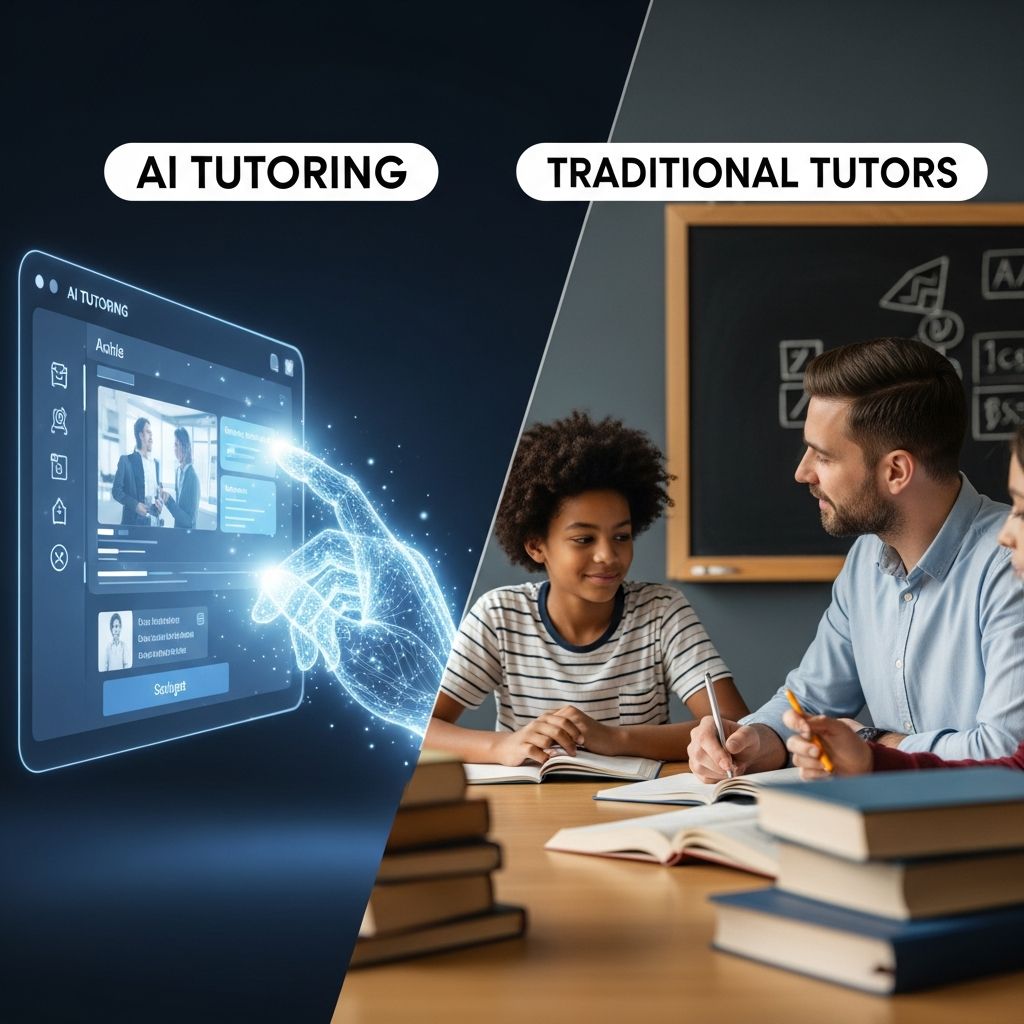
AI tutoring leverages advanced algorithms to deliver personalized education anytime, while traditional tutoring relies on human instructors for interactive, empathetic guidance. This comparison reveals their strengths, limitations, and how combining them maximizes learning potential.
Understanding the Evolution of Tutoring Methods
Tutoring has transformed from in-person sessions to digital platforms powered by artificial intelligence. Traditional approaches emphasize direct human interaction, where tutors assess students through observation and adapt lessons accordingly. In contrast, AI systems use data analytics to customize content in real-time, processing vast amounts of performance data to pinpoint weaknesses instantly.
Historically, students depended on scheduled meetings with tutors expert in specific subjects like mathematics or languages. Today, AI platforms integrate machine learning to simulate this expertise across disciplines, offering scalable solutions that adapt to individual paces without human limitations.
Accessibility: Breaking Time and Location Barriers
One of the standout advantages of AI tutoring is its 24/7 availability. Students can receive help during late-night study sessions or early mornings, eliminating the need for bookings weeks in advance. Traditional tutoring, however, is constrained by tutors’ schedules, often leading to conflicts with school, sports, or family commitments.
- AI: Instant access from any device, anywhere in the world, supporting multiple languages.
- Traditional: Fixed sessions, potential travel requirements, and geographic limitations for quality tutors.
This flexibility proves vital for students in remote areas or those with irregular routines. Platforms serving thousands globally demonstrate how AI removes barriers that once restricted educational support.
Personalization: Data-Driven vs. Intuitive Adaptation
AI excels in real-time personalization by analyzing thousands of data points per session. It adjusts difficulty levels immediately, skips mastered topics, and employs spacing algorithms for better retention. Research shows students progress 2-5 times faster with such systems compared to conventional methods.
Traditional tutors personalize through intuition, noticing subtle cues like frustration or boredom. They draw from experience to explain concepts uniquely but may miss granular gaps without extensive testing.
| Aspect | AI Tutoring | Traditional Tutoring |
|---|---|---|
| Adaptation Speed | Instant, data-based | Observation-based, session-limited |
| Progress Tracking | Precise analytics | Manual notes and feedback |
| Content Adjustment | Dynamic skipping/repetition | Planned lesson tweaks |
AI’s precision ensures no time wasted on known material, fostering autonomy as students control their pace without social pressures.
Cost Analysis: Affordability for Broader Reach
Traditional tutoring costs $50-150 per hour, accumulating to $400-600 monthly for regular sessions. AI platforms charge $20-60 monthly for unlimited access across subjects, making premium education viable for more families.
- AI: Scalable, low overhead, consistent quality without fatigue.
- Traditional: Higher rates due to expertise and time commitment.
This disparity democratizes learning, especially for underserved communities lacking local expert tutors.
Emotional Connection and Motivation Factors
Human tutors provide genuine empathy, sensing emotional struggles beyond academics. They build trust, offer encouragement, and serve as role models, which motivates through social accountability.
AI remains non-judgmental and patient but lacks true emotional depth. It simulates encouragement via algorithms yet cannot replicate nuanced human relationships.
| Element | AI Strengths | Human Strengths |
|---|---|---|
| Empathy | Consistent positivity | Intuitive emotional reading |
| Motivation | Progress badges, instant feedback | Personal rapport, accountability |
| Support | Always available | Holistic guidance |
For students needing relational boosts, humans shine; AI suits independent learners.
Fostering Independence: Shifting from Dependency
Traditional methods risk creating reliance, as students await tutor solutions. AI promotes self-reliance by guiding critical thinking, using past exam data to highlight mistakes and strategies without hand-holding.
- Guides problem-solving steps.
- Encourages multiple attempts safely.
- Builds lifelong skills like analysis.
This approach prepares students for real-world challenges, reducing dependency on external help.
Strengths and Limitations Side-by-Side
| Category | AI Tutoring Wins | Traditional Tutoring Wins |
|---|---|---|
| Availability | 24/7 global access | – |
| Cost | Fraction of human rates | – |
| Personalization | Data precision | Intuitive cues |
| Emotional Support | – | Genuine connection |
| Accountability | – | Scheduled commitment |
The Power of Hybrid Learning Models
Research from Carnegie Mellon advocates blending both: AI for daily practice, tracking, and drills; humans for deep dives, motivation, and strategy coaching. This leverages AI’s efficiency with human insight.
- AI: Homework help, unlimited problems, gap filling.
- Human: Weekly reviews, emotional check-ins, complex guidance.
Parents report superior outcomes, with faster mastery and sustained engagement.
When to Choose Each Approach
Opt for AI for budget-conscious families, self-motivated students, or broad subject needs. Traditional suits those requiring mentorship, debate-heavy subjects, or severe learning challenges. Hybrids offer the best of both.
Frequently Asked Questions (FAQs)
Q: Can AI tutoring replace a human tutor completely?
A: No, AI excels in scalability and practice but lacks human empathy; hybrids are ideal for comprehensive support.
Q: How much faster do students learn with AI?
A: Studies indicate 2-5 times faster progress due to adaptive algorithms and targeted practice.
Q: Is AI tutoring suitable for young children?
A: Yes, with engaging interfaces, but pair with human oversight for emotional development.
Q: What subjects work best with AI?
A: Math, science, and languages thrive on AI’s data-driven drills; humanities benefit from human discussion.
Q: How do costs compare long-term?
A: AI saves significantly, offering unlimited sessions for under one traditional hour’s fee.
Conclusion: Tailoring Education to Individual Needs
Neither method is superior universally; success depends on student profile, goals, and resources. AI revolutionizes access and efficiency, while traditional tutoring nurtures the human element. Exploring hybrids empowers the most effective paths forward.
References
- AI Tutoring vs Traditional Tutoring: An Honest Comparison for Parents — Kids AI Tools. 2024. https://www.kidsaitools.com/en/articles/ai-vs-traditional-tutoring-comparison
- AI Tutoring vs Traditional Tutoring: A Comprehensive Guide for Parents in 2024 — Afficienta Blog. 2024. https://blog.afficienta.com/ai-tutoring-vs-traditional-tutoring-a-comprehensive-guide-for-parents-in-2024/
- The Effectiveness of Squirrel AI in Middle School Mathematics — VanLehn, K. (peer-reviewed). 2021. https://doi.org/10.1145/3453650
- Human-Computer Interaction Institute Research on Hybrid Learning — Carnegie Mellon University. 2023. https://www.hcii.cmu.edu/research

- Integrated M.A. in Applied Linguistics, University of Hyderabad
- 5+ years in editorial, instructional, SEO, and research-based writing
Sneha is a relationships and lifestyle writer with a strong foundation in applied linguistics and certified training in relationship coaching. She brings over five years of writing experience to theskillvault, crafting thoughtful, research-driven content that empowers readers to build healthier relationships, boost emotional well-being, and embrace holistic living. Her writing and insights reflect the belief that beauty, happiness, and wellness…