
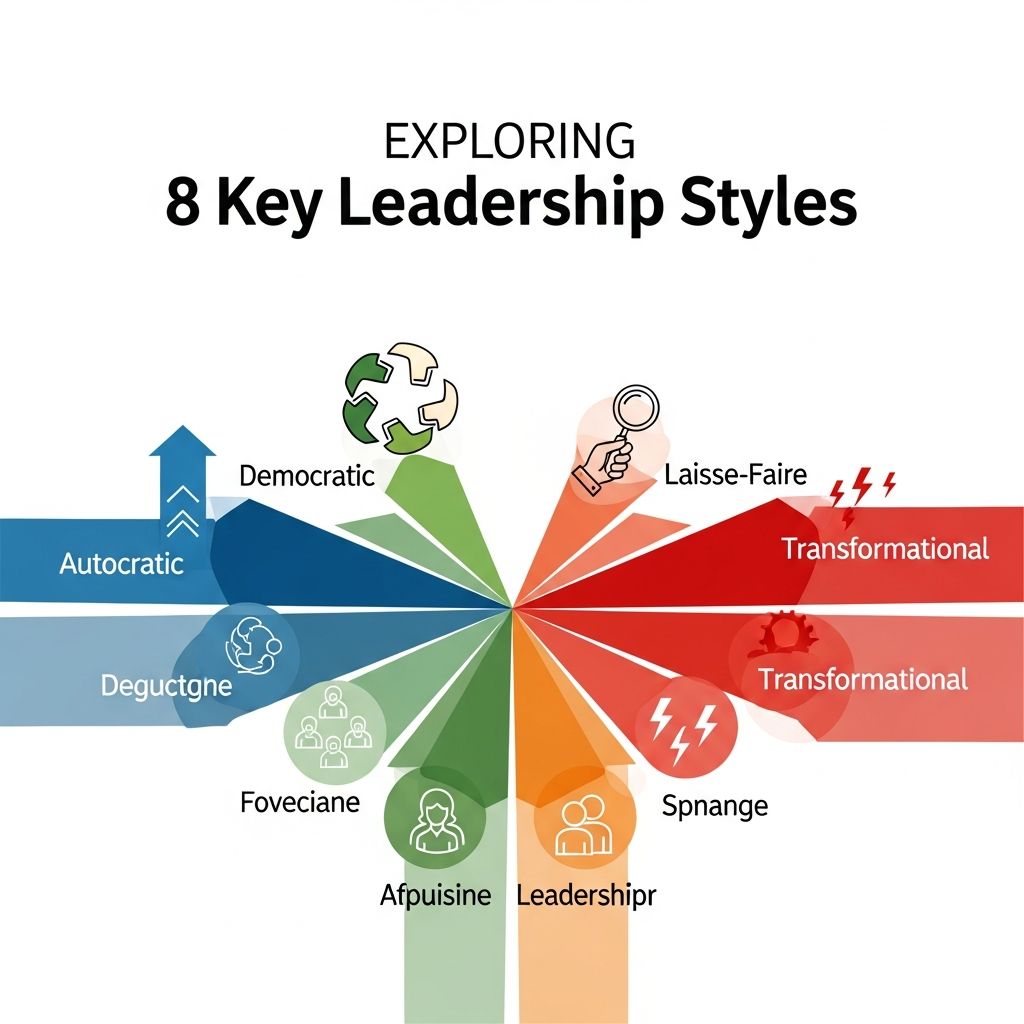
Effective leadership is the cornerstone of successful organizations, influencing everything from team morale to overall productivity. Leaders adopt various styles depending on context, team dynamics, and organizational goals. This article delves into eight fundamental leadership styles, drawing from established frameworks to provide practical insights. Understanding these approaches helps leaders adapt, inspire, and achieve results.
Why Leadership Styles Matter in Modern Organizations
In today’s fast-paced business environment, no single leadership style fits all scenarios. Adaptive leaders switch between styles to meet challenges, fostering innovation, accountability, and growth. Research shows that organizations with versatile leaders experience higher employee engagement and better performance outcomes. By mastering multiple styles, leaders can navigate crises, drive change, and build high-performing teams.
Each style has unique strengths and potential pitfalls. For instance, directive approaches excel in high-stakes situations, while collaborative ones thrive in creative settings. The key is situational awareness—assessing when to command, coach, or delegate.
1. Autocratic Leadership: Command and Control
Autocratic leaders centralize decision-making, issuing clear directives with minimal team input. They rely on their expertise to guide actions, ensuring swift execution in uncertain or urgent scenarios. This style suits emergencies, such as crisis management or military operations, where delays could be costly.
Strengths:
- Rapid decision-making reduces ambiguity.
- Clear structure minimizes errors in high-risk tasks.
- Effective for inexperienced teams needing direction.
Weaknesses:
- Can stifle creativity and lower morale.
- High stress on the leader due to sole responsibility.
- Risk of team resentment from lack of involvement.
Historical examples include Steve Jobs in Apple’s early days, where his autocratic decisions drove innovation despite controversy.
2. Democratic Leadership: Collaborative Decision-Making
Democratic leaders encourage team participation, valuing input before finalizing decisions. This participative approach boosts engagement by making members feel valued, leading to innovative solutions and higher satisfaction. It’s ideal for knowledge-based industries like tech or R&D.
Strengths:
- Fosters ownership and diverse perspectives.
- Enhances commitment through inclusion.
- Promotes long-term team cohesion.
Weaknesses:
- Slower processes due to consensus-building.
- Potential for diluted decisions in large groups.
- Not suitable for time-sensitive crises.
Companies like Google exemplify this, using democratic processes in product development to harness collective intelligence.
3. Laissez-Faire Leadership: Hands-Off Empowerment
Laissez-faire leaders provide resources and autonomy, stepping back to let teams self-manage. This style empowers skilled, motivated professionals, thriving in creative fields like design or research.
Strengths:
- Encourages innovation and independence.
- Builds self-reliance in capable teams.
- Frees leaders for strategic focus.
Weaknesses:
- Risk of directionlessness without guidance.
- May lead to accountability gaps.
- Ineffective for novice or unstructured teams.
| Scenario | Suitability |
|---|---|
| Highly skilled teams | High |
| Beginner groups | Low |
| Crisis situations | Poor |
4. Transformational Leadership: Inspiring Change
Transformational leaders motivate by articulating a compelling vision, challenging the status quo, and developing followers. They focus on personal growth, aligning individual aspirations with organizational goals. Perfect for driving cultural shifts or innovation.
Strengths:
- Sparks enthusiasm and high performance.
- Promotes skill development and loyalty.
- Effective in dynamic markets.
Weaknesses:
- Over-reliance on leader’s charisma.
- May overlook short-term operational needs.
- Challenging without strong communication skills.
Leaders like Elon Musk embody this, rallying teams around ambitious missions at Tesla and SpaceX.
5. Transactional Leadership: Rewards and Accountability
Transactional leaders use clear structures, rewards for achievements, and corrections for shortfalls. This exchange-based model ensures compliance and goal attainment through supervision.
Strengths:
- Provides predictable motivation.
- Clarifies expectations and roles.
- Drives consistent results in routine tasks.
Weaknesses:
- Limits intrinsic motivation.
- May foster compliance over creativity.
- Short-term focus.
6. Bureaucratic Leadership: Process-Driven Stability
Bureaucratic leaders adhere strictly to rules, hierarchies, and procedures, ensuring consistency in regulated environments like finance or healthcare.
Strengths:
- Reduces risks through standardization.
- Promotes fairness and accountability.
- Ideal for compliance-heavy sectors.
Weaknesses:
- Inhibits flexibility and innovation.
- Can create rigidity in fast-changing settings.
- Bureaucratic delays frustrate teams.
7. Servant Leadership: Prioritizing Others
Servant leaders focus on team needs, growth, and well-being, leading by example to build trust and community. This empathetic style excels in non-profits or values-driven firms.
Strengths:
- Boosts loyalty and ethical culture.
- Enhances long-term employee satisfaction.
- Fosters collaborative environments.
Weaknesses:
- Slower decision-making.
- Risk of overburdening the leader.
- Less effective in competitive, cutthroat arenas.
8. Visionary Leadership: Charting the Future
Visionary leaders paint bold pictures of the future, mobilizing teams with optimism and strategic foresight. They thrive during transformations or startups.
Strengths:
- Inspires alignment and persistence.
- Navigates change effectively.
- Builds confidence in uncertainty.
Weaknesses:
- May neglect details.
- Requires follow-through mechanisms.
- Overly idealistic in pragmatic settings.
Comparing Leadership Styles: A Quick Reference
| Style | Best For | Key Trait | Potential Drawback |
|---|---|---|---|
| Autocratic | Crises | Decisive | Low Morale |
| Democratic | Creative Teams | Inclusive | Slow |
| Laissez-Faire | Experts | Empowering | Unstructured |
| Transformational | Change | Inspiring | Charisma-Dependent |
| Transactional | Routines | Structured | Limited Innovation |
| Bureaucratic | Regulated | Compliant | Rigid |
| Servant | Empathy-Driven | Supportive | Exploitation Risk |
| Visionary | Growth Phases | Strategic | Detail-Blind |
Choosing and Adapting Your Leadership Style
The most effective leaders blend styles contextually. Assess team maturity, organizational culture, and external pressures. Tools like 360-degree feedback aid self-awareness. Training programs from institutions like Creighton University emphasize style flexibility for sustained success.
In practice, hybrid approaches—such as transformational with transactional elements—yield optimal results. Leaders should cultivate emotional intelligence to read situations accurately.
Frequently Asked Questions (FAQs)
What is the best leadership style?
No single style is best; effectiveness depends on context. Democratic works for collaboration, autocratic for urgency.
Can I change my leadership style?
Yes, through self-reflection, training, and feedback. Adaptive leaders excel by switching styles.
How does transformational leadership differ from transactional?
Transformational inspires change and growth; transactional focuses on rewards and tasks.
Is servant leadership effective in business?
Yes, it builds loyalty and ethics, though it requires balance to avoid over-prioritizing others.
When should I use laissez-faire leadership?
With highly skilled, self-motivated teams needing autonomy.
References
- The 8 Most Common Leadership Styles — Creighton University. 2023-10-15. https://www.creighton.edu/blog/8-most-common-leadership-styles
- The Dynamics of 8 Different Styles of Leadership — ATD (Association for Talent Development). 2022-05-20. https://www.td.org/content/atd-blog/the-dynamics-of-8-different-styles-of-leadership
- 8 Common Leadership Styles (Plus How To Find Your Own) — Indeed Career Guide. 2024-01-12. https://www.indeed.com/career-advice/career-development/10-common-leadership-styles
- The 8 Most Common Leadership Styles and How To Find Your Own — Sounding Board Inc. 2023-08-05. https://www.soundingboardinc.com/blog/eight-common-leadership-styles/
- The 8 Different Styles of Leadership — LSBF Blog. 2023-11-10. https://www.lsbf.org.uk/blog/online-learning/the-8-different-styles-of-leadership
- 8 CEO Leadership Styles and How to Discover Your Own — Vistage Research Center. 2021-07-19. https://www.vistage.com/research-center/personal-development/leadership-competencies/20210719-leadership-styles/
- What Is Leadership: Understanding Different Leadership Styles — National Society of Leadership and Success (NSLS). 2024-02-28. https://www.nsls.org/understanding-different-leadership-styles

Medha Deb is an editor with a master's degree in Applied Linguistics from the University of Hyderabad. She believes that her qualification has helped her develop a deep understanding of language and its application in various contexts. Medha specializes in the areas of beauty, health, sports, and wellness and is committed to ensuring that the content on the website is…