
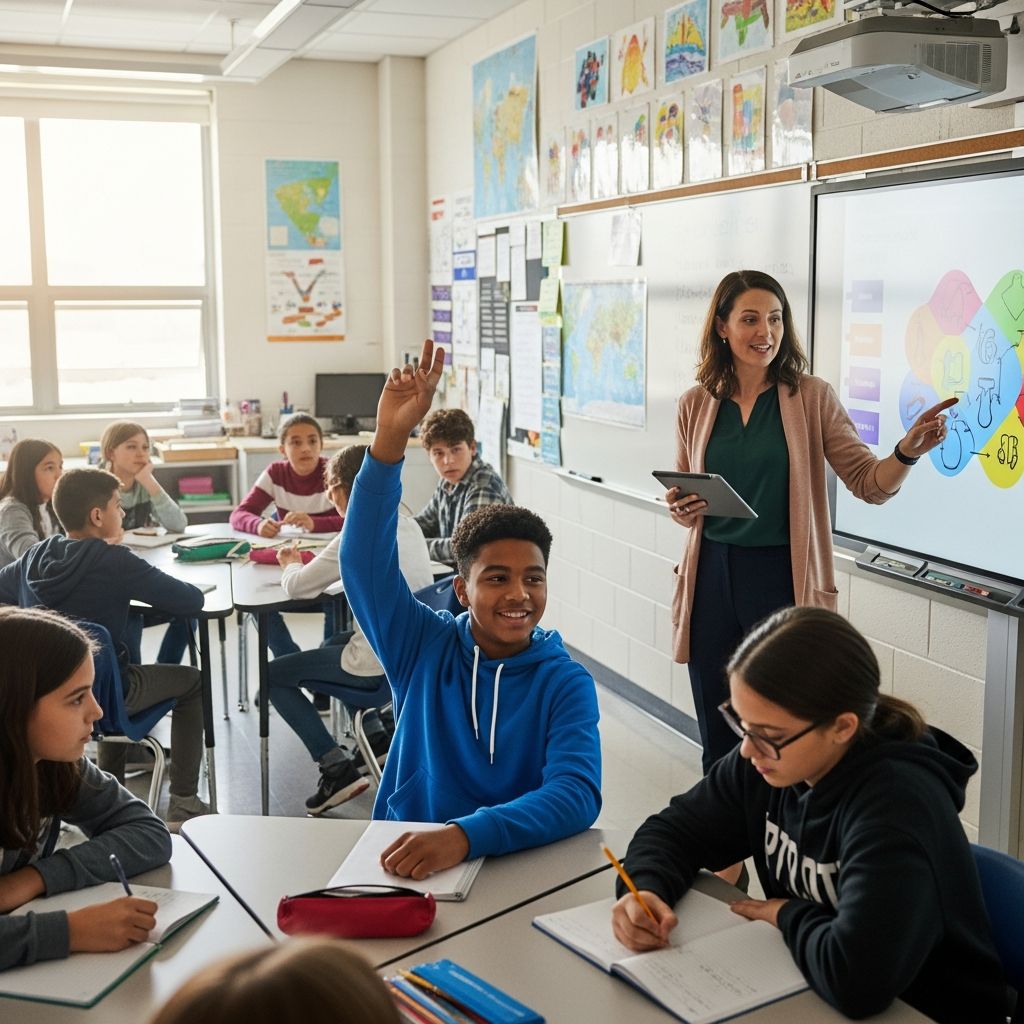
Modern education demands more than passive listening and note-taking. Today’s students thrive in environments that encourage movement, dialogue, and active problem-solving. Research consistently demonstrates that interactive teaching methods produce superior learning outcomes compared to traditional lecture-based instruction. When students participate actively in their learning process, they develop stronger comprehension, improved retention, and enhanced critical thinking abilities.
The challenge facing many educators is determining which interactive methods work best for their specific subject matter, student demographics, and learning objectives. This comprehensive guide explores multiple evidence-based strategies that transform classrooms into collaborative spaces where every learner feels empowered to contribute meaningfully to the educational experience.
The Foundation: Why Movement and Dialogue Matter
Physical engagement fundamentally changes how students process information. When learners move through classroom spaces, interact with peers, and vocalize their thinking, they activate multiple cognitive pathways simultaneously. This multisensory approach bypasses passive reception and forces students to construct meaning actively rather than absorb it passively.
Dialogue amplifies this effect. When students articulate their understanding to classmates, they clarify their own thinking while simultaneously learning from alternative perspectives. This peer-to-peer knowledge exchange creates a distributed learning network where the instructor serves as facilitator rather than sole knowledge source.
Strategy One: Structured Peer Discourse
One of the most accessible yet powerful engagement techniques involves orchestrating purposeful conversations between learners. Rather than relying on volunteers to share thoughts during whole-group instruction, structured peer discourse ensures every student participates in substantive dialogue.
Implementation approach: Present a thought-provoking question or prompt to the entire class. Allow 30-60 seconds of independent thinking time, during which students silently process the question. This silent period is crucial—it prevents dominant voices from monopolizing the discussion and gives introverted learners processing space. Next, students turn to a neighbor and discuss their thinking for two to three minutes. Finally, invite selected pairs to share their insights with the larger group.
This three-phase structure dramatically increases participation rates. Students who might never raise their hand in whole-group settings feel confident sharing within the safety of a dyadic pair. Teachers gain immediate insight into student understanding before moving forward with instruction.
Strategy Two: Visual Representation and Concept Organization
Visual thinking tools help students organize complex information into coherent mental models. Rather than memorizing isolated facts, learners construct visual maps showing how concepts interconnect and relate to larger systems.
Practical application: Provide students with large paper, markers, and chart templates. Ask them to diagram relationships between core concepts from your lesson. Students might create hierarchical trees showing categories and subcategories, flowcharts illustrating cause-and-effect sequences, or network diagrams revealing multiple interconnections. Digital alternatives using online collaboration platforms allow remote or blended classroom implementation.
This activity forces students to move beyond surface-level understanding and grapple with conceptual architecture. The physical act of drawing and positioning elements engages kinesthetic learners while creating a shareable artifact that reveals student thinking to the instructor.
Strategy Three: Character Assumption and Perspective-Taking
Role-based activities transport students into different vantage points, enabling visceral understanding of how context shapes perception and decision-making. When students assume identities different from their own, they develop empathy, recognize bias, and internalize nuanced viewpoints.
Implementation scenarios: In history classes, students might roleplay key figures during pivotal moments, defending policy decisions from period-appropriate perspectives. In literature, learners could inhabit different characters to explore motivations and conflicts. Science students might simulate being organisms within ecosystems, experiencing predator-prey dynamics firsthand. Language learners adopt personas navigating authentic social situations.
The success of roleplay depends on adequate preparation and clear parameters. Provide students with background information, motivations, and relevant context. Establish that the goal is understanding, not entertainment, which encourages genuine engagement rather than mockery.
Strategy Four: Real-World Problem Solving
Abstract concepts become meaningful when students apply them to authentic challenges. Problem-based learning bridges the gap between classroom instruction and actual-world application, demonstrating content relevance while developing professional-grade competencies.
Framework for implementation: Present students with a realistic scenario requiring application of course concepts. Rather than providing step-by-step solutions, guide students through investigation, hypothesis formation, and testing. Students work collaboratively to identify relevant information, distinguish essential from extraneous details, and propose evidence-based solutions.
This approach cultivates agency and persistence. Students confront genuine complexity rather than oversimplified textbook problems. They discover that multiple valid approaches exist and learn to justify their reasoning rather than hunt for predetermined answers.
Strategy Five: Rapid-Cycle Assessment Through Interactive Quizzing
Traditional assessments inform instructional decisions after learning occurs, making them of limited diagnostic value. Interactive quizzing during lessons provides real-time understanding snapshots, allowing teachers to adjust instruction immediately.
Technology-enhanced options: Digital platforms enable anonymous polling, multiple-choice quizzes, and confidence ratings. Students respond simultaneously using devices, creating engagement through friendly competition while generating instant data visualization. Teachers observe response distributions, identifying misconceptions and knowledge gaps within minutes rather than days.
The gamification element—scoreboards, point systems, or leaderboards—motivates participation without creating excessive pressure. Importantly, interactive quizzing provides low-stakes feedback opportunities where wrong answers inform rather than penalize.
Strategy Six: Peer Observation and Feedback Cycles
Students learn profoundly from studying peer work and providing constructive feedback. Gallery-based reviews transform assessment from teacher-directed evaluation into collaborative quality improvement.
Operational structure: Students display their work—essays, diagrams, problem solutions, creative projects—around the classroom perimeter. Classmates circulate through the gallery, spending several minutes at each station. They record observations, ask questions, and identify strengths using provided response templates. Creators then receive authentic audience feedback revealing how diverse viewers interpreted their work.
This approach builds evaluative capacity. Students develop criteria for quality through exposure to diverse exemplars. They practice constructive feedback skills essential in professional contexts. The gallery format provides physical movement, reducing sitting time while maintaining cognitive engagement.
Strategy Seven: Immersive Simulation and Scenario-Based Learning
Simulations compress time, increase stakes, and enable safe exploration of dangerous, expensive, or impossible scenarios. Students experience consequences of decisions without real-world costs, enabling powerful experiential learning.
Application domains: Economics students might simulate market trading, experiencing inflation and resource scarcity firsthand. Environmental science learners could manage virtual ecosystems, observing population dynamics. Business students might lead simulated companies through competitive markets. History students could negotiate historical treaties with different national priorities.
Effective simulations include debriefing sessions where students analyze decisions, discuss what surprised them, and connect simulation experiences to theoretical frameworks. This reflection transforms play into profound learning.
Strategy Eight: Reflective Practice and Metacognitive Development
Learning solidifies when students pause to examine their own thinking processes. Metacognitive practices—thinking about thinking—develop self-awareness and strategic learning capacity that transfers across contexts.
Reflection formats: One-minute reflection papers prompt students to summarize key learning and identify remaining questions. Think-aloud protocols reveal reasoning processes. Learning journals track conceptual development across weeks or months. Peer discussion of confusions and breakthroughs normalizes struggle as part of learning.
Reflection opportunities needn’t consume extensive class time. Brief, structured reflections at lesson conclusions provide valuable data about student understanding while supporting long-term retention.
Comparative Engagement Strategies
| Strategy | Best Subject Domains | Physical Engagement Level | Time Requirements | Primary Learning Outcome |
|---|---|---|---|---|
| Peer Discourse | All subjects | Moderate | 10-15 minutes | Communication skills, conceptual clarity |
| Concept Mapping | Science, humanities, social studies | Low-Moderate | 20-30 minutes | Systems thinking, information synthesis |
| Roleplay | History, literature, language, social studies | High | 20-40 minutes | Perspective-taking, empathy, cultural understanding |
| Problem-Based Learning | Math, science, engineering, business | Low-Moderate | 30-60 minutes | Application, critical thinking, resilience |
| Interactive Quizzing | All subjects | Low | 5-10 minutes | Immediate feedback, misconception identification |
| Gallery Walks | All subjects | High | 15-25 minutes | Peer learning, evaluative capacity, community building |
| Simulations | Science, economics, history, business | Moderate | 30-90 minutes | Decision-making, systems understanding, consequence awareness |
| Reflection Activities | All subjects | Low | 5-10 minutes | Metacognition, self-directed learning |
Creating Inclusive Engagement Environments
Effective interactive teaching doesn’t assume all students process information identically or feel comfortable with identical participation modes. Differentiation—tailoring instruction to diverse learner needs—ensures all students can engage meaningfully.
Inclusive design principles: Offer participation options accommodating different comfort levels. Some students might share verbally in groups while others prefer writing responses. Provide processing time for students who think more deliberately. Ensure physical activities have non-mobile alternatives. Validate diverse communication styles rather than rewarding only extroverted participation patterns.
Culturally responsive teaching amplifies engagement by ensuring course content reflects diverse perspectives and examples resonate with students’ lived experiences. When students see themselves reflected in curriculum and instructional examples, engagement and belonging increase substantially.
Technology Integration for Enhanced Interactivity
Digital tools expand interactive possibilities beyond physical classroom constraints. Collaborative documents allow simultaneous input from multiple students. Polling platforms enable anonymous responses that encourage honest participation. Digital whiteboards facilitate remote peer collaboration. Learning management systems track engagement patterns, identifying struggling students early.
Technology itself creates engagement only when purposefully deployed. Tools must serve pedagogical goals rather than become distractions. The most effective implementations combine digital affordances with face-to-face interaction’s relational power.
Frequently Asked Questions
Q: How can interactive strategies work in large lecture halls with 200+ students?
A: Large classes require adapted approaches. Think-pair-share works at any scale using neighbor discussions. Interactive quizzing through response systems accommodates hundreds simultaneously. Video recordings of student work samples enable asynchronous peer feedback. Strategic use of breakout sessions and teaching assistants facilitates small-group interactivity within large course structures.
Q: What if students resist interactive activities and prefer traditional lectures?
A: Student preference often reflects familiarity rather than learning effectiveness. Begin with lower-risk activities like think-pair-share before progressing to higher-engagement strategies. Explicitly explain why interactive methods promote retention and skill development. Gather learning outcome data demonstrating that students actually perform better with interactive instruction, even if they initially prefer lectures.
Q: How do I manage behavioral challenges during interactive activities?
A: Clear expectations, specific time limits, and defined roles prevent chaos. Establish ground rules for respectful participation collaboratively with students. Use visible timers so transitions feel less abrupt. Assign specific responsibilities (recorder, timekeeper, reporter) keeping all students focused. Most behavioral issues stem from unclear expectations rather than inherent student problems.
Q: Can interactive strategies work for online/remote instruction?
A: Absolutely. Breakout rooms enable small-group discussion. Digital whiteboards facilitate collaborative concept mapping. Poll features provide anonymous interactive quizzing. Chat functions enable rapid peer exchange. The principles remain consistent; implementation formats simply adapt to technological affordances.
Q: How much class time should I dedicate to interactive activities?
A: Research suggests replacing traditional lecture time with active learning boosts outcomes. Aim for roughly 50-70 percent of class time involving student activity rather than passive reception. This doesn’t mean eliminating instructor input—it means distributing class time across direct instruction, guided practice, independent work, and peer collaboration.
Q: Which interactive strategy works best for assessing student understanding?
A: Interactive quizzing and think-pair-share provide immediate diagnostic information about comprehension. Concept mapping reveals organizational thinking. Problem-based learning demonstrates application capacity. Optimal practice combines multiple strategies, using diverse data points rather than relying on single assessment methods.
Implementation Recommendations
Begin transformation gradually rather than overhauling everything simultaneously. Select one strategy aligned with your content and teaching style. Practice implementation until comfortable, then assess student responses and learning outcomes. Once confident, integrate a second strategy. This incremental approach prevents overwhelming yourself while building a robust interactive repertoire.
Observe successful practitioners. Attend professional development workshops focused on active learning. Read scholarly research on teaching methods in your discipline. Join learning communities with colleagues pursuing similar goals. Continuous improvement through observation, reading, and collaboration accelerates expertise development.
Most importantly, maintain curiosity about your students’ experiences. Regularly solicit feedback about what engagement strategies resonate. Observe which approaches produce genuine learning versus performative participation. Teaching excellence emerges through commitment to continuous refinement based on evidence and reflection.
References
- 10 Engaging Exercises to Promote Active Learning in the Classroom — T1 Visions Knowledge Base. Accessed April 2026. https://knowledge.t1v.com/10-engaging-exercises-to-promote-active-learning-in-the-classroom
- 7 Quick Ways to Use Interactive Classroom Activities — Nearpod Blog. Accessed April 2026. https://nearpod.com/blog/6-quick-ways-to-use-interactive-activities-in-the-classroom/
- 9 Interactive Learning Activities That Actually Work — SchoolAI. Accessed April 2026. https://schoolai.com/blog/interactive-learning-transforming-education-through-engagement/
- 33 Active Learning Activities and Strategies for Engaging Learners — SessionLab. Accessed April 2026. https://www.sessionlab.com/blog/active-learning-activities-and-strategies/
- 34 Effective Student Engagement Strategies to Boost Learning — Top Hat. Accessed April 2026. https://tophat.com/blog/student-engagement-strategies/

Medha Deb is an editor with a master's degree in Applied Linguistics from the University of Hyderabad. She believes that her qualification has helped her develop a deep understanding of language and its application in various contexts. Medha specializes in the areas of beauty, health, sports, and wellness and is committed to ensuring that the content on the website is…