
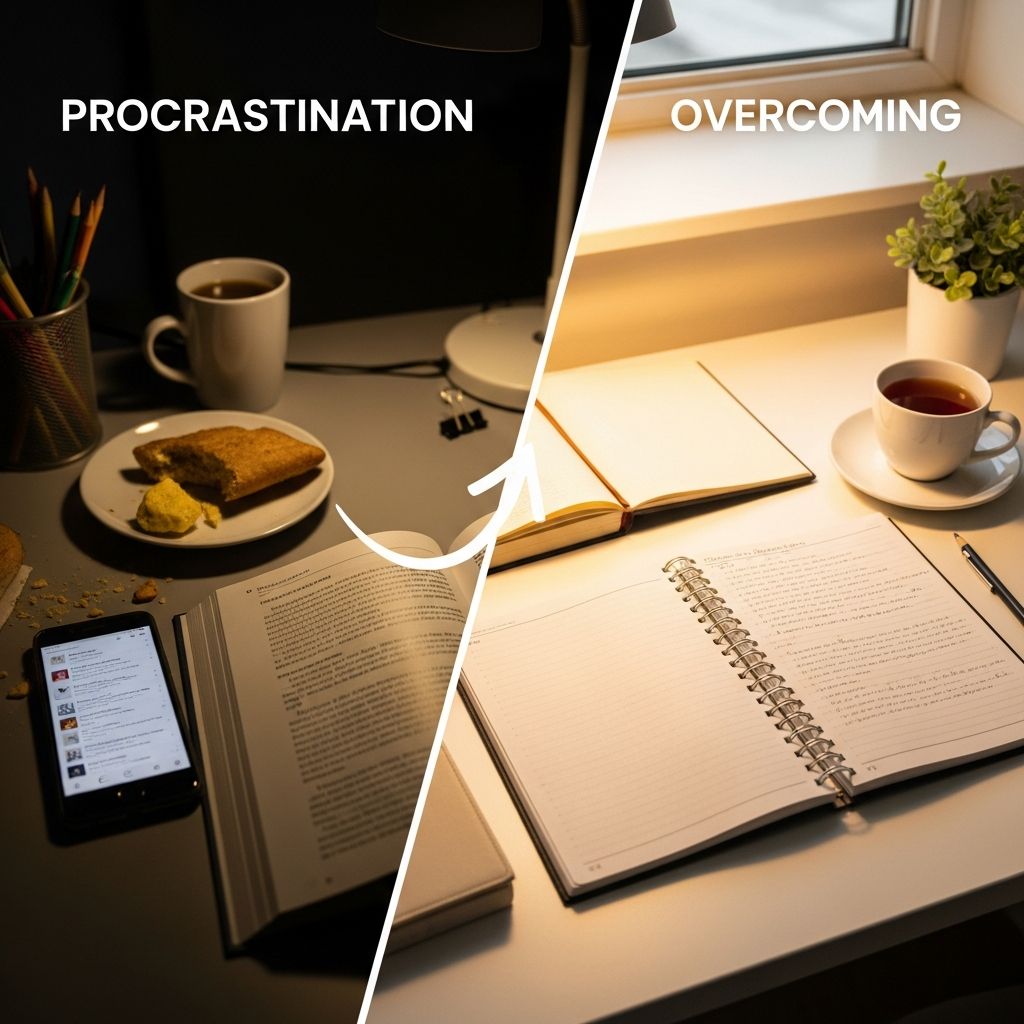
Procrastination on homework affects countless students, leading to stress, poor performance, and missed opportunities. This guide presents seven actionable tactics drawn from proven methods to help you start tasks promptly, maintain focus, and complete assignments efficiently. By implementing these steps, you can transform your study routine into a powerhouse of productivity.
Understanding the Procrastination Trap
Procrastination often stems from emotional responses like anxiety or overwhelm rather than poor time management. Recognizing this as an emotional challenge is the first step to victory. Students frequently delay homework because tasks feel daunting or unappealing, triggering avoidance behaviors. Breaking this cycle requires targeted strategies that address both mindset and environment.
Research from academic institutions highlights that starting small and building momentum counters the brain’s natural aversion to large efforts. For instance, committing to just a few minutes of work often leads to extended sessions, as initial resistance fades once engaged.
Tactic 1: Craft a Focused Daily Blueprint
Begin by creating a master overview of all assignments, then distill it into a compact daily blueprint. List every pending task with deadlines on a single sheet, avoiding digital tools initially to prevent diversions. From this, select your top three priorities—those with the nearest due dates or highest impact.
Writing these on a small physical note keeps your focus sharp and limited, preventing overload. As you finish each, cross it off and replenish from the master list. This iterative process builds quick wins and sustains motivation throughout your session.
- Compile all tasks in one place.
- Pick only three to tackle immediately.
- Celebrate completions before advancing.
Tactic 2: Prime Your Workspace for Success
Your environment dictates your output. Dedicate time to set the mood: clear clutter, arrange materials like notebooks and pens, and introduce subtle enhancers like instrumental music or a pleasant aroma. Aim for a setup that promotes alertness without drowsiness—comfortable yet invigorating.
A dedicated study zone signals your brain it’s time for work, reducing startup friction. Keep essentials within arm’s reach to avoid interruptions, ensuring seamless transitions into deep focus.
Tactic 3: Harness the Power of Short Bursts
The Pomodoro Technique revolutionizes focus by segmenting work into 25-minute intervals followed by 5-minute breaks. Set a timer for one task, work intently until it rings, then step away for hydration, stretching, or a quick bio break. After four cycles, take a longer 15-30 minute respite.
This method combats mental fatigue, leveraging natural attention spans while providing structured relief. Many students report doubling output as short commitments lower the barrier to entry.
| Cycle | Work Time | Break Time | Activity Suggestion |
|---|---|---|---|
| 1-4 | 25 minutes | 5 minutes | Water, stretch |
| After 4 | – | 15-30 minutes | Walk, snack |
Tactic 4: Deploy the Five-Minute Momentum Starter
When inertia grips you, invoke the five-minute rule: pledge to work on the task for just five minutes. Set a phone timer and dive in—whether outlining notes or reading one page. Inevitably, this micro-commitment activates flow state, extending your session far beyond the timer.
This tactic exploits the psychological hurdle of initiation. Once underway, continuation feels natural, turning ‘impossible’ assignments into manageable progress.
Tactic 5: Neutralize Distractions Systematically
Distractions erode focus; combat them with a distraction journal and environmental controls. Keep a notepad nearby: log every urge—phone checks, wandering thoughts, or noises—with a tally mark for repeats. Review later to identify patterns and countermeasures.
- Phone in another room, notifications off.
- Wi-Fi disabled unless essential.
- Noise-cancelling headphones or quiet library spot.
- Inform family of ‘do not disturb’ windows.
These barriers create a fortress for concentration, minimizing external pulls.
Tactic 6: Build Accountability Networks
Solitary efforts falter without oversight. Partner with a classmate for mutual check-ins, sharing daily goals and progress updates. Alternatively, form study groups where collective momentum reinforces individual discipline.
Positive self-talk amplifies this: swap defeatist phrases like ‘This is endless’ for empowering ones such as ‘One step at a time leads to victory.’ External and internal accountability fortifies resolve.
Tactic 7: Reward Progress Strategically
Motivation thrives on incentives. Design a reward ladder tied to milestones—finish three tasks for a favorite snack, a chapter for gaming time. Keep rewards brief to avoid new procrastination loops.
This taps into dopamine responses, making effort pleasurable. Track wins in a ‘done’ list for visual satisfaction, fueling the cycle of achievement.
Advanced Implementation: Weekly Routines
For sustained results, integrate tactics into routines. Sundays, map the week’s assignments into time blocks: mornings for high-energy tasks, evenings for review. Incorporate daily habits like 10-minute meditation to sharpen self-control.
Adjust based on energy peaks—many excel post-exercise. Flexibility prevents rigidity, accommodating life’s variables while prioritizing homework.
Common Roadblocks and Fixes
| Roadblock | Symptom | Fix |
|---|---|---|
| Overwhelm | Staring blankly | Break into micro-steps |
| Fatigue | Yawning mid-task | Pomodoro with active breaks |
| Boredom | Mind wandering | Distraction journal + rewards |
| Lack of Urgency | Endless scrolling | Top-3 list + accountability |
Frequently Asked Questions (FAQs)
What if I can’t stick to just three tasks?
Start with one if three feels much; the key is limitation to build momentum without scattering focus.
Does music really help during study?
Instrumental tracks can enhance concentration for many by masking noise, but test what suits your style.
How do I handle group projects procrastination?
Assign personal micro-deadlines and use group chats for daily updates to mirror solo accountability.
What about late-night homework urges?
Channel them productively but prioritize sleep; cap sessions to avoid burnout.
Can apps replace paper lists?
Paper minimizes digital temptations initially; transition to apps once habits solidify.
Long-Term Transformation
Consistency cements these tactics into habits. Track weekly completions to measure growth—expect initial resistance, but persistence yields exponential gains. Students applying these report higher grades, reduced anxiety, and reclaimed free time.
Revisit your blueprint regularly, refining based on what works. Procrastination diminishes as discipline strengthens, empowering academic and personal pursuits.
References
- Understanding and Overcoming Procrastination — McGraw Center for Teaching and Learning, Princeton University. 2023-01-15. https://mcgraw.princeton.edu/undergraduates/resources/resource-library/understanding-and-overcoming-procrastination
- How to Stop Procrastinating in College: 7 Essential Tips — BestColleges. 2024-09-10. https://www.bestcolleges.com/blog/how-to-stop-procrastinating/
- Seven Ways to Beat Procrastination — University of Phoenix. 2023-05-22. https://www.phoenix.edu/blog/seven-ways-to-beat-procrastination.html
- 7 Ways To Stop Procrastination — Eastern Florida State College. 2024-02-14. https://blog.easternflorida.edu/ways-to-stop-procrastination/
- Overcoming Procrastination: 7 Strategies for College Students — URBE University. 2023-11-08. https://urbeuniversity.edu/blog/overcoming-procrastination-7-strategies-for-college-students

- Integrated M.A. in Applied Linguistics, University of Hyderabad
- 5+ years in editorial, instructional, SEO, and research-based writing
Sneha is a relationships and lifestyle writer with a strong foundation in applied linguistics and certified training in relationship coaching. She brings over five years of writing experience to theskillvault, crafting thoughtful, research-driven content that empowers readers to build healthier relationships, boost emotional well-being, and embrace holistic living. Her writing and insights reflect the belief that beauty, happiness, and wellness…