
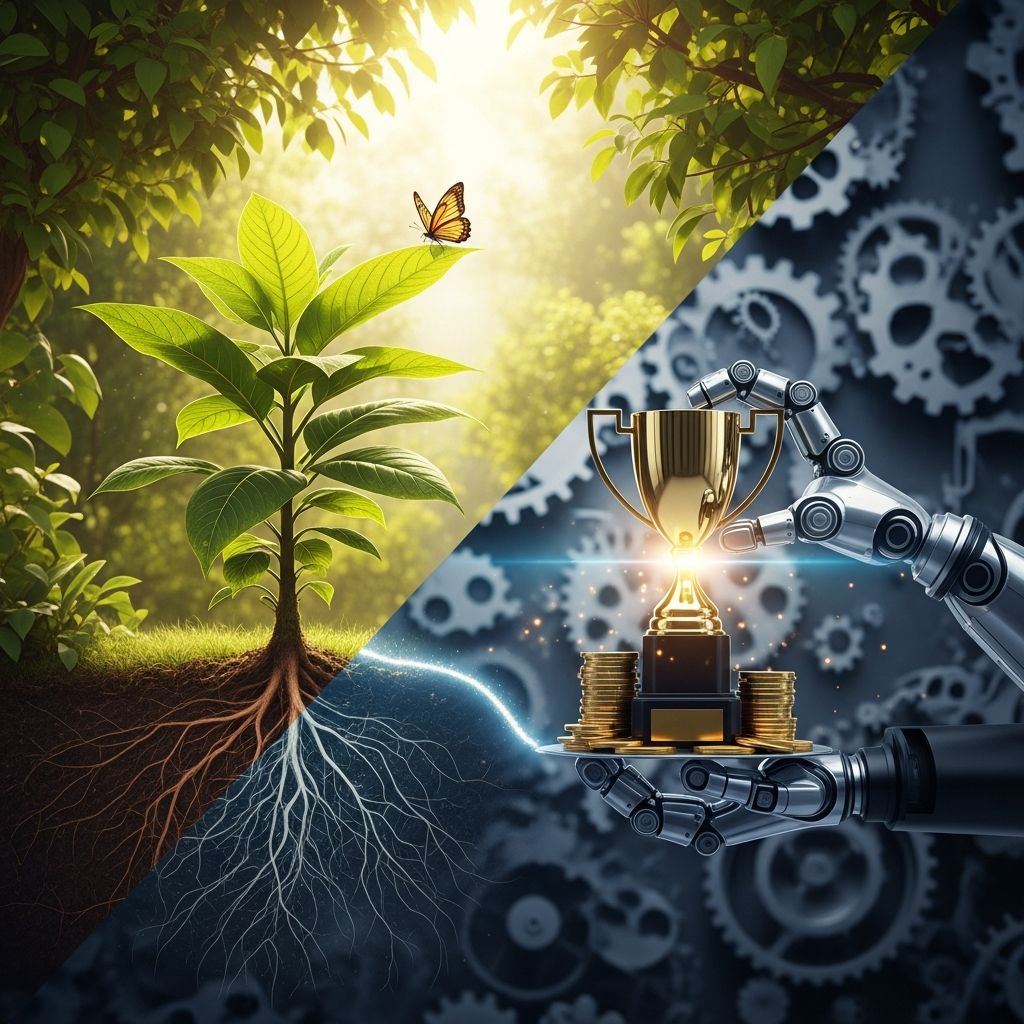
In the pursuit of goals, understanding what fuels our actions is essential. Intrinsic motivation stems from internal satisfaction and personal interest in a task, while extrinsic motivation arises from external rewards or pressures. Research shows that a blend of both drives optimal outcomes, with intrinsic often proving more sustainable for long-term engagement.
Defining the Core Drives Behind Human Behavior
Motivation is the engine of achievement, but it manifests in two primary forms. Intrinsic motivation occurs when individuals pursue activities for the inherent pleasure, challenge, or fulfillment they provide. For example, a writer crafting stories for the joy of creation embodies this drive. In contrast, extrinsic motivation involves external incentives like money, grades, or praise. A student studying solely for a high score illustrates this type.
Psychological foundations, such as self-determination theory, highlight that intrinsic motivation thrives when basic needs for autonomy, competence, and relatedness are met. Autonomy means controlling one’s actions; competence involves mastering skills; and relatedness fosters meaningful connections. When fulfilled, these spark genuine enthusiasm, leading to deeper learning and persistence.
Extrinsic motivation, however, relies on tangible or social reinforcements. It can jumpstart action on unappealing tasks but risks fading without ongoing incentives. Studies indicate that over-reliance on external rewards may erode internal interest, especially if rewards feel controlling.
Key Characteristics and Real-World Manifestations
- Intrinsic: Self-sustained, fosters creativity, linked to higher satisfaction and resilience during setbacks.
- Extrinsic: Outcome-focused, boosts short-term compliance and speed, ideal for routine or undesirable duties.
In sports, athletes with high intrinsic motivation enjoy skill-building and persist through slumps, while extrinsic elements like trophies provide competitive edge. At work, employees driven by passion for their craft innovate more, whereas bonuses ensure deadlines are met.
Comparative Analysis: Strengths, Weaknesses, and Outcomes
| Motivation Type | Strengths | Weaknesses | Best Applications |
|---|---|---|---|
| Intrinsic | Long-term persistence, creativity, enthusiasm; enhances well-being | May lack urgency for competition; slower initial action | Learning new skills, personal growth, complex problem-solving |
| Extrinsic | Quick mobilization, compliance in teams, handles mundane tasks | Can lead to burnout, motivation drop post-reward | Short-term goals, habit formation, performance boosts |
The table underscores that neither type is superior universally. Intrinsic drive excels in sustained efforts, with research showing intrinsically motivated people tackle challenges with originality. Extrinsic, per studies, accelerates task completion but may undermine interest if overused. A meta-analysis confirms intrinsic links to better job satisfaction, while excessive extrinsic correlates with stress.
Psychological Mechanisms: Why One Outshines the Other Long-Term
Intrinsic motivation aligns with innate psychological needs, promoting flow states where time flies amid deep immersion. Positive feedback bolsters it by affirming competence, unlike criticism which diminishes drive. Extrinsic rewards, if expected, can shift focus from enjoyment to payout, reducing agency.
Unexpected rewards or those signaling mastery, however, may enhance intrinsic pull. In education, choice in tasks and supportive environments nurture intrinsic motivation, yielding enthusiastic learners. Workplaces emphasizing purpose over strict metrics see higher engagement.
Balancing Acts: Integrating Both for Peak Performance
Top performers harmonize both motivations. Athletes blending intrinsic joy with extrinsic competition achieve elite status. Strategies include:
- Start with extrinsic nudges for new habits, transitioning to intrinsic through mastery experiences.
- Use intangible rewards like praise to support, not supplant, internal drive.
- Foster autonomy via goal-setting and feedback loops.
Environments promoting choice, skill-building, and relationships amplify intrinsic forces while extrinsic provides structure. Research affirms this balance yields persistence, positivity, and peak concentration.
Practical Tactics to Cultivate Intrinsic Fire
- Pursue Passion-Aligned Goals: Select activities resonating personally for natural pull.
- Set Mastery Milestones: Break challenges into achievable steps with progress tracking.
- Seek Meaningful Feedback: Focus on informative input that builds competence.
- Cultivate Connections: Engage communities sharing values for relatedness.
- Minimize Controlling Pressures: Avoid rigid deadlines; emphasize exploration.
Implementing these shifts locus from external to internal, sustaining drive amid obstacles.
Potential Pitfalls: When Motivation Backfires
Over-emphasizing extrinsic can foster dependency, where effort halts sans reward, leading to discouragement. Intrinsically dominant individuals might shun competition, capping potential. Undermining effects occur when rewards imply insufficiency, eroding self-determination. Mitigation involves mindful reward design: performance-tied, unexpected, and competence-affirming.
Applications Across Life Domains
Education and Skill Acquisition
Students thrive intrinsically when tasks challenge optimally and offer autonomy. Teachers de-emphasizing grades foster deeper retention and curiosity.
Professional Environments
Intrinsic elements like purpose and autonomy boost innovation; extrinsic incentives align teams. Leaders craft roles with variety, significance, and feedback.
Health and Personal Habits
Exercise for enjoyment sustains routines better than scale-focused goals. Intrinsic framing turns habits into joys.
Empirical Evidence: What Studies Reveal
Decades of research, including self-determination theory, validate intrinsic’s edge for quality learning and creativity. Extrinsic aids when autonomous, enhancing engagement. Behavioral data shows interactive effects: extrinsic can boost intrinsic if not controlling. Athletes and workers balancing both exhibit superior outcomes.
Frequently Asked Questions
Can extrinsic rewards ever enhance intrinsic motivation?
Yes, when unexpected, competence-focused, or intangible, they reinforce without undermining.
Which is better for long-term goals?
Intrinsic generally sustains better, but blending with extrinsic provides comprehensive drive.
How do I boost intrinsic motivation at work?
Align tasks with interests, seek autonomy, pursue mastery, and build supportive networks.
What environments kill intrinsic drive?
Controlling, overly competitive settings with rigid demands and poor feedback.
Is one type genetically determined?
No, both are malleable through experiences, environments, and deliberate practices.
References
- Balance intrinsic and extrinsic motivation for success — Human Kinetics. 2023-05-15. https://us.humankinetics.com/blogs/excerpt/balance-intrinsic-and-extrinsic-motivation-for-success
- Intrinsic and Extrinsic Motivation — Excelsior University. 2024-02-10. https://www.excelsior.edu/article/types-of-motivation/
- Intrinsic vs. Extrinsic Motivation: What’s the Difference? — Indeed. 2024-08-20. https://www.indeed.com/career-advice/career-development/intrinsic-extrinsic-motivation
- Extrinsic vs. Intrinsic Motivation: What’s the Difference? — Simply Psychology. 2023-11-05. https://www.simplypsychology.org/differences-between-extrinsic-and-intrinsic-motivation.html
- The Science of Motivation: Intrinsic vs. Extrinsic Rewards — Sparkplug. 2024-01-12. https://sparkplug.app/blog/the-science-of-motivation-intrinsic-vs.-extrinsic-rewards-in-the-workplace
- Extrinsic vs. Intrinsic Motivation at Work — Psychology Today. 2020-04-15. https://www.psychologytoday.com/us/blog/creative-leadership/202004/extrinsic-vs-intrinsic-motivation-at-work
- Intrinsic and Extrinsic Motivations: Classic Definitions and New Directions — Self-Determination Theory. 2000-01-01. https://www.selfdeterminationtheory.org/SDT/documents/2000_RyanDeci_IntExtDefs.pdf
- On what motivates us: a detailed review of intrinsic v. extrinsic motivation — PMC (NIH). 2022-08-10. https://pmc.ncbi.nlm.nih.gov/articles/PMC9340849/

Medha Deb is an editor with a master's degree in Applied Linguistics from the University of Hyderabad. She believes that her qualification has helped her develop a deep understanding of language and its application in various contexts. Medha specializes in the areas of beauty, health, sports, and wellness and is committed to ensuring that the content on the website is…