
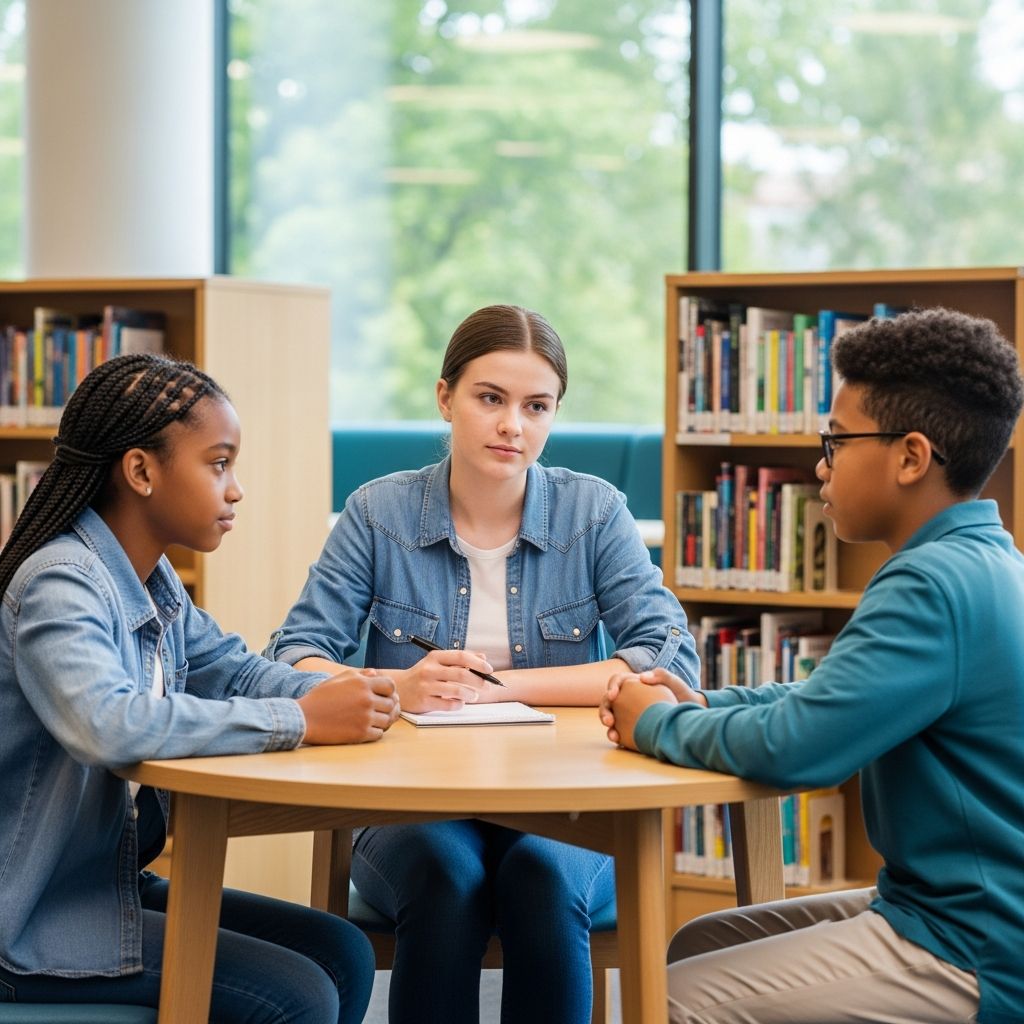
Student peer mediation represents a transformative approach in modern education, where young people take the lead in resolving everyday disputes among their peers. This method equips students with essential skills to handle conflicts constructively, reducing disruptions and promoting a culture of mutual respect. By shifting from adult-dominated discipline to youth-led dialogue, schools can cultivate environments where learning thrives without the shadow of unresolved tensions.
Understanding the Foundations of Peer Mediation
At its core, peer mediation involves trained students acting as neutral facilitators to help classmates navigate disagreements. Unlike traditional punitive measures, this process emphasizes understanding perspectives, active listening, and collaborative problem-solving. It operates on the principle that students are more receptive to solutions crafted by peers rather than imposed by authority figures, leading to higher compliance and genuine resolution.
Research highlights that such programs stem from a recognition that conflicts are inevitable in school settings but can be managed effectively when students feel empowered. Basic tenets include student motivation through ownership of agreements, freedom of expression, and avoidance of severe disciplinary actions like suspensions. This face-saving mechanism ensures everyone involved walks away feeling respected, fostering long-term behavioral changes.
- Empowerment: Participants develop agreements they co-create, boosting self-efficacy.
- Open Dialogue: Safe spaces allow honest expression without judgment.
- Win-Win Outcomes: No one loses; solutions prioritize mutual benefit.
Key Benefits for Students and School Communities
Implementing peer mediation yields multifaceted advantages that extend beyond immediate conflict resolution. Schools report fewer incidents of violence, reduced teacher interventions in minor disputes, and an overall more peaceful atmosphere conducive to academic focus. Mediators themselves gain profound personal growth, serving as role models who demonstrate prosocial behaviors to their peers.
Participation hones critical life skills such as communication, empathy, critical thinking, and creativity. Disputants learn to articulate needs assertively, moving away from passive or aggressive styles toward balanced expression. Programs also build leadership capacities, with trained students often extending their influence by educating younger grades on social-emotional topics.
| Benefit | Impact on Students | Impact on School |
|---|---|---|
| Skill Development | Improved listening, negotiation, and problem-solving | Fewer disciplinary referrals |
| Emotional Growth | Enhanced self-esteem and perspective-taking | Positive climate shift |
| Leadership | Role modeling and mentoring opportunities | Increased teacher retention |
| Discipline Reduction | Alternatives to punishment build responsibility | Lower violence and suspensions |
Statistics from established programs show marked declines in fights and behavioral issues, creating ripple effects like better academic performance and resource allocation toward education rather than crisis management.
Step-by-Step Guide to the Mediation Process
A structured framework ensures mediations are effective and fair. While variations exist, most programs follow a systematic sequence that calms emotions and guides parties toward resolution. Here’s a proven six-step model adapted for school settings:
- Agreement to Proceed: Introduce participants, establish ground rules like confidentiality and respect, and confirm willingness to mediate.
- Story Sharing: Each disputant vents their side uninterrupted, with mediators using open-ended questions to clarify feelings and facts.
- Issue Identification: Pinpoint core problems collaboratively, distinguishing between positions and underlying interests.
- Brainstorming Solutions: Generate creative options freely, without immediate critique, encouraging out-of-the-box thinking.
- Agreement Formulation: Evaluate ideas, select feasible ones, and formalize a clear, actionable plan with timelines.
- Closure and Follow-Up: Affirm commitments, celebrate progress, and schedule check-ins if needed.
This process not only resolves the immediate issue but teaches transferable skills for family, neighborhood, or future workplace conflicts.
Training Tomorrow’s Mediators: Essential Preparation
Success hinges on comprehensive training for peer mediators. Sessions typically span a full day or multiple workshops, covering conflict theory, communication techniques, and ethical guidelines. Volunteers, such as attorneys or counselors, often lead these, providing real-world insights and role-playing scenarios.
Key training components include:
- Active listening and paraphrasing to validate emotions.
- Distinguishing open-ended questions (e.g., “How did that make you feel?”) from closed ones for deeper exploration.
- Maintaining neutrality, impartiality, and confidentiality.
- Recognizing power imbalances and ensuring equitable participation.
Programs like those from state bar associations emphasize nonviolent techniques, helping students tolerate diverse viewpoints and respond constructively to frustration. Trained mediators, regardless of academic or disciplinary history, become empowered leaders capable of scaling program impact school-wide.
Overcoming Common Challenges in Implementation
While promising, peer mediation requires thoughtful rollout to address hurdles. Skepticism about students’ maturity, resource constraints, and integration with existing discipline policies are frequent concerns. Solutions include starting small with pilot groups, securing administrative buy-in, and measuring outcomes through pre- and post-program surveys.
Confidentiality breaches or mediator burnout can arise, mitigated by ongoing supervision and rotation of roles. Cultural sensitivity training ensures inclusivity across diverse student populations. Evidence indicates that with proper support, programs reduce exclusionary discipline and empower voices previously sidelined.
Real-World Success Stories and Evidence
Across the U.S. and beyond, peer mediation has delivered tangible results. In Michigan schools since 1994, lawyer-led trainings correlated with fewer fights and a more peaceful atmosphere. Student-led models in various districts cut violence incidents, boosted funding via improved metrics, and enhanced teacher stability.
International toolkits from organizations like IREX demonstrate skill transfer to community settings, fostering self-regulation and discipline. Nebraska’s frameworks note school-wide attitude shifts toward constructive conflict responses, promoting growth in self-respect and critical thinking. These cases underscore peer mediation’s scalability from voluntary sessions to core disciplinary tools.
Integrating Peer Mediation into Broader SEL Initiatives
Peer mediation amplifies when woven into comprehensive social-emotional learning (SEL) curricula. It complements lessons on assertiveness, empathy, and self-management, with mediators delivering peer-to-peer education. This proactive layer prevents escalations, aligning with goals of positive school climates and lifelong resilience.
By prioritizing student agency, schools invest in futures where conflicts become opportunities for connection rather than division.
Frequently Asked Questions (FAQs)
What age groups benefit most from peer mediation?
Elementary through high school students thrive, with adaptations for developmental stages. Younger kids focus on basic listening; teens tackle complex negotiations.
Is training required for all participants?
Only mediators receive formal training; disputants learn through experience. Open access encourages broad involvement.
Does peer mediation replace teacher discipline?
No, it serves as a complementary tool for non-violent disputes, reducing administrative load while upholding safety.
How confidential is the process?
Strictly confidential unless safety risks arise, building trust essential for open dialogue.
Can any student become a mediator?
Yes, programs welcome diverse applicants, prioritizing training over past records to model inclusivity.
References
- Peer Mediation – Schrumpf, Crawford, Bodine, Rue, Potter — UNCG. Accessed 2026. http://uncg.edu/~bblevin/class_management/models/pm.html
- Peer Mediation…Students Helping Students with Conflict-Resolution — Nord Anglia Education. 2023-09-26. https://www.nordangliaeducation.com/village-houston/news/2023/09/26/peer-mediation
- Peer Mediation in Action: From Conflict to Connection — KCDRC. Accessed 2026. https://kcdrc.org/peer-mediation-in-action-from-conflict-to-connection/
- Peer Mediation in the Classroom—A New Initiative for the State Bar — Michigan Bar Journal. Accessed 2026. https://www.michbar.org/journal/Details/ArticleID/128
- Peer Mediation — NeMTSS, University of Nebraska-Lincoln. 2024-12. https://nemtss.unl.edu/wp-content/uploads/2024/12/Peer-Mediation.pdf
- Student Led Peer Mediation — PeerMediation.net. Accessed 2026. https://www.peermediation.net
- Conflict Resolution and Peer Mediation Toolkit — IREX. Accessed 2026. https://www.irex.org/sites/default/files/node/resource/conflict-resolution-and-peer-mediation-toolkit.pdf

- Integrated M.A. in Applied Linguistics, University of Hyderabad
- 5+ years in editorial, instructional, SEO, and research-based writing
Sneha is a relationships and lifestyle writer with a strong foundation in applied linguistics and certified training in relationship coaching. She brings over five years of writing experience to theskillvault, crafting thoughtful, research-driven content that empowers readers to build healthier relationships, boost emotional well-being, and embrace holistic living. Her writing and insights reflect the belief that beauty, happiness, and wellness…