
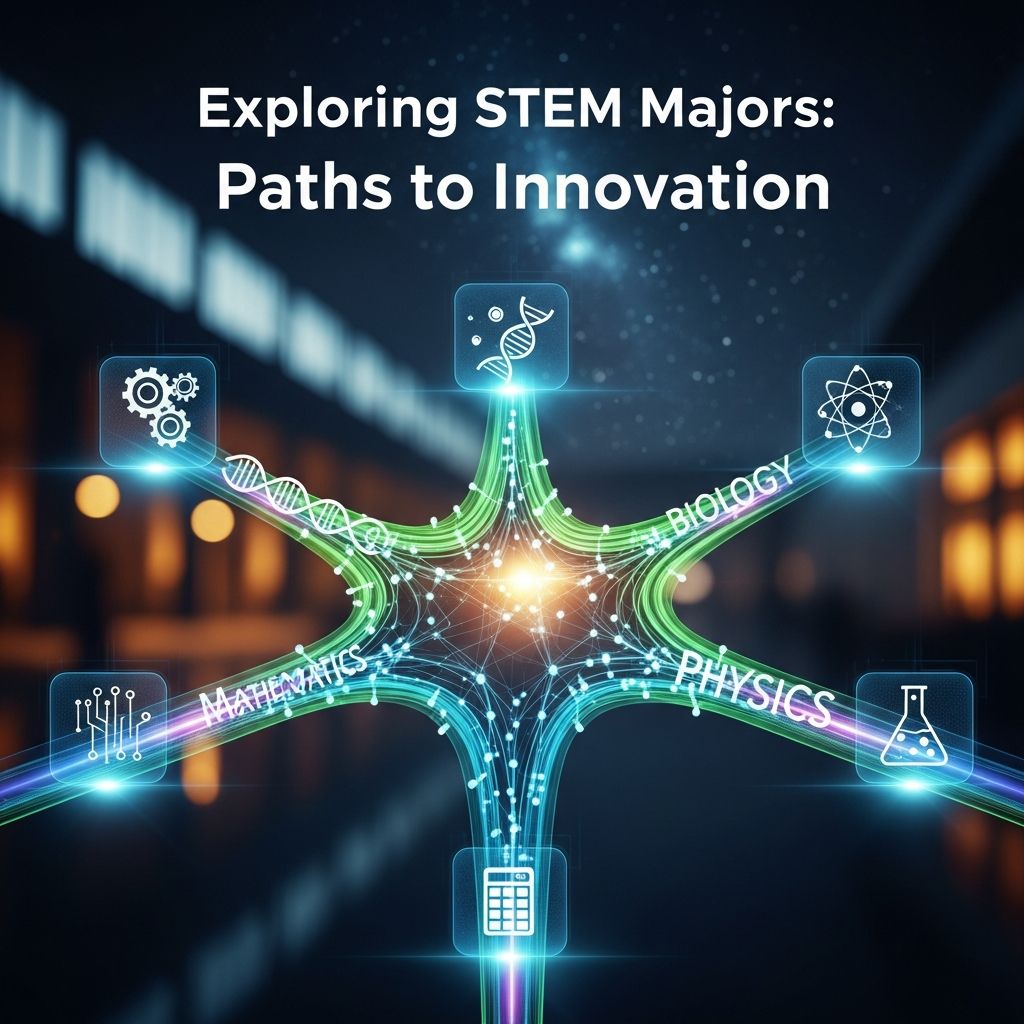
STEM fields—encompassing **Science**, **Technology**, **Engineering**, and **Mathematics**—represent the cornerstone of modern progress. These disciplines equip students with analytical skills to tackle global challenges like climate change, healthcare advancements, and digital transformation. Pursuing a STEM major opens doors to lucrative careers, with many entry-level positions offering salaries exceeding $75,000 annually.
Defining the Scope of STEM Education
At its core, a STEM major integrates rigorous coursework across interconnected domains, fostering interdisciplinary problem-solving. Students engage in hands-on labs, computational modeling, and collaborative projects that mirror real-world applications. Unlike traditional programs, STEM emphasizes adaptability, preparing graduates for evolving industries.
The breadth of STEM ensures versatility. For instance, a foundational understanding of algorithms in computer science can apply to finance or biology, while engineering principles underpin everything from robotics to sustainable energy.
Science Disciplines: Foundations of Discovery
Science majors delve into the natural world, uncovering principles that drive innovation. These programs build expertise in experimentation, data interpretation, and theoretical modeling.
- Biological Sciences: Focus on living organisms, including genetics, ecology, and microbiology. Careers span biotechnology, pharmaceuticals, and conservation.
- Chemistry: Explores matter’s composition and reactions, essential for materials science and drug development.
- Physics and Astronomy: Studies fundamental forces and celestial phenomena, leading to roles in quantum computing and space exploration.
- Earth and Environmental Sciences: Addresses geology, atmospheric science, and climate dynamics, critical for sustainability efforts.
Biology, general, remains a popular entry point, with subfields like marine biology offering specialized paths in ocean conservation.
Technology Frontiers: Powering the Digital Age
Technology majors emphasize computing and information systems, skills in high demand amid AI and cybersecurity booms. Programs teach programming, network design, and data management.
| Major | Key Skills | Average Starting Salary |
|---|---|---|
| Computer Science | Algorithms, software development, AI | $85,000+ |
| Information Systems | Data management, cybersecurity | $75,000 |
| Data Science | Machine learning, visualization | $90,000 |
Computer science stands out for its flexibility, enabling transitions into web development, app creation, or bioinformatics. Data science, in particular, equips learners to harness big data for business insights.
Engineering Excellence: Building Tomorrow’s World
Engineering majors apply scientific principles to design practical solutions. From infrastructure to biomedical devices, these fields demand creativity and precision.
- Mechanical Engineering: Involves thermodynamics, robotics, and manufacturing—versatile for automotive and aerospace industries.
- Electrical Engineering: Covers circuits, telecommunications, and renewable energy systems.
- Civil Engineering: Focuses on structures, transportation, and urban planning.
- Chemical Engineering: Blends chemistry with process design for energy and pharmaceuticals.
- Biomedical Engineering: Merges biology and engineering for medical devices and prosthetics.
Aerospace engineering, for example, propels careers in aviation and NASA-related projects. Entry-level engineers often earn $75,000–$110,000, with rapid advancement.
Mathematics: The Language of Precision
Mathematics majors master abstract reasoning, statistics, and modeling—tools indispensable across STEM. Programs include applied math, actuarial science, and computational methods.
These degrees shine in finance, tech, and research. The U.S. Bureau of Labor Statistics projects 37,100 annual openings in math occupations through 2033, far outpacing average growth.
Career Trajectories and Job Market Insights
STEM graduates enjoy robust employment prospects. Computer science leads with versatility across sectors like healthcare and finance. Engineering follows closely, fueled by infrastructure needs.
High-demand roles include:
- Software developers and engineers
- Data analysts and scientists
- Biomedical researchers
- Civil and mechanical engineers
- Actuaries and statisticians
Versatility defines top majors: Chemical engineering adapts to global manufacturing, while math supports AI and economics.
Skills Every STEM Student Needs
Success in STEM requires:
- Analytical Thinking: Breaking down complex problems.
- Programming Proficiency: Languages like Python, MATLAB, and R.
- Collaboration: Team-based projects simulating industry.
- Ethical Reasoning: Addressing AI biases and environmental impacts.
Hands-on experience via internships amplifies resumes, bridging theory and practice.
Challenges and Realities of STEM Programs
STEM majors are demanding, with heavy math, labs, and group work. Persistence pays off, as dropout rates reflect initial rigor but yield high rewards.
Women and underrepresented groups are increasingly represented, supported by scholarships and outreach.
Why Choose a STEM Major Today?
In an era of rapid technological change, STEM drives economic growth. Governments prioritize these fields for competitiveness, with billions invested in research.
Graduates not only secure financial stability but also contribute to societal advancements, from clean energy to pandemic response.
Frequently Asked Questions (FAQs)
What is the most versatile STEM major?
Computer science tops the list due to its applications in tech, healthcare, finance, and more.
Are STEM jobs high-paying?
Yes, many start at $75,000+, with engineering and data science exceeding $90,000.
Do all STEM majors require advanced math?
Most do, but applied programs focus on practical tools like statistics over pure theory.
Can I switch STEM fields after graduation?
Absolutely—interdisciplinary skills allow pivots, e.g., from mechanical engineering to robotics.
What undergraduate programs exemplify STEM?
Examples include Northwestern’s Computer Science, UMichigan’s Data Science, and UCI’s Software Engineering.
References
- STEM Majors – College Essay Guy — College Essay Guy. 2023. https://www.collegeessayguy.com/blog/stem-majors
- STEM Majors and Occupations – ACT — ACT. 2014-09-01. https://www.act.org/content/act/en/research/reports/act-publications/condition-of-stem-2014/stem-majors-and-occupations/stem-majors-and-occupations.html
- Best STEM Majors for In-Demand Career Paths – NSHSS — National Society of High School Scholars. 2023. https://www.nshss.org/resources/blog/blog-posts/best-stem-majors-for-in-demand-career-paths/
- What Nobody Told You About Being a STEM Major | SNHU — Southern New Hampshire University. 2023. https://www.snhu.edu/about-us/newsroom/stem/what-nobody-told-you-about-being-a-stem-major
- Stem Degrees – Minority Serving Institutions Exchange — NASA. 2023. https://msiexchange.nasa.gov/stem-degrees
- Periodic Table of STEM Occupations – Bureau of Labor Statistics — U.S. Bureau of Labor Statistics. 2023-10-01. https://www.bls.gov/k12/students/careers/stem-table.htm

- Integrated M.A. in Applied Linguistics, University of Hyderabad
- 5+ years in editorial, instructional, SEO, and research-based writing
Sneha is a relationships and lifestyle writer with a strong foundation in applied linguistics and certified training in relationship coaching. She brings over five years of writing experience to theskillvault, crafting thoughtful, research-driven content that empowers readers to build healthier relationships, boost emotional well-being, and embrace holistic living. Her writing and insights reflect the belief that beauty, happiness, and wellness…