
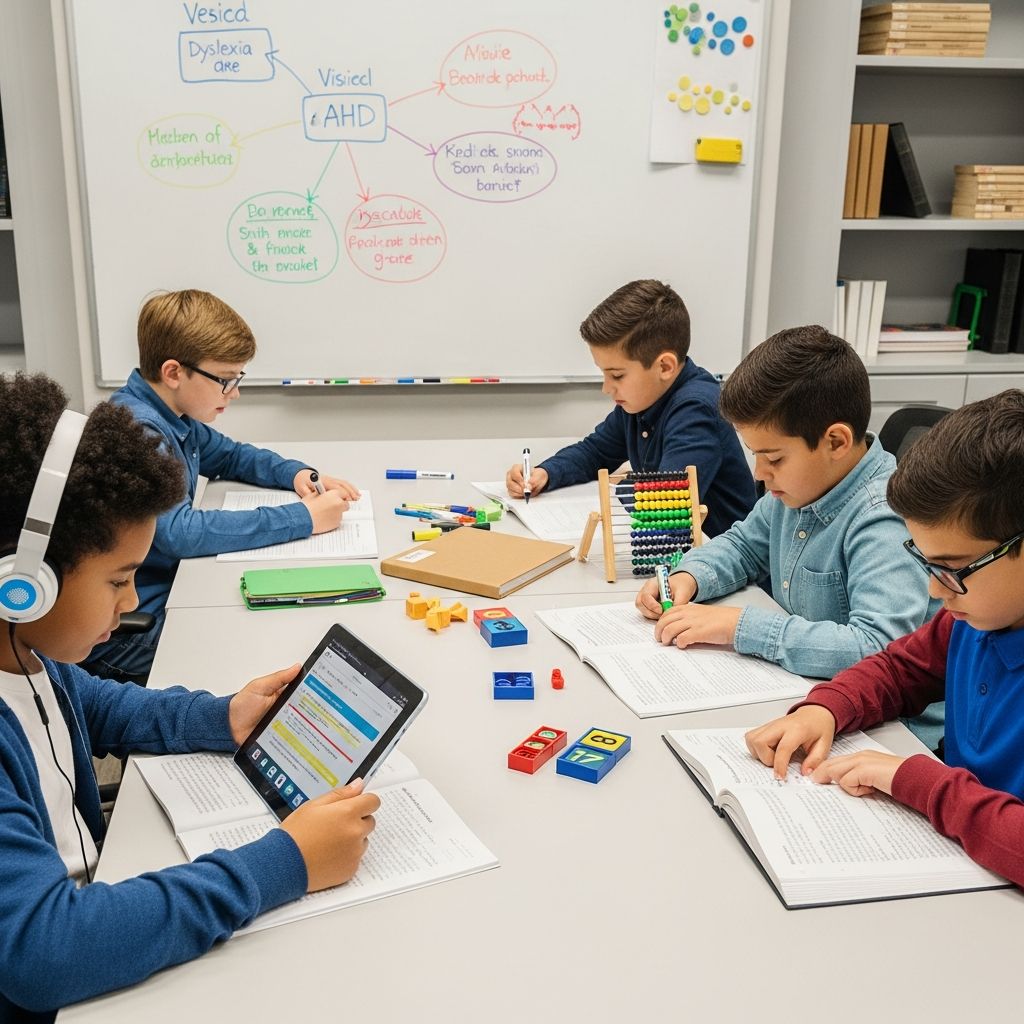
Students with learning disabilities often encounter unique hurdles in traditional educational settings, but targeted study techniques can bridge these gaps and foster remarkable progress. These methods emphasize personalization, breaking down barriers in processing, memory, and organization to promote independence and achievement.
Understanding Learning Disabilities and Study Challenges
Learning disabilities affect how individuals process information, impacting areas like reading, writing, math, and executive functions such as planning and focus. According to educational research, these students benefit from strategies that align with their cognitive profiles, reducing overwhelm and enhancing retention. Common issues include working memory limitations, where holding multiple ideas feels daunting, and attention difficulties that disrupt sustained effort. By adopting adaptive techniques, educators, parents, and students can transform these challenges into opportunities for growth.
Evidence highlights that without support, these students risk frustration and underperformance, but structured interventions yield significant gains. For instance, direct instruction combined with feedback improves outcomes across subjects. This article outlines practical approaches drawn from proven practices to help students thrive.
Building Strong Foundations: Organization and Routines
A consistent routine forms the bedrock of effective studying for students with learning disabilities. Establishing a dedicated study space free from distractions—think quiet corners with organized supplies—helps signal the brain it’s time to focus. Pair this with a fixed daily schedule, such as studying post-snack at the same hour, to build habits that combat executive functioning deficits.
- Select a clutter-free area with good lighting and minimal noise.
- Prepare materials in advance: notebooks, pens, and devices ready to go.
- Incorporate short breaks with timers to maintain attention spans.
Visual tools like color-coded planners amplify this. Assign colors to subjects—blue for math, green for science—and use checklists for tasks. This system reduces ‘where is my homework?’ moments and eases anxiety. For ADHD-related struggles, visual timers or apps provide cues, prompting transitions without nagging.
Task Breakdown: Mastering Chunking and Step-by-Step Learning
One of the most powerful techniques is chunking, dividing large assignments into bite-sized segments to avoid cognitive overload. Research indicates working memory handles only 5-9 items at once, so splitting a history essay into ‘research notes,’ ‘outline,’ and ‘draft’ makes it approachable. Teachers can model this by providing checklists: Step 1: Brainstorm ideas; Step 2: Gather sources; Step 3: Write intro.
In math, tackle multi-step problems one operation at a time, checking progress after each. This builds confidence and mastery, as students experience quick wins. For IEPs, embed goals like ‘complete chunked tasks independently 80% of the time’.
| Complex Task | Chunked Steps |
|---|---|
| Write a 5-paragraph essay | 1. Brainstorm topics 2. Create outline 3. Draft body paragraphs 4. Write intro/conclusion 5. Revise and edit |
| Solve algebra equation | 1. Isolate variable 2. Simplify terms 3. Check solution |
Engaging Multiple Senses for Deeper Retention
Multisensory learning activates visual, auditory, and kinesthetic pathways, creating robust neural connections for students with disabilities. Visual aids like graphic organizers map ideas—mind maps for science concepts or timelines for history—making abstracts tangible. Auditory support includes audiobooks or verbal recaps, ideal for reading struggles.
Kinesthetic elements shine through hands-on tasks: build models for geometry or use manipulatives for fractions. Combine them: read aloud while highlighting text and gesturing key points. Differentiated instruction tailors this—advanced readers get complex texts, while others use simplified visuals. In sessions, tutors might draw diagrams on digital whiteboards during discussions.
- Visual: Diagrams, color-coded notes.
- Auditory: Podcasts, group talks.
- Kinesthetic: Role-play, physical timers.
Leveraging Technology and Assistive Tools
Assistive technology levels the playing field, offering tools for reading, writing, and organization. Text-to-speech software like Microsoft Narrator reads screens aloud, aiding dyslexia. Speech-to-text options, such as Dragon NaturallySpeaking, capture spoken ideas for those with writing barriers, bypassing motor challenges.
Apps like Quizlet turn flashcards digital, with pre-made decks for sharing—perfect for portability and gamified review. Visual timers and reminder apps support time management, while graphic organizer software builds custom visuals. For IEPs, specify these as accommodations, tracking usage in goals. Download lecture slides pre-class to annotate key terms without frantic note-taking.
Memory Boosters: Mnemonics, Flashcards, and Repetition
Memory aids counteract recall issues. Mnemonics like PEMDAS (Parentheses, Exponents, Multiplication/Division, Addition/Subtraction) anchor sequences. Flashcards promote active recall: write questions on one side, answers on back, reviewing daily. Apps enhance this with spaced repetition algorithms.
Repetition with feedback—practice, probe, adjust—solidifies skills. Graphic notes during lessons create reusable references. For tests, teach strategies like underlining keywords or process-of-elimination.
Incorporating Movement, Games, and Fun Elements
Restless energy in learning-disabled students, especially with ADHD, benefits from movement breaks: jumping jacks, dances, or walks recharge focus. Integrate songs for facts—rhymes for spelling—or games like vocabulary bingo.
Study games contextualize learning: math relays or history charades. Short bursts (10-15 mins) followed by activity prevent burnout. This multisensory fun boosts engagement and retention.
Direct Instruction and Feedback Loops
Explicit teaching—model, practice, feedback—drives success. Break skills into steps, demonstrate (e.g., ‘Watch me outline’), then guided practice with probes like ‘How did that step work?’ Diagrams augment explanations, providing visual scaffolds.
Regular, quality feedback scaffolds independence: ‘Great chunking—next, add details.’ One-on-one tutoring personalizes this, using shared tools for ownership.
IEP Integration: Formalizing Support
For students with IEPs or 504 plans, embed strategies formally. Goals might target ‘use planner daily’ or ‘apply mnemonics in two subjects.’ Accommodations include chunked assignments, tech access, extended time. Study skills classes offer daily practice in organization and prep.
Frequently Asked Questions (FAQs)
What are the best first steps for a study routine?
Create a distraction-free space, set consistent times, and use checklists for materials. Start small to build momentum.
How does assistive technology help with writing?
Speech-to-text converts voice to print, easing motor and idea-organization barriers for fluid expression.
Can games really improve retention?
Yes, gamified reviews like flashcards or quizzes make learning interactive, enhancing memory through engagement.
How often should movement breaks occur?
Every 15-20 minutes for young students, adjusting for age to sustain focus without fatigue.
What role do parents play in these strategies?
Parents reinforce routines at home, monitor progress, and collaborate with teachers for consistent application.
Additional Tips for Long-Term Success
Monitor progress with journals, adjusting strategies quarterly. Collaborate across home-school for reinforcement. Celebrate milestones to sustain motivation. These techniques, when consistent, empower students toward autonomy.
References
- Strategies for Students with Learning Disabilities [2026] — Lrnkey. 2026. https://lrnkey.com/blog/strategies-for-students-with-learning-disabilities
- Study skills for students with a Specific Learning Disability (SpLD) — ADCET. Accessed 2026. https://www.adcet.edu.au/oao/for-academics-and-teachers/study-skills-for-students-with-a-specific-learning-disability
- 5 Brilliant Study Tips for Kids With Learning Disabilities That Work — CES Schools. Accessed 2026. https://www.ces-schools.net/5-brilliant-study-tips-for-kids-with-learning-disabilities-that-work/
- 8 Study Skills Strategies To Include In An IEP — A Day in Our Shoes. Accessed 2026. https://adayinourshoes.com/study-skills-strategies/
- 8 Best Evidence-Based Practices in Special Education — AbleSpace. Accessed 2026. https://www.ablespace.io/blog/8-best-evidence-based-practices-in-special-education/
- Successful Strategies for Teaching Students with Learning Disabilities — LDA America. Accessed 2026. https://ldaamerica.org/info/successful-strategies-for-teaching-students-with-learning-disabilities/

Medha Deb is an editor with a master's degree in Applied Linguistics from the University of Hyderabad. She believes that her qualification has helped her develop a deep understanding of language and its application in various contexts. Medha specializes in the areas of beauty, health, sports, and wellness and is committed to ensuring that the content on the website is…