
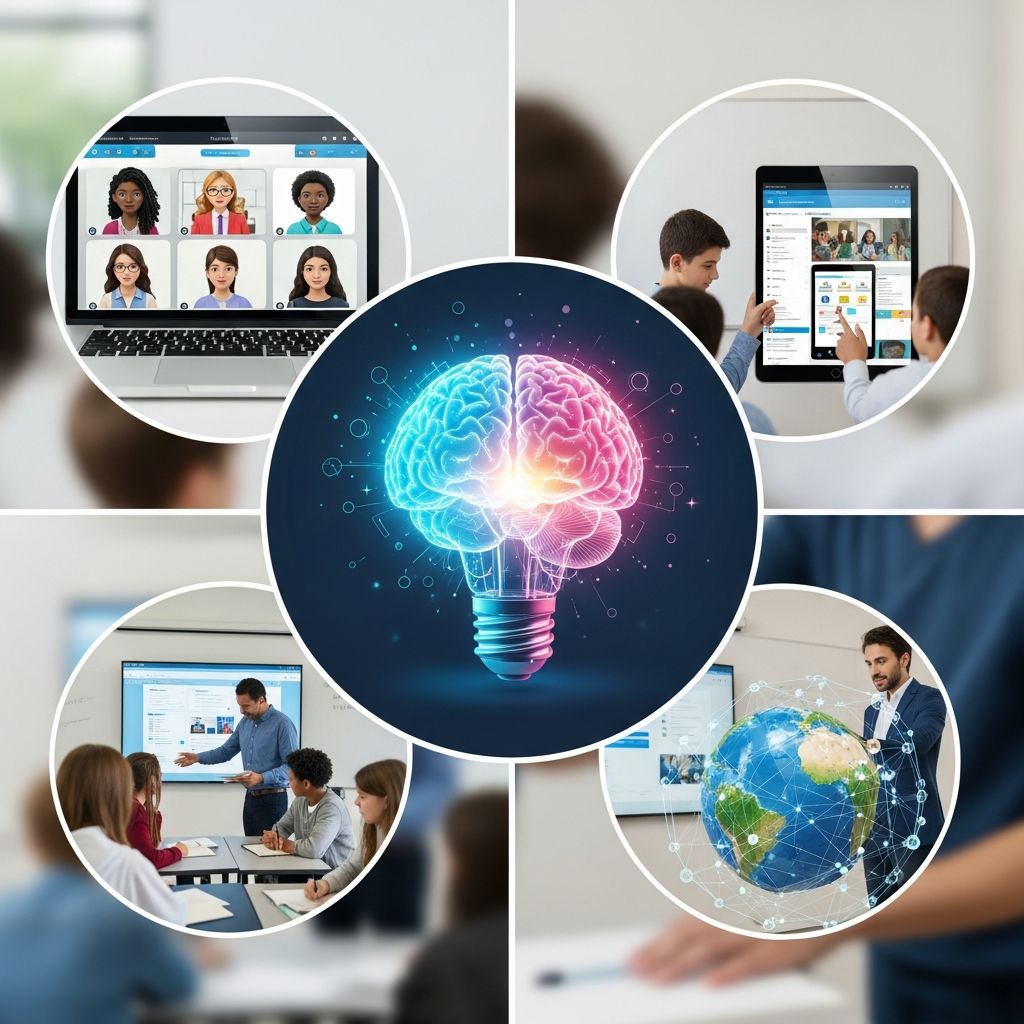
Online and blended learning models have emerged as powerful forces in reshaping how knowledge is delivered and absorbed worldwide. By merging digital tools with traditional methods, these approaches offer unprecedented flexibility, inclusivity, and efficiency, making high-quality education available to millions who were previously excluded.
Breaking Geographical and Socioeconomic Barriers
One of the most significant shifts brought by online and blended learning is the democratization of education. Learners in remote villages, busy urban professionals, or individuals with disabilities can now access Ivy League-level courses without leaving home. Asynchronous platforms allow study at convenient times, supporting diverse schedules from full-time workers to parents.
This inclusivity extends to multilingual content and adaptive technologies like screen readers and closed captions, ensuring no one is left behind due to language or physical limitations. For instance, rural students who once traveled hours for basic classes can now engage with interactive modules on their smartphones, bridging the urban-rural divide effectively.
Expanding Horizons with Diverse Course Offerings
Traditional schools often limit options to local faculty expertise, but digital platforms provide a vast library of subjects—from quantum physics to graphic design. Learners pursue niche skills like data analytics or sustainable agriculture, aligning education with real-world job markets.
Blended models enhance this by combining online variety with in-person depth, allowing schools to offer advanced placements without hiring specialists. Micro-credentials and stackable certifications enable quick upskilling, proving invaluable for career changers in fast-evolving industries.
Crafting Tailored Educational Journeys
Every student learns differently, yet conventional classrooms enforce a one-size-fits-all pace. Online tools use algorithms to analyze progress, recommending customized paths—more videos for visual learners or simulations for kinesthetics.
In blended settings, teachers receive real-time analytics to intervene precisely, accelerating gifted students or supporting those struggling. This personalization boosts retention and comprehension, as evidenced by higher satisfaction in hybrid programs at institutions like the University of Central Florida.
Fostering Global Connections and Teamwork
Far from isolating learners, digital platforms cultivate vibrant communities. Discussion forums, virtual breakout rooms, and collaborative projects connect students across continents, enriching perspectives with cultural diversity.
- Live webinars enable expert Q&A sessions with international speakers.
- VR simulations let teams explore historical sites or dissect virtual specimens together.
- Group assignments build cross-cultural communication skills essential for global careers.
Blended learning amplifies this by pairing online interactions with face-to-face bonding, creating well-rounded social experiences.
Harnessing AI for Smarter Instruction
Artificial intelligence is the backbone of modern edtech, powering chatbots that provide 24/7 tutoring and predictive analytics that flag at-risk students early. Automated grading frees educators for mentorship, while AI curates content to match emerging trends like green energy or cybersecurity.
In blended environments, AI integrates seamlessly: online quizzes inform in-class discussions, ensuring lessons are hyper-relevant. Future iterations promise even deeper personalization, adapting in real-time to emotional cues via sentiment analysis.
Championing Flexible Schedules for Lifelong Pursuit
Life doesn’t pause for education, and online-blended models accommodate this reality. Study during commutes, nights, or weekends—flexibility empowers adults to reskill without derailing careers or family life.
This shift promotes lifelong learning, with platforms offering bite-sized modules for continuous growth. Employers value this, as demonstrated by rising demand for certified professionals who adapt via digital credentials.
Cost Efficiency and Resource Optimization
Digital education slashes expenses on textbooks, travel, and infrastructure. Open educational resources (OER) provide free materials, while blended models optimize classroom use for hands-on activities, reducing overhead.
| Aspect | Traditional Learning | Online/Blended Learning |
|---|---|---|
| Cost per Student | High (facilities, books) | Low (digital access) |
| Scalability | Limited by space | Unlimited globally |
| Resource Access | Local library | Global databases |
Governments and institutions save billions, redirecting funds to innovation and equity initiatives.
Real-Time Insights Driving Better Outcomes
Instant feedback loops transform teaching. Adaptive quizzes pinpoint weaknesses immediately, allowing targeted remediation. Teachers shift from lecturers to facilitators, using data dashboards to refine curricula dynamically.
Research confirms blended formats outperform pure online or in-person alone, with meta-analyses showing superior learning gains due to this hybrid synergy.
Frequently Asked Questions (FAQs)
What is blended learning exactly?
Blended learning combines online digital media with traditional face-to-face instruction, optimizing both for engagement and flexibility.
Does online learning really improve academic results?
Yes, studies like the U.S. Department of Education’s 2010 meta-analysis show blended approaches yield stronger outcomes than purely onsite or online methods.
Is online education suitable for young children?
With proper supervision and interactive tools, it supports diverse learning styles and early tech proficiency, though blending with in-person is ideal.
How does AI enhance blended learning?
AI provides personalized recommendations, automates assessments, and enables predictive interventions for better student support.
What are the biggest challenges in adopting these models?
Digital divides and teacher training are hurdles, but scalable solutions like mobile-first platforms are addressing them rapidly.
Online and blended learning are not mere trends but foundational shifts equipping society for a knowledge-driven future. Their integration promises equitable, effective education for all.
References
- Blended Learning: 7 Steps to Success — KPCross Academy, University of Alabama. 2023. https://kpcrossacademy.ua.edu/blended-learning-7-steps-to-success/
- Evaluation of Evidence-Based Practices in Online Learning: A Meta-Analysis and Review of Online Learning Studies — U.S. Department of Education, Office of Planning, Evaluation, and Policy Development. 2010-05-01. https://www2.ed.gov/rschstat/eval/tech/evidence-based-practices/finalreport.pdf
- 7 Ways Online Learning Is Transforming Education in 2024 — Oregon State University Nexus Blog. 2024-12-13. https://blogs.oregonstate.edu/nexus/2024/12/13/7-ways-online-learning-is-transforming-education-in-2024/
- Blended Learning Research: The Seven Studies You Need to Know — Education Week. 2015-04-28. https://www.edweek.org/teaching-learning/blended-learning-research-the-seven-studies-you-need-to-know/2015/04
- Going the Distance: Why Online Learning Works — Harvard Extension School. 2023. https://extension.harvard.edu/blog/going-the-distance-why-online-learning-works/

Medha Deb is an editor with a master's degree in Applied Linguistics from the University of Hyderabad. She believes that her qualification has helped her develop a deep understanding of language and its application in various contexts. Medha specializes in the areas of beauty, health, sports, and wellness and is committed to ensuring that the content on the website is…