
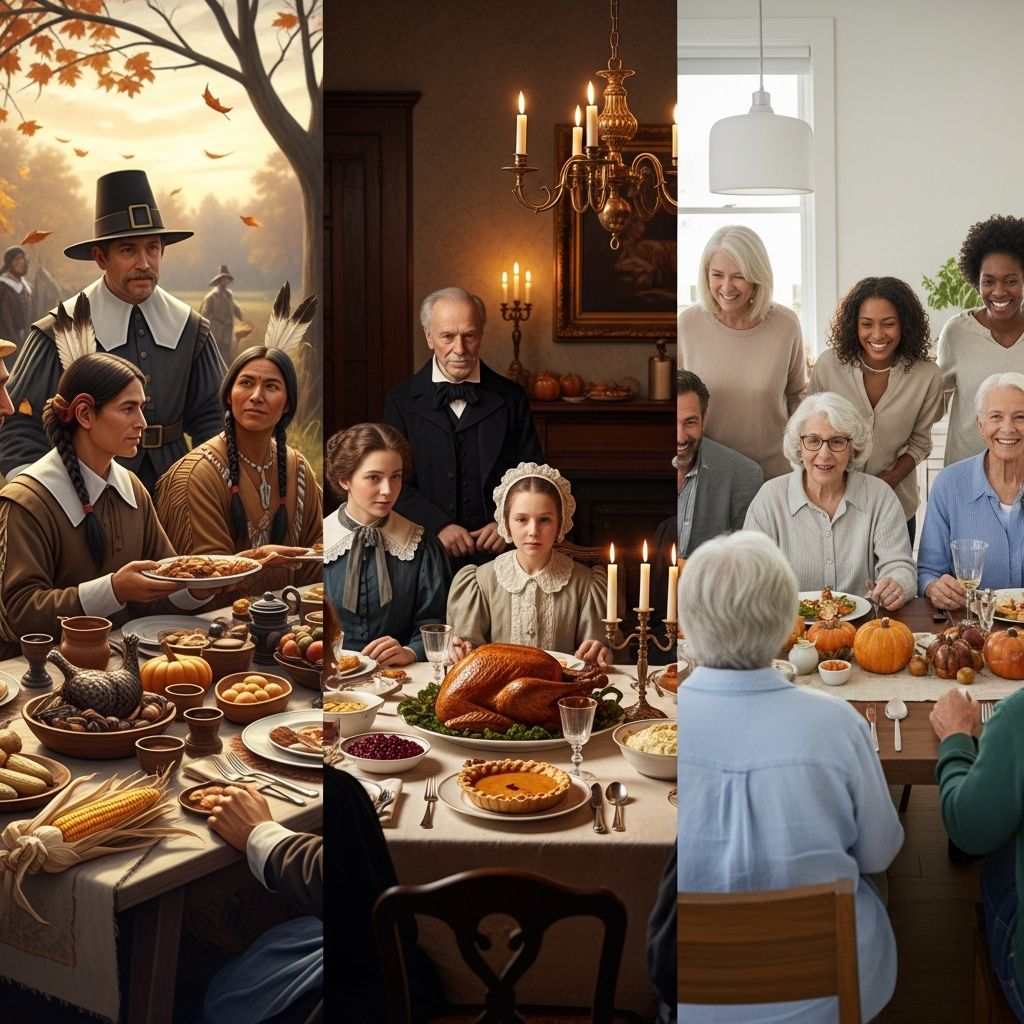
Thanksgiving in the United States traces its roots to early European settlers’ expressions of gratitude for survival and harvests, evolving from sporadic religious observances into a unified national holiday. This transformation reflects broader themes of resilience, community, and national identity.
Ancient and Indigenous Foundations of Gratitude
Expressions of thanks for bountiful harvests predate European arrival in the Americas by millennia. Native American tribes across North America held seasonal ceremonies to honor the land’s provisions, fostering communal bonds through feasting and rituals. These practices paralleled European traditions of harvest thanksgiving rooted in pagan festivals later Christianized.
In Europe, medieval Christians observed days of thanksgiving after successful crops or averted disasters, a custom carried by colonists to the New World. This shared cultural motif of gratitude underscores how Thanksgiving emerged from convergent traditions rather than a single event.
Earliest European Thanksgivings in North America
The first documented Thanksgiving-like service by Europeans occurred on May 27, 1578, when explorer Martin Frobisher’s expedition in Newfoundland (now Canada) gave thanks for safe passage. Spanish explorers in Florida held similar church services even earlier in the 16th century.
In what is now the U.S., British settlers at the Popham Colony in Maine conducted a service in 1607. Jamestown colonists in Virginia expressed thanks that same year for their arrival and again in 1610 after a supply ship arrived post-winter hardship. Berkeley Hundred settlers in Virginia formalized an annual day of thanks per their charter, though interrupted by conflict.
- 1578: Frobisher’s Newfoundland service marks the earliest recorded in North America.
- 1607: Popham Colony (Maine) and Jamestown (Virginia) hold thanksgivings.
- 1610: Jamestown relief after starvation winter.
These events demonstrate that Pilgrim gatherings were not isolated but part of a pattern among early colonists.
The 1621 Plymouth Gathering: Fact vs. Legend
Often romanticized as the ‘First Thanksgiving,’ the 1621 event at Plymouth Colony involved English Pilgrims and Wampanoag people sharing a harvest feast. After a brutal 1620 winter that claimed nearly half of the 102 arrivals, survivors— aided by Native Americans like Squanto—planted corn and reaped a successful crop.
Governor William Bradford proclaimed days of prayer and feasting, inviting Massasoit and about 90 of his warriors. Edward Winslow’s account notes 90 Native attendees outnumbering the 52 colonists, with activities including games and military displays. No turkey or pumpkin pie is mentioned; the menu likely featured venison, fowl, corn, and fish.
| Common Myth | Historical Reality |
|---|---|
| Pilgrims and ‘friendly Indians’ in harmonious feast. | Tense alliance post-plague that decimated Wampanoag; no formal invitation to Natives. |
| Three-day religious event with prayer. | Multi-day gathering with feasting, recreation; religious aspects separate. |
| Turkey central; modern foods featured. | Wild fowl, deer, seafood; no evidence of turkey dominance. |
This event symbolized survival amid adversity but was one of many such observances.
Colonial Era: Localized Harvest Celebrations
Throughout the 17th and 18th centuries, New England colonies regularly proclaimed thanksgiving days for harvests, victories, or relief from calamities. By the 1660s, autumn harvest thanksgivings became routine in Puritan communities, distinct from weekly Sabbath worship.
In 1623, Plymouth Pilgrims held a pivotal thanksgiving after drought-ending rains and arriving supplies, blending prayer and social festivity—earmarks of the modern holiday. Post-Revolution, states independently set thanksgiving dates, reflecting regional customs.
Path to National Holiday: 19th Century Push
Momentum for a unified observance grew in 1789 when Representative Elias Boudinot proposed a thanksgiving for the new Constitution. During the Civil War, amid division, President Abraham Lincoln proclaimed Thanksgiving on October 3, 1863, as the last Thursday in November to foster unity.
Lincoln’s proclamation urged gratitude despite war, aiming to heal North-South rifts and improve U.S.-tribal relations post-Dakota conflicts. Sarah Josepha Hale’s 17-year advocacy via letters and her magazine Godey’s Lady’s Book influenced this decision.
20th Century Standardization and Changes
Franklin D. Roosevelt shifted it to the fourth Thursday in 1939 for economic boost via extended shopping, causing controversy—29 states followed the old date. Congress resolved it in 1941, standardizing the fourth Thursday.
Canada’s Thanksgiving, second Monday in October since 1957, stems from 1578 Frobisher event and 1879 parliamentary action.
Cultural Shifts and Modern Observances
Thanksgiving evolved from solemn prayer to family-centered feasting with turkey, stuffing, pie, and football. Parades like Macy’s (1924 debut) and National Dog Show add spectacle. Travel surges, with millions driving or flying.
- Turkeys pardoned by presidents since 1947 (Truman era).
- Football games date to 1934 Detroit Lions tradition.
- Black Friday shopping frenzy post-1950s.
Contemporary critiques highlight Native perspectives, noting colonial impacts like land loss and the 1862 Dakota executions preceding Lincoln’s call.
Global Parallels and Unique American Twist
Harvest festivals worldwide echo Thanksgiving: Germany’s Erntedankfest, Korea’s Chuseok. U.S. version uniquely blends Puritan solemnity, frontier survival, and civic nationalism.
Frequently Asked Questions (FAQs)
Was the 1621 Plymouth feast the first Thanksgiving?
No, earlier services occurred in 1578 (Canada), 1607 (Maine/Virginia). Plymouth’s was influential but not inaugural.
Why did Lincoln make Thanksgiving national?
To promote unity during Civil War, responding to Hale’s campaign and post-1862 tensions.
What’s the menu of the original 1621 feast?
Likely venison, waterfowl, corn, fish, berries—no turkey confirmed.
How does U.S. Thanksgiving differ from Canada’s?
U.S.: Fourth Thursday November; Canada: Second Monday October, with earlier roots.
Are there Native American views on Thanksgiving?
Many see it as ‘National Day of Mourning’ due to colonial consequences.
Thanksgiving Traditions Timeline
| Year | Event |
|---|---|
| 1578 | Frobisher’s Newfoundland thanksgiving. |
| 1621 | Plymouth harvest feast. |
| 1623 | Plymouth rain/supply thanksgiving. |
| 1789 | Boudinot’s Constitution proposal. |
| 1863 | Lincoln’s national proclamation. |
| 1941 | Fourth Thursday fixed by Congress. |
References
- Thanksgiving: From Local Harvests to National Holiday — Smithsonian Institution. 2023. https://www.si.edu/spotlight/thanksgiving/history
- A Brief History of Thanksgiving — Around the World Festival. 2023. https://aroundtheworldfestival.com/blog-post/a-brief-history-of-thanksgiving/
- Thanksgiving Day | Meaning, History, & Facts — Encyclopædia Britannica. 2024-11-01. https://www.britannica.com/topic/Thanksgiving-Day
- The true, dark history of Thanksgiving — Citizen Potawatomi Nation. 2020-11-25. https://www.potawatomi.org/blog/2020/11/25/the-true-dark-history-of-thanksgiving/
- Thanksgiving (United States) — Wikipedia (sourced from primary refs). 2024. https://en.wikipedia.org/wiki/Thanksgiving_(United_States)
- What is the Real Story of Thanksgiving? — College of Charleston. 2024-11-21. https://today.charleston.edu/2024/11/21/what-is-the-real-story-of-thanksgiving/

- Integrated M.A. in Applied Linguistics, University of Hyderabad
- 5+ years in editorial, instructional, SEO, and research-based writing
Sneha is a relationships and lifestyle writer with a strong foundation in applied linguistics and certified training in relationship coaching. She brings over five years of writing experience to theskillvault, crafting thoughtful, research-driven content that empowers readers to build healthier relationships, boost emotional well-being, and embrace holistic living. Her writing and insights reflect the belief that beauty, happiness, and wellness…