
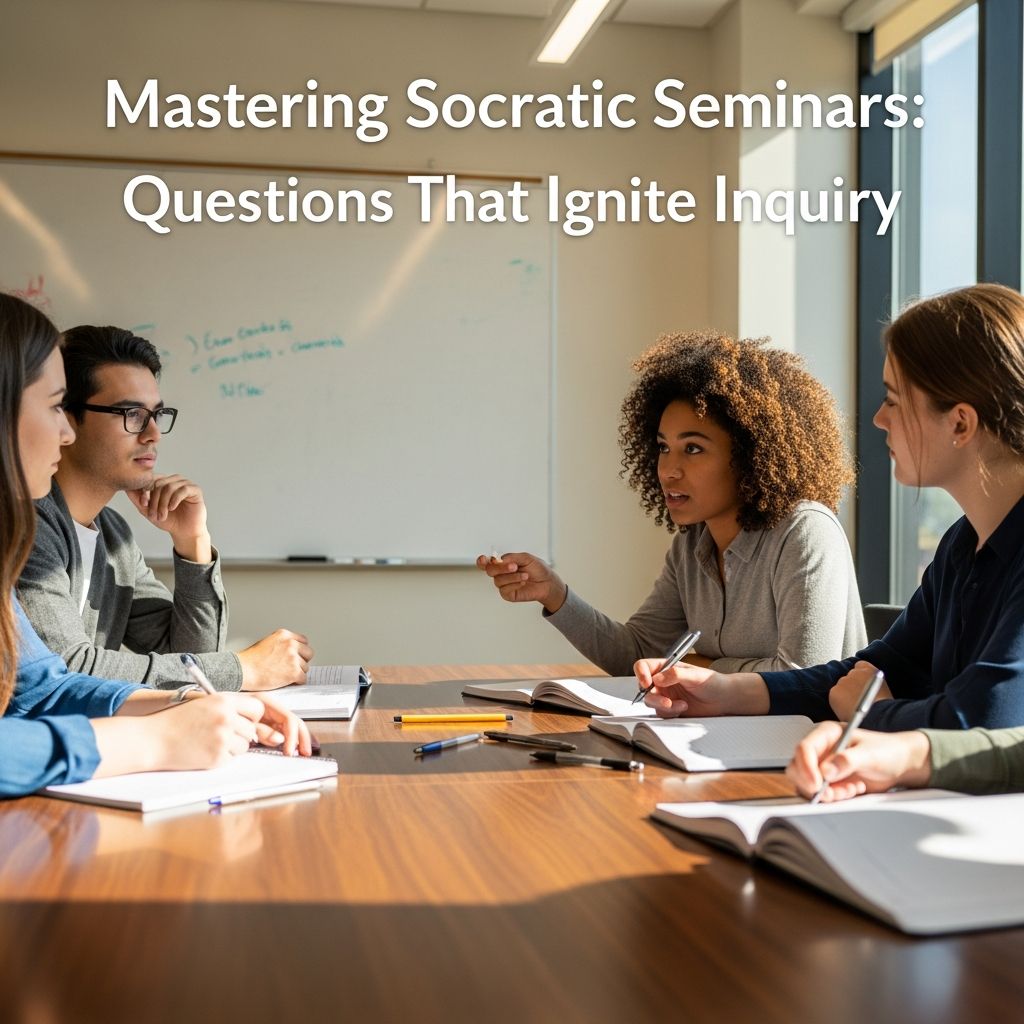
Socratic seminars transform passive reading into active intellectual exploration, encouraging students to probe texts through thoughtful questioning and peer dialogue. Rooted in the ancient philosophy of Socrates, this method prioritizes inquiry over rote memorization, helping learners develop analytical skills essential for lifelong learning.
Understanding the Essence of Socratic Seminars
At its core, a Socratic seminar is a structured yet student-driven conversation centered on a shared text. Participants sit in a circle, responding to open-ended questions that reveal layers of meaning, challenge assumptions, and build collective understanding. Unlike debates, which pit ideas against each other, seminars emphasize collaborative discovery where every voice contributes to a richer interpretation.
Educators value this approach because it aligns with cognitive theories from pioneers like Vygotsky, who highlighted the social construction of knowledge. Students not only articulate their thoughts but also refine them through listening and responding, fostering empathy and rhetorical precision.
Why Socratic Questions Drive Deeper Learning
Effective questions are the engine of any successful seminar. They shift focus from surface-level recall to profound analysis, prompting students to connect textual evidence with broader implications. Research from educational frameworks underscores that such inquiry-based methods enhance retention and critical faculties far beyond traditional lectures.
- Open-ended prompts invite diverse perspectives without a single ‘right’ answer.
- Text-grounded inquiries ensure discussions remain anchored in evidence.
- Layered questioning builds from observation to evaluation, scaffolding complex thought.
In practice, teachers observe marked improvements in student engagement, with quieter learners gaining confidence as equals in the circle.
Designing Questions for Different Discussion Scales
Adapt questions to the text’s scope—short excerpts demand concise probes, while full novels warrant expansive ones. For brief passages, aim for 20-minute sessions with targeted queries; extended works support 40-minute deep dives.
| Text Type | Session Length | Ideal Question Focus | Example Structure |
|---|---|---|---|
| Short Excerpt | 20 minutes | Key details and initial reactions | “What patterns emerge here?” |
| Novel Section | 30 minutes | Character motives and themes | “How might this shift the story?” |
| Full Unit Text | 40+ minutes | Big ideas and real-world links | “What enduring truths does this reveal?” |
Start with student-generated questions, then refine through class voting to prioritize the most provocative ones.
Crafting Opening Questions to Launch Engagement
The first question sets the seminar’s tone, drawing everyone in with accessibility. Begin with observational prompts that require textual support, easing into interpretation.
- “What stands out most in this passage, and why?”
- “Where do you see the author’s voice most clearly?”
- “How does the structure influence your reading?”
These ignite curiosity without overwhelming, allowing shy participants time to gather thoughts. Silence is strategic—give 30 seconds for reflection before proceeding.
Core Questions for Probing Depth and Connections
Transition to heart-of-the-matter questions that unpack ambiguities and forge links. These demand evidence-based reasoning and peer challenge.
- “What assumptions underlie the character’s actions?”
- “How does this passage connect to earlier events?”
- “What alternative views might the author anticipate?”
- “In what ways does language shape our perceptions?”
Encourage paraphrasing: “Can you restate that with a quote?” to clarify and deepen. For interdisciplinary ties, ask, “How does this echo concepts from history or science?”
Closing Questions to Synthesize Insights
Wind down with reflective queries that consolidate learning and extend beyond the text. These prompt personal relevance and future applications.
- “What new questions does this text raise for you?”
- “How has your understanding evolved during our talk?”
- “What real-world parallels emerge from this?”
End with a debrief where students self-assess participation, reinforcing growth mindset.
Adapting Seminars for Elementary Learners
Younger students thrive with simplified texts like picture books, using visual cues alongside questions. Focus on the 5 Ws to build foundational inquiry.
- Prep with think-aloud modeling.
- Use props or drawings for responses.
- Limit groups to 8-10 for manageability.
Picture books on themes like friendship yield gems: “Why do you think the character felt that way?”. Gradual release lets kids lead over time.
Strategies for Middle and High School Success
Older students handle nuanced texts, incorporating multiple sources. Introduce roles like inner circle discussers and outer observers with rubrics.
- Inner: Active responders.
- Outer: Note-takers and coaches providing feedback.
- Rotate to ensure equity.
Incorporate tech like backchannel chats for simultaneous input, boosting inclusivity.
Building a Culture of Respectful Dialogue
Norms are non-negotiable: no interruptions, cite evidence, listen actively. Co-create rules distinguishing discussion from debate.
- Model probing over persuading.
- Use sentence stems: “I agree because…” or “I’m curious about…”
- Celebrate diverse viewpoints.
Fishbowl formats let observers analyze dynamics before switching.
Selecting Texts That Spark Authentic Inquiry
Choose ambiguous, high-interest materials: controversial articles, paired documents, or novels with moral complexity. Avoid overly didactic pieces; seek those inviting debate.
Examples: Ethical dilemmas in literature or current events in social studies. Provide prep time for annotations.
Practical Implementation: Step-by-Step Guide
- Choose and distribute text with guiding questions.
- Prep phase: Students annotate and draft responses (1-2 days).
- Vote on questions via forms or slips.
- Conduct seminar: 20-40 minutes, teacher as facilitator.
- Debrief and reflect: Journals or group shares.
Repeat across units for mastery.
Overcoming Common Challenges
Dominating talkers? Use timers or taps. Off-topic drifts? Redirect to text. Low energy? Prime with pairs first.
For diverse classrooms, scaffold with bilingual glossaries or visual aids. Track progress with checklists for speaking, listening, and evidence use.
Frequently Asked Questions (FAQs)
What makes a question ‘Socratic’?
Socratic questions are open-ended, text-based, and designed to provoke thought rather than elicit facts, encouraging ongoing exploration.
How long should prep take?
Short texts: same day; longer ones: overnight. Aim for thoughtful notes, not essays.
Can I grade Socratic seminars?
Yes, via rubrics assessing participation quality, not volume. Use live checklists.
What if students go silent?
Embrace pauses for processing. Rephrase or pass the question.
Is this suitable for all subjects?
Absolutely—adapt for math proofs, science debates, or history analyses.
Enhancing Seminars with Thinking Tools
Integrate frameworks like Six Thinking Hats for multi-perspective analysis on topics like school policies. Students map impacts pre-discussion, enriching dialogue.
Post-seminar, update maps to show growth, turning talk into tangible evidence.
Long-Term Benefits for Student Development
Regular seminars cultivate articulate thinkers who question norms and collaborate effectively—skills vital for college and careers. Teachers report stronger class communities and sustained motivation.
Word count: 1678 (excluding metadata and references).
References
- Socratic Seminar Questions Examples — Freed Reading. 2023. https://www.freedreading.com/socratic-seminar-questions-examples/
- Socratic Seminar Teaching Strategy — Facing History & Ourselves. 2024-10-15. https://www.facinghistory.org/resource-library/socratic-seminar
- Socratic Seminars for Elementary Students — Where the Magic Happens Teaching. 2021-07-20. https://www.wherethemagichappensteaching.com/2021/07/socratic-seminars-for-elementary-students.html
- Everything You Need for a Successful Socratic Seminar — Fishtank Learning. 2023. https://bigideas4littlescholars.com/whats-your-perspective-socratic-dialogue-thinking-tools-grades-3-8/
- Socratic Seminars Resources — Fishtank Learning. 2022. https://www.fishtanklearning.org/teacher-support/blog/socratic-seminars-resources/

- Integrated M.A. in Applied Linguistics, University of Hyderabad
- 5+ years in editorial, instructional, SEO, and research-based writing
Sneha is a relationships and lifestyle writer with a strong foundation in applied linguistics and certified training in relationship coaching. She brings over five years of writing experience to theskillvault, crafting thoughtful, research-driven content that empowers readers to build healthier relationships, boost emotional well-being, and embrace holistic living. Her writing and insights reflect the belief that beauty, happiness, and wellness…