
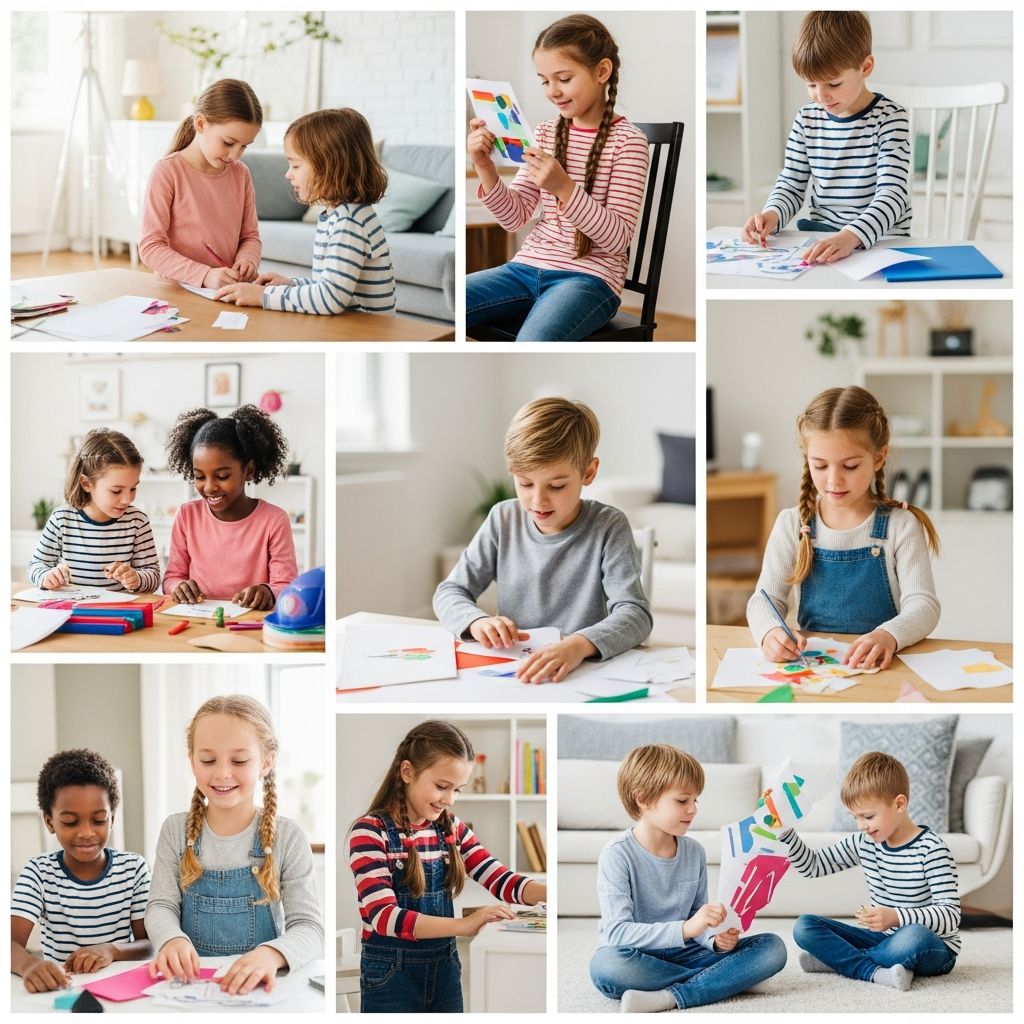
Keeping children engaged without screens, paper, or specialized tools can feel challenging, especially during rainy days or busy afternoons. Fortunately, your home is full of treasures waiting to be transformed into playgrounds of discovery. These 10 activities harness everyday objects like cushions, socks, and kitchen utensils to foster physical development, imaginative play, and cognitive growth. Designed for kids aged 3-10, they require minimal setup and cleanup, making them ideal for parents juggling work or chores. Let’s dive into creative ways to turn ordinary items into extraordinary adventures.
Why Household Items Spark the Best Play
Research from child development experts highlights how unstructured play with familiar objects enhances problem-solving and fine motor skills. Unlike store-bought toys, household items encourage improvisation, helping children adapt and innovate. Activities like these also promote sensory exploration—touching textures, balancing shapes, and hearing sounds—which builds neural connections vital for learning. Parents report reduced screen time and increased family interaction when incorporating such play, creating joyful memories without added expense.
Activity 1: Cushion Kingdom Challenge
Transform living room furniture into a royal realm. Stack cushions, blankets, and chairs to build towering castles or secret hideouts. Challenge kids to navigate as knights or explorers, leaping over ‘moats’ made from rolled towels. This builds gross motor skills and spatial awareness as they plan layouts and test stability.
- Items needed: Cushions, blankets, chairs, towels.
- Duration: 20-40 minutes.
- Age range: 4+ (younger with supervision).
- Benefits: Improves balance, teamwork if playing with siblings.
Extend the fun by adding a ‘quest’: retrieve a toy from the top without toppling the structure. Variations include timed builds for older kids.
Activity 2: Sock Puppet Theater
Grab mismatched socks and turn them into lively characters. Stuff toes with tissue or rice for heads, use buttons or yarn scraps for eyes (if available), and perform impromptu shows on a couch stage. No crafting table needed—just hands and imagination fuel storytelling.
- Items needed: Old socks, fabric scraps, rice or tissue.
- Duration: 15-30 minutes.
- Age range: 3+.
- Benefits: Enhances language skills and emotional expression.
Kids can invent dialogues about daily adventures, practicing empathy through character voices. Record performances on a phone for playback giggles.
Activity 3: Balloon Balance Relay
Balloons aren’t just for parties—use them for airborne challenges. Inflate one per child and task them with keeping it aloft using taps, knees, or heads while racing across the room. No floor touches allowed!
- Items needed: Balloons (leftover from events).
- Duration: 10-20 minutes.
- Age range: 5+.
- Benefits: Boosts hand-eye coordination and endurance.
For groups, form teams batting balloons over imaginary lines. Deflate and reuse for multiple rounds.
Activity 4: Kitchen Utensil Symphony
Orchestrate a home band with pots, pans, spoons, and lids. Assign instruments: wooden spoons as drumsticks, colanders as cymbals. Compose rhythms mimicking rain or marches, following a leader’s cues.
- Items needed: Pots, pans, spoons, lids.
- Duration: 15-25 minutes.
- Age range: 3+.
- Benefits: Develops auditory discrimination and rhythm sense.
Quiet versions use pillows as muffled drums for apartments. End with a ‘concert’ for family applause.
Activity 5: Towel Obstacle Dash
Lay towels flat as ‘stepping stones’ across the floor, or drape them as tunnels and swings from doorways. Kids dash through, avoiding ‘lava’ carpets, timing their speed.
- Items needed: Towels, chairs for anchors.
- Duration: 20-30 minutes.
- Age range: 4+.
- Benefits: Strengthens agility and quick thinking.
Add commands like ‘crawl under’ or ‘jump high’ for variety, adapting to space constraints.
Comparing Activity Types for Quick Selection
| Activity Type | Energizes Body | Sparks Imagination | Best For Ages | Setup Time |
|---|---|---|---|---|
| Cushion Builds | High | High | 4-8 | 2 min |
| Sock Puppets | Low | Very High | 3-7 | 1 min |
| Balloon Games | High | Medium | 5-10 | 1 min |
| Utensil Music | Medium | High | 3-9 | 0 min |
| Towel Courses | Very High | Medium | 4-10 | 3 min |
Activity 6: Spoon-and-Ball Transfer
Line up plastic spoons and ping-pong balls (or crumpled foil). Challenge kids to carry balls across the room mouth-free, balancing on spoons. Race or build towers with transferred items.
- Items needed: Spoons, small balls/foil.
- Duration: 10-15 minutes.
- Age range: 5+.
- Benefits: Fine motor precision and focus.
Activity 7: Shadow Tag Showdown
In a dimly lit room, use a flashlight to cast shadows. Players tag each other’s silhouettes on walls, dodging beams. Outdoors at dusk, use sun shadows for giant pursuits.
- Items needed: Flashlight (phone works).
- Duration: 15-25 minutes.
- Age range: 6+.
- Benefits: Visual tracking and strategy.
Activity 8: Jar Sensory Shakers
Fill empty jars or bottles with rice, beans, buttons—seal tightly. Shake to create maracas, sort by sound, or use in dance freezes.
- Items needed: Jars, dry goods, tape for seals.
- Duration: 20 minutes.
- Age range: 3+.
- Benefits: Sensory integration and pattern recognition.
Activity 9: Chair Limbo Dance-Off
Lower a broomstick between chairs as a limbo bar. Kids bend backward under it to music from a phone, competing for lowest passes.
- Items needed: Chairs, broomstick.
- Duration: 10-20 minutes.
- Age range: 5+.
- Benefits: Flexibility and social fun.
Activity 10: Pillowcase Parachute Play
Hold open a large pillowcase or sheet corners. Drop lightweight toys inside and watch them ‘parachute’ down, predicting landings.
- Items needed: Pillowcases/sheets, small toys.
- Duration: 15 minutes.
- Age range: 4+.
- Benefits: Physics concepts through observation.
Tips for Endless Adaptations
Rotate activities weekly to maintain excitement. For toddlers, simplify (e.g., just stacking); for tweens, add rules like blindfolds. Supervise small parts, and clean as you go. These games align with guidelines from educational bodies promoting active play for healthy development.
Frequently Asked Questions (FAQs)
What if I lack some items?
Substitute freely: foil for balls, scarves for towels. The goal is improvisation.
Are these safe for indoors?
Yes, clear spaces and supervise jumps. Most are low-impact.
How do they help learning?
They target motor skills, creativity, and social-emotional growth per child experts.
Can solo kids play?
Absolutely—self-challenges like timed relays work great.
Extend for longer sessions?
Combine, e.g., build forts then host puppet shows inside.
References
- 67 Screen-Free Activities for Kids — Techno Sapiens. 2023-05-15. https://technosapiens.substack.com/p/67-screen-free-activities-for-kids
- Easy Activities for Kids: No Fancy Supplies Needed — The Inspired Treehouse. 2022-11-10. https://theinspiredtreehouse.com/easy-activities-for-kids-no-fancy-supplies-needed/
- 75 DIY Kids Games and Activities for Indoors or Outdoors — Fitness by the Sea. 2024-03-20. https://fitnessbythesea.com/educational-and-stem-activities/75-diy-kids-games-and-activities-for-indoors-or-outdoors/
- Fun, Engaging Activities to Keep Children Busy at Home — UC Merced Early Childhood Education Center (.edu). 2023-08-01. https://ecec.ucmerced.edu/activities
- 16 Activities for Kids Using Household Items — Connected Kids. 2023-01-12. https://www.connectedkids.org/post/16-activities-for-kids-using-household-items
- 50 Independent Activities Children Can Do at Home — Waterford.org (.org educational resource). 2024-06-05. https://www.waterford.org/resources/independent-activities-for-kids/

Medha Deb is an editor with a master's degree in Applied Linguistics from the University of Hyderabad. She believes that her qualification has helped her develop a deep understanding of language and its application in various contexts. Medha specializes in the areas of beauty, health, sports, and wellness and is committed to ensuring that the content on the website is…