
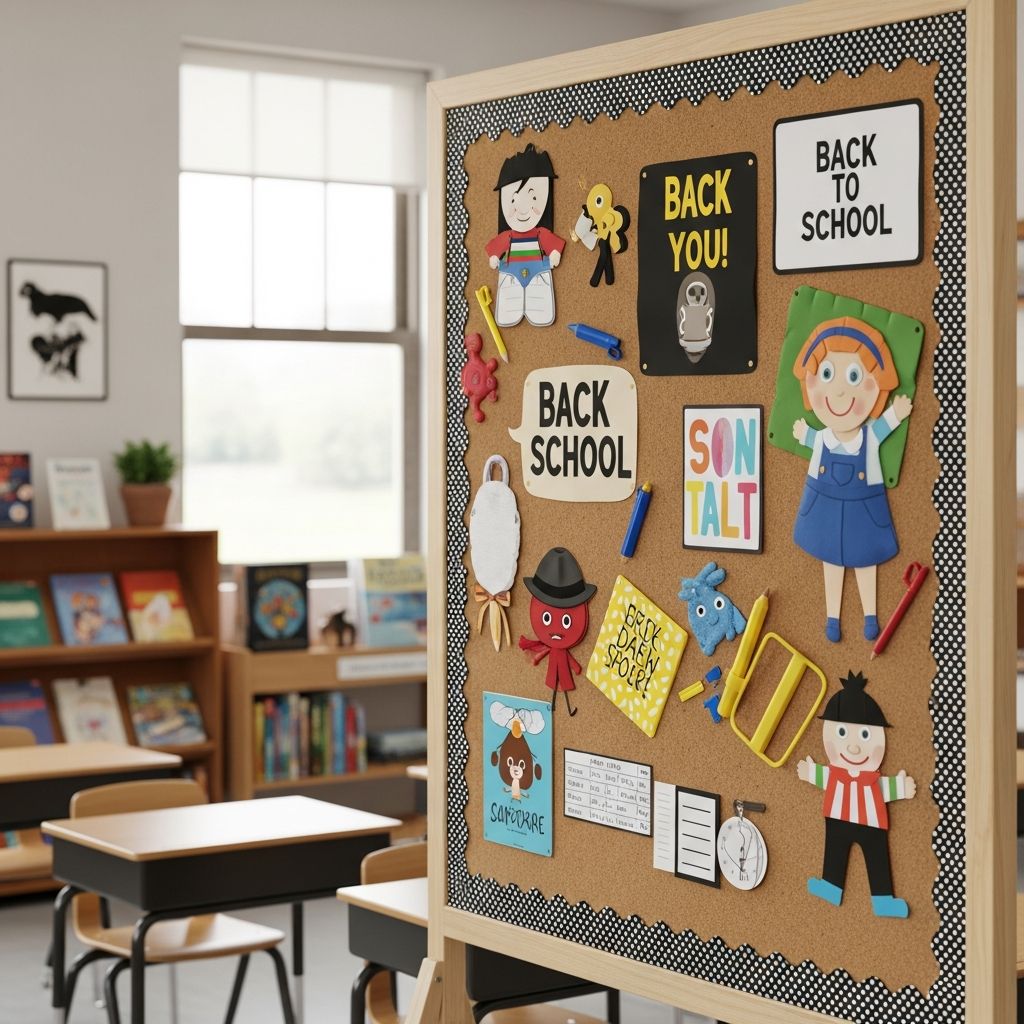
Transforming classroom walls into dynamic canvases at the start of the school year can profoundly influence student morale and engagement. Bulletin boards serve as more than mere decorations; they act as visual anchors that communicate expectations, celebrate individuality, and ignite curiosity. As educators prepare for the 2026 academic session, selecting themes that resonate with diverse age groups ensures every learner feels included and excited. This guide explores a variety of inventive designs, from interactive puzzles to thematic landscapes, all crafted to maximize impact with minimal effort.
Why Bulletin Boards Matter in Classroom Setup
Bulletin boards are pivotal in establishing classroom culture. Research from the National Education Association highlights how visually stimulating environments enhance student focus and retention by up to 20%. They provide opportunities for personalization, allowing students to contribute from day one, which builds ownership and community. Moreover, these displays evolve throughout the year, tracking progress and milestones. For back-to-school setups, prioritize durability with materials like foam board or fabric backing to withstand daily interactions.
Consider the psychological benefits: vibrant colors boost mood, while thematic relevance ties into curriculum goals. Elementary teachers might opt for playful motifs, whereas middle school boards could incorporate motivational quotes or goal-setting charts. Budget-friendly supplies—construction paper, markers, and die-cut letters—keep projects accessible. Always align designs with school branding for cohesion across hallways.
Interactive Welcome Displays for First Impressions
Capturing attention immediately sets the tone. Interactive elements encourage participation, turning passive viewers into active contributors.
- Puzzle Piece Portraits: Distribute oversized puzzle pieces pre-cut from cardstock. Students decorate with self-portraits, favorite hobbies, or goals, then assemble into a complete image labeled “Our Class Puzzle: Stronger Together.” This fosters teamwork and reveals personalities gradually.
- Photo Frame Gallery: Frame printed student photos (with parental consent) in DIY frames made from popsicle sticks. Add captions like “Ready to Shine!” for a personalized touch that reassures newcomers.
- Goal-Setting Envelopes: Pin envelopes shaped like stars or books. Students slip in written goals, “revealing” them weekly to track aspirations publicly.
These setups not only decorate but also facilitate icebreakers during orientation. According to a study by the American Psychological Association, such personal involvement reduces first-week anxiety by promoting belonging.
Themed Adventures: Nature and Growth Motifs
Nature-inspired boards evoke growth and resilience, mirroring the learning journey. They suit all grades and require simple greenery accents.
| Theme | Key Elements | Message | Materials |
|---|---|---|---|
| Garden Bloom | Felt flowers, student leaf cutouts | “Blossoming into Greatness” | Green paper, pipe cleaners |
| Forest Path | Tree silhouettes, animal footprints | “Branch Out and Learn” | Brown craft paper, stickers |
| Ocean Voyage | Wave borders, fish templates | “Dive into Discovery” | Blue tissue paper, foil |
Enhance with real plants or LED string lights for dimension. For younger learners, incorporate sensory textures like cotton ball clouds. These designs subtly reinforce STEM concepts, such as plant life cycles, aligning with early curriculum standards from the U.S. Department of Education.
Supercharged Themes: Heroes and Space Explorers
Tap into children’s imaginations with high-energy superhero or cosmic adventures. These resonate especially with elementary and middle schoolers.
- Superhero Squad: Craft capes from fabric scraps, emblazoned with student names and powers (e.g., “Math Master”). Assemble around a city skyline backdrop proclaiming “Heroes Assemble for Learning!”
- Galactic Launch: Use black paper as space, dotted with star stickers and rocket ships. Personalize planets with faces and taglines like “Orbiting Success.”
- Animal Allies: Feature empowering animals—eagles for vision, bees for teamwork—with puns such as “Bee-lieve in Yourself.”
Such boards energize hallways, drawing compliments from peers and parents. They also segue into lessons on perseverance, echoing themes in child development research from Harvard’s Graduate School of Education.
Academic-Focused Boards for Skill-Building
Beyond aesthetics, integrate learning tools. These multifunctional displays support daily routines.
- Number Spotlight: Daily feature a new number with facts: primes, multiples, or real-world ties. Students add sticky notes with examples.
- Word Quest: Giant word search or crossword with back-to-school vocabulary. Rotate clues weekly to build literacy.
- Reading Rainbow: Arcs of book covers with reviews; students vote on favorites via clothespins.
These promote consistent practice, vital as per Common Core standards emphasizing interactive math and language arts. Track engagement by noting participation spikes post-installation.
Seasonal and Evolving Designs
Design for longevity by planning rotations. Start with welcomes, transition to monthly themes.
For fall: Hot air balloons symbolizing “Soaring to New Heights,” with student-tied strings. Winter: Snowflake goals melting into achievements. Spring: Butterfly transformations tracking progress. Use magnetic strips for easy swaps, minimizing waste.
Incorporate multicultural elements, like global welcome phrases, to celebrate diversity as recommended by the U.S. Department of Education’s equity guidelines. Digital twists—QR codes linking to class playlists—modernize static boards.
Practical Tips for Effortless Execution
Streamline creation with these strategies:
- Prep templates digitally via tools like Canva for uniform cuts.
- Recruit parent volunteers for assembly nights.
- Stock a “board bin” with borders, letters, and fasteners.
- Photograph progress for portfolios or newsletters.
Time investment: 2-4 hours per board. Cost: Under $50 using bulk supplies from office stores. Safety note: Secure pins away from young reach.
Frequently Asked Questions (FAQs)
What are the best materials for durable bulletin boards?
Use fabric-wrapped backing, hot glue for elements, and brass tacks for longevity. Avoid tape that yellows.
How can I involve students without chaos?
Assign small groups tasks over days, providing pre-cut shapes to focus on creativity.
Are digital elements allowed on physical boards?
Yes, QR codes enhance interactivity, linking to videos or surveys.
How often should I change the design?
Monthly for freshness, tying to units or holidays.
Ideas for inclusive designs?
Incorporate braille labels, varied skin tones, and multilingual text.
These FAQs address common hurdles, ensuring smooth implementation.
Measuring Success and Iteration
Gauge impact via student feedback surveys or photo logs. High fives in hallways or photo requests signal wins. Iterate based on input—swap faded elements promptly. Over time, boards become collaborative class legacies, imprinting positive memories.
In summary, thoughtful bulletin boards bridge aesthetics and academics, propelling 2026’s school year forward with enthusiasm. Experiment boldly; the results inspire lasting connections.
References
- Improving Student Outcomes Through Classroom Environment Design — National Education Association. 2024-09-15. https://www.nea.org/professional-excellence/student-engagement/tools-tips/classroom-environment
- Belonging in Schools: Fostering Psychological Safety — American Psychological Association. 2023-11-20. https://www.apa.org/education-career/k12/belonging
- Classroom Design Guidelines for Equity — U.S. Department of Education. 2025-02-10. https://www.ed.gov/policy/early-learning-classrooms
- Play and Imagination in Learning — Harvard Graduate School of Education. 2024-05-05. https://www.gse.harvard.edu/ideas/usable-knowledge/24/05/play-imagination-learning
- Common Core State Standards Initiative — National Governors Association. 2024-08-01. http://www.corestandards.org/

Medha Deb is an editor with a master's degree in Applied Linguistics from the University of Hyderabad. She believes that her qualification has helped her develop a deep understanding of language and its application in various contexts. Medha specializes in the areas of beauty, health, sports, and wellness and is committed to ensuring that the content on the website is…