
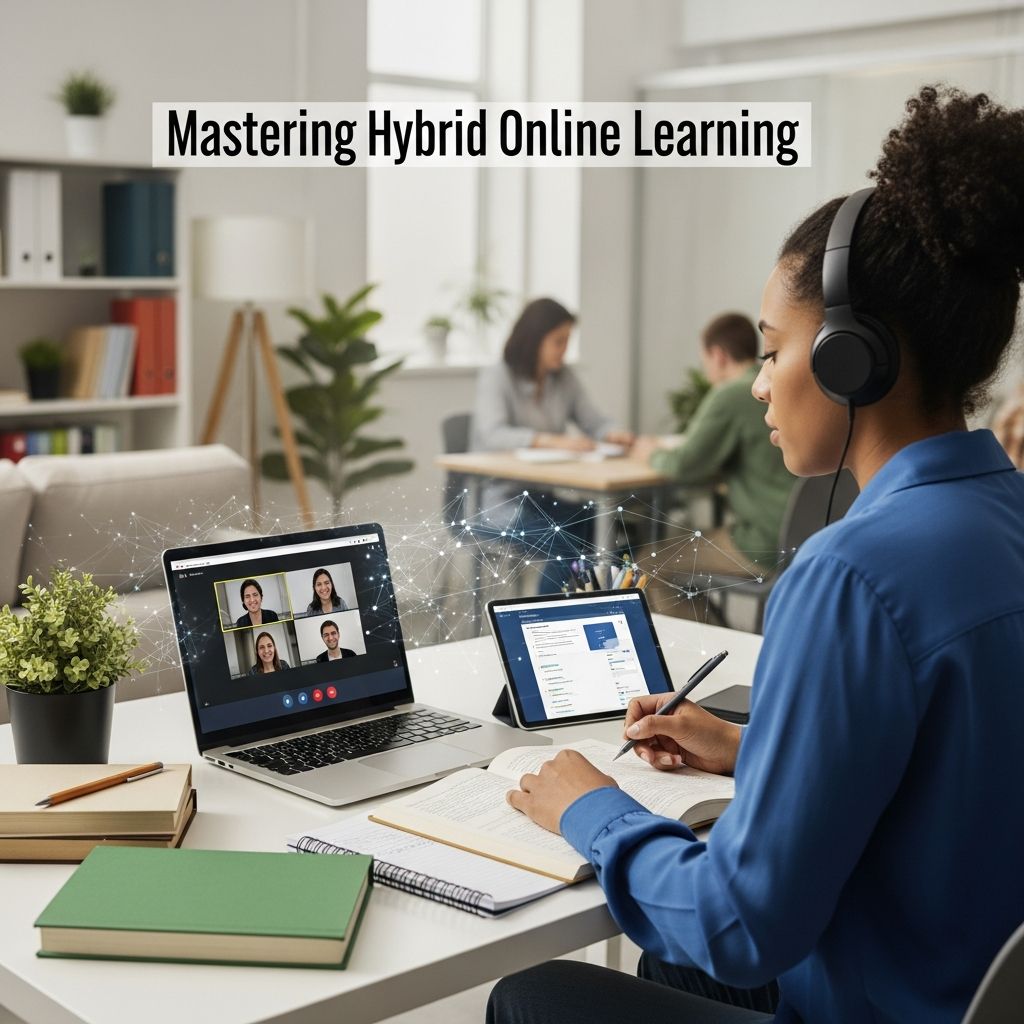
Hybrid online learning combines the strengths of real-time collaboration and flexible self-study to create engaging educational experiences. This approach allows educators to meet diverse student needs while maintaining academic rigor in virtual settings.
Understanding Core Learning Modalities
Online education relies on two primary modalities: synchronous and asynchronous learning. **Synchronous learning** involves live interactions where students and instructors engage simultaneously through video calls, chats, or virtual classrooms. This method mirrors traditional classrooms by enabling immediate feedback and group dynamics.
**Asynchronous learning**, conversely, provides materials like recorded videos, discussion forums, and assignments that students access on their own schedule. This flexibility accommodates varying time zones, personal commitments, and learning paces.
Key Advantages of Each Approach
Each modality offers unique benefits that, when combined, optimize learning outcomes.
Benefits of Synchronous Sessions
- Real-Time Interaction: Students receive instant clarification on concepts, fostering deeper understanding during live discussions.
- Community Building: Scheduled meetings cultivate relationships among peers and instructors, reducing isolation in remote environments.
- Structured Guidance: Ideal for complex topics requiring hands-on supervision or equipment access.
Benefits of Asynchronous Activities
- Flexibility: Learners study anytime, anywhere, balancing education with work or family obligations.
- Deep Processing: Time for reflection, multiple reviews of materials, and self-assessment enhances retention.
- Inclusivity: Supports diverse learners, including those in different time zones or with accessibility needs.
Challenges and Mitigation Strategies
While powerful, each method has drawbacks that hybrid models address.
| Modality | Common Challenges | Mitigation Strategies |
|---|---|---|
| Synchronous | Time zone conflicts, ‘Zoom fatigue’, scheduling rigidity | Record sessions for later viewing, limit session length to 50 minutes, rotate time slots |
| Asynchronous | Student isolation, procrastination, lack of accountability | Regular check-ins via forums, clear deadlines with progress trackers, peer review activities |
Designing an Effective Hybrid Framework
Successful hybrid courses align activities with learning objectives. Begin by mapping course goals: use synchronous time for application and discussion, reserving asynchronous for content delivery and preparation.
Weekly Structure Example:
- Monday: Asynchronous video lecture and readings (prepare for live session).
- Wednesday: Synchronous problem-solving workshop (apply concepts).
- Friday: Asynchronous reflection forum and quiz (extend learning).
This rhythm builds anticipation, practice, and consolidation, keeping students engaged throughout the week.
Practical Tools and Technologies
Leverage digital platforms to seamless integrate modalities.
- LMS Platforms: Canvas, Moodle, or Brightspace for housing asynchronous content and tracking progress.
- Video Conferencing: Zoom or Microsoft Teams for interactive synchronous sessions with breakout rooms.
- Collaboration Tools: Discussion boards, Padlet for asynchronous peer interactions; polls in live sessions for quick feedback.
Ensure accessibility by providing captions, transcripts, and mobile-friendly formats to support all learners.
Student-Centered Implementation Tips
Tailor your balance to audience needs. First-year students often benefit from more synchronous support for transition, while advanced learners thrive with asynchronous independence.
- Assess Needs: Survey students on preferences and constraints early in the term.
- Set Clear Expectations: Use checklists and ‘look-ahead’ announcements to outline weekly tasks.
- Monitor Engagement: Analytics in LMS track participation; follow up with personalized feedback.
- Iterate Based on Feedback: Mid-term surveys allow adjustments for better fit.
Case Studies: Real-World Success
Institutions worldwide have refined hybrid models effectively. At the University of Guelph, instructors freed synchronous time for active learning by delivering content asynchronously, boosting student problem-solving skills.
The Academy at Method Schools adopted a hybrid approach, preventing overload from excessive live sessions while maintaining community through targeted interactions.
Measuring Success in Hybrid Environments
Evaluate effectiveness through multiple metrics:
- Completion rates and grades.
- Engagement data from forums and attendance.
- Student satisfaction surveys.
- Instructor reflections on session productivity.
Hybrid models often yield higher retention when flexibility meets structure.
Frequently Asked Questions (FAQs)
What is the ideal ratio of synchronous to asynchronous time?
No universal ratio exists; it depends on course goals and students. Start with 40% synchronous for interaction and 60% asynchronous for flexibility, then adjust.
How do I prevent student disengagement in asynchronous work?
Incorporate interactive elements like video responses, peer reviews, and gamified quizzes with deadlines to build accountability.
Is hybrid learning suitable for all subjects?
Yes, but adapt: use synchronous for labs/discussions, asynchronous for theory readings. Even hands-on courses benefit from recorded demos.
What if students miss synchronous sessions?
Always record and post materials. Use asynchronous make-up activities like summary reflections to ensure no one falls behind.
How does hybrid learning impact student mental health?
It reduces fatigue from constant live classes while synchronous elements combat isolation, promoting better well-being when balanced thoughtfully.
Future Trends in Hybrid Education
Advancements like AI-driven personalization and VR for immersive synchronous experiences promise to enhance hybrids further. Adaptive platforms will auto-adjust content delivery based on learner progress, making education more equitable.
Instructors who master this balance not only improve outcomes but also prepare students for lifelong learning in a digital world.
References
- Balancing Synchronous and Asynchronous Teaching: Effective Strategies — University of Guelph, Office of Teaching and Learning. 2020. https://otl.uoguelph.ca/remote-teaching-strategies/balancing-synchronous-and-asynchronous-teaching-effective-strategies
- Exploring Asynchronous and Synchronous Online Courses — Branches Learning. 2023. https://brancheslearning.org/balancing-virtual-learning-exploring-asynchronous-and-synchronous-online-courses/
- Balancing Asynchronous and Synchronous Learning: The Academy at Method Schools Approach — Method Schools. 2022. https://www.methodschools.org/blog/balancing-asynchronous-and-synchronous-learning-the-academy-at-method-schools-approach
- Balancing the Synchronous and Asynchronous Parts of Your Course — Wilfrid Laurier University Research Centres. 2021. https://researchcentres.wlu.ca/teaching-and-learning/building/balancing-synchronous-and-asynchronous-content.html
- Synchronous vs. Asynchronous Learning: Strategies for Remote Environments — UCLA SSIDP. 2020-08-01. https://ssidp.ucla.edu/wp-content/uploads/sites/54/2020/08/Synchronous-vs-Asynchronous-Learning-Strategies-for-Remote-Environments.pdf
- Balancing Synchronous and Asynchronous Instruction — Millersville University Wiki. 2023. https://wiki.millersville.edu/spaces/instructdocs/pages/136709866/Balancing+Synchronous+and+Asynchronous+Instruction

Medha Deb is an editor with a master's degree in Applied Linguistics from the University of Hyderabad. She believes that her qualification has helped her develop a deep understanding of language and its application in various contexts. Medha specializes in the areas of beauty, health, sports, and wellness and is committed to ensuring that the content on the website is…