
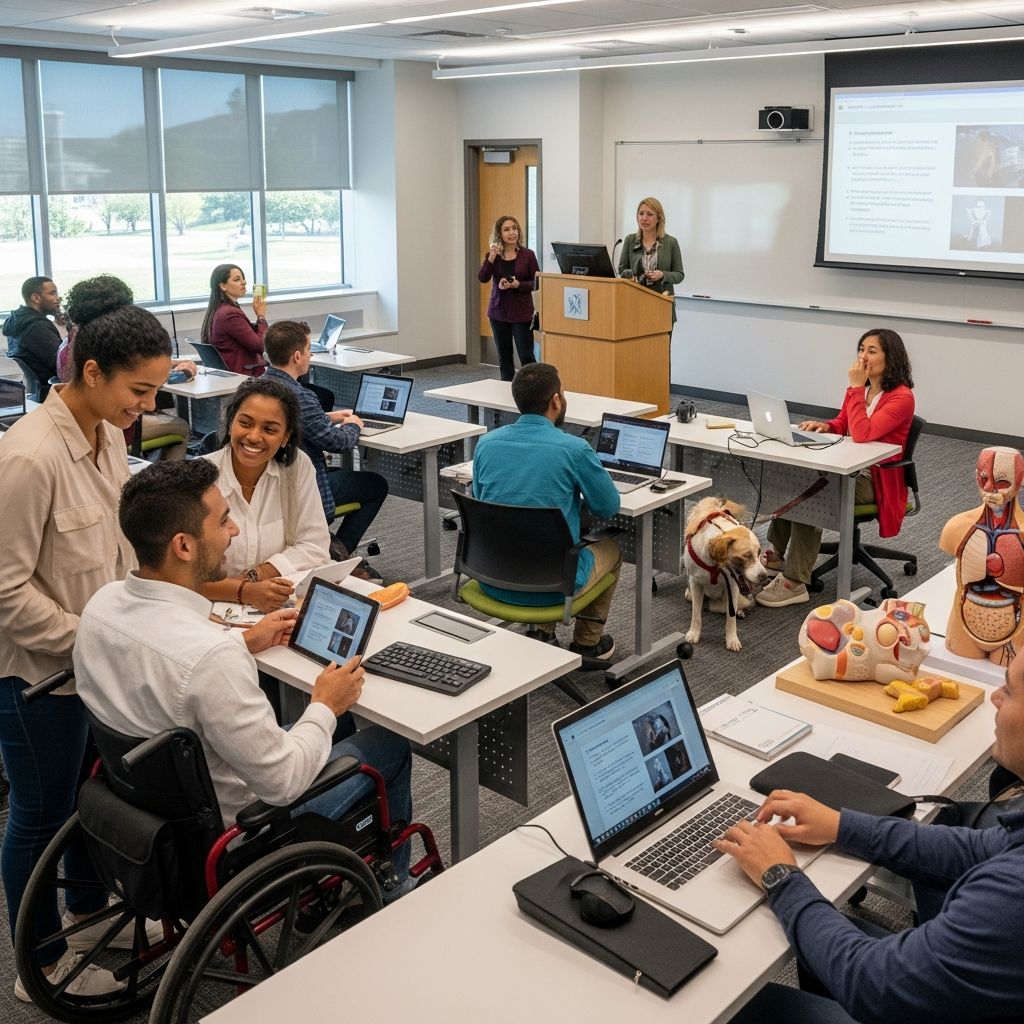
Foundations of Effective Support Systems for Students with Disabilities
Creating an educational environment where students with disabilities can flourish requires a comprehensive understanding of what constitutes effective support. At its core, meaningful assistance rests on several foundational principles that guide teaching decisions and classroom practices. These principles emerge from decades of educational research and direct experience with learners who face unique challenges in traditional academic settings.
An effective support system must be grounded in evidence. This means the strategies educators employ should have demonstrated success through rigorous research with similar student populations. For instance, explicit, structured phonics instruction has proven highly effective for students experiencing reading difficulties because extensive longitudinal studies document its positive outcomes across diverse learner groups. When teachers base their practices on solid evidence rather than intuition or tradition, they significantly increase the likelihood of meaningful student progress.
Beyond evidence, support must remain closely aligned with each student’s Individualized Education Program (IEP) or 504 plan. When a teaching strategy fails to directly address identified goals, it risks becoming disconnected busywork that consumes instructional time without advancing student learning. The IEP represents a legal commitment to specific learning targets, and every classroom intervention should intentionally work toward these established objectives.
Additionally, effective support acknowledges that each student’s experience of disability is entirely unique. Educators must avoid making assumptions about what a student can or cannot do based solely on their disability category. Instead, they should approach each learner as an individual with particular strengths, challenges, and learning preferences. This personalized perspective requires genuine curiosity and a willingness to listen to students themselves about their needs and preferences.
Differentiated and Multi-Sensory Instructional Approaches
No two learners absorb and process information identically. Special education excellence demands that teachers deliberately offer multiple pathways for students to engage with academic content. Differentiated instruction represents a fundamental shift from the one-size-fits-all teaching model toward an approach that acknowledges and responds to diverse learning profiles within a single classroom.
Multi-sensory instructional strategies extend learning opportunities across various modalities, allowing students to access content through their strongest channels while strengthening weaker areas:
- Visual representations help students who struggle with auditory processing or language comprehension by transforming abstract concepts into concrete images and diagrams
- Manipulative materials engage tactile learners who benefit from hands-on exploration and physical interaction with learning materials
- Kinesthetic activities embed conceptual understanding through movement and whole-body engagement, particularly beneficial for students with attention or motor coordination challenges
- Assistive technology tools such as text-to-speech applications remove barriers for students with reading disabilities, making written content accessible without compromising complexity or rigor
The implementation of differentiated instruction requires intentional planning. Teachers must analyze their student population, identify learning preferences and processing strengths, then deliberately design lessons offering multiple entry points. A single lesson might include a video component for visual learners, a hands-on activity for kinesthetic learners, and written materials for students who prefer text-based information. This approach does not mean creating entirely different lessons for each student; rather, it means thoughtfully embedding choice and flexibility into core instruction.
Building Collaborative Ecosystems Around Students
Students with disabilities thrive when the adults in their lives function as a coordinated team. Siloed professionals—teachers working independently without input from special educators, related service providers, families, or administrators—create fragmented experiences where students receive inconsistent messages and support. Collaboration fundamentally changes this dynamic.
Effective teamwork ensures that everyone understands the student’s learning plan and recognizes their specific role in implementation. When a special educator, classroom teacher, speech-language pathologist, occupational therapist, and family all share common goals and understand how their efforts interconnect, students receive reinforcement across settings. A student practicing communication strategies only during therapy sessions experiences less impact than a student whose teachers also incorporate these strategies during daily instruction and transitions.
Research demonstrates that involving families in collaborative planning significantly increases satisfaction compared to decisions made by educators alone. Families bring invaluable knowledge about their child’s strengths, preferences, and needs outside the school environment. They also represent crucial partners in reinforcing learning at home. When families feel heard and valued as equal team members rather than simply informed about predetermined plans, they become invested advocates for their child’s education.
Establishing structures for regular collaboration requires intentional time allocation. Effective teams might schedule monthly planning meetings, share digital documentation accessible to all members, and create systems for quick communication about emerging needs or successful strategies. Technology platforms enable asynchronous collaboration when schedules conflict, ensuring that geographical or scheduling challenges do not prevent meaningful teamwork.
Positive Behavioral Interventions and Supports as a Foundational Framework
Traditional approaches to student behavior often emphasize consequences and punishment. Positive Behavioral Interventions and Supports (PBIS) represents a philosophical shift recognizing that behavior communicates information about students’ needs, skills, or environmental factors. When a student acts disruptively, punishment may suppress the immediate behavior but fails to address underlying causes. PBIS proactively teaches expected behaviors and builds skills that enable students to succeed.
Implementing PBIS involves several key components:
- Explicitly teaching classroom routines, procedures, and expectations rather than assuming students understand unstated norms
- Prioritizing acknowledgment and praise of positive behaviors, which proves more motivating than correction of negatives for many students
- Creating visual behavior tracking systems enabling students to monitor their own progress and build metacognitive awareness
- Building relationships based on trust rather than fear, which increases student willingness to engage and reduces anxiety-based behaviors
This framework recognizes that behavior management is not about controlling students but rather equipping them with self-regulation skills and environmental supports that set them up for success. Students learn to recognize triggers for problematic behavior, identify replacement behaviors that meet the same need, and gradually develop autonomy in managing their own conduct.
Creating Predictable, Trauma-Informed Classroom Environments
Many students with disabilities have experienced trauma—whether from medical procedures, prior school failures, family circumstances, or disability-related challenges. Trauma shapes how students’ brains function, affecting their ability to concentrate, trust adults, and regulate emotions. Classrooms designed with trauma-informed principles create safety that enables learning.
Predictability serves as a cornerstone of trauma-informed environments. Students who know what to expect, what is expected of them, and what transitions are coming experience reduced anxiety and increased capacity for learning. Practical strategies include:
- Displaying visual schedules throughout the classroom so students can reference what happens next
- Establishing consistent routines for transitions between activities or subjects
- Designating calm spaces where students can regulate emotions or decompress when overwhelmed
- Using consistent language and signals for common classroom procedures
Beyond predictability, trauma-informed practice requires recognizing that disruptive behavior often reflects unmet needs or reflects how past experiences have shaped students’ perceptions of safety. Rather than responding punitively, educators pause to consider what need the behavior might be communicating. Is the student seeking attention, avoiding a difficult task, seeking sensory input, or expressing fear? Understanding the function of behavior allows for responsive support rather than reactive punishment.
Accessibility Through Assistive Technology Solutions
Technology has fundamentally expanded access to learning for students with disabilities. Assistive technology encompasses tools specifically designed to compensate for disabilities, removing barriers that would otherwise limit participation and achievement. The range of available applications continues expanding, offering solutions across diverse disability categories:
- Speech-to-text software transforms writing from a frustrating struggle for students with dysgraphia into an accessible means of expression, allowing them to focus on content rather than mechanics
- Audiobook formats make literature and informational texts accessible to students with low vision or reading disabilities, ensuring they access grade-level content alongside peers
- Visual organizers and graphic mapping applications support students with executive functioning challenges in planning, organizing, and managing complex tasks
- Communication devices enable nonverbal students to participate fully in classroom discussions and social interactions
- Text-to-speech and speech-to-text combinations provide multimodal access for students with processing challenges
Effective assistive technology implementation requires more than simply providing tools. Teachers must receive training in feature-rich applications, understand how to customize settings for individual students, and create classroom cultures where technology use is normalized and supported rather than stigmatizing. Students benefit when assistive technology is integrated seamlessly into typical classroom instruction rather than isolated during special pullout sessions.
Communication and Language Considerations
Clear, explicit communication forms the foundation of effective teaching for all students but proves especially critical for learners with disabilities. Vague or implied instructions create confusion and opportunities for misunderstanding. Teachers should describe items, locations, and procedures using specific, concrete language rather than relying on gestures or implied references.
When interacting with students who have communication challenges, teachers should employ several communication-enhancing practices. Maintaining direct eye contact, keeping mouths uncovered to facilitate lip-reading or visual cues, and positioning oneself at the student’s level (sitting when the student sits) communicate respect and facilitate understanding. When uncertain whether communication was understood, asking for clarification rather than assuming comprehension prevents downstream confusion. If a student requests clarification of instruction, offering an entirely different explanation or approach often proves more helpful than simple repetition.
Visual aids, gestures, and body language appropriately support communication, particularly for students with hearing loss, language processing disorders, or autism spectrum conditions. Combining multiple communication modes ensures that students access information through their most effective channels while strengthening secondary pathways.
Organizing Materials and Creating Accessible Learning Spaces
Logical organization of classroom materials and information benefits all learners but proves especially valuable for students with disabilities. When materials are organized systematically and consistently, students develop independence in locating resources, following multi-step directions, and managing their learning environment. Digital platforms should mirror this organization, with lecture slides, readings, supplemental materials, and assignments organized in parallel structures that students can navigate predictably.
Posting materials in advance of lessons allows students and families to preview content, ask clarifying questions, and prepare for instruction. This advance notice proves particularly valuable for students with anxiety, processing delays, or limited prior knowledge, as it reduces cognitive load during live instruction. Recorded lectures or AI-generated transcripts enable students to review content at their own pace, revisit confusing concepts, and participate without requiring constant real-time processing.
Physical classroom layout should account for accessibility. Pathways should accommodate wheelchairs or other mobility devices without requiring students to navigate around obstacles. Classroom locations should be shared with students early so they develop familiarity and independence in navigation. Consideration of sensory needs includes attention to lighting, noise levels, and visual complexity for students with sensory sensitivities.
Establishing Classroom Norms That Support Participation
Structured communication norms increase access for students with disabilities while simultaneously benefiting the broader learning community. Establishing turn-taking rules—such as requiring students to raise hands before speaking or implementing structured protocols where only one person speaks at a time—creates order that supports students with processing delays, attention challenges, or social communication difficulties. Name tags or table tents with students’ names facilitate address and reference, particularly valuable for students with memory challenges or those developing familiarity with new peer groups.
These norms should be taught explicitly rather than assumed. Students need direct instruction in classroom discussion protocols, just as they need instruction in academic content. Practicing turn-taking, waiting, and listening skills during low-stakes interactions builds fluency that students can then apply during academic instruction.
Frequently Asked Questions
Q: How can I differentiate instruction without creating separate curricula for each student?
A: Differentiation involves offering multiple pathways to the same learning objective rather than different objectives for different students. Use flexible grouping, provide choice in demonstrations of learning, and leverage assistive technology to adapt how content is delivered or how students show understanding. One core objective can be approached through visual, auditory, kinesthetic, and text-based modalities simultaneously.
Q: What should I do if a student’s disability is not visible?
A: Never assume that lack of visible disability means a student has no support needs. Many disabilities—including learning disabilities, attention disorders, autism, anxiety, and chronic illnesses—are invisible. Treat all students as individuals with individualized needs, maintain confidentiality about disability status, and provide accommodations to any student with documented needs regardless of whether those needs are apparent to others.
Q: How do I balance assistive technology use without stigmatizing students?
A: Normalize assistive technology by using it schoolwide. Encourage all students to use tools that support their learning, not just students with disabilities. Provide training in technology use as part of general classroom practice. Position assistive technology as a tool that levels the playing field rather than marking a student as different.
Q: How can I maintain student engagement when students have varying disability needs?
A: Build flexibility into lessons, provide multiple ways to engage with content, maintain predictable routines that reduce anxiety, use collaborative learning structures that leverage peer support, and regularly communicate with students and families about what strategies support engagement best for individual learners.
References
- 7 Best Practices in Special Education to Support Students — Alliant International University. 2024. https://www.alliant.edu/blog/best-practices-in-special-education
- Best Practices for Working with Disabled Students — Rutgers University Accessibility Resource and Development. https://radr.rutgers.edu/resource/best-practices-working-disabled-students
- How To Support Students With Disabilities In All Settings — Everway. 2024. https://www.everway.com/blog/how-to-support-students-with-disabilities-in-all-settings/
- Building and Sustaining Inclusive Educational Practices — U.S. Department of Education. 2024. https://www.ed.gov/media/document/inclusive-practices-guidance-109436.pdf
- TIPs for Supporting the Engagement of Students with Disabilities through Varied Service Delivery Models — Maryland Public Schools. https://www.marylandpublicschools.org/programs/Documents/Special-Ed/TAB/TIPs_for_Supporting_Engagement_of_Students-with-Disabilities-through-Varied-Service-Delivery-Models.pdf
- How Teachers Can Help Students with Learning Disabilities — Learning Disabilities Association of America. https://ldaamerica.org/how-teachers-can-help-students-with-learning-disabilities/
- 10 Ways to Support Social and Emotional Learning for Students with LD and ADHD — National Education Association. https://www.nea.org/professional-excellence/student-engagement/tools-tips/10-ways-support-social-and-emotional-learning-students-ld-and-adhd

- Integrated M.A. in Applied Linguistics, University of Hyderabad
- 5+ years in editorial, instructional, SEO, and research-based writing
Sneha is a relationships and lifestyle writer with a strong foundation in applied linguistics and certified training in relationship coaching. She brings over five years of writing experience to theskillvault, crafting thoughtful, research-driven content that empowers readers to build healthier relationships, boost emotional well-being, and embrace holistic living. Her writing and insights reflect the belief that beauty, happiness, and wellness…