
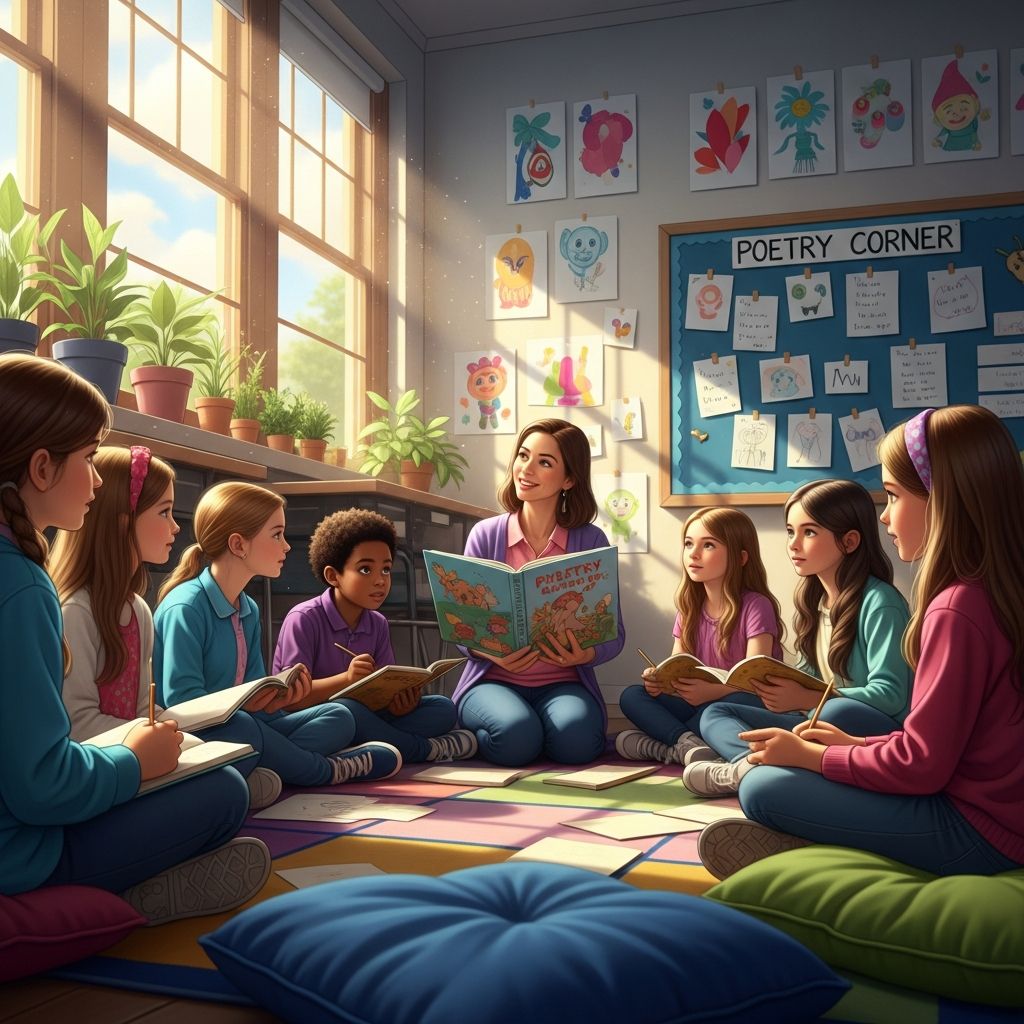
Poetry offers a unique gateway to language exploration, rhythm, and imagination, making it an ideal element for morning classroom sessions. By embedding poetic elements into daily rituals like announcements or greetings, educators can create engaging starts to the day that enhance literacy and emotional expression. This approach not only builds vocabulary but also encourages students to appreciate concise, vivid communication.
Building a Foundation with Morning Poetry Recitations
Starting the day with recited poems sets a rhythmic tone and aids memory retention. Select short, age-appropriate pieces that resonate with seasonal themes or student interests. Read aloud together daily, gradually transitioning to choral recitation where the group joins in. This method strengthens phonetic awareness and boosts confidence in public speaking.
For younger learners, incorporate nursery rhymes, which serve as introductory poems rich in rhyme and repetition. These build foundational listening skills and pattern recognition. Older students benefit from narrative poems that prompt discussions on themes like nature or personal growth. Over weeks, repeat the same poem until the class can recite it from memory, celebrating milestones with group performances.
- Choose poems under 20 lines for quick sessions.
- Pair recitation with gestures to enhance kinesthetic learning.
- Rotate poems monthly to maintain variety and excitement.
Interactive Poetry Challenges to Spark Creativity
Transform passive listening into active participation with challenges that encourage poetic thinking. During morning messages, prompt students to contribute lines using specific devices like similes or metaphors. For instance, describe the day’s weather poetically: “The sky whispers secrets like a gentle breeze through leaves.” This interactive element makes announcements memorable and teaches figurative language organically.
Organize a “poetry speed dating” where students rotate through stations featuring different poems or books. They skim, note favorites, and share discoveries, fostering peer recommendations and broad exposure. This works well for middle schoolers transitioning to more complex works.
Seasonal Scavenger Hunts for Sensory Poems
Take learning outdoors for a sensory poetry hunt. Instruct students to observe their surroundings and craft similes for each sense: sight, sound, smell, touch, and taste. Examples include “Rain tastes like fresh earth awakening” or “Leaves crunch like autumn’s symphony.” Compile these into a class anthology shared during announcements, reinforcing observation skills.
Hands-On Creation: From Copying to Composing
Handwriting poems with colorful tools like gel pens engages fine motor skills and artistic expression. Assign a stanza per morning session, allowing time for marginal illustrations. This slow-paced copying builds appreciation for structure and word choice before students attempt original work.
Progress to guided composition with templates like “I Am From” poems, inspired by personal heritage and memories. Students list sensory details from their lives—”I am from sticky mango peels and laughter echoing in courtyards”—then shape them into free verse. These personal pieces often become favorites for sharing.
| Activity Stage | Focus Skill | Duration | Example Output |
|---|---|---|---|
| Copying | Structure & Rhythm | 5-10 min | Illustrated poem page |
| Template Writing | Personal Expression | 10-15 min | “I Am From” draft |
| Free Composition | Originality | 15-20 min | Class-shared poem |
Gamifying Poetry for Maximum Engagement
Games turn poetry into play, ensuring high participation. A poetry bracket tournament pits 16 poems against each other in elimination rounds. Students vote using student-created rubrics on criteria like imagery or emotional impact, categorizing by theme (e.g., nature haikus vs. humorous limericks). The winning poem crowns the morning announcements for a week.
Blackout poetry challenges students to redact newspaper articles, revealing hidden poems through selected words. This reveals beauty in everyday text and hones editing skills. Display results on a morning bulletin board for ongoing inspiration.
- Bracket: Builds analytical skills through comparison.
- Blackout: Encourages creative reinterpretation.
- Poetry Recital: Promotes memorization and performance.
Cross-Age and Collaborative Poetry Exchanges
Pair grades for buddy readings where older students mentor younger ones on favorite poems. This builds community and exposes all to diverse perspectives. Record sessions for playback during announcements, amplifying voices school-wide.
Incorporate music analysis by dissecting lyrics as modern poetry, identifying rhyme schemes and metaphors in popular songs. Students rewrite verses with twists, performing during morning shares to connect poetry with their world.
Advanced Twists for Middle and High School
For teens, adapt activities like turning sonnets into illustrated storybooks using digital tools. Groups simplify Shakespeare’s works for younger audiences, decoding meaning through visuals. This demystifies classics without rote analysis.
Explore “crot” poetry—short, fragmented bursts inspired by nonfiction clippings. Students craft these during quick writes, emphasizing brevity and punch. Hyperbolic odes to mundane objects, like praising a pencil’s might, inject humor and exaggeration practice.
Frequently Asked Questions
What age groups benefit most from morning poetry?
All ages thrive, from preschoolers with rhymes to high schoolers with sonnets. Adapt complexity to developmental stages for optimal engagement.
How often should poetry feature in routines?
Loop it 2-3 times weekly for 5-15 minutes to prevent overload while building habits. Consistency yields memorization without fatigue.
Do I need special materials?
Minimal: paper, pens, printed poems. Free online collections like Poetry 180 suffice; digital tools enhance but aren’t essential.
How to handle reluctant participants?
Start with choices, group work, and games. Share your enthusiasm and personal favorites to model joy.
Can this align with curriculum standards?
Yes, supports reading, writing, speaking standards through figurative language, analysis, and creation.
Sustaining Momentum Year-Round
Beyond April’s Poetry Month, maintain rituals by theming around holidays or events. Create a class poetry wall updated via announcements, featuring student work. Host quarterly slams where memorized pieces shine, with peers as judges. Track progress in portfolios, reflecting on growth in expression and confidence.
These strategies cultivate a classroom where poetry pulses through daily life, turning routine moments into profound learning opportunities. Students emerge with sharpened language skills, deeper empathy, and a lifelong affinity for verse.
References
- Six Ways to Celebrate Poetry Month in the Classroom — Responsive Classroom. 2023-04-01. https://www.responsiveclassroom.org/six-ways-to-celebrate-poetry-month-in-the-classroom/
- Simple Ideas for Poetry in Morning Time — Our Life Homeschooling. 2022-04-26. https://ourlifehomeschooling.com/2022/04/26/simple-ideas-for-poetry-in-morning-time/
- 14 Activities to Help Introduce Your Elementary Students to Poetry — Studentreasures. 2023-01-15. https://studentreasures.com/blog/writing-skill-building-activity/poetry-activities/
- 10 Creative Poetry Activities & Workshops for ELA — Now Spark Creativity. 2025-04-10. https://nowsparkcreativity.com/2025/04/10-creative-poetry-activities-workshops-for-ela.html
- 35 Unique Poetry Games and Activities for Kids and Teens — We Are Teachers. 2024-03-20. https://www.weareteachers.com/poetry-games-for-the-classroom/
- 7 Poetry Activities Students Love — Teach Writing. 2018-03-07. https://www.teachwriting.org/612th/2018/3/7/3-poetry-activities-students-students-will-love
- Fun Poetry Activities That Even High Schoolers Love — Building Book Love. 2023-05-12. https://buildingbooklove.com/fun-poetry-activities-that-even-high/

- Integrated M.A. in Applied Linguistics, University of Hyderabad
- 5+ years in editorial, instructional, SEO, and research-based writing
Sneha is a relationships and lifestyle writer with a strong foundation in applied linguistics and certified training in relationship coaching. She brings over five years of writing experience to theskillvault, crafting thoughtful, research-driven content that empowers readers to build healthier relationships, boost emotional well-being, and embrace holistic living. Her writing and insights reflect the belief that beauty, happiness, and wellness…