
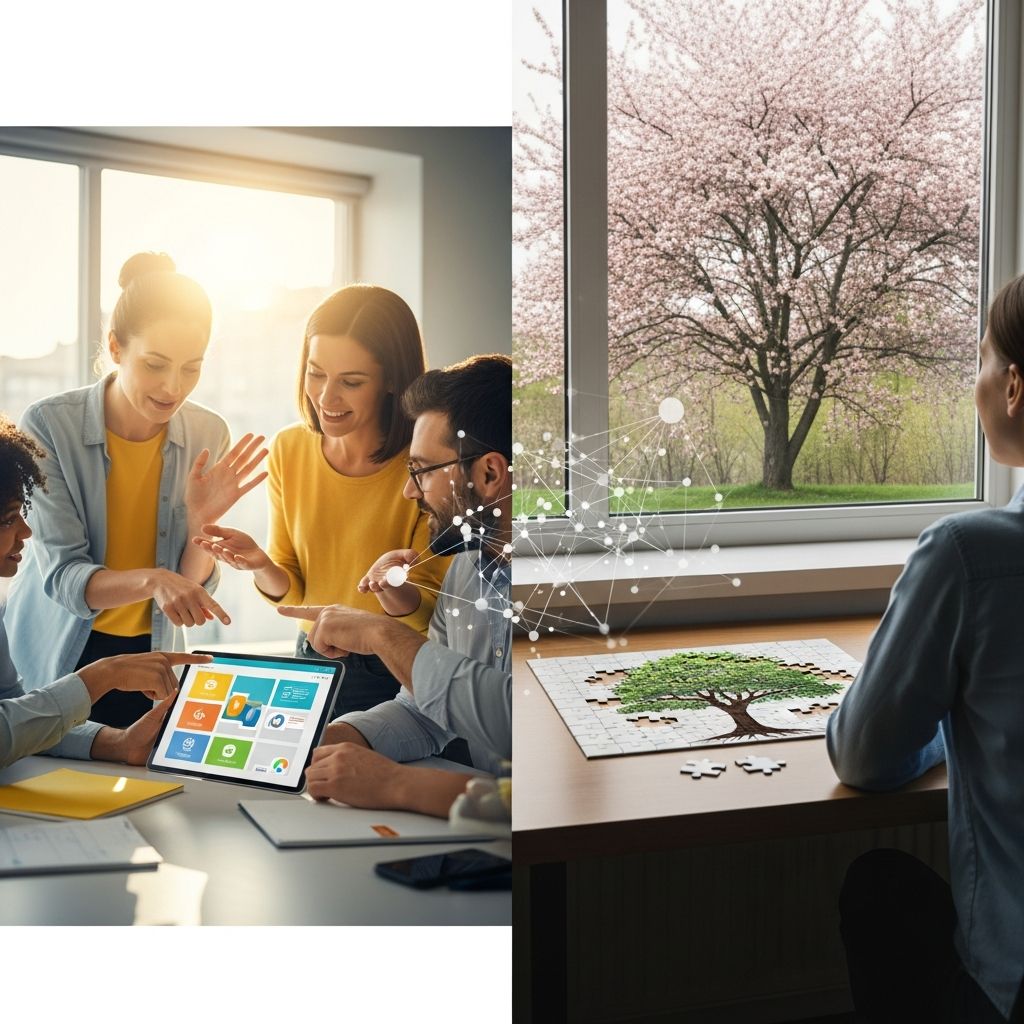
Understanding Teacher Adaptability in Modern Education
The educational landscape has undergone significant transformation in recent years, demanding that educators develop unprecedented levels of flexibility and resilience. Teachers today face rapidly evolving demands—from technological integration to shifting student needs and institutional policies. Research demonstrates that adaptability is not merely a desirable trait but a fundamental requirement for effective teaching in contemporary classrooms. The ability to adjust instructional strategies, embrace new methodologies, and respond to unexpected challenges directly impacts both teacher satisfaction and student outcomes. When educators cultivate genuine flexibility in their practice, they model problem-solving skills for students while creating more responsive and inclusive learning environments.
The Foundation of Professional Resilience
Resilience in teaching extends beyond simply enduring difficult circumstances. It represents a dynamic capacity to navigate challenges, extract learning from adversity, and maintain commitment to educational excellence despite obstacles. Research on teacher resilience reveals that educators who sustain their professional identities and core educational values through turbulent periods typically employ systematic strategies rather than relying on personal willpower alone. Building resilience begins with recognizing that adaptability is a learnable skill set rather than an innate talent, meaning all educators can strengthen this capacity through intentional practice and supportive structures. Teachers who understand resilience as a collective rather than purely individual endeavor are more likely to develop sustainable coping mechanisms and maintain long-term effectiveness in their roles.
Leveraging Collaborative Networks for Professional Support
One of the most powerful resources available to educators seeking to develop resilience is their professional community. Collaborative inquiry groups and professional learning communities create spaces where teachers share pedagogical challenges, exchange innovative solutions, and reinforce a shared sense of professional identity. When educators work collectively to address institutional challenges, they distribute the emotional and intellectual burden while simultaneously expanding their access to diverse problem-solving approaches. Teachers who participate in genuine collaborative structures report significantly higher levels of job satisfaction and report greater confidence in their ability to handle unexpected changes in their teaching environments. Beyond school-level collaboration, broader professional networks—including subject-specific associations and online educator communities—extend teachers’ access to resources and provide validation during periods of uncertainty.
Embracing Technological Fluency Without Overwhelm
Technology integration represents both an opportunity and a source of stress for many educators. Rather than viewing technological demands as an additional burden, resilient teachers approach technology as a tool that can simplify certain aspects of their practice while creating opportunities for enhanced student engagement. Developing technological confidence does not require mastery of every available platform or tool; instead, it involves strategically identifying which technologies genuinely serve pedagogical objectives. Teachers who take incremental approaches to technology adoption—experimenting with one new tool per semester rather than attempting comprehensive digital transformation—report less anxiety and greater sustainability in their practice. Creating dedicated time for professional development focused on technology, establishing peer mentorship relationships with tech-savvy colleagues, and accessing quality training resources allows teachers to build genuine competence rather than surface-level familiarity.
Designing Flexible Learning Environments
Classroom design—both physical and instructional—significantly impacts a teacher’s ability to respond flexibly to diverse student needs. Teachers who build modularity into their learning spaces and instructional sequences create infrastructure for rapid adaptation. This might include organizing furniture to enable quick reconfiguration for different learning activities, maintaining a diverse library of instructional materials accessible for multiple purposes, or structuring lessons with flexible pacing that allows for extension or consolidation based on student progress. Flexible design thinking extends to curriculum as well; teachers who understand core learning objectives can identify multiple pathways to achieve those objectives and adjust their approach based on real-time formative assessment data. This architectural flexibility reduces the cognitive load of adaptation because responsive adjustments become embedded in system design rather than requiring constant improvisation.
Social-Emotional Learning as a Teaching Priority
The wellbeing of both students and teachers represents a critical foundation for sustainable, adaptive teaching practice. Research demonstrates that students experiencing higher rates of emotional distress show reduced capacity for academic engagement and learning. Teachers who intentionally design their instruction and classroom culture to address social-emotional learning create more resilient student populations while simultaneously reducing behavioral disruptions that deplete teacher energy. This approach involves explicit instruction in emotional regulation, building genuine community relationships, and creating psychologically safe spaces where students feel comfortable taking intellectual risks. When teachers prioritize these dimensions, they invest in long-term classroom climate improvement that pays dividends across the academic year. Additionally, teachers who attend to their own emotional wellbeing and create peer support systems for managing the emotional labor of teaching maintain greater reserves of patience and presence for their students.
Strategic Autonomy and Professional Decision-Making
Teachers demonstrate greater resilience when they exercise meaningful autonomy in their professional decision-making, particularly regarding instructional approaches and curriculum emphasis. Autonomy combined with collaborative structures—where teachers make decisions within parameters established through collective dialogue—provides both the freedom to respond to local needs and the stability of shared guidelines. When educational systems grant teachers legitimate authority over matters directly affecting their practice while maintaining accessible channels for feedback and coordination, educators report feeling more invested in outcomes and more capable of handling implementation challenges. This form of professional agency operates at multiple levels: individual teachers making moment-to-moment instructional decisions, grade-level or subject-area teams designing curriculum coherence, and school-wide leadership structures addressing systemic issues. The experience of democratic decision-making within professional communities strengthens both organizational capacity and individual teacher commitment.
Communication Systems That Reduce Uncertainty
Effective systems for timely, transparent communication represent an underestimated element of teacher resilience. When educators face ambiguous or contradictory policies, when implementation guidance arrives late or remains unclear, or when they lack information about upcoming changes, stress levels escalate significantly. Conversely, schools that establish regular communication channels—both vertical (between administration and teaching staff) and horizontal (among peer educators)—enable teachers to build shared understanding and coordinate responses to institutional demands. Communication systems prove most effective when they are bidirectional, allowing teachers to raise questions, propose solutions, and contribute their expertise to policy implementation rather than serving as passive recipients of directives. Informal networks and formal channels both contribute to this communication infrastructure; the most resilient school systems typically cultivate both spontaneous peer consultation and structured communication protocols.
Continuous Learning and Professional Growth
Teachers who maintain curiosity about their practice and engage in continuous learning demonstrate greater resilience when facing novel challenges. This orientation toward growth involves several interconnected practices: regularly consuming educational research relevant to one’s practice, experimenting thoughtfully with new instructional strategies and reflecting on results, pursuing professional credentials or specialized training aligned with evolving student needs, and maintaining intellectual engagement with one’s subject matter. Professional development opportunities prove most valuable when they address educators’ actual needs, allow for application to specific classroom contexts, and include follow-up support for implementation. Teachers who view challenges as opportunities to develop new competencies rather than as threats to existing expertise approach difficulties with greater confidence. Creating school cultures where experimentation is valued, where thoughtful risk-taking is supported, and where failures are treated as learning opportunities rather than performance deficits strengthens collective resilience.
Practical Strategies for Daily Implementation
- Daily Flexibility Checkpoint: Dedicate five minutes at the end of each school day to reflect on what worked, what required adjustment, and what you’d modify tomorrow. This practice builds adaptive thinking into routine rather than treating flexibility as an afterthought.
- Peer Consultation Protocols: Establish regular times to meet with colleagues to troubleshoot challenges collaboratively. These structured conversations normalize seeking input and generate creative solutions you might not develop alone.
- Student-Centered Feedback Loops: Implement brief formative assessments that reveal genuine student understanding, allowing you to adjust pacing and emphasis based on actual learning rather than assumed understanding.
- Professional Development Intentionality: Rather than attending professional development sessions randomly, identify specific areas where you want to develop greater capacity and seek learning opportunities aligned with those goals.
- Self-Care Non-Negotiables: Establish specific practices for managing your own wellbeing—whether exercise, creative pursuits, time with family, or other activities that restore your emotional resources—and protect this time with the same commitment you give to instructional planning.
- Documentation and Reflection: Maintain a teaching journal where you capture insights, analyze challenges, and track your own professional growth. This practice externalizes your thinking and creates a record of your adaptive capacity.
Building Organizational Systems for Sustained Resilience
Individual teacher resilience operates within organizational contexts that either support or undermine adaptive capacity. Schools that invest in building collective resilience establish structures and cultures that make flexibility sustainable rather than exhausting. This involves creating realistic workloads, ensuring that professional expectations align with available time and resources, establishing clear role definitions to prevent role ambiguity, and creating feedback mechanisms that allow teachers to communicate when systems are undermining rather than supporting their effectiveness. Leadership plays a critical role in this infrastructure; administrators who genuinely listen to teacher concerns, acknowledge the difficulty of contemporary teaching, and make resource allocation decisions that reflect stated priorities communicate that resilience is a shared organizational responsibility rather than an individual burden. When school leaders model flexibility themselves—adjusting plans based on feedback, admitting when approaches aren’t working, seeking input before making significant decisions—they create cultural permission for teachers to do the same.
Frequently Asked Questions
Q: How can I maintain flexibility without constantly changing my teaching approach?
A: Flexibility exists within a framework of consistent core practices. Identify your essential pedagogical principles and instructional structures, then vary how you implement them based on student needs. This provides both stability and responsiveness rather than chaotic constant change.
Q: What should I do if school policies contradict my professional judgment about what students need?
A: Engage in dialogue with administrators and colleagues to understand policy rationale and explore how you might align with policy while maintaining your core commitments. Many apparent contradictions can be resolved through collaborative problem-solving rather than compliance or resistance.
Q: How do I develop resilience if I work in an unsupportive school environment?
A: While systemic support makes resilience easier, individual agency remains possible. Connect with professional communities outside your school, seek mentorship from experienced educators, focus on elements within your direct control, and consider whether your long-term career wellbeing requires exploring different employment contexts.
Q: Can resilience and maintaining boundaries coexist?
A: Yes—authentic resilience requires protecting your wellbeing, which means maintaining clear boundaries around your time and energy. Resilient teachers work sustainably rather than burning out through over-commitment.
Q: How often should I attempt to implement new teaching strategies?
A: Introduce one significant new practice per term rather than multiple simultaneous changes. This allows adequate time for learning, implementation, reflection, and refinement before adding additional innovations.
References
- Teaching with collective resilience during COVID-19 — National Institutes of Health, National Center for Biotechnology Information. 2023. https://pmc.ncbi.nlm.nih.gov/articles/PMC9899788/
- Bouncing Forward in Tough Times: Strategies of Resilient Teachers — Kansas Debate Programs. 2023. https://www.kdp.org/blogs/phil-kitchel/2023/11/09/bouncing-forward-in-tough-times-strategies-of-resilient-teachers-
- The instructional legacy of COVID-19: Teacher adaptation in response to the pandemic — Northwest Evaluation Association (NWEA). 2020. https://www.nwea.org/research/publication/the-instructional-legacy-of-covid-19-teacher-adaptation-in-response-to-the-pandemic/
- Teacher Flexibility and the New Normal — California Association of Curriculum Development (CACE). 2021. https://cace.org/teacher-flexibility-and-the-new-normal/
- Teachers’ Resilience Experiences Post COVID-19 Pandemic — Liberty University Digital Commons. 2023. https://digitalcommons.liberty.edu/cgi/viewcontent.cgi?article=8054&context=doctoral

Medha Deb is an editor with a master's degree in Applied Linguistics from the University of Hyderabad. She believes that her qualification has helped her develop a deep understanding of language and its application in various contexts. Medha specializes in the areas of beauty, health, sports, and wellness and is committed to ensuring that the content on the website is…