
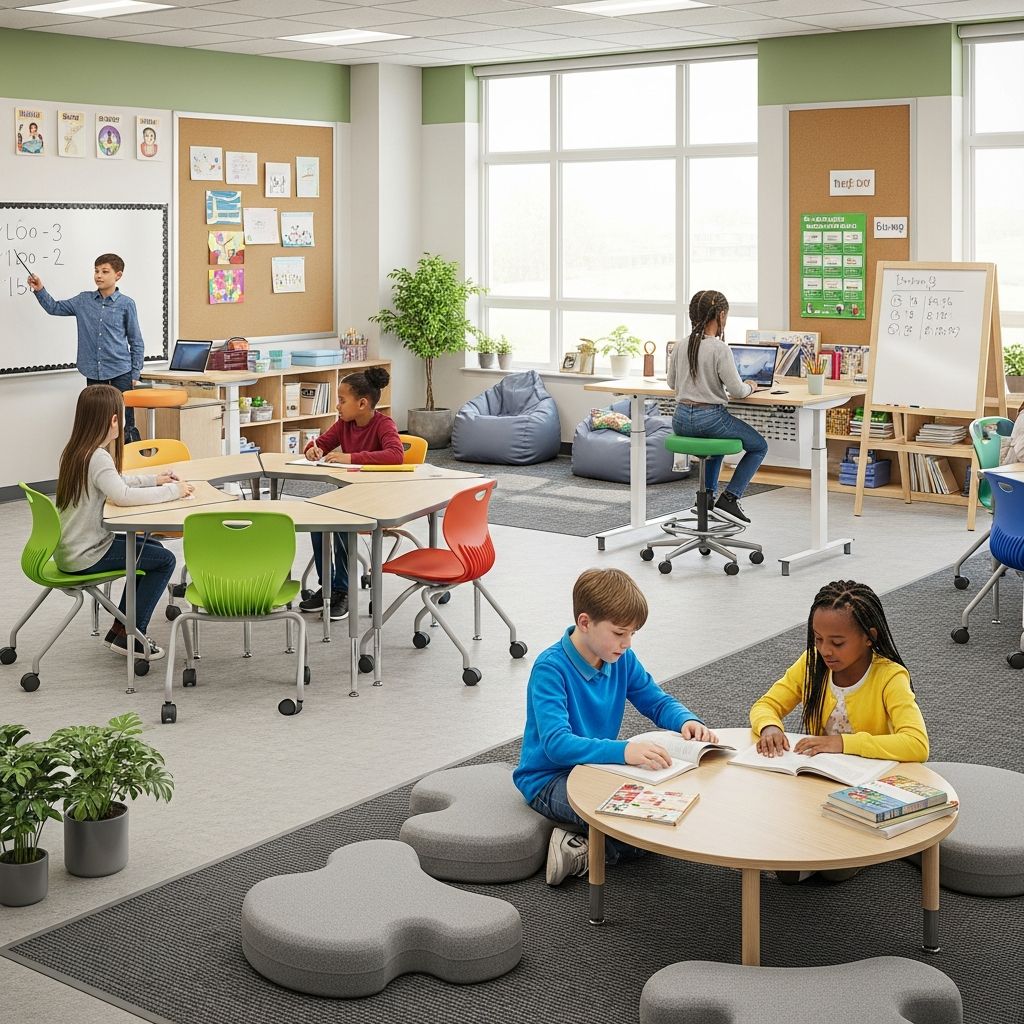
Effective classroom seating goes beyond mere organization; it shapes student interactions, attention spans, and overall learning outcomes. Research shows that thoughtful arrangements can reduce disruptions by up to three times compared to student-chosen seats, promoting focus and prosocial behavior. By prioritizing flexibility, educators can tailor layouts to specific activities, student needs, and teaching styles, creating environments that maximize engagement and minimize distractions.
Why Seating Matters: The Science Behind Layout Choices
Seating arrangements influence everything from peer dynamics to academic performance. A landmark 2012 study found that teacher-assigned seats significantly cut disruptive behavior, as students naturally cluster with friends when given free choice, leading to chattier and less focused groups. More recent research from 2021 highlights how assigned seating fosters new friendships across diverse backgrounds, increasing social connections by 50% and building long-term tolerance.
Proximity plays a critical role in attentiveness. A 2024 analysis revealed that students seated next to inattentive peers took half as many notes and scored nine points lower on quizzes, underscoring the contagious nature of disengagement. Strategic placement—such as positioning distracted learners near the front—can counteract this, providing teachers with a low-cost tool for behavior management.
Flexible designs also align with varied instructional methods. Rows excel for direct instruction, while clusters encourage collaboration. Matching layouts to tasks ensures optimal visibility, interaction, and participation, as confirmed in a 2020 study on seating’s role in social dynamics.
Core Principles for Designing Adaptable Spaces
Start with visibility: Every student should see the board, teacher, and key visuals without obstruction. Consider height differences—avoid placing tall students in front of shorter ones to prevent neck strain. Factor in your teaching style; mobile instructors benefit from open pathways, while board-focused ones need clear front views.
- Accessibility: Maintain wide aisles for circulation, especially in rows or clusters, allowing quick teacher intervention.
- Student Needs: Separate high-energy or disruptive students to prevent mimicry, filling surrounding seats with focused peers.
- Space Efficiency: Optimize for room size; stadium-style angles save floor space while directing attention forward.
- Routines: Establish entry/exit protocols and clear seating plans to track attendance and streamline transitions.
These principles ensure layouts support both independent work and group tasks, adapting seamlessly to daily shifts.
Popular Seating Configurations and Their Best Uses
Diverse arrangements suit different objectives. Below is a comparison of common setups, drawn from educator practices and research.
| Arrangement | Best For | Pros | Cons | Visibility |
|---|---|---|---|---|
| Rows | Lectures, tests | Minimizes distractions; easy monitoring | Limits collaboration; back rows feel isolated | High to front |
| Clusters (4-6 desks) | Group work, discussions | Boosts interaction; peer learning | Risk of off-task talk; uneven sightlines | Moderate |
| U-Shape/Horseshoe | Discussions, demos | Full peer/teacher eye contact; equitable | Requires space; less for independent work | Excellent |
| Stadium | Presentations, older grades | Space-saving; focused forward view | Fixed orientation; minimal flexibility | High |
| L-Shaped Groups | Mixed activities | Versatile; balances solo/group | Needs furniture variety | Good |
Rows with a central aisle facilitate teacher movement and behavior checks, ideal for whole-class instruction. U-shapes promote communication during demonstrations, with every student facing the front and peers.
Adapting Layouts for Specific Learning Activities
Align seating with lesson goals for peak effectiveness. For direct instruction or modeling, rows keep eyes forward during initial phases. Transition to clusters of four for brainstorming or peer review, facing students inward to spark ideas.
In smaller spaces, mini U’s offer group benefits without crowding, easing teacher circulation and check-ins. Double U’s pack more students for presentations but limit one-on-one support—reserve for front-facing teaching.
For presentations, line students in rows facing forward, repeating if space allows, to maintain focus on the speaker. Socratic circles or jigsaw groups encourage equal participation, building social skills alongside content.
Incorporate variety: Use L-shapes for flexibility, combining rows and clusters. Periodically rearrange for drama or labs, turning rows backward for quick discussions.
Incorporating Flexible and Alternative Furniture
Modern classrooms thrive on adaptability. Offer zones for groups, solo work, and varied seating like wobble stools, exercise balls, or height-adjustable chairs. This empowers students to choose what suits their focus style, fostering agency.
Remove unused furniture to create walking paths around clusters. For middle/high school, U-clusters of five-six facilitate group interactions while preserving instructional access. Stadium seating angles desks toward one point, ideal for compact rooms and on-task monitoring.
Pairs strike a balance: Students work solo or collaborate easily, using folders as barriers for tests. These options enhance engagement without fixed desks, suiting dynamic lessons.
Managing Behavior and Social Dynamics Through Seating
Seating is a proactive management tool. Isolate disruptive students, surrounding them with positive influences to curb reinforcement. Dual seats—one isolated for focus work, one grouped for collaboration—address specific challenges.
Promote inclusivity: Assigned seats diversify friendships, countering self-segregation. Monitor for inattentiveness contagion by pairing strugglers with attentive peers near the teacher.
Clear plans prevent disputes, with routines ensuring smooth shifts. Track absences instantly and adjust for misconceptions via easy access.
Practical Tips for Implementation and Transitions
- Map your room: Sketch layouts digitally for trials.
- Pilot changes: Test during low-stakes lessons, gathering student feedback.
- Communicate: Explain rationales to build buy-in.
- Rotate periodically: Refresh dynamics and prevent ruts.
- Hybridize: Blend rows with clusters for versatility.
Train students on procedures for efficiency. For group work, have back-row pupils enter first to avoid jams.
Frequently Asked Questions (FAQs)
What is the single best seating arrangement for all lessons?
No universal best; match to activity—rows for focus, clusters for collaboration. Flexibility is key.
How often should I change seating plans?
Every 4-6 weeks or per unit to refresh dynamics and address issues, per educator consensus.
Can flexible seating work in small classrooms?
Yes—use stadium, pairs, or mini U’s to save space while maintaining oversight.
Does assigned seating limit student choice?
It guides positive choices, boosting diverse friendships without total freedom’s pitfalls.
What about special needs students?
Place near front for visibility/support; clusters aid social skills if paired thoughtfully.
Building a Responsive Classroom Environment
Ultimately, optimal seating evolves with your class. Research affirms its power: Strategic setups enhance attentiveness, equity, and outcomes. Experiment, observe, and refine to craft spaces where every student thrives. By staying adaptable, teachers harness seating as a silent ally for transformative learning.
References
- Research-Based Tips for Optimal Seating Arrangements — Edutopia. 2024. https://www.edutopia.org/article/research-based-tips-for-optimal-seating-arrangements/
- Perfecting Classroom Seating Arrangements — Lucidchart Blog. N/A. https://www.lucidchart.com/blog/perfecting-classroom-seating-arrangements
- Classroom seating arrangement – In praise of rows — The Headteacher. N/A. https://www.theheadteacher.com/attainment-and-assessment/teaching-practice/classroom-seating-whats-the-best-arrangement
- 8 Classroom Seating Arrangements Teachers Love — Teach Starter. N/A. https://www.teachstarter.com/us/blog/inspiration-for-classroom-seating-arrangements-us/
- 19 Classroom seating arrangements fit for your teaching — BookWidgets Blog. 2019-12-19. https://www.bookwidgets.com/blog/2019/12/19-classroom-seating-arrangements-fit-for-your-teaching
- Effective Room Arrangement: Middle & High School — IRIS Center, Vanderbilt University. N/A. https://iris.peabody.vanderbilt.edu/case-study/effective-room-arrangement-middle-high/
- What’s the Ideal Classroom Seating Arrangement? Teachers Weigh In — Education Week. 2026-01. https://www.edweek.org/teaching-learning/whats-the-ideal-classroom-seating-arrangement-teachers-weigh-in/2026/01

- Integrated M.A. in Applied Linguistics, University of Hyderabad
- 5+ years in editorial, instructional, SEO, and research-based writing
Sneha is a relationships and lifestyle writer with a strong foundation in applied linguistics and certified training in relationship coaching. She brings over five years of writing experience to theskillvault, crafting thoughtful, research-driven content that empowers readers to build healthier relationships, boost emotional well-being, and embrace holistic living. Her writing and insights reflect the belief that beauty, happiness, and wellness…