
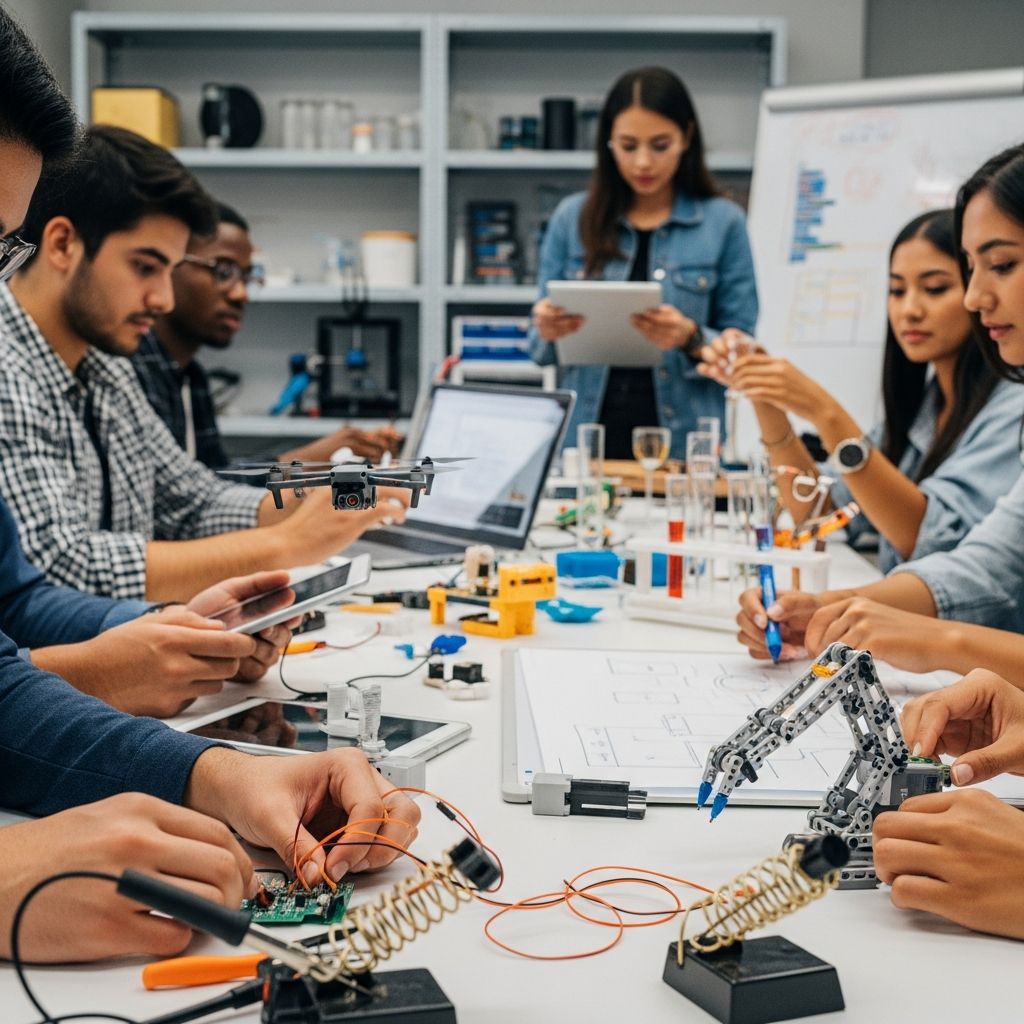
Modern education demands more than rote memorization; it requires students to tackle complex problems, collaborate effectively, and apply knowledge to real-world scenarios. Hands-on STEM projects centered on observable phenomena and practical math applications empower learners to develop these vital 21st-century skills, transforming classrooms into hubs of inquiry and innovation.
Why Phenomena-Driven Science Ignites Curiosity
Phenomena-based learning shifts science instruction from passive absorption of facts to active exploration of natural events. Students observe intriguing occurrences—like the green patina on the Statue of Liberty or the formation of grand canyons—and drive their own investigations to uncover explanations. This approach mirrors scientific practices, encouraging questioning, evidence collection, and model-building.
In such environments, teachers facilitate rather than dictate, guiding discussions where students share findings and refine ideas collectively. Research from the National Science Teaching Association highlights how this method fosters deeper comprehension as learners construct answers over multiple investigations. By anchoring lessons in tangible wonders, educators make abstract concepts accessible and memorable.
Key Principles of Effective STEM Project Design
Successful projects integrate core elements to maximize engagement and skill development:
- Relevance to Student Lives: Choose phenomena tied to local environments or global issues, such as antibiotic resistance or natural disaster preparedness, to spark personal investment.
- Three-Dimensional Learning: Blend disciplinary core ideas, science practices, and crosscutting concepts, as outlined in frameworks like NGSS, ensuring comprehensive growth.
- Collaborative Inquiry: Promote partner and whole-class dialogues to build communication and teamwork skills essential for future careers.
- Model Development: Have students create visual or physical representations of phenomena, reinforcing explanatory power.
These principles ensure projects are not isolated activities but cohesive units that build progressively toward big ideas.
Sample Science Projects: From Inquiry to Insight
Consider a project exploring chemical transformations using everyday examples. Students might investigate why copper statues change color over time, testing reactions with vinegar and observing oxidation. They hypothesize, experiment, and revise models, applying engineering practices to propose preservation solutions.
Another idea: Canyon formation through erosion. Groups simulate water flow over sediment, measuring changes and debating human impacts like deforestation. This leads to discussions on sustainable land use, connecting science to societal challenges.
| Project Theme | Grade Level | Key Skills | Real-World Link |
|---|---|---|---|
| Statue Color Change | Elementary | Observation, Testing Hypotheses | Material Science, Conservation |
| Canyon Erosion | Middle | Data Analysis, Modeling | Environmental Protection |
| Antibiotic Resistance | High School | Evidence Evaluation, Argumentation | Public Health |
These activities, drawn from resources like Phenomena for NGSS, provide ready-to-use anchors for dynamic lessons.
Making Math Meaningful Through Real Applications
Math thrives when disconnected from abstraction. Instead of isolated drills, embed operations in contexts students care about, such as sports stats or community planning. For instance, during a unit on elapsed time, students track daily routines, creating schedules and graphs to analyze patterns, turning procedures into purposeful tools.
Cross-curricular links amplify impact. Pair measurement lessons with plant growth studies: learners master rulers in math class, then apply them to track seedling progress in science, seeing math as a versatile language for discovery.
Strategies for Relevant Math Integration
- Student Interests: Customize problems around basketball scores or gaming data to boost motivation and perseverance.
- Action-Oriented Tasks: Beyond worksheets, have groups design budgets for class events, practicing addition and subtraction collaboratively.
- Local Contexts: Use school data—like cafeteria waste—for graphing exercises, forging connections between classroom and community.
This method aligns with rigorous standards, emphasizing application as a mathematical practice.
Building 21st-Century Competencies
STEM projects cultivate skills beyond content mastery: critical thinking via evidence scrutiny, creativity through model invention, and communication in group presentations. Initiatives like Project 2061 advocate science literacy for all, defining benchmarks that prepare students for a tech-driven world.
Teachers play pivotal roles as facilitators, using digital tools for data visualization while prioritizing discourse. Online courses from platforms like YouCubed equip educators with data science approaches tailored for contemporary needs.
Implementation Tips for Busy Classrooms
Start small: Select one phenomenon per unit and scaffold investigations with guiding questions. Resources from New Visions for Public Schools offer adaptable, standards-aligned materials. Assess formatively through student models and reflections, not just tests.
Overcome challenges like content coverage by designing units where phenomena naturally unfold disciplinary ideas. Professional development, such as webinars on future math content, keeps instruction cutting-edge.
Frequently Asked Questions (FAQs)
What is phenomena-based learning?
A student-centered method where observable events drive inquiry, replacing textbook-driven lessons with hands-on exploration and explanation-building.
How can teachers find suitable phenomena?
Sites like Phenomena for NGSS curate examples aligned to standards, offering diverse options from local weather patterns to cosmic events.
Does this approach work for math?
Yes, by embedding skills in real contexts like sports analytics or scheduling, students grasp relevance and apply concepts flexibly.
What about time constraints?
Phenomena anchor multi-week units efficiently, integrating practices and ideas without sacrificing depth.
How to assess 21st-century skills?
Use rubrics for collaboration, model quality, and argumentation, supplemented by peer feedback.
Overcoming Common Hurdles in STEM Project Rollout
Many educators worry about preparation time, but pre-curated phenomena reduce planning. Equity arises by incorporating diverse student interests, ensuring all voices contribute. Parental buy-in grows as projects yield tangible artifacts like posters or prototypes.
Technology enhances without dominating: apps for simulations complement physical experiments, as seen in computer-facilitated curricula where teachers orchestrate learning.
Long-Term Impact on Student Outcomes
Graduates from phenomena-rich classrooms enter college and careers with robust problem-solving arsenals. Studies affirm that active, relevant learning boosts retention and motivation, particularly in underserved groups. By 2061 visions, widespread science literacy hinges on such innovations.
In summary, these projects redefine STEM as a toolkit for life, equipping youth to navigate an unpredictable future with confidence and ingenuity.
References
- The Vision for Science Education and the New Role of Teachers — National Science Teaching Association / Joe Krajcik. 2015. https://www.youtube.com/watch?v=ytFZ0IJ1pts
- Teachers, Here’s How to Make Science and Math Relevant in the Classroom — Education Week. 2024-12. https://www.edweek.org/teaching-learning/opinion-teachers-heres-how-to-make-science-and-math-relevant-in-the-classroom/2024/12
- 21st Century Teaching and Learning: Data Science — YouCubed. Accessed 2026. https://www.youcubed.org/21st-century-teaching-and-learning/
- The Future of Math: Content Students Need for the 21st Century — Grantmakers for Education. Accessed 2026. https://www.youtube.com/watch?v=54tn9rsEh1s
- Science Literacy for All in the 21st Century — ASCD. Accessed 2026. https://www.ascd.org/el/articles/science-literacy-for-all-in-the-21st-century
- Curriculum — New Visions for Public Schools. Accessed 2026. https://www.newvisions.org/curriculum

- Integrated M.A. in Applied Linguistics, University of Hyderabad
- 5+ years in editorial, instructional, SEO, and research-based writing
Sneha is a relationships and lifestyle writer with a strong foundation in applied linguistics and certified training in relationship coaching. She brings over five years of writing experience to theskillvault, crafting thoughtful, research-driven content that empowers readers to build healthier relationships, boost emotional well-being, and embrace holistic living. Her writing and insights reflect the belief that beauty, happiness, and wellness…