
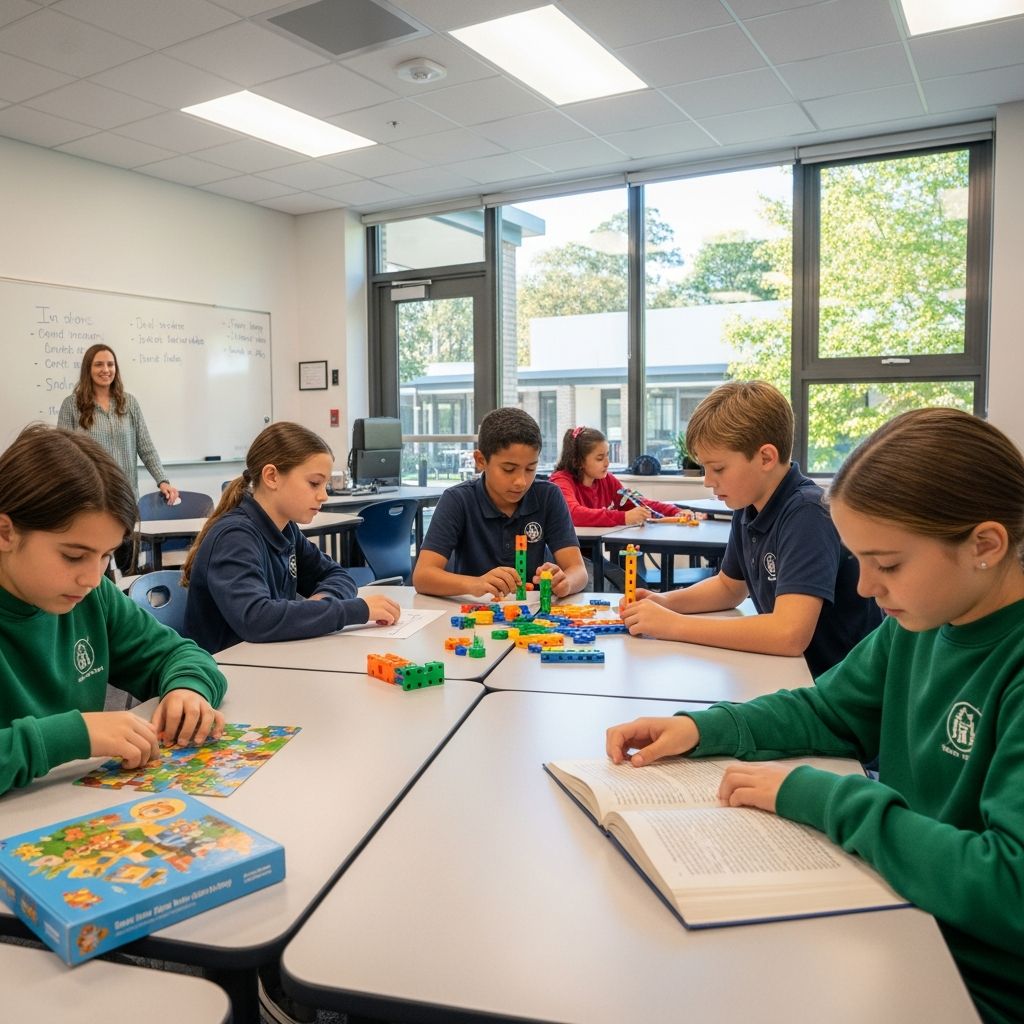
One of the most common classroom management challenges educators face occurs when some students finish assigned work significantly faster than their peers. Rather than allowing these students to sit idle or become disruptive, forward-thinking teachers recognize this as an opportunity to deepen learning, foster creativity, and maintain engagement. The key to successfully managing early finishers lies in having a well-organized system of purposeful activities that extend learning without creating additional preparation burden for already busy educators.
Building a Framework for Success
Before implementing specific activities, teachers should establish a structured system that makes it easy for students to understand expectations and transition seamlessly into extension work. This framework begins with clear communication about what constitutes “finished” work—students should understand quality expectations and when they are genuinely ready to move on to enrichment activities. Creating a visible, accessible system helps students become independent in selecting their next task without requiring teacher direction each time.
The foundation of any early finisher program includes three essential components: designated spaces or containers where materials are stored, clear written or visual instructions for each activity type, and a rotation system that prevents boredom from repetitive choices. When these elements are in place, students can transition autonomously into meaningful work, allowing teachers to continue supporting other learners without constant interruptions.
Quick Completion Tasks That Require Minimal Setup
Effective early finisher systems include readily available options that require no preparation when a student approaches with completed work. These immediate-access activities serve as the first line of engagement while more elaborate projects develop.
Drawing and Sketching Opportunities provide accessible creative outlets that develop observation and artistic skills. Offering dry-erase boards with markers eliminates paper waste while maintaining the immediacy students need. Alternatively, maintaining a collection of pre-drawn templates where students add their own creative elements—whether adding backgrounds to outlined objects, developing character designs, or completing partially finished drawings—gives structure to artistic exploration while allowing creative freedom.
Independent Reading remains one of the most valuable uses of early finisher time. Creating a student-curated classroom library where learners can independently select texts based on interest ensures sustained engagement. Allowing students to rotate their selections weekly maintains novelty and prevents the monotony that develops when choices remain static.
Cognitive Challenges and Logic Puzzles develop critical thinking while remaining accessible for varied ability levels. Brain teasers, sudoku puzzles, logic riddles, and tangram challenges provide mental stimulation that feels like play while strengthening problem-solving skills. Keeping a container of puzzle cards, printed puzzle books, or access to free online puzzle resources gives students immediate options.
Designing Purposeful Project Extensions
Beyond quick activities, teachers should plan extension projects that allow early finishers to deepen their engagement with lesson content. These projects transform basic assignments into more complex, meaningful work that challenges advanced learners without requiring entirely separate curricula.
Layered Complexity Assignments build naturally from core lessons. When designing projects, teachers can plan additional steps that students undertake upon completing the main task. For instance, after completing a landscape drawing, students might experiment with different color schemes, incorporate mixed media elements, or develop the scene into a complete narrative sequence. Planning these extensions beforehand ensures quality enrichment rather than random busy work.
Content-Connected Creative Projects allow students to synthesize learning through different modalities. After studying a historical period, students might create a digital timeline, design artifacts from that era, or compose diary entries from historical figures’ perspectives. After completing a science unit, learners might develop teaching presentations for younger students, create instructional posters, or design experiments testing related hypotheses.
Student-Choice Long-Term Projects prove particularly effective for consistent early finishers. Meeting individually with these students to co-design quarter-long investigations around their interests creates sustained engagement. A student passionate about marine biology might research ocean adaptations and develop an illustrated guide. An aspiring author might work toward completing a short story. These individualized projects leverage student motivation while providing meaningful challenge.
Creative and Artistic Extension Avenues
Arts-based activities offer rich opportunities for extension and creativity that appeal to diverse learner strengths.
Visual Art Enrichment encompasses numerous possibilities suited to various skill levels and interests. Students might explore fiber arts through collaborative weaving projects, create jewelry through bead work, develop stop-motion animations, or construct found-object sculptures from collected materials. Setting up dedicated making spaces with varied materials invites students to experiment and innovate while developing technical skills.
Narrative Creation Through Multiple Media develops storytelling abilities across formats. Comic strip creation using templates or digital tools like Canva helps students develop narrative structure and visual communication. Photography-based projects where students compose and document themed scenes combine artistic vision with technological skills. Writing challenges that encourage joke creation, humorous narrative, or poetry development tap into creative writing abilities.
Maker Challenges and Design Thinking present open-ended problems requiring innovative solutions. Challenges might include constructing the tallest structure from limited materials, designing a bridge that spans a specific distance, or creating a solution for a classroom problem. These activities integrate multiple disciplines—engineering, creativity, mathematics, and critical thinking—within single engaging experiences.
Literacy-Focused Enrichment Options
Reading and writing extensions develop communication skills while engaging student interests and promoting intellectual growth.
Structured Writing Opportunities expand beyond standard assignments. Participating in writing contests through organizations like The Adroit Journal or Teen Ink provides authentic audiences and genuine motivation. Creating book reviews rather than traditional reports teaches evaluative thinking. Developing how-to guides, instructional materials, or informational resources for classmates or younger students combines writing skill development with purposeful communication.
Magazine and Current Events Engagement exposes students to engaging, age-appropriate content while building knowledge. Scholastic Magazines offer high-interest articles on diverse topics that broaden student perspective beyond standard curriculum. Students might summarize interesting articles, research topics further, or participate in prompted discussions about magazine content.
Interest-Based Research and Exploration transforms reading time into intellectual pursuit. Creating dedicated folders or digital collections of curated articles, TED talks, online tutorials, and educational videos in areas matching student interests encourages independent learning. Students might explore topics ranging from animal adaptations to emerging technologies to historical mysteries, deepening knowledge in areas of passion.
Digital Learning and Technology Integration
Thoughtfully selected digital resources extend learning while maintaining focus on educational goals rather than entertainment.
Curated Online Learning Platforms provide structured, engaging content aligned with learning objectives. Teachers might preload tablets or learning management system pages with hyperlinks to educational games, coding challenges, virtual museum tours, or subject-specific practice activities. This curation ensures that technology time remains purposefully educational rather than devolving into unfocused browsing.
Educational Games and Simulations develop skills through interactive experiences. Art-integrated games, math practice games disguised as entertainment, and games teaching content-specific information provide skill development while maintaining the engagement factor of gameplay. Educational platforms offering games tied to curriculum standards provide vetted options.
Wellness and Mindfulness Activities
Not all extension time needs to involve academic content. Strategic inclusion of wellness activities supports student wellbeing while providing necessary mental breaks.
Mindfulness and Relaxation Practices help students develop emotional regulation and stress management skills. Apps like Smiling Mind or Headspace for Kids introduce guided mindfulness exercises, breathing techniques, and relaxation strategies. These activities benefit all learners while particularly supporting students who benefit from movement and sensory regulation.
Sensory and Kinesthetic Activities address developmental needs, particularly for younger learners. Sensory tables filled with sand, rice, or water alongside manipulatives provide tactile engagement and stress relief. Building with blocks, magnetic tiles, or marble runs develops spatial reasoning and problem-solving while providing satisfying tactile and visual feedback.
Social and Collaborative Extensions
Activities involving peer collaboration develop social skills while maintaining engagement and purpose.
Peer Teaching and Explanation deepens understanding while supporting classmates. Early finishers might explain concepts to struggling peers, demonstrate techniques, or create teaching materials for younger students. This positions advanced learners as classroom resources while reinforcing their own mastery through explanation.
Collaborative Creative Projects leverage group energy and diverse perspectives. Collaborative weaving, group sculpture creation, or team-based design challenges encourage cooperation and shared problem-solving. These experiences build social skills while producing visible, meaningful results.
Practical Implementation Strategies
Organization Systems determine whether early finisher programs operate smoothly or create chaos. Color-coded containers, labeled shelves, or clearly organized digital folders help students navigate options independently. Visual instructions with pictures or icons ensure accessibility for diverse readers. Rotation systems that periodically introduce new activities prevent boredom and maintain freshness.
Teacher Preparation minimizes workload while maximizing program quality. Batch-preparing materials—printing puzzle packets, gathering craft supplies, organizing digital resources—during planning time enables smooth implementation throughout the year. Creating reusable materials that withstand multiple uses maximizes time investment.
Student Responsibility builds independence and reduces teacher burden. Teaching students how to select appropriate activities, manage materials, and transition between tasks creates autonomous learners. Holding students accountable for returning materials and maintaining organization systems encourages stewardship.
Addressing Diverse Learner Needs
| Student Profile | Recommended Activity Types | Rationale |
|---|---|---|
| Advanced Academic Learners | Complex projects, research investigations, long-term challenges | Provide appropriate cognitive challenge matching accelerated processing |
| Creative Learners | Artistic pursuits, open-ended making, design challenges | Allow self-expression and experimentation matching creative strength |
| Kinesthetic Learners | Building, weaving, sensory activities, movement-based tasks | Engage through preferred learning modality |
| Social Learners | Collaborative projects, peer teaching, group activities | Leverage interpersonal strengths in purposeful contexts |
| Visual-Spatial Learners | Drawing, design, spatial puzzles, architectural challenges | Develop strength areas through engaging formats |
Frequently Asked Questions
Q: How do I prevent early finisher activities from becoming mere busy work?
A: Ensure activities extend learning by connecting to content, developing new skills, or exploring meaningful topics. Regular reflection on whether activities genuinely challenge and engage students helps identify and eliminate busywork masquerading as enrichment.
Q: What if I have many early finishers? How can I manage that?
A: Multiple early finishers often indicate that pacing or instruction needs adjustment. Simultaneously, having multiple activity stations, digital resources, and options prevents competition for materials. Implementing a rotation system ensures everyone eventually accesses preferred activities.
Q: Should early finisher time always be academically focused?
A: While academic extension is valuable, incorporating wellness, creativity, and social activities provides balance. A mix of academic, creative, and restorative activities maintains engagement while supporting whole-child development.
Q: How can I assess learning through early finisher activities?
A: Collecting student work samples, observing engagement and problem-solving approaches, and conducting brief conferences about learning provide assessment data. These informal assessments inform instructional decisions and validate that extension work meaningfully advances learning.
Q: What if a student finishes early but lacks independence in choosing activities?
A: Explicitly teach activity selection by modeling choices, discussing criteria, and initially directing students to specific options. Gradually release responsibility as students develop independence. Some students benefit from a structured menu rather than open choices.
Conclusion: Transforming Transition Time
Early finishers represent both a classroom management challenge and a valuable opportunity. By establishing well-organized systems featuring diverse, purposeful activities, teachers transform potentially problematic idle time into meaningful extension of learning. Whether through creative projects, deeper academic investigations, collaborative challenges, or wellness practices, early finisher activities can deepen engagement, develop new competencies, and support individual learner needs. The investment in thoughtfully designing and organizing these systems yields dividends in improved classroom dynamics, enhanced student satisfaction, and accelerated learning for those ready to move beyond core instruction.
References
- 46 Early Finisher Activities to Boost Creativity in Your Elementary Art Room — The Art of Education. 2024-03-01. https://theartofeducation.edu/2024/03/jan-46-early-finisher-activities-to-boost-creativity-in-your-elementary-art-room/
- Extension Ideas for Early Finishers — Maneuvering the Middle. https://www.maneuveringthemiddle.com/extension-ideas-for-early-finishers/
- Your Student Finished Early—Now What? — Edutopia. https://www.edutopia.org/article/fast-finishers-school-keeping-students-any-grade-engaged/
- Simple and Meaningful Activities for Early Finishers — Truth for Teachers. https://truthforteachers.com/simple-and-meaningful-activities-for-early-finishers/
- Early Finishers: Ideas for Teachers — Gifted Guru. https://giftedguru.com/early-finishers-ideas-for-teachers/

Medha Deb is an editor with a master's degree in Applied Linguistics from the University of Hyderabad. She believes that her qualification has helped her develop a deep understanding of language and its application in various contexts. Medha specializes in the areas of beauty, health, sports, and wellness and is committed to ensuring that the content on the website is…