
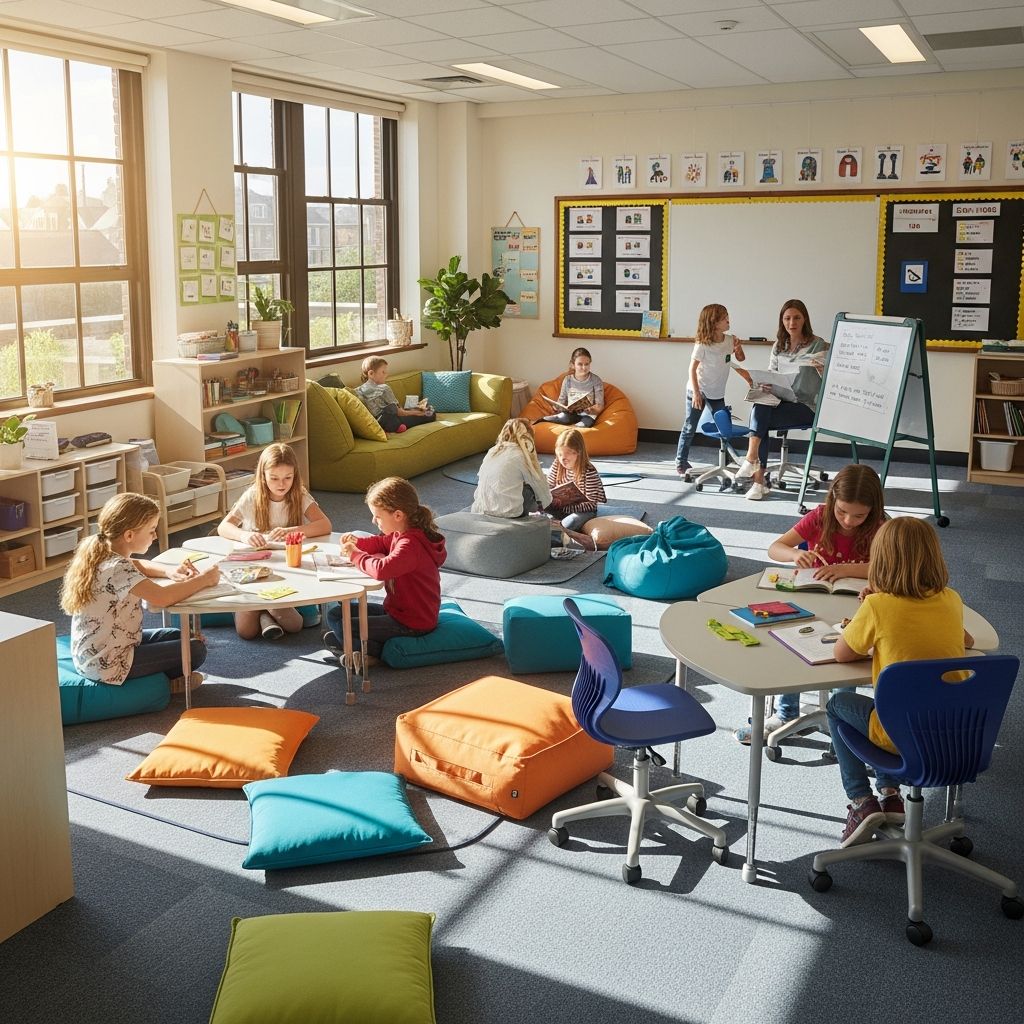
Traditional classrooms with rows of uniform desks have long defined education, but a growing movement is challenging this norm. Deskless classrooms eliminate individual desks in favor of flexible seating options like floor mats, balance balls, cushions, and standing areas. This approach prioritizes student choice, movement, and comfort, aiming to create dynamic environments that better support diverse learning styles. Educators adopting this model report heightened engagement and collaboration, though it requires careful planning to succeed.
The Evolution of Classroom Design
Classroom layouts have evolved significantly over decades. Early 20th-century schools emphasized rigid rows to maintain discipline during mass instruction. Today, research highlights the limitations of such setups, particularly in accommodating varied learning preferences. Flexible spaces emerged from studies showing that environment impacts cognition. For instance, a 2015 University of Salford study found that adaptable classrooms improved academic performance by 16% in key subjects, attributing a quarter of gains to student-controlled flexibility .
This shift aligns with broader educational trends toward student-centered learning. By removing desks, teachers reclaim space for activities that promote active participation, mirroring real-world collaborative settings. The result is not chaos but structured freedom, where students select positions that optimize focus—whether sprawled on the floor for reading or perched on stools for group work.
Key Advantages of Adopting a Deskless Approach
Switching to a deskless model yields multiple benefits, backed by teacher testimonials and research. These spaces combat monotony, injecting energy into daily routines .
- Increased Student Engagement: Without desks as barriers, students stay more attentive. Teachers note easier eye contact and participation, especially in discussions. One educator described how facing students directly simplified personalized questioning, boosting oral comprehension .
- Enhanced Collaboration: Open layouts facilitate group work. Belongings stored collectively foster a shared community sense, reducing isolation. Students collaborate fluidly, learning from peers alongside instruction .
- Improved Academic Outcomes: Flexible setups correlate with better test scores. In one case, behavior referrals dropped, and scores rose 10-15%, prompting school-wide adoption . The Salford study confirms flexibility rivals factors like lighting in boosting reading, writing, and math performance .
- Greater Space Utilization: Removing bulky furniture frees floor area for movement-based activities, dances, or rearrangements. Chairs shift quickly for pairs, groups, or circles—taking minutes instead of half an hour .
- Reduced Distractions and Cleanup: Bags on back tables minimize phones and snacks. Fewer surfaces mean less graffiti or trash, simplifying end-of-day tidying .
- Promotion of Movement and Health: Students wiggle on balls or shift positions naturally, addressing ‘movement matters’ for brain health and accessibility, especially for those with disabilities .
Potential Drawbacks and Mitigation Strategies
No change is without hurdles. Deskless setups can overwhelm rowdy groups or inexperienced teachers, risking disorder . Here’s a balanced view:
| Challenge | Impact | Solution |
|---|---|---|
| Chaos Risk | Noise or off-task behavior | Clear rules and routines from day one |
| Accountability | Students neglecting responsibilities | Explicit expectations and self-regulation training |
| Space Management | Overcrowding during activities | Designated zones and timers for transitions |
| Teacher Adaptation | Loss of familiar control | Gradual implementation and peer observation |
Success hinges on preparation. Start small, perhaps deskless one day weekly, building to full adoption. Emphasize accountability: more choices demand self-management .
Practical Steps for Implementation
Transitioning requires intentional design. Begin with student input via surveys: ‘Where do you focus best?’ This empathy step, rooted in design thinking, ensures buy-in .
- Assess Your Space: Measure room size; aim for multi-use furniture like lightweight tables or stools.
- Source Flexible Options: Budget-friendly choices include yoga balls, cushions, lap desks, and floor rugs. Tables over desks ease collaboration without full removal .
- Set Norms: Co-create guidelines: quiet zones, movement breaks, respect for choices.
- Incorporate Technology: Clipboards or lap desks support device-free writing; integrate tablets for digital work.
- Monitor and Adjust: Weekly reflections gauge effectiveness, tweaking based on feedback.
For language classes, deskless excels in immersive discussions, with everyone visible and engaged . Primary teachers balance choice with structure, fostering agency gradually .
Real-World Examples and Teacher Insights
Educators worldwide share successes. Third-grade teacher Chase Morgan notes motivated, higher-order thinkers in his deskless room, with shared resources building community . Bridget Wortman saw calmer dynamics, fewer referrals, and score jumps, crediting student control .
In world language instruction, Martina Bex found proximity aids comprehension checks, reducing hiding spots and emphasizing orality over worksheets . Spanish teacher Carrie Toth highlights space for fun activities, keeping all eyes forward . These align with Edutopia’s view: remaking space remakes learning .
Evidence from Research and Studies
Beyond anecdotes, data supports deskless benefits. The University of Salford’s rigorous analysis of 153 UK schools linked flexible designs to 16% gains, isolating ‘student choice’ as pivotal—comparable to ventilation or light . Dynamic teacher-student space use amplifies furniture effects.
U.S. reports echo this: flexible seating reduces stress, elevates interactions . While not universal, patterns suggest deskless thrives where teachers empower students proactively.
Frequently Asked Questions (FAQs)
What is a deskless classroom?
A deskless classroom replaces traditional desks with varied seating like balls, mats, and stools, allowing students to choose comfortable work spots for better focus.
Does it work for all grade levels?
Yes, but adapt for age: primaries need more guidance on self-regulation; older students handle independence well.
How much does setup cost?
Starts low—reuse items or thrift cushions; full overhauls range $500-$2000, offset by engagement gains.
Can it handle rowdy classes?
With firm routines, yes; it often calms by giving choice ownership, reducing rebellion.
What about writing or tests?
Lap desks, clipboards, or communal tables accommodate; many report neater work sans desk slouching.
Future Directions in Flexible Learning Environments
Deskless models point to hybrid futures blending tech, movement, and personalization. As schools prioritize equity, accessible designs will expand. Educators must weigh local contexts, but evidence favors experimentation. Ultimately, deskless isn’t anti-structure—it’s restructured for 21st-century minds.
References
- The Pros and Cons of Going Deskless — Houston Installation Services. 2023. https://houstoninstallation.com/blog/the-pros-and-cons-of-going-deskless/
- Take a seat: Learning in a deskless classroom — EdNC. 2016-05-16. https://www.ednc.org/take-a-seat-learning-in-a-deskless-classroom/
- Why my Classroom Does Not have Desks — Mis Clases Locas. 2018. https://misclaseslocas.com/why-my-classroom-does-not-have-desks/
- A First-Timer’s Reflections on Going Deskless — Simply Comprehensible. 2016. https://simplycomprehensible.weebly.com/blog/going-deskless
- Design Thinking and the Deskless Classroom — Edutopia. 2016-09-06. https://www.edutopia.org/blog/design-thinking-and-deskless-classroom-tracy-evans

- Integrated M.A. in Applied Linguistics, University of Hyderabad
- 5+ years in editorial, instructional, SEO, and research-based writing
Sneha is a relationships and lifestyle writer with a strong foundation in applied linguistics and certified training in relationship coaching. She brings over five years of writing experience to theskillvault, crafting thoughtful, research-driven content that empowers readers to build healthier relationships, boost emotional well-being, and embrace holistic living. Her writing and insights reflect the belief that beauty, happiness, and wellness…