
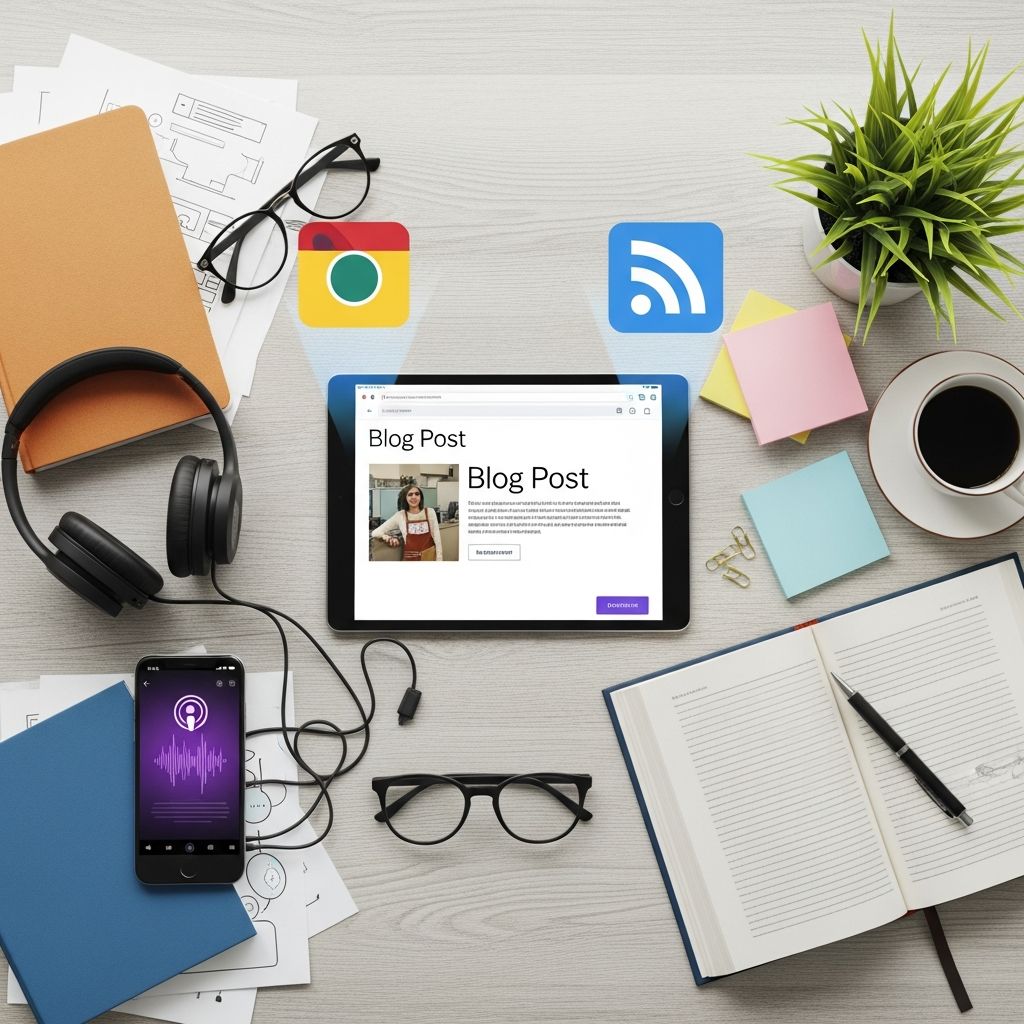
In today’s fast-paced educational landscape, technology plays a pivotal role in enhancing teaching methods and student outcomes. Tools such as **blogs**, **RSS feeds**, **podcasts**, and **widgets** have emerged as indispensable assets for educators seeking to create dynamic, interactive learning environments. These technologies enable seamless content sharing, real-time updates, multimedia engagement, and customizable interfaces, ultimately bridging the gap between traditional pedagogy and digital innovation.
Understanding Blogs in the Educational Context
Blogs represent one of the earliest and most versatile forms of online publishing, functioning as dynamic websites where users post articles, reflections, and multimedia in reverse chronological order. In education, **blogs** serve as personal or class journals, allowing teachers to document lessons, share resources, and facilitate discussions.
Educators can leverage blogs to extend classroom walls, posting assignments, study guides, and student work for parental access. For instance, a history teacher might chronicle a unit on ancient civilizations with embedded images, videos, and links to primary sources, encouraging student comments for deeper analysis. This interactivity fosters critical thinking and community building.
Key advantages include accessibility—no advanced coding required, as platforms like WordPress or Blogger offer user-friendly interfaces. Blogs also support multimedia integration, turning static lessons into rich narratives. Regular posting builds digital literacy skills in students, preparing them for professional communication.
Practical Strategies for Blogging in Classrooms
- Subject-Specific Blogs: Create dedicated spaces for math puzzles, literature reviews, or science experiments.
- Student-Led Contributions: Empower learners to author posts, promoting ownership and voice.
- Collaborative Projects: Link class blogs for cross-school exchanges on global topics.
Challenges like digital divides can be mitigated by providing school devices or printable summaries. Overall, blogs transform passive learning into active participation.
Harnessing RSS Feeds for Efficient Content Management
**RSS feeds**, or Really Simple Syndication, are XML-based formats that allow users to subscribe to updates from multiple websites without constant manual checking. An RSS feed aggregates headlines, summaries, and links from blogs, news sites, or educational portals into a single, streamlined view.
For teachers, RSS feeds act as personalized curators. Imagine subscribing to feeds from NASA, Khan Academy, or peer educator blogs—new content appears automatically in readers like Feedly or Inoreader. This saves hours, ensuring educators stay abreast of the latest research, lesson ideas, and current events relevant to curricula.
In classrooms, RSS enables ‘feed dashboards’ where students monitor topic-specific updates, such as environmental news for geography or tech advancements for STEM. Platforms automatically update with fresh episodes or posts, supporting flipped learning models where homework involves reviewing syndicated content.
| RSS Reader | Key Features | Educational Use |
|---|---|---|
| Feedly | AI organization, tagging | Curate subject feeds for class sharing |
| Inoreader | Advanced filters, newsletters | Student research aggregation |
| Feedbin | Simple interface, mobile sync | Quick teacher updates |
RSS also powers podcast distribution, pulling episode details for directories like Spotify. Its automation reduces information overload, making it ideal for busy educators.
Podcasts: Bringing Lessons to Life Through Audio
**Podcasts** are episodic audio series distributed via RSS feeds, offering on-demand listening for commuters, auditory learners, or diverse settings. In education, they humanize subjects, with teachers producing ‘bite-sized’ explanations or interviews.
A biology instructor might record a podcast series on cell structures, complete with real-world analogies and quizzes. Students access via apps, pausing for reflection. Guest experts add authenticity, while transcription tools ensure inclusivity for hearing-impaired learners.
Benefits extend to differentiated instruction—podcasts suit varied paces and styles. Research shows audio boosts retention for 40% of learners. Creation is straightforward: record with free tools like Audacity, host on Buzzsprout, and distribute via RSS.
Steps to Launch an Educational Podcast
- Plan Content: Outline episodes around curriculum goals.
- Record and Edit: Use microphones for clarity; add intro music.
- Host and Syndicate: Upload to platforms generating RSS feeds.
- Promote: Share links in class blogs or LMS.
Podcasts encourage global reach, with student creations shared worldwide, enhancing cultural exchange.
Widgets: Customizable Building Blocks for Interactive Sites
**Widgets** are compact, embeddable applications that add functionality to websites or blogs, such as calendars, polls, or live feeds. In education, they make pages interactive without coding expertise.
A classroom blog might embed an RSS widget displaying latest news, a podcast player for episodes, or a weather widget tying into science lessons. These elements update dynamically, keeping content fresh. JavaScript or iFrame integration allows seamless addition.
Widgets support gamification—think progress trackers or quiz embeds—boosting motivation. For administrators, analytics widgets monitor engagement, informing improvements.
- Types for Education: Embeddable calendars for schedules, social media streams for announcements, interactive maps for geography.
- Customization: Adjust size, theme to match site aesthetics.
- Accessibility: Ensure compatibility with screen readers.
Combining widgets with blogs creates ‘learning hubs,’ centralizing resources.
Integrating Tools for a Cohesive Digital Ecosystem
The true power emerges when combining these tools. A teacher’s blog posts articles, syndicated via RSS for subscribers, embeds podcast players via widgets, and links to student contributions. This ecosystem supports blended learning, where online elements reinforce in-person sessions.
For example, in a literature class: Blog recaps readings; RSS feeds latest author interviews; podcasts dramatize excerpts; widgets poll opinions. Data from interactions guides instruction.
Implementation tips: Start small, train students on tools, ensure privacy via approved platforms. Measure success through engagement metrics and feedback surveys.
Frequently Asked Questions (FAQs)
What is the primary benefit of using RSS feeds in education?
RSS feeds centralize updates from multiple sources, saving time and ensuring teachers and students access the latest relevant content automatically.
How do podcasts differ from traditional audio lessons?
Podcasts are episodic, distributable via RSS, and consumable on-demand, offering flexibility beyond fixed classroom timings.
Are widgets suitable for beginners?
Yes, most widgets use simple copy-paste code, requiring no programming knowledge while adding advanced interactivity.
Can blogs replace learning management systems?
Blogs complement LMS by providing public, creative spaces but lack robust grading features; hybrid use is ideal.
How secure are these tools for student data?
Use platforms with GDPR compliance, parental consents, and avoid sharing personal info; preview embeds for safety.
Future Trends and Best Practices
Emerging integrations like AI-curated RSS or VR-embedded podcasts promise further evolution. Best practices: Prioritize mobile compatibility, foster digital citizenship, and iterate based on analytics. These tools democratize education, empowering global connectivity.
By mastering blogs, RSS, podcasts, and widgets, educators craft immersive experiences, preparing students for a digital future. Experiment, collaborate, and innovate to maximize impact.
References
- Using RSS feeds — Squarespace Help Center. 2023-05-15. https://support.squarespace.com/hc/en-us/articles/215761717-Using-RSS-feeds
- What is an RSS Feed? — RSS.app. 2024-02-10. https://rss.app/blog/what-is-an-rss-feed-Ncvgpf
- How Do Podcast RSS Feeds Work? — Buzzsprout. 2025-01-20. https://www.buzzsprout.com/blog/how-do-podcast-rss-feeds-work
- What is a podcast RSS feed? — TYX Studios. 2026-01-18. https://tyxstudios.com/blog/what-is-a-podcast-rss-feed
- What Is a Podcast RSS Feed and How Do You Get One? — RSS.com (YouTube). 2024-11-05. https://www.youtube.com/watch?v=IEWJpxq6HVI
- How Do RSS Feeds Work? — RSS.com. 2025-03-12. https://rss.com/blog/how-do-rss-feeds-work/
- The RSS Feed: What’s the Deal and How to Use It — Wix Blog. 2024-07-22. https://www.wix.com/blog/rss-feed

Medha Deb is an editor with a master's degree in Applied Linguistics from the University of Hyderabad. She believes that her qualification has helped her develop a deep understanding of language and its application in various contexts. Medha specializes in the areas of beauty, health, sports, and wellness and is committed to ensuring that the content on the website is…