
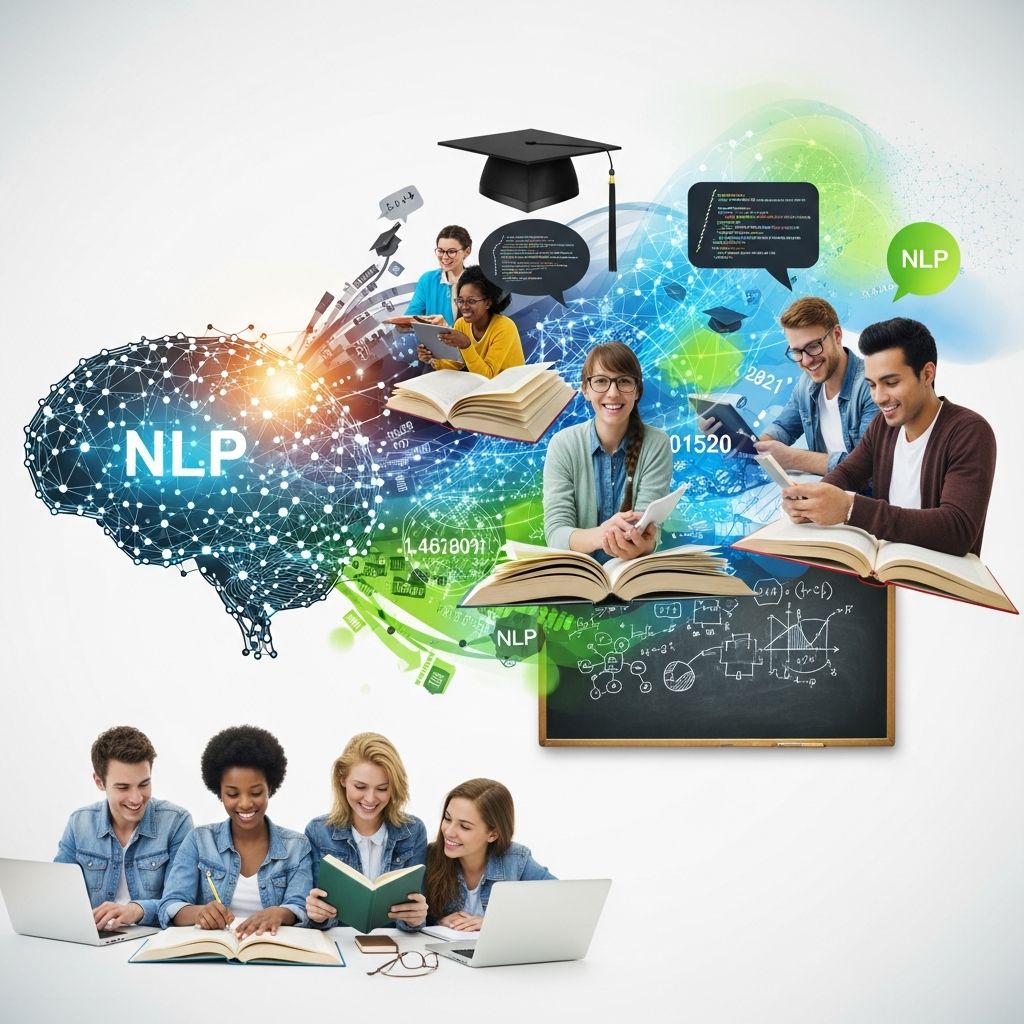
Natural Language Processing (NLP), a branch of artificial intelligence focused on enabling machines to comprehend and generate human language, stands at the forefront of educational innovation. By interpreting text, speech, and sentiment, NLP empowers educators and learners with tools that adapt to individual needs, automate routine tasks, and uncover hidden insights into learning processes. This technology promises to make education more accessible, engaging, and effective across diverse settings.
Core Technologies Powering NLP in Classrooms
At its heart, NLP relies on several key components to bridge human communication and machine intelligence. Text analysis breaks down written content to extract meaning, while speech recognition converts spoken words into editable text, aiding students with note-taking challenges. Sentiment analysis gauges emotional tones in responses, and natural language understanding deciphers context and intent. These elements combine to create systems that not only process language but also respond intelligently.
In practical terms, speech-to-text tools transcribe lectures in real-time, supporting diverse learners including those with auditory processing difficulties. Chatbots, powered by these technologies, offer round-the-clock assistance, answering queries on everything from homework help to administrative details, thus alleviating teacher workloads.
Personalized Learning Paths Tailored to Individuals
One of NLP’s most compelling applications is in crafting bespoke educational experiences. Adaptive platforms analyze student interactions—such as quiz responses, essay drafts, and discussion posts—to dynamically adjust content difficulty, pacing, and format. For instance, if a student excels in visual explanations but struggles with abstract concepts, the system might prioritize diagrams and simplified language.
Learning management systems (LMS) integrate NLP to recommend resources aligned with a learner’s style and progress. Predictive analytics forecast potential struggles, enabling proactive interventions like supplementary modules or peer pairings. This shift from one-size-fits-all curricula to individualized trajectories boosts retention and motivation, particularly for underrepresented groups.
- Dynamic Content Adjustment: Modifies reading levels and question complexity based on real-time performance.
- Resource Matching: Suggests videos, articles, or exercises suited to preferred modalities.
- Progress Forecasting: Identifies at-risk students early for targeted support.
Streamlining Assessments with Automation
Traditional grading is time-intensive and subjective; NLP automates this process with remarkable accuracy. Automated essay scoring evaluates structure, coherence, vocabulary, and argumentation, providing scores comparable to human evaluators while handling thousands of submissions instantly.
Beyond scoring, NLP delivers granular feedback. In formative assessments, it pinpoints errors in grammar, logic, or comprehension and suggests improvements immediately. This real-time loop allows students to iterate on their work, fostering deeper understanding without waiting for teacher input.
| Assessment Type | NLP Benefit | Example Tools |
|---|---|---|
| Essays | Holistic scoring and detailed critiques | Automated grading platforms |
| Quizzes | Instant error analysis | Adaptive testing software |
| Short Answers | Semantic matching to rubrics | AI feedback engines |
Such tools ensure consistency, reducing bias from fatigue or subjectivity, and scale to massive online courses where manual review is impossible.
Enhancing Reading and Writing Proficiency
NLP directly bolsters literacy skills by offering scaffolded support. For writing, it assesses self-explanations, summaries, and source-based essays, providing feedback on integration of evidence and clarity. Struggling writers receive prompts to strengthen arguments or vary sentence structures.
In reading comprehension, algorithms evaluate summaries and explanations against source material, highlighting gaps in understanding. This is invaluable for teachers short on time, as it scales individualized coaching across entire classes. Research shows these interventions improve not just skills but also metacognition—students’ awareness of their own thinking.
Decoding Learning Behaviors and Emotions
NLP extends beyond content to probe the ‘why’ behind performance. By analyzing language patterns in discussions or journals, it infers cognitive states like confusion, engagement, or frustration. Sentiment analysis on student chats flags emotional distress, enabling early mental health referrals.
Dropout prediction models scan interaction data to identify withdrawal signals, such as reduced participation or negative phrasing, prompting interventions. In science classrooms, NLP tracks conceptual progress through open-ended responses, revealing misconceptions in real-time for teachers to address.
These insights inform broader strategies: curriculum tweaks based on class-wide trends or personalized motivation boosters like gamified rewards.
Administrative Efficiency and Teacher Empowerment
Educators spend hours on non-teaching tasks; NLP automates many. Lesson plan generators create outlines from learning objectives, while content summarizers distill research articles into key points. Question banks populated by AI ensure varied assessments without manual crafting.
Chatbots manage routine inquiries—scheduling, policies, resources—freeing staff for mentorship. Data analytics from NLP aggregate trends, aiding curriculum optimization and resource allocation.
Global Connectivity and Immersive Experiences
Integrating NLP with augmented reality (AR) and virtual reality (VR) opens virtual classrooms transcending borders. Real-time translation enables multilingual collaboration, while NLP moderates discussions for inclusivity. Students worldwide co-build projects, enriched by AI-summarized global perspectives.
Challenges and Ethical Imperatives
Despite promise, NLP faces hurdles. Bias in training data can perpetuate inequities, necessitating diverse datasets. Privacy concerns demand robust safeguards for student language data. Moreover, over-reliance risks diminishing human elements like empathy in teaching.
Ethical deployment involves transparent algorithms, teacher training, and hybrid models blending AI with human oversight. Ongoing research refines accuracy for nuanced responses, ensuring equity.
The Horizon of NLP-Driven Education
Future NLP will predict behaviors with greater precision, integrate multimodal data (text, voice, gestures), and support lifelong learning via personal AI tutors. Hybrid systems will evolve, making education responsive, inclusive, and human-centered.
Frequently Asked Questions
What is Natural Language Processing in education?
NLP uses AI to analyze and generate human language, enabling tools for personalized feedback, automated grading, and learning insights in educational settings.
How does NLP improve personalized learning?
It adapts content to individual paces and styles by analyzing interactions, recommending tailored resources, and predicting needs.
Can NLP replace teachers?
No, it augments teachers by handling routine tasks, providing data insights, and scaling support while preserving human connection.
What are the risks of using NLP in schools?
Potential biases, data privacy issues, and reduced personal interaction require careful ethical implementation.
Is NLP effective for non-English speakers?
Yes, multilingual NLP supports translation and adaptation, fostering global inclusivity.
References
- 6 Insane Applications Of NLP In Education For Growth In 2025 — Tezeract.ai. 2025. https://tezeract.ai/applications-of-nlp-in-education/
- Natural Language Processing In Education — The Learning Agency Lab. 2023. https://the-learning-agency-lab.com/the-learning-curve/how-npl-will-change-education/
- NLP in Assessments – Revolutionizing Education and Evaluation — Excelsoft Corp. 2023. https://www.excelsoftcorp.com/blog-post/nlp-in-assessments-revolutionizing-education-and-evaluation/
- Deepening Science Teaching and Learning with Language AI — Berkeley School of Education. 2023. https://bse.berkeley.edu/nlp-tips
- Designing Natural Language Processing Tools for Teachers — Stanford HAI. 2023. https://hai.stanford.edu/news/designing-natural-language-processing-tools-teachers

- Integrated M.A. in Applied Linguistics, University of Hyderabad
- 5+ years in editorial, instructional, SEO, and research-based writing
Sneha is a relationships and lifestyle writer with a strong foundation in applied linguistics and certified training in relationship coaching. She brings over five years of writing experience to theskillvault, crafting thoughtful, research-driven content that empowers readers to build healthier relationships, boost emotional well-being, and embrace holistic living. Her writing and insights reflect the belief that beauty, happiness, and wellness…