
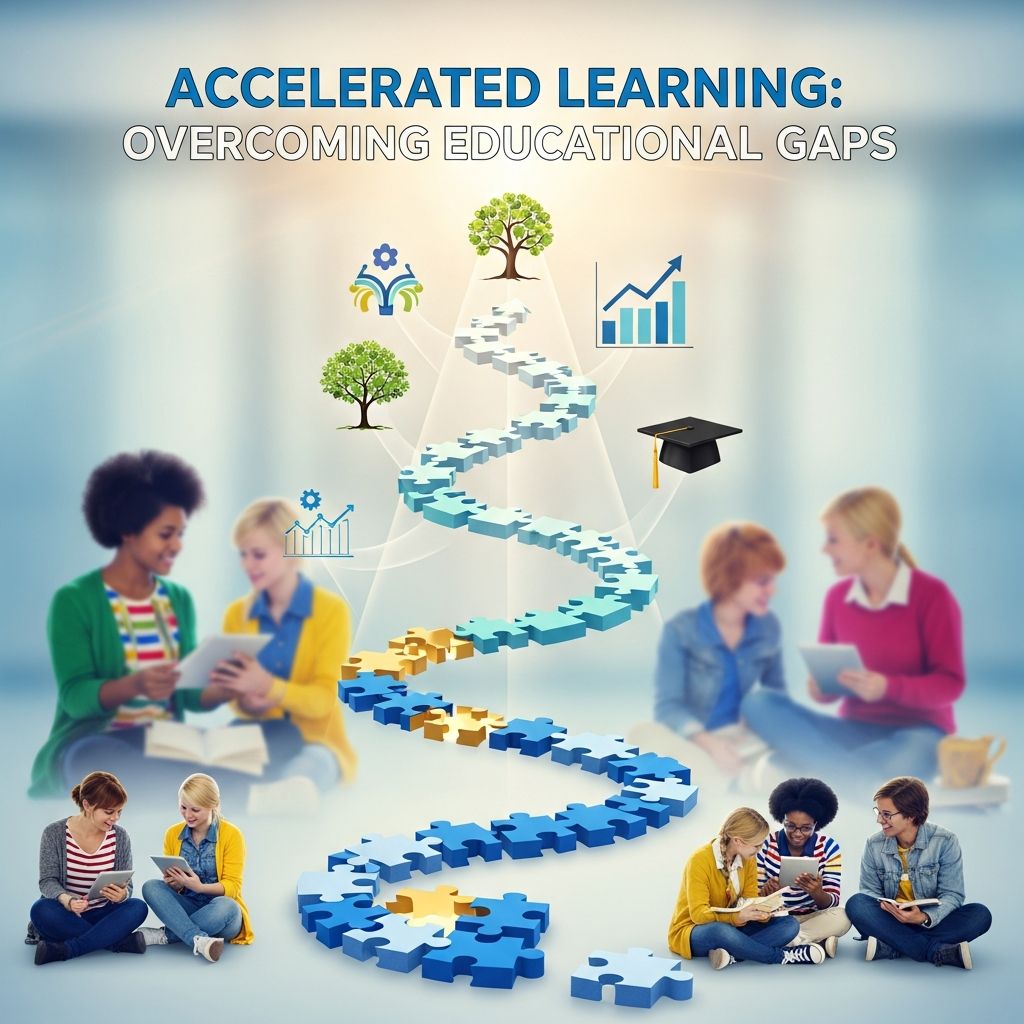
Academic acceleration has emerged as a powerful approach to address learning disruptions faced by students worldwide. Unlike traditional remediation that revisits past material, acceleration focuses on mastering current grade-level content while strategically filling prerequisite gaps. This method enables students to progress efficiently without falling further behind their peers.
Understanding the Scope of Learning Disruptions
Learning losses vary significantly by grade level, subject, and student background. Early elementary students and those already struggling often require the most intensive support in foundational skills like reading and mathematics. Disruptions from events such as pandemics exacerbate existing inequities, concentrating recovery needs among vulnerable populations.
Research indicates that without targeted interventions, these gaps persist and widen over time. Supportive school climates, characterized by strong teacher-student relationships, play a critical role in emotional recovery, which in turn facilitates academic progress. Schools fostering these environments see faster rebound in student performance across subjects.
High-Impact Strategies for Rapid Progress
Several evidence-based tactics stand out for their ability to accelerate learning. These include high-dosage tutoring, extended instructional time, and personalized instruction plans, each backed by rigorous studies demonstrating substantial gains.
- High-Dosage Tutoring: Frequent, small-group or one-on-one sessions aligned with classroom content yield remarkable results, particularly for struggling learners in math and reading.
- Extended Learning Opportunities: Programs like summer academies or double-period classes staffed by top educators provide concentrated exposure to key material.
- Data-Driven Targeting: Formative assessments identify precise skill deficits, enabling customized interventions that address root causes rather than symptoms.
Building a Foundation with Diagnostic Tools
The first step in any effective recovery plan is comprehensive assessment. Formative tools reveal where students stand relative to grade expectations, highlighting critical prerequisites for current coursework. This data informs targeted instruction, ensuring resources focus on high-priority gaps.
Educators using reliable assessment platforms benefit from actionable insights, including recommended activities and progress tracking. Such precision prevents wasted effort on irrelevant remediation and accelerates mastery of essential competencies.
Personalization: Tailoring Support to Individual Needs
One-size-fits-all approaches fall short in diverse classrooms. Personalized learning, powered by adaptive technologies, adjusts content difficulty and pace in real-time based on student performance. This method proves twice as effective as conventional tutoring in some studies, with significant effect sizes on outcomes.
Combining human tutors with digital tools creates hybrid models that offer both relational support and scalable personalization. Students receive immediate feedback, building confidence alongside skills.
Extended Time and Intensive Programs
Simply extending school days or adding after-school sessions often yields modest gains unless structured intentionally. Acceleration academies, compressing core content into intensive week-long formats, demonstrate strong efficacy when led by high-performing teachers.
Mini-lessons embedded in regular classes—dedicating 10-15 minutes daily to prerequisite review—provide efficient catch-up without derailing grade-level instruction. These spiraling techniques reinforce skills across the curriculum, promoting retention.
Creating Supportive Ecosystems
Beyond academics, emotional well-being underpins learning recovery. Systems for early identification of at-risk students, paired with consistent routines, help re-engage learners. Teacher training in relationship-building amplifies these efforts.
Family involvement and community partnerships extend support beyond school walls. Engaging parents through workshops and progress updates correlates with sustained student motivation and achievement.
Comparing Intervention Approaches
Not all strategies perform equally. The table below summarizes key methods based on evidence strength and potential risks.
| Strategy | Evidence Level | Key Benefits | Potential Drawbacks |
|---|---|---|---|
| High-Dosage Tutoring | High | Rapid gains in math/reading; tied to class content | Requires trained tutors; cost |
| Extended Time Programs | High | Concentrated skill-building; effective teachers | Scheduling challenges |
| Grade Retention | Low | Temporary catch-up | Long-term negative effects |
| Compressed Curriculum | Moderate | Covers essentials quickly | May skip depth |
| Personalized Tech | High | Adaptive; scalable | Access inequities |
Implementing District-Wide Acceleration Plans
Districts succeed by conducting thorough landscape analyses of loss patterns, then selecting strategies aligned with local data. Building administrator and teacher buy-in ensures faithful execution. ESSER funds have supported such initiatives, emphasizing proven practices like tutoring and extended learning.
Progress monitoring through regular checkpoints allows mid-course adjustments. Districts prioritizing these steps report accelerated recovery across multiple years.
Technology’s Role in Scaling Solutions
Digital platforms enable customized planners, interactive resources, and virtual tutoring. Adaptive software personalizes practice, focusing on weak areas while advancing proficient skills. Integrating tech with in-person support maximizes impact, especially for remote or underserved students.
Project-based learning via tech bridges subjects and real-world applications, boosting engagement. Students tackling interdisciplinary challenges apply standards simultaneously, accelerating holistic development.
Social-Emotional Integration for Lasting Gains
Learner-centered pedagogies incorporating social-emotional learning (SEL) enhance catch-up programs. Addressing trauma and building resilience alongside academics prevents disengagement. Evidence supports embedding SEL across subjects for comprehensive recovery.
Frequently Asked Questions
What makes high-dosage tutoring more effective than standard remediation?
High-dosage tutoring provides frequent, content-aligned sessions with immediate feedback, leading to faster closure of gaps compared to infrequent review.
Can acceleration work for all grade levels?
Yes, though early grades show concentrated needs; tailored programs adapt to any level with data-driven targeting.
How do schools measure intervention success?
Through ongoing formative assessments and progress monitoring tied to grade-level benchmarks.
Is technology essential for acceleration?
Not essential but highly effective for personalization and scaling support, especially when combined with human elements.
What about grade retention as a solution?
Evidence shows limited benefits and potential long-term harms; acceleration is preferable.
Charting the Path Forward
Accelerated learning demands commitment to evidence-based practices, relentless data use, and nurturing environments. By prioritizing high-impact interventions, educators can not only recover lost ground but position students for future success. Districts investing in these strategies witness transformed trajectories, proving that strategic acceleration balances—and surpasses—learning disruptions.
References
- School Practices to Address Student Learning Loss — University of Chicago Consortium on School Research. 2023. https://consortium.uchicago.edu/publications/school-practices-to-address-student-learning-loss
- 7 Strategies to Help Mitigate Learning Loss — SchoolPlanner. 2023. https://www.schoolplanner.com/7-strategies-to-help-mitigate-learning-loss/
- 3 Strategic Actions to Accelerate Learning Recovery — Amira Learning. 2023. https://amiralearning.com/blog/3-strategic-actions-to-learning-recovery
- What are evidence-based practices that support learning recovery? — Institute of Education Sciences (IES), U.S. Department of Education. 2025-01-15. https://ies.ed.gov/rel-pacific/2025/01/faq-0
- How To Select the Right Interventions To Boost Accelerated Learning — Branching Minds. 2023. https://www.branchingminds.com/blog/selecting-the-right-interventions-to-boost-accelerated-learning
- Learning Recovery and Acceleration Planning Guide — National Institute for Excellence in Teaching (NIET). 2022. https://www.niet.org/assets/Resources/5475a2c059/learning-recovery-and-acceleration-planning-guide.pdf

Medha Deb is an editor with a master's degree in Applied Linguistics from the University of Hyderabad. She believes that her qualification has helped her develop a deep understanding of language and its application in various contexts. Medha specializes in the areas of beauty, health, sports, and wellness and is committed to ensuring that the content on the website is…